

(SPOT.ph) Breast cancer is the most common cancer globally. In the Philippines, we unfortunately have the highest prevalence of breast cancer in Asia and the ninth highest in the world. Survivors usually go through a mastectomy, a process that requires the removal of breast tissue; saving their lives yes, but not without scars, in all sense of the word.
Women who've had a mastectomy often feel a diminished sense of femininity; a feeling of lack and abnormality after having lost a body part deemed crucial to the female anatomy. It is normal for breast cancer survivors to wear prosthetics to maintain the appearance of a full chest. But as with any material, these prosthetics do not last forever, and after a few years of constant wear, can break down or must be refitted. This now creates a sustainability issue with no secondary market for prostheses; they gather dust in closets, stick out in landfills, or are incinerated. This is why innovations to make breast prostheses recyclable, customizable, and lightweight, such as the Brakong, are groundbreaking— but wait, Brakong? What is that exactly?
Also read:
Meet the Filipina Doctor Fighting for Children's Protection Against Abuse
These Filipino Students' Projects Show How Science Can Uplift Communities
How a Fisherman Is Saving His Town One Mangrove at a Time
Meet the Brakong, a James Dyson Award-winning plant-based prosthetic for breast cancer survivors
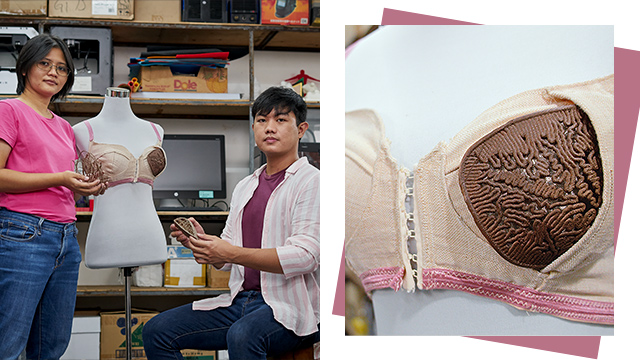
The Brakong is a lightweight external breast prosthesis made from a bio-based raw material, making it regenerative by design. Invented by Emmanuelle Pangilinan and Jason Pechardo, engineering students from the University of the Philippines Diliman, the Brakong has a nature-inspired theme that maximizes airflow and minimizes weight to provide peak comfort for its user. In addition, it uses 3D scanning technology that guarantees the prosthetic can be customized to the wearer's chest curves and features. A perfect match for every body type, giving the wearer that extra confidence boost.
The Brakong is the latest winner of the James Dyson Award's national leg, a competition demonstrating engineers' power to change the world. Winning the nationals of the James Dyson Award gives the Brakong project P330,000. The Brakong will also be progressing to the international stage of the James Dyson Award. The International shortlist will be announced on October 12, and the International winners on November 16.

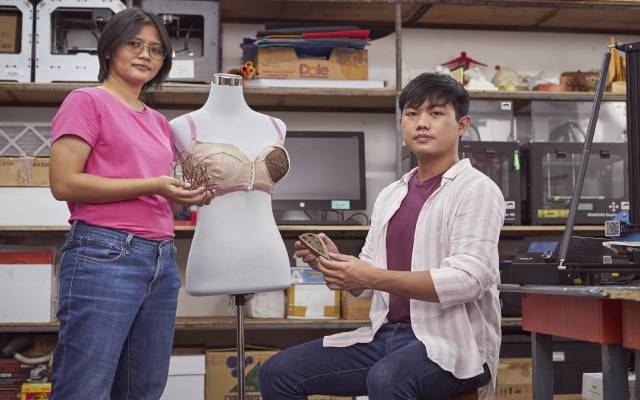
The raw material for the prosthetic is an aquatic plant called bakong, a long-ignored resource that grows all year round in the northern region of the Philippines. In addition, bakong is native to the Philippines, which makes it an accessible and low-cost raw material that addresses the sustainability issue in prostheses. Aside from that, the plant also has antimicrobial properties, which ensure that the prosthesis stays clean and fresh despite being in the chest area, which can often get damp and sweaty. From the raw bakong, a bio-composite called PLAkong is created, which will be used as filaments for making the final Brakong.
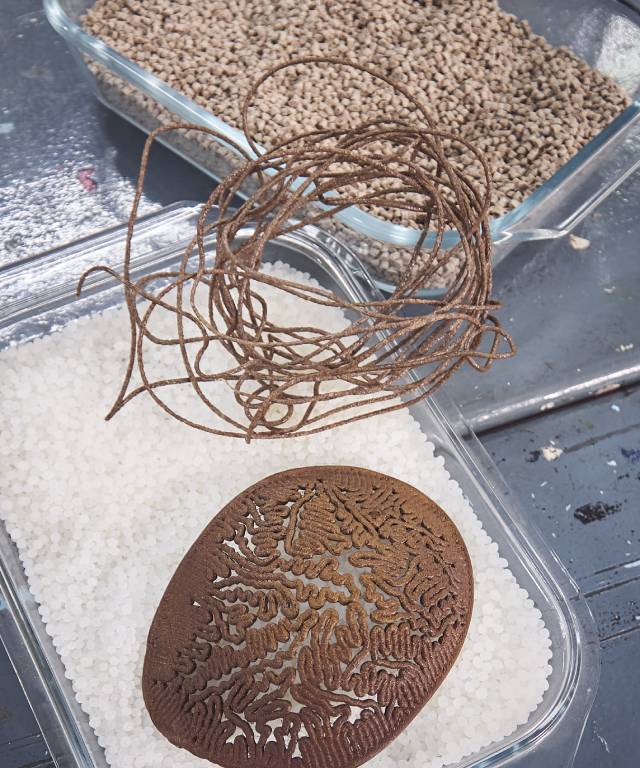
Brakong is a true product of collaboration between survivors, designers, artists, engineers, doctors, and scientists. The product underwent several design iterations, exploring different generative patterns and experimentation with the material. Pangilinan and Pechardo made sure to understand and immerse themselves in the nuances of conventional breast prostheses to gain insights regarding the design and specific areas that need more work. In addition, the team consulted with design experts and medical professionals to ensure that Brakong's design meets medical requirements while maintaining a lingerie silhouette.
Pangilinan and Pechardo will use the cash injection from the James Dyson Award for further product development. Currently, they are coordinating with the Design Centre of the Philippines, the ICanServe foundation, and several medical advisers to gather user feedback and guide their approach for future product upgrades. Pangilinan and Pechardo are now working on the next iteration for Brakong and are looking to pursue commercialization.
Aside from winning the James Dyson Award, the Brakong was also one of the winners of the Design Center of the Philippines' Circular Design Challenge in 2021 and was showcased in the Sustainability Solution Exchange Exhibit and Conference in 2022.
The James Dyson Award is an international design award that celebrates, encourages, and inspires the next generation of design engineers. With the goal of designing something that solves a problem (i.e., a frustration that we all face in daily life or a global issue), the competition encourages participants to demonstrate effective considered design thinking. It's open to current and recent design engineering students and is run by the James Dyson Foundation, James Dyson's charitable trust.
For more information, visit the James Dyson Foundation and the James Dyson Awards websites.
Hey, Spotters! Check us out on Viber to join our Community and subscribe to our Chatbot.