

SIM Card Registration Bill Is Now a Law, Here's What We Know So Far
To help curb mobile phone-aided crimes.
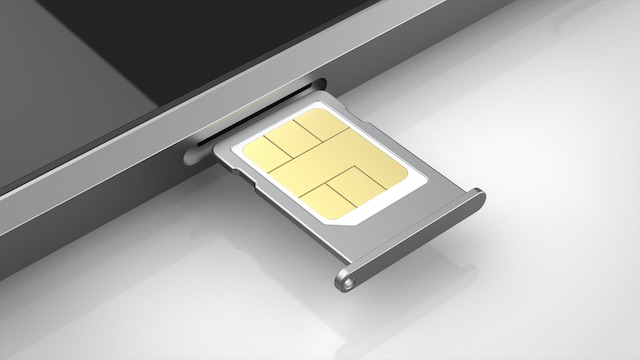
(SPOT.ph) President Ferdinand "Bongbong" Marcos Jr. today, October 10, signed into law the measure requiring the registration of SIM cards to help curb text scams and other mobile phone-aided crimes in the country.
Republic Act 11934, or the "SIM Card Registration Act", is the first measure that Marcos enacted into law, just three days after he marked his 100th day in office.
Under the measure, all new SIM card holders are required to register their SIM cards with their respective telcos as a prerequisite for card activation.
Existing SIM card holders are also required to register their SIM cards within 180 days from the effectivity of the law. Failure to do so will authorize the telco to automatically deactivate or retire the SIM number and registration.
The signing of the law came following the prevalance of text messages from unknown numbers that flood subcribers' inboxes with phishing scams.
A version of this measure was also submitted for signing during the administration of former President Rodrigo Duterte, but it was vetoed due to the inclusion of social media into the provisions.
Also read:
Globe Starts Blocking Text Messages With Clickable Links
Keep Getting Sketchy Job Offers Through Text? Here's What the NTC Says to Do
Here's How to Deal With Those Annoying Spam Texts You've Been Receiving
How does SIM card registration work?
The "SIM Card Registration Act" authorizes the National Telecommunications Commission, in close consultation with the telcos and other concerned government agencies to craft the guidelines for SIM card registration.
While there are no formal guidelines yet, the SIM card registration should be done through the following process:
- Submission of duly-accomplished controlled-numbered owner's registration form with full name, date of birth, and address. The registration form should be accomplished electronically through a platform or website to be provided by the telcos.
- Presentation of valid government-issued ID or other similar forms of documents as proof of identity.
The registration form should include an attestation by the SIM card user that the documents presented are true and correct, and that the user is the one who accomplished the form.
Telcos and other public telecommunications entities are required to secure and protect SIM card user information in their respective databases. They are also mandated to provide a platform to allow changes in registration information in cases of loss of death of the SIM card user.
SIM card user information will be kept with absolute confidentiality, and can only be disclosed upon issuance of a subpoena by a competent authority in relation to an investigation based on a complaint that the SIM card number was used to commit a crime.
What are the prohibited acts?
Under the law, a registered SIM card should not be sold or transferred without complying with the registration requirements as prescribed in the measure.
The sale of a stolen SIM card, as well as "spoofing" or transmitting misleading or inaccurate information about the source of the phone call or text message with the intent to defraud or cause harm, or wrongfully obtain anything of value are also criminally liable acts under the law.
What are the penalties?
Those who fail or refuse to register their SIM cards without valid reason will be slapped with the following penalties:
- P100,000 to P300,000 on the first offense
- P300,000 to P500,000 on the second offense
- P500,000 to P1 million on the third and subsequent offenses
Telcos, its agents or employees who directly or indirectly reveal any SIM card user data will be fined with P500,000 to P4 million.
Those who use fictitious identities or fraudulent documents to register a SIM card will be slapped with a prison sentence ranging from six months to two years and a fine of P100,000 to P300,000.
For SIM card spoofing, the fine is set to up to six years of imprisonment or fine of P200,000 or both, while the sale of a stolen SIM card will be penalized with a jail time of six months to two years or a fine of P100,000 to P300,000 or both.