Here are 5 Easy Ways to Fight Fake News as Survey Shows It's a National Problem
According to a Pulse Asia poll.
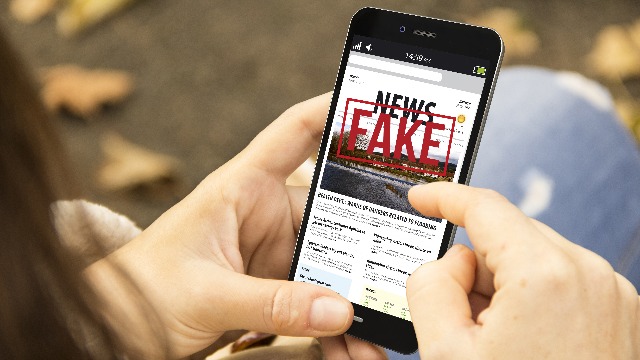
(SPOT.ph) Roughly nine in 10 Filipinos have encountered fake news and see it is a national problem, according to a Pulse Asia survey, underscoring how the Philippines' status as one of the world's social media capitals provides fertile ground for misinformation.
However, the same digital channels that allow fake news to flourish can be used to identify and flag incorrect and misleading information, thus saving gullible friends and family members who have become easy targets. You just need to think before you click or share.
Also read:
Media Is "One of Last Lines of Defense" Against Fake News, Says Risa Hontiveros
Veteran Actress Dexter Doria Fights Fake News Through "DidiSerye"
Pulse Asia's poll of 1,200 respondents from September 17 to 21 showed that 86% believe fake news is a problem nationwide. That opinion is more pronounced in Metro Manila and Luzon than in the Visayas and Mindanao.
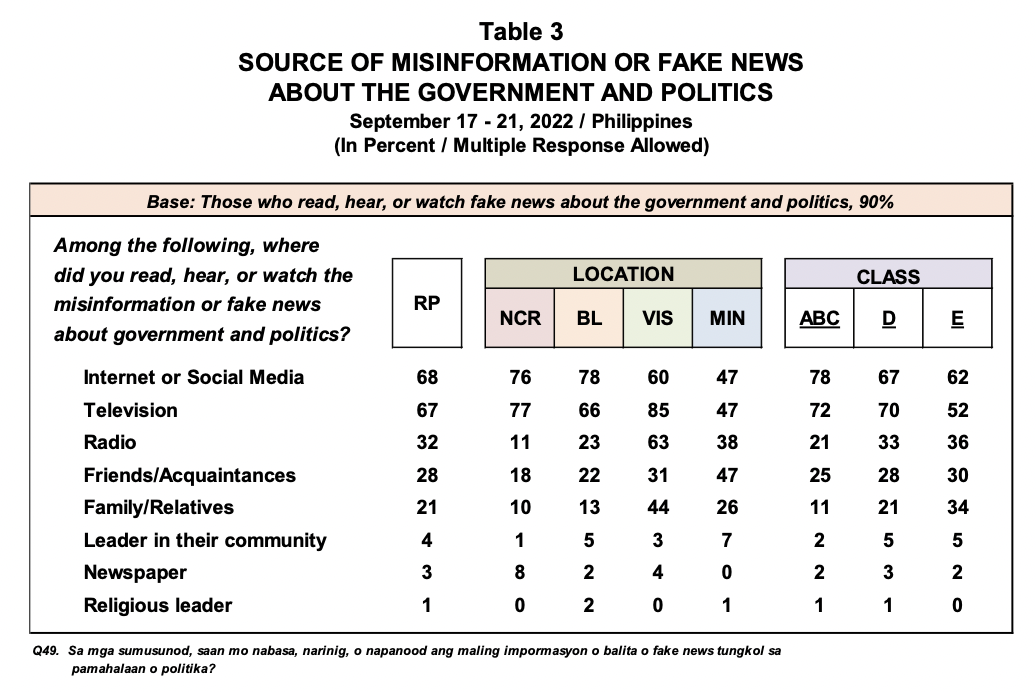
An overwhelming 90% of the respondents also said they have read, heard, or watched fake political news, with 68% of them saying that they encountered such false news on social media, the pollster added.
How to spot fake news online
Everybody can and should be a fact-checker, not just journalists, according to Celine Samson, the head of VERA Files’ online verification team. As Filipinos view fake news as a problem in the country, it’s essential for netizens to know how to spot false information on social media to avoid unknowingly sharing them.
Samson shared the following tips:
Get your facts from authorities
Just like consulting your doctor if you feel anything wrong with your body, it’s best that you rely on authorities to get essential information, Samson said in an earlier interview.
CTTO is not credible source
People are fond of putting “CTTO” or “credits to the owner” when reposting information online. Be careful when interacting with these posts as you don’t know where it came from or who said it.
“Either you go to the first-hand source or you visit actual news websites,” Samson said.
Triangulate
If you doubt the truthfulness of a post, look for two other credible sources that say the same thing.
“If three credible sources are saying the same thing, then that indicates more trust that an event actually happened or sinabi talaga itong statement na ito,” Samson said.
Google is your friend
Oftentimes, information is just one Google search away. Before sharing a post, make sure that you have verified its accuracy.
“Other things you can ask yourself, ano ba yung sinasabi ng ibang sources tungkol sa topic na ito, or meron na bang existing na fact-check tungkol dito? That's how we can check the credibility of something,” Samson said.
Don’t let emotions drive your clicks
You may get too excited to share a post because you found it amusing or infuriating that you didn’t realize realize that it’s false. Before anything else, check your emotions or biases first.
“Huwag agad mag-share ng post, kasi we don't know baka maging source tayo ng misinformation. Hindi natin na-realize mali pala yung na-share natin,” Samson said.
How do Filipinos view the spread of fake news?
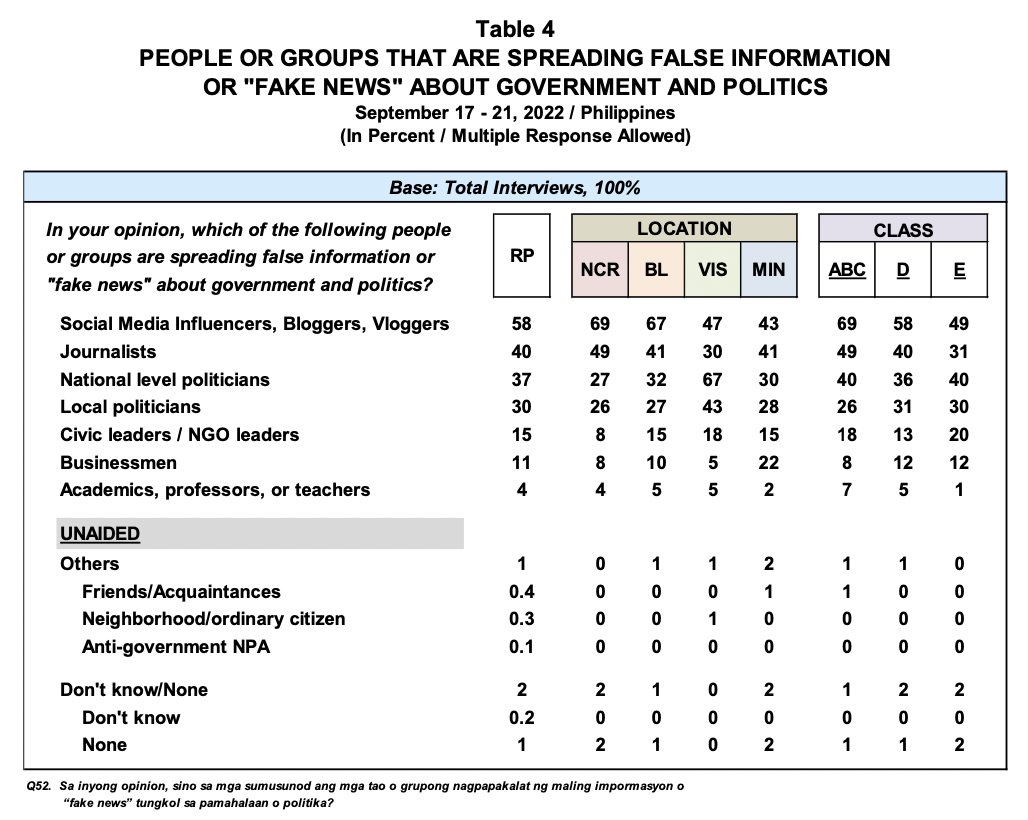
A majority, or 58%, of those who encountered fake news said social media influencers, bloggers, and vloggers are the top purveyors of false information about government and politics, followed by journalists at 40%, national level politicians at 37%, and local politicians at 30%, Pulse Asia said.
Asked if they were sure that news they consume about the government and politics is not fake news, 44% of the respondents said they were sure, 11% said they were unsure, while another 44% were neither sure or unsure.
Most adults (55%) said they were confident in the ability of Filipinos to determine whether the political news they encounter is truthful or false, with 37% saying they were not sure about the matter and 7% saying they were not confident at all, it added.