(SPOT.ph)Cubao doesn't exist. Not really. People know where it is, but would be hard pressed to tell you where its borders are. And even if they could, there is no central authority in Cubao that could enforce those boundaries. It is technically a diocese, but this only happened in 2003, decades after Cubao had become Cubao. And no one thinks of Cubao as a holy place, anyway.
It is written on addresses, even though it is completely unnecessary. Cubao is big enough in our heads that it doesn't actually narrow down a location. Some parts of New Manila feel like Cubao. Parts of Projects 2, 3 and 4 are thought of as pieces of this larger area, even if their immediate neighbors aren't.
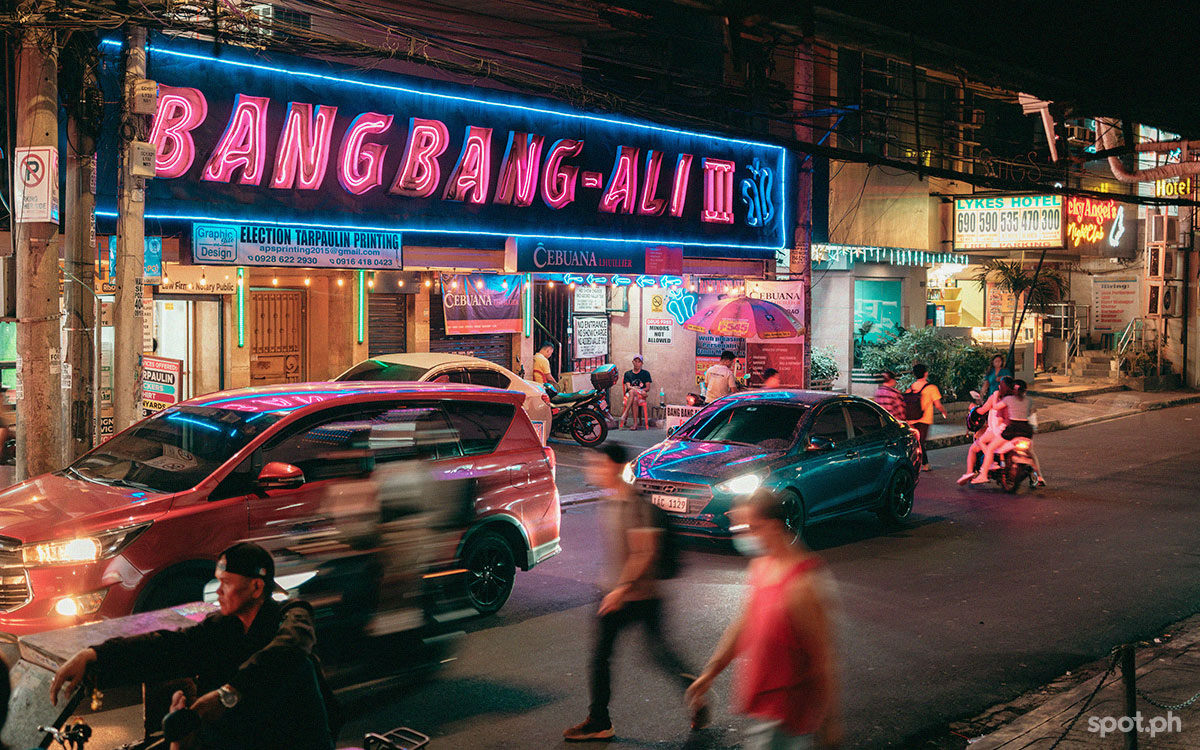
Cubao disco pub Bangbang-Ali along Imperial Street is just one of the many neon signs you'll see lighting up the area at night. PHOTO: Jilson Tiu
Post a Comment
Cubao is an idea, a feeling. We know it for what it represents. It is where the buses are. It's where the old cinemas were, and where those painted billboards advertised the coming attractions. It's where Jollibee started, where Ali fought Frazier for the last time, and where Binibining Pilipinas is held every year. It's where once upon a time, when we were small, we sat on the shoulders of our fathers and watched an animatronic Christmas pageant play out on the side of a building. It's also that dangerous place your classmates were afraid to go to; a den of lust and vice marked by neon soaked streets.
It is all these things, because it isn't really a place. Cubao doesn't exist, and this is what makes it free.
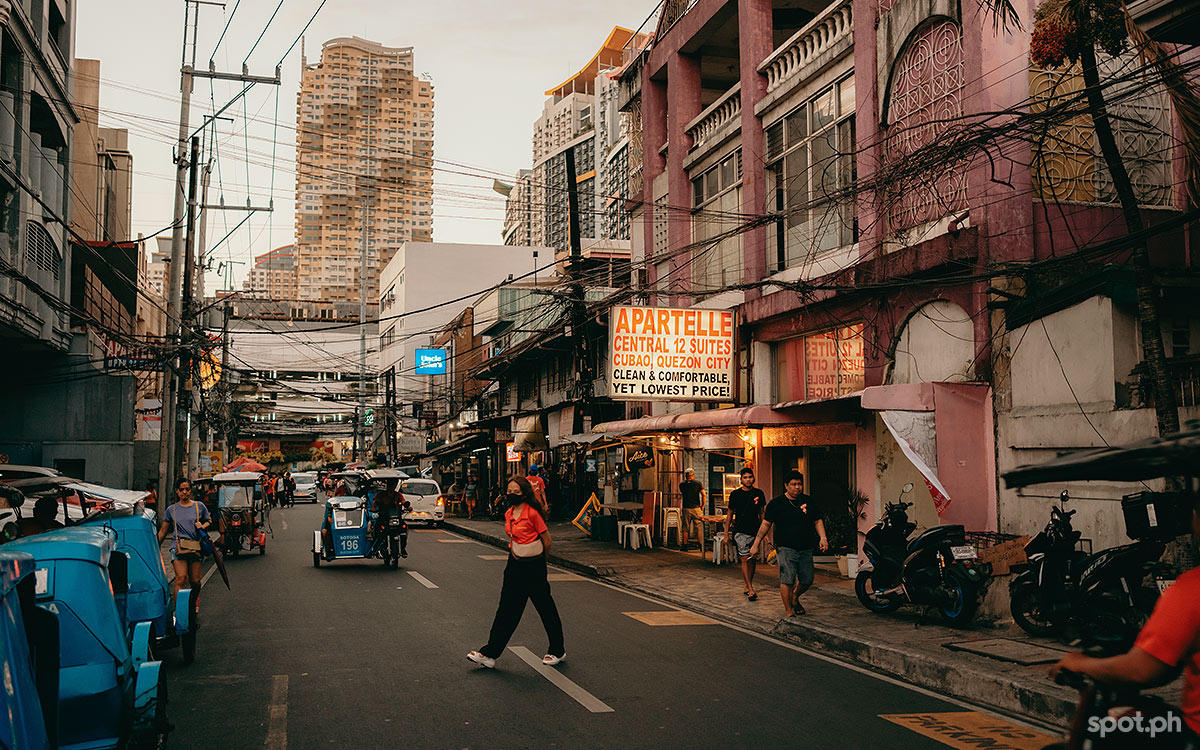
The lively 12th Avenue in Cubao sees everyone from all walks of life pass by. PHOTO: Jilson Tiu
Post a Comment
The earliest descriptions of Cubao describe it as a ‘suburb,’ which seems hilarious now. Zoning in Metro Manila is really more of a suggestion than anything, although one can kind of see it in how the district is laid out. Squint hard enough and Cubao is basically an extensive commercial strip tucked between residential areas on either side. It feels like Cubao was meant to be self-contained, some version of the Fifteen Minute City that’s gained popularity in recent years. You live either North of Aurora Boulevard or South of P. Tuazon and everything you might need will be in between those two arteries.
Article continues after this ad.
ADVERTISEMENT - CONTINUE READING BELOW
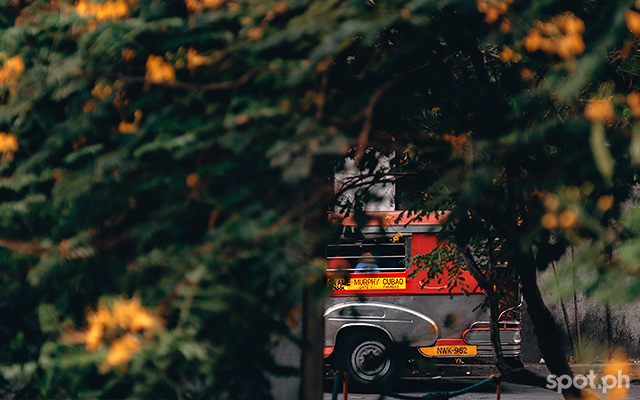
Most jeepneys in the Metro start at and lead back to Cubao.
PHOTO BY Jilson Tiu
This feels like an accident but sections of Cubao are actually among the most walkable areas in all of Metro Manila. The sidewalks on Aurora Boulevard are really wide, and the road itself is not wide enough to make it a challenge to cross. Car traffic is generally slow enough that it never feels like a danger to pedestrians. Araneta City, despite the recent addition of traffic lights that have slowed down pedestrian traffic, is the walkable neighborhood that other, more upscale areas claim to be.
Cubao on the other side of EDSA is another story, as it becomes impossible to cross the split between Aurora Boulevard and E. Rodriguez. But even here one will find little roads where the pedestrian is king, where cars have to slowly creep at the pace of a walking person.
None of this really seems to be by design. It is just another one of those paradoxes of the area. Cubao is at the intersection of two major thoroughfares, and logically ought to be a district built around the freedom of the automobile. There’s a whole highway that runs through it, yet the areas that immediately surround the highway are filled with these tiny streets that are difficult for cars to get through. It is technically bad planning, but it is bad planning that has inexplicably turned Cubao into a model for the future, as cities attempt to decongest.
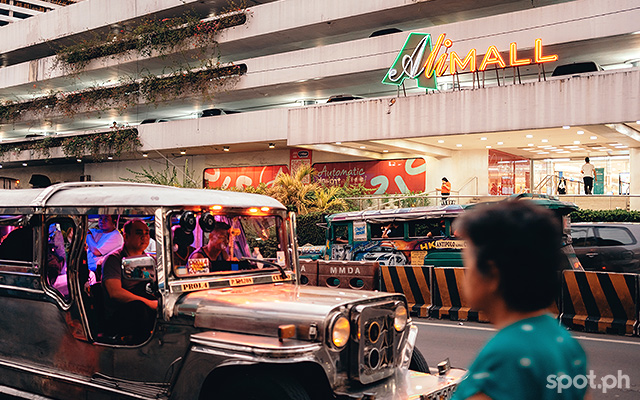
Ali Mall was named after boxer Muhammad Ali a year after he won the historic Thrilla in Manila match in 1975. The mall was the place to be during its heyday, but continues to serve Cubao visitors all the same today.
PHOTO BY Jilson Tiu
My mother owned and ran the Cubao Cafe back in the 80s and the 90s. It was an eatery located near the intersection of EDSA and Aurora Boulevard, along the western side of the highway beside the Ketch Department Store. There she served her famous pancit, along with other dishes inside a display case. There was a jukebox that had to compete with the noise of the buses running on EDSA.
I spent many an afternoon in the second floor office, waiting for my mother to finish doing her daily accounting. It was barely an office, really: just a room with a desk with not nearly enough light, with bare wood floors and the smell of exhaust at times creeping in. Sometimes, my mom would task one of her waitresses to bring me and my brother to nearby Farmers Plaza, where we would go to one of those stores where you could pay by the hour to play on a Sega Genesis or Super Famicom.
Article continues after this ad.
ADVERTISEMENT - CONTINUE READING BELOW
My mother was always proud of Cubao Cafe. She’d tell me that it only took her six months to get a return on investment. This has always stuck with me, as I watch Cubao develop into whatever it is becoming. All the economic attention has always been on Araneta Center, now Araneta City, where the malls and the restaurants and the Coliseum are. Where now, there are call centers and condominiums and other markers of a thriving economy. But the borders of Araneta seem to always provide opportunities for entrepreneurs that do not quite fit in a gentrified setting.
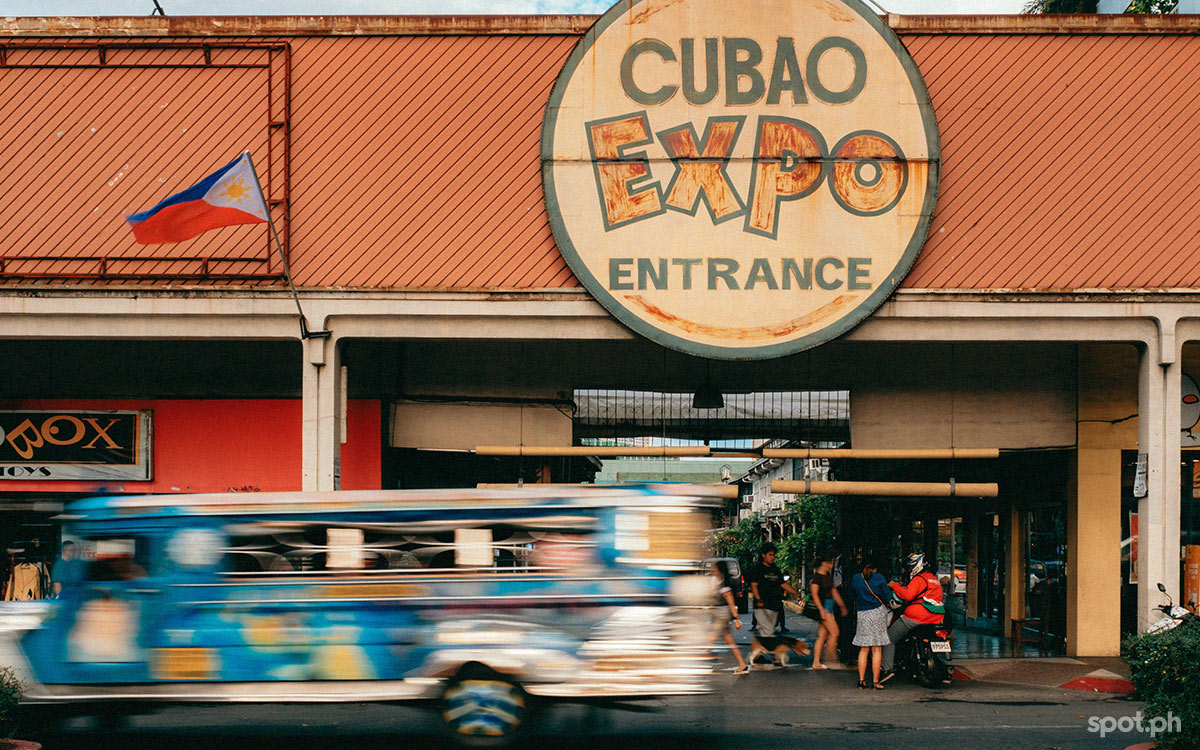
Cubao Cafe was one of those places. Today, we have Cubao Expo, once the Marikina Shoe Expo. Once upon a time, it was a place for the Marikina shoe industry to showcase their wares in a setting that was closer to a commercial center. Then at some point, it became a place for oddball entrepreneurs who were trying something different. It feels like it has settled into something more stable now, but it was also where the bar cum screening room Mogwai was. It once housed the comic book shop Sputnik, with its Leeroy New designed exterior. It’s where Bong Salaveria opened his antique shop, Vintage Pop, open by appointment. Natives remember all these names: Future Prospects, Black Soup, Chunky Far Flung; all these businesses that just got to try things because this place exists.
Cubao Expo has withstood the test of time, evolving with Cubao and its people. PHOTO: Jilson Tiu
Post a Comment
It’s where Bellini’s still is, where owner Roberto will happily reminisce with you about his days as a paparazzo, and those days when rent at the Expo was P300 a day. It’s where Habanero is, one of the biggest success stories in F&B, serving high-end cuisine without any of the pretension (or cost) that tends to come with fine dining.
Article continues after this ad.
ADVERTISEMENT - CONTINUE READING BELOW
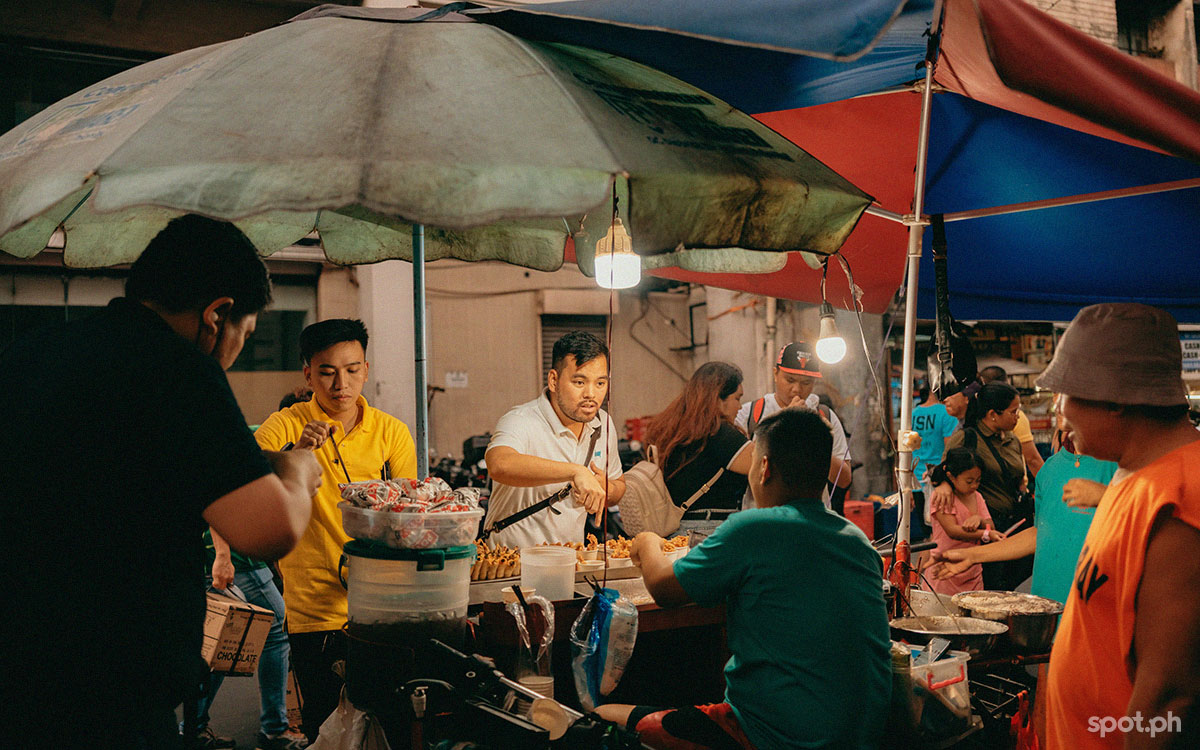
Beyond the Expo, that spirit of adventurous commerce persists in this non-existent district. On 11th Avenue, a variety of street vendors cook fresh food daily for workers in the area. On St. Mary St., Sine Pop offers a boutique cinema experience at shockingly affordable rates. Deep into Imperial, past the girly bars, hostel The Millas is gaining popularity, perhaps pointing to a transformation of the area a la Poblacion. On Yale, Rapture’s drag shows are becoming a thing of legend. All over Cubao, the story is the same. It’s just people trying things, because they can.
Got a hankering for street food during your hectic commute? There's no shortage of it in Cubao. PHOTO: Jilson Tiu
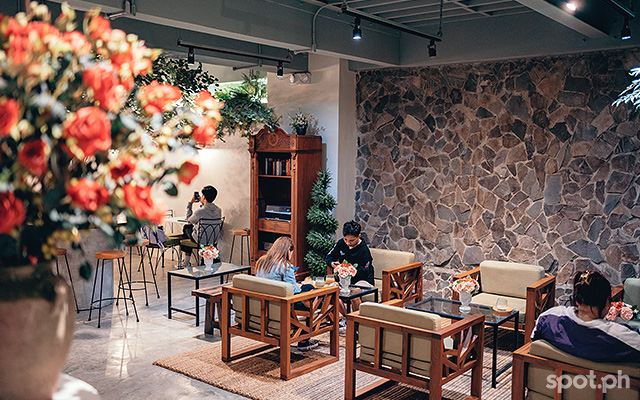
The Millas Hostel and Cafe is one of the newer Cubao sprouts, attracting a younger crowd to the chunky brick building.
PHOTO BY Jilson Tiu
In December of 2023, the Aranetas brought Fiesta Carnival back to its original home, having been vacated by a supermarket chain. For the past few years, they staged an outdoor version of it on a parking lot, in the same place they’d erected their giant Christmas tree. Christmas, for some reason, has always been special to the area. It was, of course, where the department store COD would produce the animatronic Christmas plays on the side of the building. And they were never really good, but they were always fun to watch. Families would gather on General Romulo and stare up at the robot Santa Claus or the robot Jesus, depending on the theme that year. There have been several attempts at recreating the magic of this event, including a couple at the outdoor parking lot seasonal Fiesta Carnival, but it was never the same.
Fiesta Carnival has always been strange, its attractions necessarily smaller because of the limitations of being an indoor space. One might remember being on a cable car that spanned the length of the location, the ride providing views of just this weirdly dark space. But again, this has always been part of the charm of Cubao: things not quite making sense.
The Smart Araneta Coliseum, the first big thing in Cubao, has paid witness to many great events over the years.
PHOTO BY Jilson Tiu
Araneta City continues to develop, and it is far from the place it once was. But it will always be strange and paradoxical. One wonders if any of the big international acts that perform at Araneta Coliseum are aware that the venue is also where the country’s biggest cockfighting events happen. The new Gateway 2 feels very upscale, but it is also very confusing, if only for the way that the floors are named. There is a lower ground floor, a ground floor, an upper ground A, an upper ground B, before going to a second floor. One wonders why any of that is necessary, except for the fact that Cubao was to be weird and kind of janky, even when it’s trying to be fancy. On weekends, one might sit around the fountain they call the ‘Restaurant Lagoon,’ where one might be serenaded by a guy on a keyboard, who at times will break out into a doble kara version of "The Prayer," singing both male and female parts.
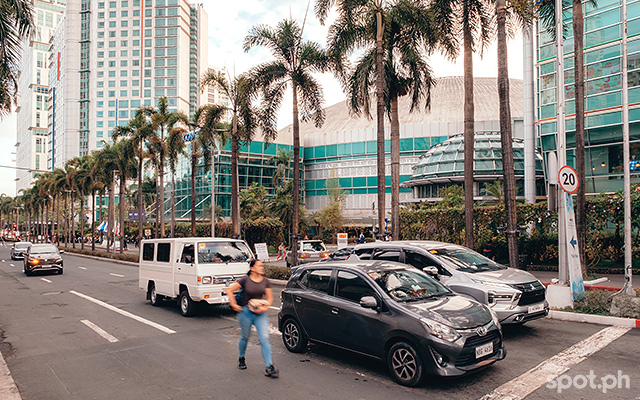
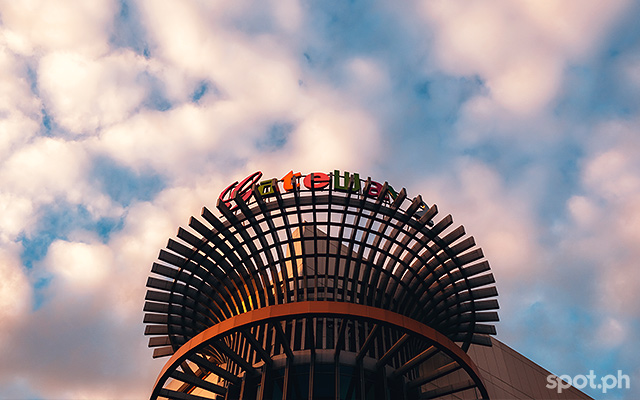
Completed in 2004, the Gateway Mall has served as a convergence point for workers, commuters, and Coliseum attendees.
PHOTO BY Jilson Tiu
It is what it is. This is what Cubao has always been. One might point out that the families who stood on the street to watch the COD display were just a stone’s throw away from beerhouses, and streetwalkers looking for Johns on Aurora Boulevard. Christmas lights and red lights are never too far from each other in this weird area.
To explore Cubao is to explore contradiction; the high and low, the wholesome and the skeevy, the good and the bad, all existing in the same place at the same time. Because again, Cubao isn’t real. It doesn’t exist. We all just agree that it’s there, that it is that place where all these things happen. Where, somehow, all these unique things emerge out of the mess of its conception. It is the suburb in the middle of the city, the dangerous district where it is easy to walk, the upscale commercial district that no one thinks of as being upscale. All these things are somehow true, despite their paradoxical nature. Cubao is everything we believe it to be.
Philbert Dy grew up in Cubao and still lives in the area. He writes about movies and food for Spot.ph.
We use cookies to ensure you get the best experience on Spot.ph. By continued use, you agree to our privacy policy and accept our use of such cookies. Find out more here.

Comments