
The SPOT.ph Guide to Exploring Bangkok by Train
Load up your Rabbit Card.
(SPOT.ph) Most Filipinos think of Bangkok as similar to Metro Manila. That’s not entirely untrue. After all, both are tropical cities where the humidity is oppressive and the heat almost a year-round burden. With both being highly urbanized and densely populated, heavy traffic is a daily source of stress.
Though slow-moving traffic is a chronic problem in both cities, those who haven’t been to the capital of Thailand will be surprised at how the city runs on railway systems that far exceed the ones we have here in terms of efficiency, reliability, and even cleanliness. This makes Bangkok much friendlier to tourists than Manila. In fact, you can pack in as many sights as you can in a day while avoiding the gridlocked roads thanks to the city’s well-connected trains that run mostly like clockwork.
Bangkok Train Station Itinerary for Five Days
Since the first rapid transit system in Bangkok—the BTS Skytrain—went operational in 1999, the city now has eight lines including the underground and elevated MRT, the elevated Airport Rail Link, and the partially elevated SRT Red Lines.

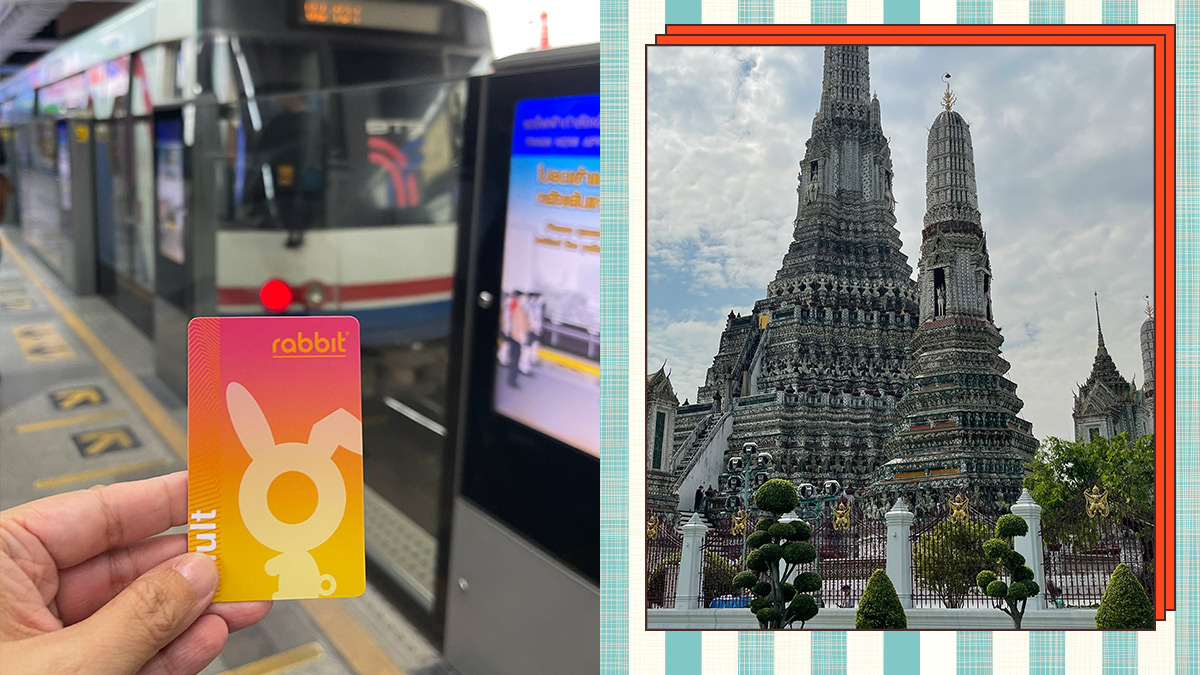
The whole mass transit system has a total of 173 stations spanning a total of 210 kilometers. You can buy and load up your Rabbit stored value card—like our own Beep card, only cuter—at the airport, at all BTS stations, or at any McDonald’s branch that accepts Rabbit Pay. It comes in three kinds: Adult, Student, and Senior.
The Rabbit Card costs THB200 (around P330), which includes a THB100 issuing fee and THB100 stored value. It can also be bought online in advance for THB290, which includes a THB 200 stored value.
Also read:
10 Exciting Things to Do in Bangkok Aside from Temple Hopping
10 Must-Visit Spots in Bangkok for the Food Lover
Day 1: Bangkok Riverside and Silom
Assuming that you arrive in Bangkok in the morning, we suggest starting your five-day sojourn in one of Asia’s most frenetic cities with a few hours of walking around its more subdued riverside.
Hop on the BTS and get off at Saphan Taksin station. On Charoen Krung Street, you’ll stroll past some of the city’s best-preserved age-old structures. You’ll also walk by the Mandarin Oriental, Bangkok’s oldest hotel; and the East Asiatic Company with its distinct Venetian-style façade. Walk further ahead and you’ll come across the red-brick Assumption Cathedral, the early 1900s shopping center O.P. Plaza, the French Embassy, and the Old Customs House, which cinephiles will recognize from Wong Kar Wai’s In the Mood for Love.
If you turn back a bit and turn left, you’ll end up at Haroon Mosque and one of Bangkok’s Muslim communities. Nearby are the art deco General Post Office, the Portuguese Embassy, and the Bangkokian Museum. If you have some time to spare and would like to get to know more about the city’s history, we recommend spending an hour or two there.
The Bangkokian Museum is best known for housing three antique structures. The main building is its centerpiece and was built in 1937 by Chinese carpenters for an affluent family. Costing a mere P3,800 in today’s money, it has well-preserved wooden furniture that gives us a peek into the everyday life of Thais in post-war Thailand.
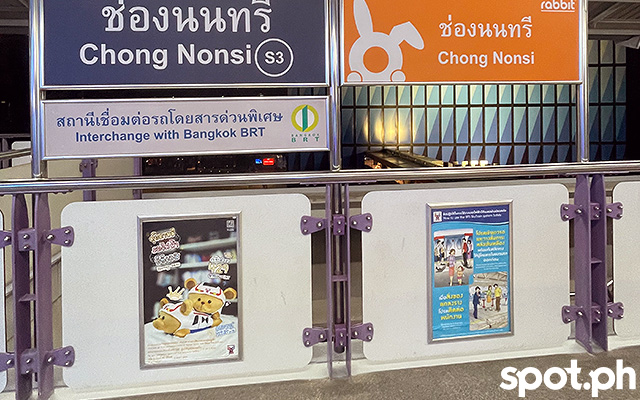
You can end your day in Silom or nearby areas which are served by three stations on the same line as Saphan Taksin: Surasak, Chong Nonsi, and Silom. Trust us, you won’t run out of bars and restaurants in this district.
In Surasak, you can check out the elaborate Sri Mariamman Temple before dining in at Chennai Kitchen, which serves Southern Indian vegetarian food. If you have a hankering for seafood, head out to Somboon Seafood near the Chong Nonsi Station. If you have some extra baht to burn, get off at Silom Station, go up to the top floor of the Dusit Thani Hotel, and have dinner at D’Sens. You'll be treated to fine dining extraordinaire and some of the best views of the Bangkok skyline.
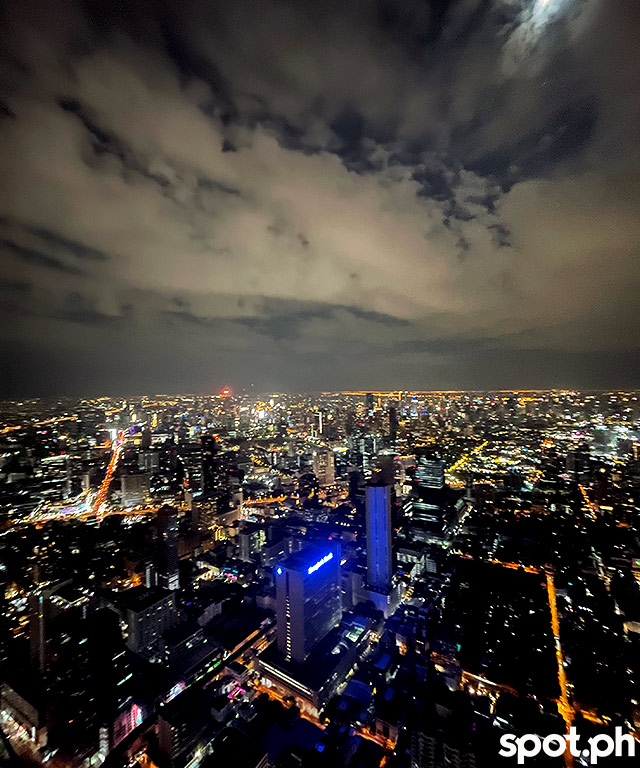
If you still have the energy—it’s your first day, after all, go up 78 storeys to King Power Mahanakhon Skywalk. Thailand’s highest observation deck affords guests a breathtaking 360-degree panoramic view of Bangkok from high above through indoor and outdoor viewing areas. Those who are a little more intrepid can have their photos taken on the glass trays as they look down the street over 300 meters below. King Power Mahanakhon sits just outside the BTS Chong Nonsi Station.
Day 2: Ko Ratanakosin
This artificial island is the Bangkok of your dreams.
There is no BTS station within the area itself, but you can get off at either National Stadium or Phaya Thai and from either of those two, flag down a cab for a quick ride.
Bangkok’s iconic sights are in Ko Ratanakosin, and you could opt to spend a whole day there. Reserve your whole morning exploring Wat Phra Kaew and the Grand Palace. Wat Phra Kaew or the Temple of the Emerald Buddha is so ornate you would think otherworldly beings created it. It’s also considered the center of Thai Buddhism and the monarchy, with the Emerald Buddha as the symbol of this sometimes tenuous union.
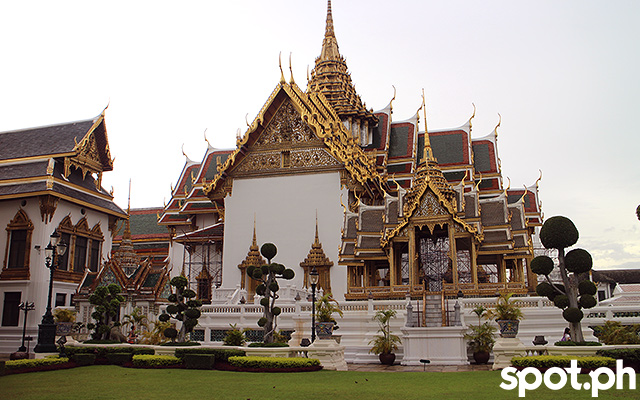
The Grand Palace (Phra Borom Maharatchawang) is the former royal residence that’s now only used for ceremonial occasions. Make sure you ask for a guide upon entry as the vast complex and its Instagrammable structures teem with so much history. Visitors are allowed to roam around the grounds and four of the remaining palace buildings.
After your crash course on the history of the Thai monarchy, have a look into local folk practices with a visit to the bustling Amulet Market, only minutes away from the palace. Not so different from our very own Quiapo, this lively bazaar sells anything from amulets to charms, and lucky coins to totems.
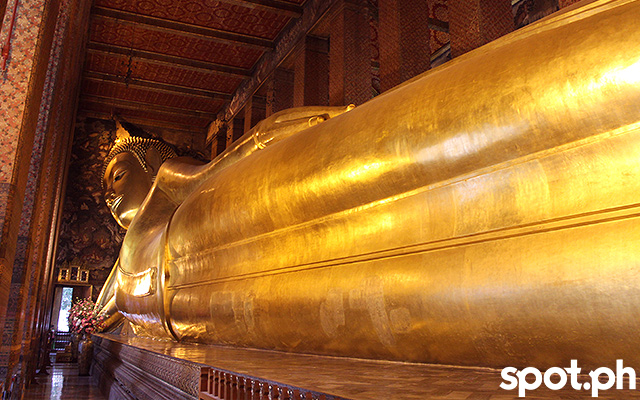
A short walk away is Bangkok’s most famous wat or temple: Wat Pho with its magnificent Reclining Buddha. It also has the distinction of being the oldest and biggest temple in Bangkok and houses the largest collection of Buddha images in the country.
End your day at one of Thailand’s most beautiful temples, the aptly named Temple of Dawn or Wat Arun. The temple seems to sparkle even more at sunset, so make sure you time your visit just before dusk settles in.
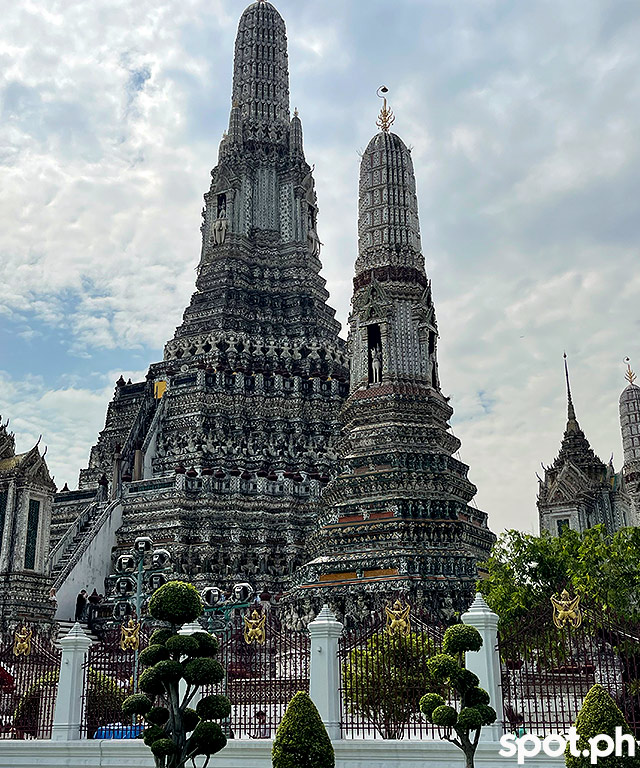
The area doesn’t have a wide selection of restaurants, but the few it has offer delectable Thai dishes. You can opt for Coconut Palm’s famed Sukhothai-style noodles or Pa Aew’s flavorful curries. Punctuate your day with a cup of coffee at Rub Aroon Café.
Do make sure you’ve dressed appropriately when visiting the area as the sights are either considered holy or are property of the royal family. Wear a sleeved shirt and long pants or a skirt that goes way below the knee.
Day 3: Siam, Pratu Nam, and Sukhumvit
Your third day in Bangkok can be reserved for doing what Bangkokians love doing aside from eating—shopping. And when in the “City of Angels,” there’s no better area to shop your baht away than in the shopping trio of Siam, Pratu Nam, and Sukhumvit—all served well by several BTS stations.
Before checking out the shops, spend an hour or so at the lovely Jim Thompson House, the nearest station to which is National Stadium. Owner Jim Thompson is credited as the one who jump-started the silk industry in Thailand. His popularity endures to this day, not just because of his legacy, but for his mysterious disappearance in the Malaysian highlands in 1967.
After marveling at the historic teak house, you can make a beeline to MBK to start your shopping spree. This hulking mall is Bangkok’s answer to Greenhills and its labyrinth of tiangge. You can buy everything here from pasalubong to affordable electronics. MBK’s Food Island is an excellent place to have lunch, with its dizzying number of food stalls each offering a different specialty at affordable price points.
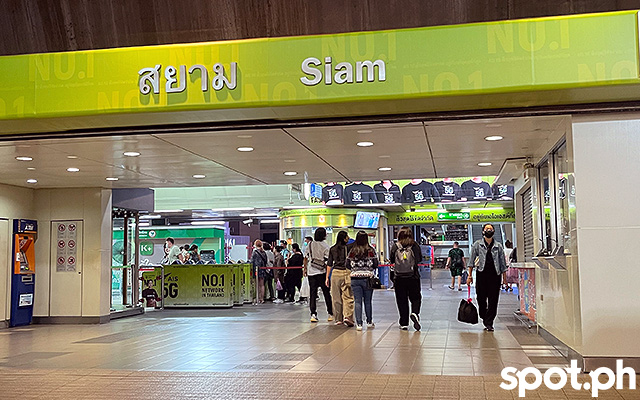
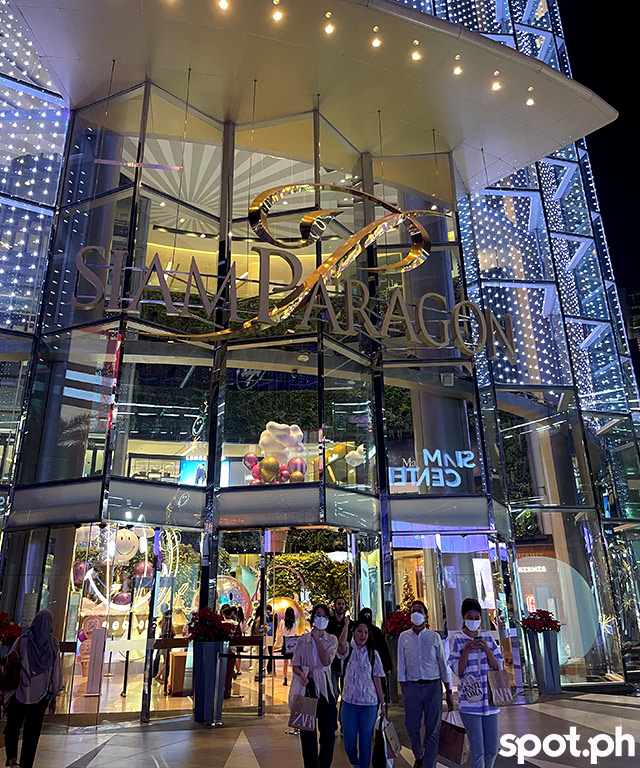
Continue your capitalist indulgence at the glass-and-steel malls of Siam, served by a BTS station of the same name, which is only a stop away from the National Stadium. Here you are greeted with a cluster of malls, from the posh Siam Paragon and CentralWorld to the more understated Siam Square.
If you haven’t had enough shopping, take the BTS and get off after one stop at Ratchathewi Station for affordable clothes at Pratu Nam Market. If you love fashion but don’t want to burn all your pocket money away on clothes and accessories, then don’t skip the Baiyoke Garment Center and Platinum Fashion Mall.
Cap your day off with dinner and bar hopping at Sukhumvit, an area known best not for its sights but for its pulsating nightlife. The area is served by the BTS Nana and Asok Stations and the MRT Sukhumvit stop, making it easy-peasy to get to.
Aside from its bars and clubs, Sukhumvit is that one area in Bangkok where you can go if you’ve grown tired of eating Thai food—though we think that’s quite improbable. The area, also known as Little Arabia, has a smattering of Middle Eastern restaurants, including ones that serve obscure cuisines such as Uyghur and Uzbek.
Day 4: Lumpini and Chinatown
Now that you’ve seen most of Bangkok’s major sights, you can take it easy on your fourth day. Start off your day with a leisurely stroll around the 58-hectare Lumpini Park, the city’s biggest and most famous. Catch locals practicing tai-chi or jogging as huge monitor lizards scurry past without a care in the world. The park is accessible via three BTS stations: Silom, Sala Daeng, and Ratchadamri.
Once you’ve burned some calories away, it’s time to earn them back by having lunch either at the famous Nahm, considered one of the best restaurants not just in Thailand but in the whole of Asia; or at Kai Thort Jay Kee, which has made a name for itself through its sinfully crispy deep-fried Thai-style garlic chicken. Both restos are near the MRT Lumpini Station.
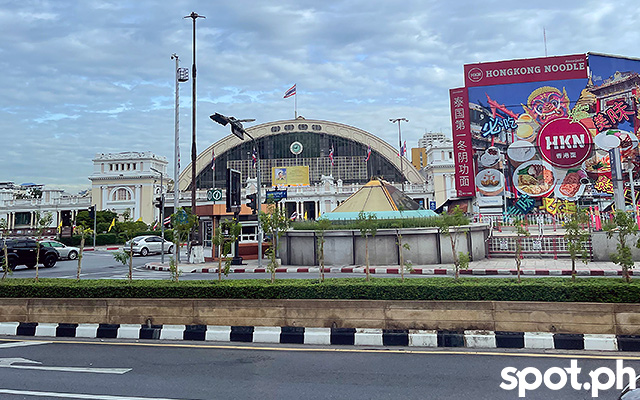
Spend the rest of your day exploring Bangkok’s Chinatown, which has the MRT Hua Lamphong as its stop, just three stations away from Lumpini, and is the city’s main railway hub. Constructed by the Dutch sometime in the 1910s, the neoclassical structure has 14 platforms and also has traces of other influences such as Thai art deco.
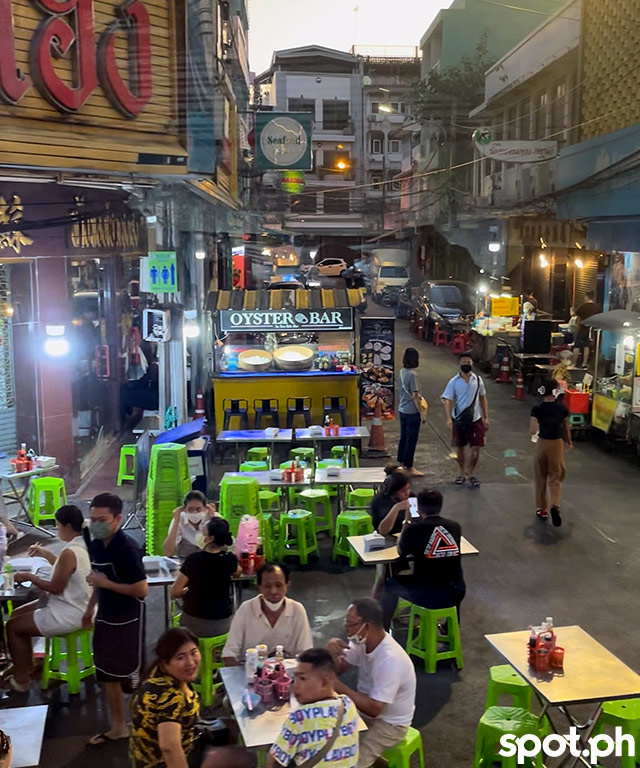
Much like most Chinatowns the world over, the area is an enclave buzzing with life with vendors and tourists jostling for space in what could be the city’s noisiest district. Before diving headfirst into a street food crawl, stop by Wat Traimit or the Temple of the Golden Buddha. Whisper a prayer while admiring the largest golden Buddha in the world at 5.5 tons and 3 meters in height.
After you’ve whispered a wish or two, you can now embark on a culinary experience that’s rivaled by few in the world of street food. Centered largely along Yaowarat Road, you can try anything here from Thai to Chinese street fare. You can spend hours eating to your heart’s content and still end up craving more food.
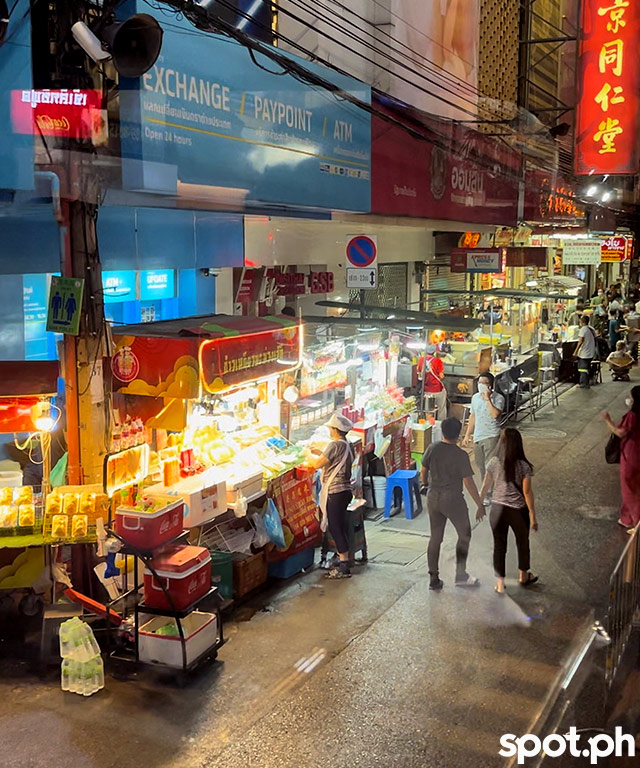
Among the must-try stalls are Jek Pui which is famous for its Chinese-style Thai curries; Nai Mong Hoi Thod and its oyster omelet; Nay Leek Uan with its distinct peppery pork noodle soup; and Mangkorn Khao that’s popular for its barbecued pork.
Pro-tip: Try to avoid going here on a Monday, the rest day of many of the vendors.
Day 5: Dusit
Start your last day in Krung Thep, as Bangkok is known to locals, with a stroll around Dusit Palace Park, which you can access via a short cab ride from BTS Phaya Thai Station. This park was King Rama V’s pet project after he went home inspired by his first Europe tour in 1897. He then set about building a palace with a creative fusion of European styles—from Victorian palaces to Moorish manors— and Thai aesthetics. The palace and the surrounding gardens make for a peaceful morning retreat in the middle of chaotic Bangkok. You can easily lose track of time here and before you know it, it’s time for lunch.
A reminder before going: Just like the sights at the Ko Ratanakosin area, Dusit Palace Park is owned by the royal family so don’t forget to wear a sleeved top and long pants or a skirt that covers most of your lower extremities.
Grab lunch at nearby Nang Loeng Market, a fresh market built in 1899 that is known for its handmade egg noodles, curries, and sweets.
If you still have some extra time before your trip back home, you can come a little earlier to the airport. Bangkok has two: Suvarnabhumi, the newer, larger, and swankier airport, and Don Mueang, the smaller, older one that’s like NAIA 1’s long-lost twin. Both have shops for some last-minute pasalubong buying, though Suvarnabhumi has more options both for shopping and dining.
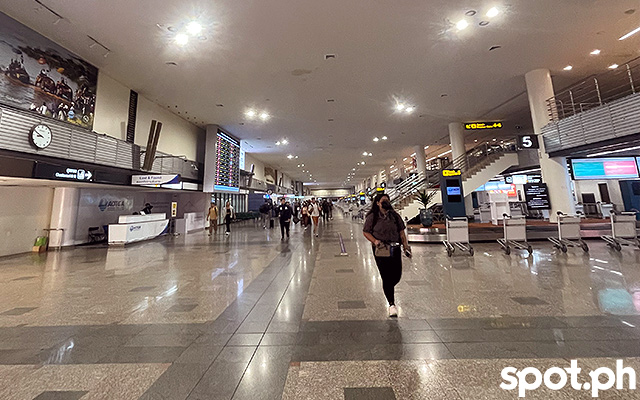
Suvarnabhumi International Airport is the last station of the Airport Rail Link, while Don Mueang International Airport is about a five-minute walk from the station of the same name on the SRT Dark Red Line.
Also read: The SPOT.ph Guide to Exploring Singapore by Train