
10 Best Places to Visit in Barcelona, Spain if You Love the Arts
From architectural wonders to a food market with rich history.
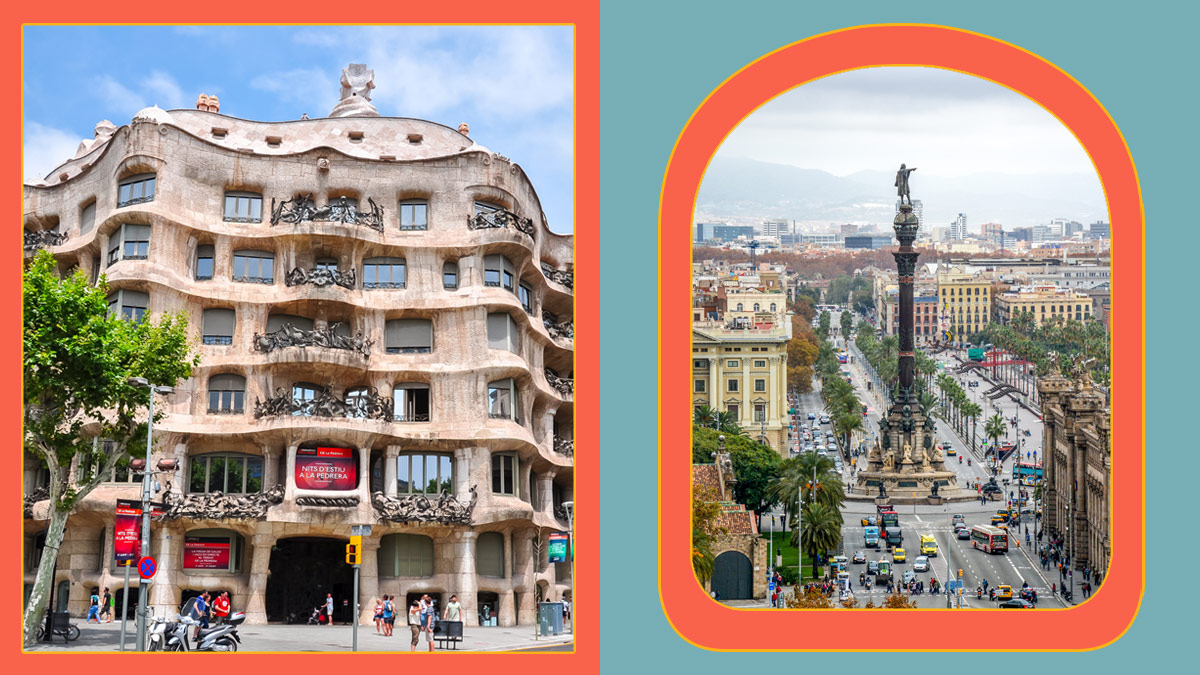
(SPOT.ph) Barcelona: Whether you heard it through a KathNiel movie or a football game, you probably know a bit about it. This remains to be the most popular destination in Spain for international tourists, despite the fact that Madrid is its capital and largest city.
Found on the northeastern coast of Spain, Barcelona is well-loved by visitors because of its rich Catalan culture, modernist architecture, wonderful beaches, and exquisite food. The unique culture and the arts were propagated by the great master, Antoni Gaudi. Out of all the places I've been in Europe, this has got to be the closest to Filipino culture because of our Spanish colonial history. Spanish food also easily satisfies our palates because of its similarity to our cuisine. Tapas, paellas, and churros are some of the things you shouldn't miss.
Also read:
10 Places to Visit in Paris if You Love the Arts
10 Places to Visit in New York City if You Love the Arts
Here is a list of Barcelona tourist spots if you're into culture and arts:
La Sagrada Familia
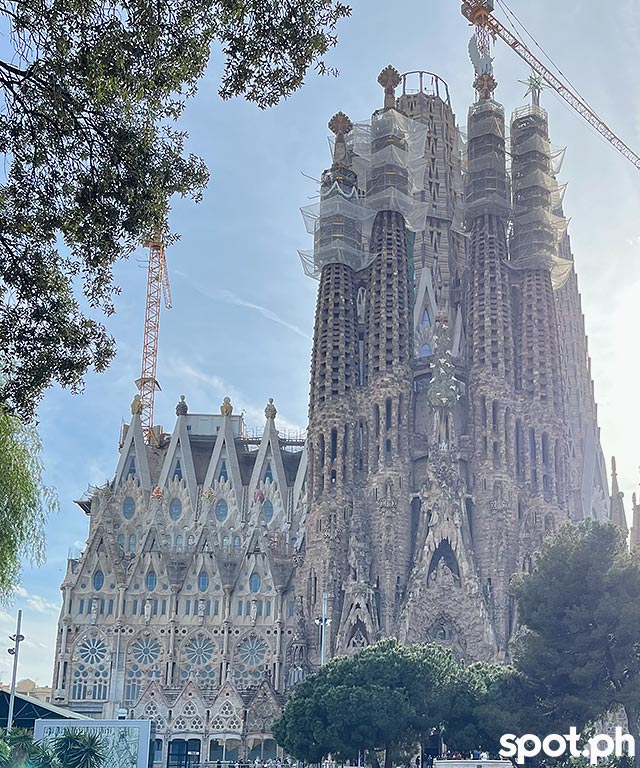
The Basilica of La Sagrada Familia is the world-renowned masterpiece of Gaudi, a household name in Barcelona because of his great contribution to Catalan architecture and heritage. His eccentric style is characterized by freedom of form and designs with minimal lines or sharp edges.
While it has been in construction for more than 130 years, the basilica remains unfinished. It is expected to be completed by 2026, in time for Gaudi's centennial death anniversary. Ten years after Gaudi's unfortunate death in 1926, many of his drawings and models were destroyed by fire, which made it difficult for the succeeding artists and architects to piece together his master plan for the structure. The master architect's project was passed on to various generations of artists and thus became a topic of debate. Another reason for the delays in its completion was a lack of funding. Today, the revenue earned from tourist tickets and private donations primarily fund its continuing construction.
Nevertheless, this church is an all-time favorite because of its breathtaking interior and exterior. Outside, you can clearly see Gaudi's distinct style of curves, as well as the incorporation of details and ornaments from nature. The church has three façades: the Nativity Facade, the Passion Facade, and the Glory Facade. Much like the exterior, the interior showcases Gaudi's Gothic naturalism style. The columns represent the saints rising into heaven, and the angels meeting them. The church's stained glass windows complement its exterior. The yellow, blue, and green hues on the Nativity Façade symbolize the birth of Jesus, while the orange and red on the Passion Façade indicate Jesus' passion and resurrection.
Basilica of La Sagrada Familia is at Carrer de la Marina, Barcelona, Spain. Entrance is at the Nativity Façade. Admission fee is 35 euros (P2,220), but going on a guided tour at 49 euros (P3,000) is recommended.
Park Guell
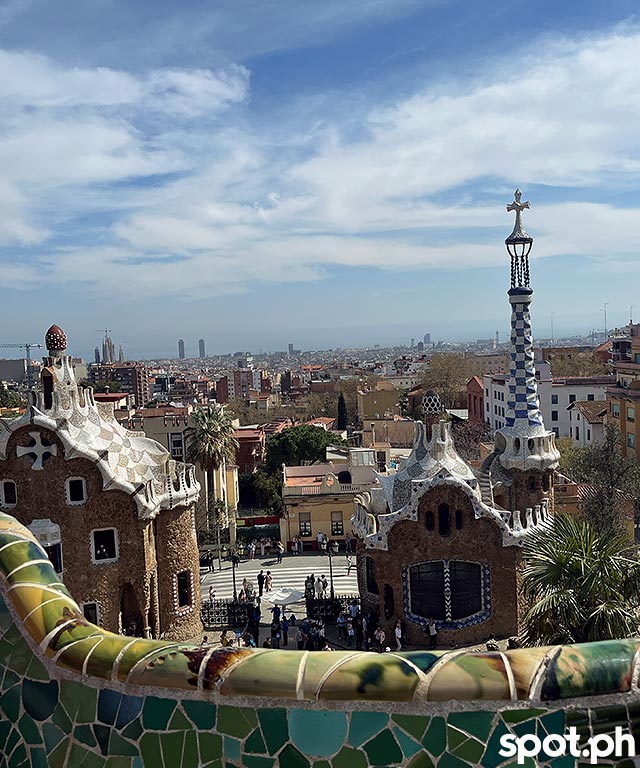
Another work of the master architect Gaudi is Park Guell. The land owner, Eusebi Guell, initially intended to develop this large property into an estate for well-off families. The location was prime because it provided views of the sea and the whole of Barcelona. Guell and Gaudi moved into the estate in the early 1900s, and a large number of civic events were already held in the square. The complex conditions for the sales of the lots and the lack of a suitable transport system made it unattractive for buyers, leading to its abandonment in 1914. Upon Guell's death, his heirs offered the park to the city. Today, it is considered a UNESCO World Heritage Site because of its contribution to the evolution of architecture and construction techniques.
Because it was initially intended as a home for wealthy families, the emblematic features in the park were built as part of the common services and network of roads for the residents. The iconic spots include the Dragon Stairway, the Austria Gardens, the Hypostyle Room, the Greek Theatre or Nature Square, the Laundry Room Portico, Casa del Guarda, and the Viaducts.
The Dragon Stairway is the great entrance stairway to the estate. There, you can find the salamander, covered with decorative tile-shard mosaic, and it has become the most popular symbol of the park. The Austria Gardens were supposed to be the residential lots in the original plan. The Hypostyle Room was designed to house the weekly market. The Greek Theatre was initially planned to hold large open-air shows that can be watched from the surrounding terraces. To the east of the Greek Theatre, you can see the Laundry Room Portico. You will come upon an original iron door that leads to Guell's old mansion. Casa del Guarda was once the porter's residence. Although the viaducts were built as pathways for walking and for carriages, it became one of the iconic spots in the park because of its interesting structure.
Park Guell is on Carmen Hill, Barcelona, Spain. It is open daily from 9:30 a.m. to 7:30 p.m. Admission fee is 10 euros (P600) per person, while the guided tour costs 22 euros (P1,350).
Casa Batllo
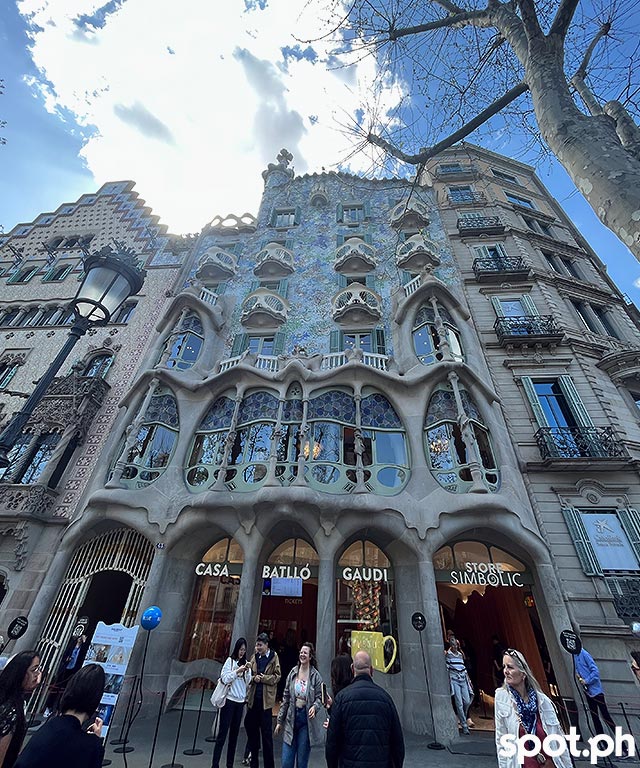
Josep Batllo, a textile industrialist who owned several factories in Barcelona, bought the building in 1903 when Passeig de Gracia became the city's backbone. He granted full creative freedom to Gaudi, and the building was fully reformed in 1906. Gaudi transformed the place by completely changing the facade and turning the interior into a work of art. The current owners of the house, the Bernat family, have recently restored it and made it open to the public. It is also a UNESCO World Heritage site, welcoming one million visitors every week.
Casa Batllo is a canvas of marine inspiration. Its façade also reflected the vision and is made of glass, stone, and ceramics. The play on light and bright colors bring the journey through the sea to life. Many people interpret the facade as an aquatic landscape. The roof is composed of large scales, which resemble an animal's back. This has led to popular interpretations referencing the legend of Saint George. Saint George was believed to have killed the dragon and saved the princess. The interior is also a sight to behold. Gaudi collaborated with skilled artisans to put the interior design together. Even though the items in the house are eccentric, they never fail to be functional as well.
The entrance hall leads to the Batllo family's private entrance hall and evokes an underwater environment. The Noble Floor is the heart of the house, which has Batllo's study and the main living room. The Lightwell is an important part of the house because it distributes both air and light from the skylight. The Indoor Garden extends from the private dining room and is designed for afternoon leisure. The Loft is formerly a service area for the building tenants and housed the laundry rooms and storage areas. The focal point of the Roof Terrace is the four crooked and polychrome chimney stacks, built to prevent backdrafts.
Casa Battlo is at 43 Passeig de Gracia, Barcelona, Spain. It is open daily from 9 a.m. to 8 p.m. every day. Admission fee is 29 euros (P1,800) per person.
Casa Mila
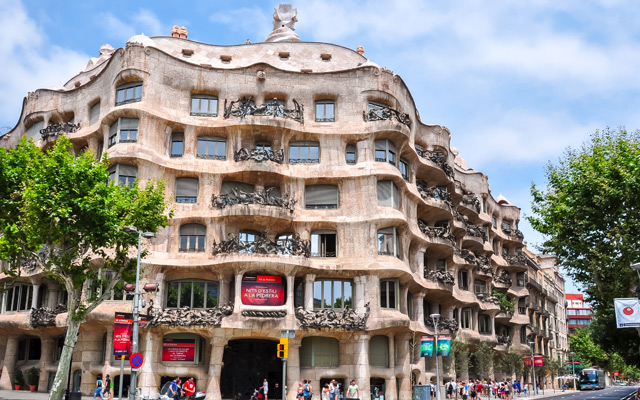
Casa Mila (a.k.a. La Pedrera) is Gaudi's last civil work. La Pedrera, which means stone quarry, was named after the material used to build its façade and balconies. The family purchased a detached house and commissioned Gaudi to build their new property. The plan was to make the main floor their home and rent out the other apartments. Gaudi, though, did not finish the building according to his vision because of a disagreement with the Mila family.
The site has one of the most iconic terraces with sculpted chimneys and air vents. The curves in the design enabled better distribution of light through its inner courtyards. During its time, Casa Mila was ridiculed for its modern design, and the not-so-good relationship between Gaudi and Mila was the subject of satirical magazines. Today, one part is still a residential building, but the rest was turned into a cultural center. The landmark is also included in the World Heritage list, along with Gaudi's other famous works.
Casa Mila is at 92 Passeig de Gracia, Barcelona, Spain (near Casa Batllo). It is open daily from 9 a.m. to 8:30 p.m. Admission fee is 25 euros (P1,550) per person.
Gothic Quarter
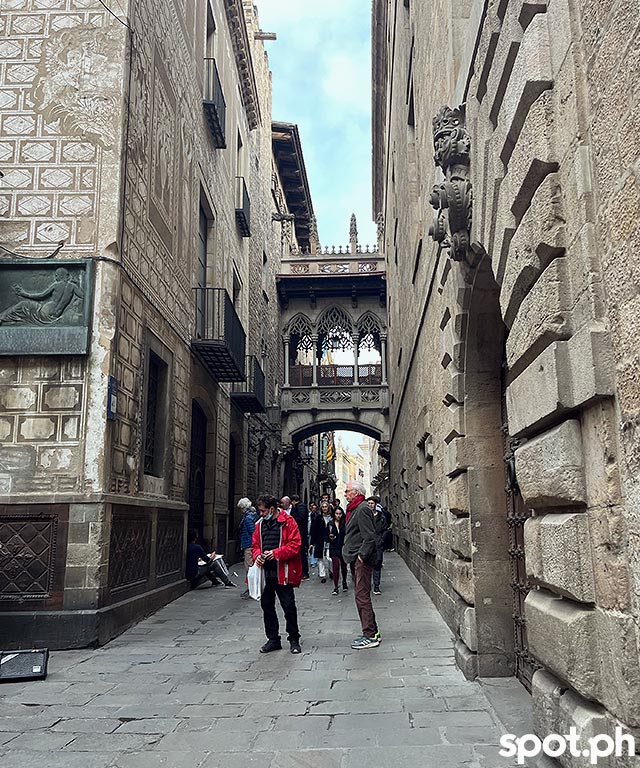
The Gothic Quarter, a popular medieval neighborhood, is the heart of Barcelona. Its bustling narrow streets consist of Catalan restaurants, bars, art markets, and boutique shops. The Gothic District of Barcelona was born from the old Roman settlement, Barcino.
Must-sees in the area are the Barcelona Cathedral, Pont del Bisbe, the Temple d'August, Place Sant Felip Neri, and Placa de Reial. Pont del Bisbe is a bridge built in 1929 to connect the House of Canons with Palau de la Generalitat and is the most Instagrammable spot in the entire neighborhood. Temple d'August is Barcelona's Roman Temple. You'll find it hidden in a courtyard behind Barcelona Cathedral. The 2000-year-old columns are some of the city's earliest relics from the Roman settlement.
The Gothic Quarter is at the center of Las Ramblas, Via Laietana, Barcelona Port, and Ronda Say Pau.
Also read:
10 Places in Hanoi, Vietnam for the Artsy Traveler
10 Places in Baguio for the Artsy Traveler
La Rambla
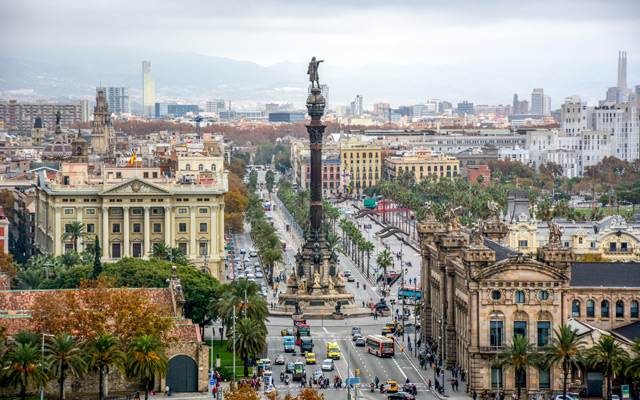
As you stroll along La Rambla, you will see various architectural sights, fascinating art pieces, cute flower stalls, and the al-fresco area of Spanish restaurants around the street. The street used to be an open sewer, but because Barcelona wanted to extend the city walls in the 15th century, they diverted the stream, and the resulting area became La Rambla. With that, convents and monasteries were built along the road but were eventually burnt down during the anti-clerical revolution of 1835. A lot of establishments like Placa de Reial, Mercat de la Boqueria, Teatre Liceu, and Font de Canaletes were constructed in place of these Catholic buildings—making La Rambla became the center of modern city life in Barcelona.
The first stretch of the boulevard is La Rambla de Caneletes where you can find the ornate fountain called Font de Caneletes. It is believed that whoever drinks the water from this fountain will come back to Barcelona in the future. This is also where FC Barcelona fans would gather during celebrations for the football club wins. In another stretch called La Rambla de les Flors, you will see the surrealist painter Joan Miro's big mosaic and the flower market.
Barcelona Cathedral
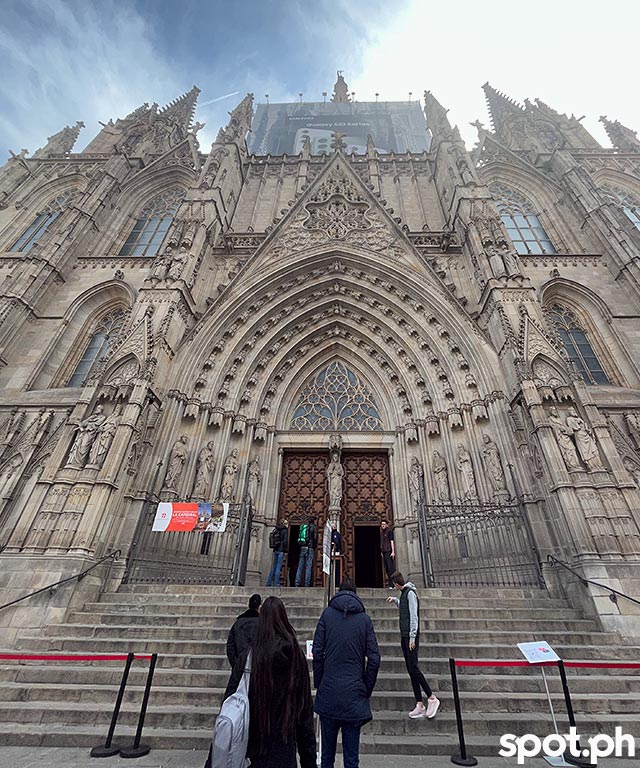
Barcelona Cathedral (a.k.a. Cathedral of the Holy Cross and Saint Eulalia) was consecrated in 1339. It is considered a minor basilica and is the seat of the Diocese of Barcelona. The church's interior has a Gothic architectural style with notable features like pointed archways and ribbed vaults. But the façade features a Neo-Gothic 19th-century design. It consists of an intensified design with more elaborate finishes compared to the original 14th-century Gothic architecture.
Outside the cathedral is Placa Nova, where an antiques traders' fair is set up every Thursday from 10 a.m. to 9 p.m. Glass, porcelain, books, furniture, and collectors' items are sold in this market.
Barcelona Cathedral is open from 9:30 a.m. to 6:30 p.m. on weekdays and closes earlier on weekends. Admission fee is 11 euros (P670) per person.
Camp Nou
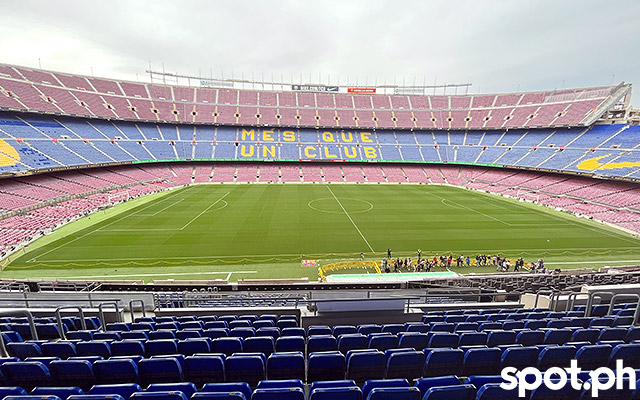
Spotify Camp Nou, as it is known today, is FC Barcelona's new stadium, replacing the old Les Corts. Initially, it was going to be under the name of Estadi del FC Barcelona but eventually was officially named Camp Nou, which is loosely translated to "new ground." The reason for the construction of Camp Nou was to have a stadium that can accommodate the growing fan base of Barca, the colloquial term used to call the professional football club. It has a capacity of 99,000 and is now the biggest stadium in Europe.
Lionel Messi, one of the products of the Barca football club, is dubbed as the GOAT of football. He arrived at Barca at the age of 13 and ended his football career on a very high note by winning the FIFA World Cup in 2022. The richest footballer in the world according to Forbes' list, Messi is highly recognized in the Camp Nou Museum, with all of his achievements highlighted and celebrated. In addition to the museum, the tour includes visits to the stadium, chapel, changing rooms, the presidential box, the VIP lounge, and the press rooms.
Camp Nou is at C/Aristides Maillot 12, Barcelona, Spain. Opening hours to visit vary according to the season but are usually open from 10 a.m. to 6:30 p.m. from Mondays to Saturdays and 10 a.m. to 2:30 p.m. on Sundays. An immersive tour basic ticket costs around 28 euros (P1,705), and the immersive tour total experience costs 49 euros (P2,985).
Mercat de la Boqueria
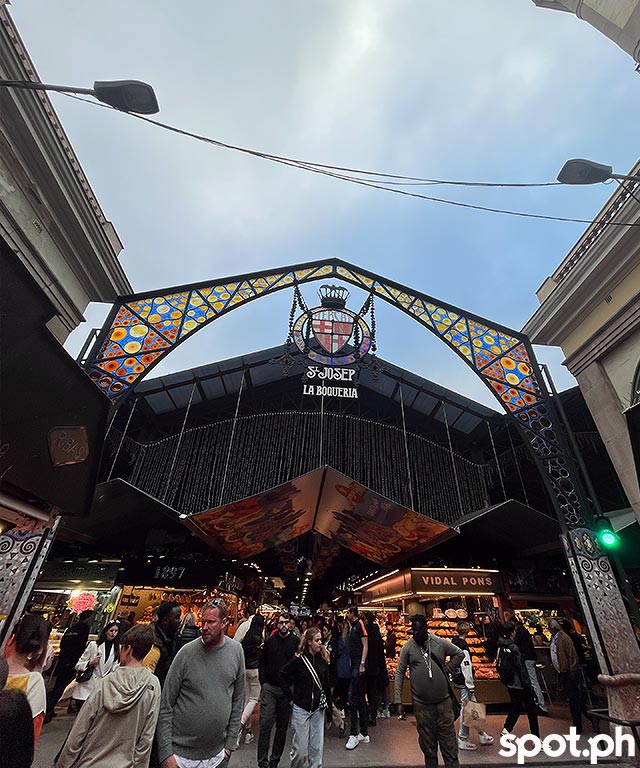
Mercat de la Boqueria is the most famous food market spot in Barcelona, selling food and fresh produce of the highest quality. It traces its origins way back in 1217 when farmers from the villages set up temporary meat stalls in the area.
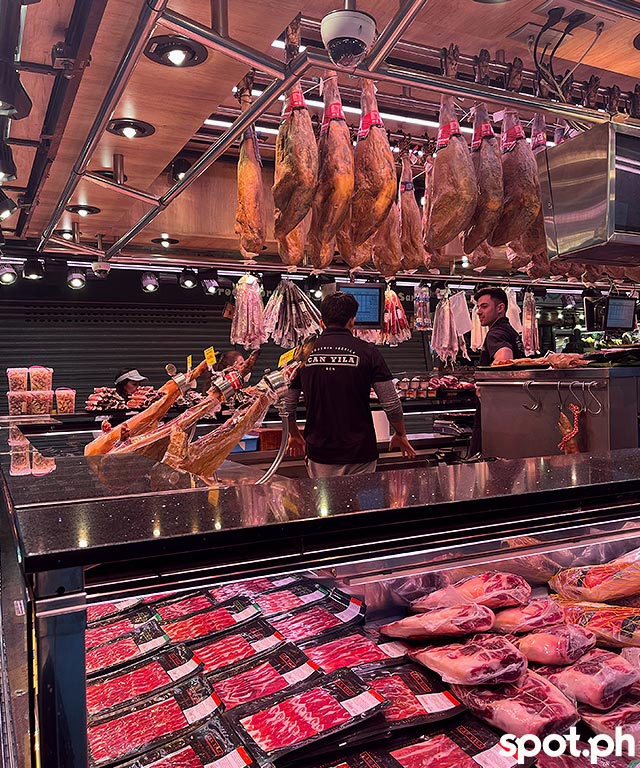
With 40,000 visitors flocking to the market every day, it presents a varying array of food from different kinds of tapas and hams to fresh fruit smoothies. All of what you see here is a feast for the eyes, but there are specific stalls that stand out based on internet reviews. El Quim de La Boqueria is known for its fried eggs with baby squid. Other well-known food stalls are Ramblero de la Boqueria and Kiosko Universal, serving fresh seafood; and Bar Pintotxo, which is home to the best tapas.
Other tips when visiting are that prices generally drop the deeper you go into the market, and be sure to switch the usual Sangria for Tinto de Verano if you're having a drink.
Mercat de la Boqueria is at La Rambla 91, Bareclona, Spain. It is open from Mondays to Saturdays from 8 a.m. to 8:30 p.m. Some stalls close as early as 2 p.m., so it is recommended to visit around 10 a.m. to 12 noon.
Montserrat
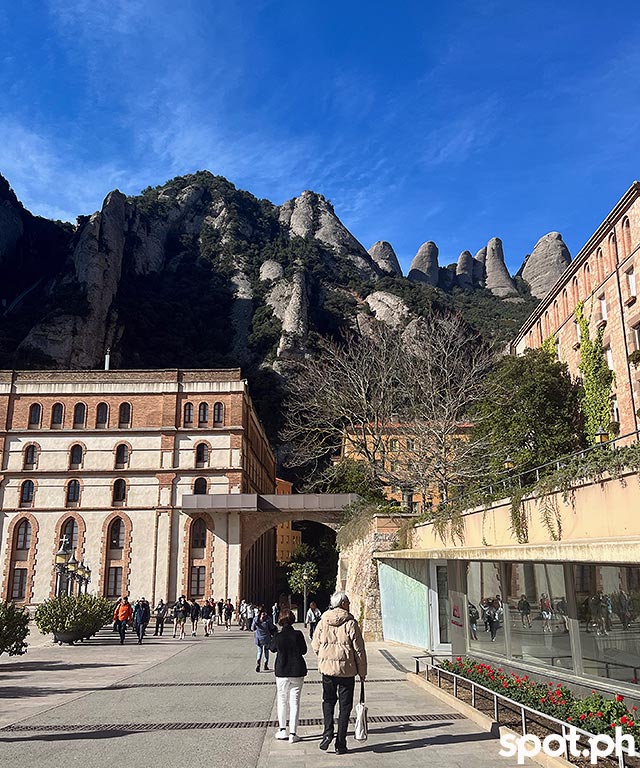
One hour northwest of Barcelona by land is a Benedictine monk mountain retreat called Montserrat. The mountain is not only of religious significance but also gives you a spectacular view of Catalonia. The most breathtaking view will be at St. Michael's Cross, which is a 30-minute hike from the center of Montserrat.
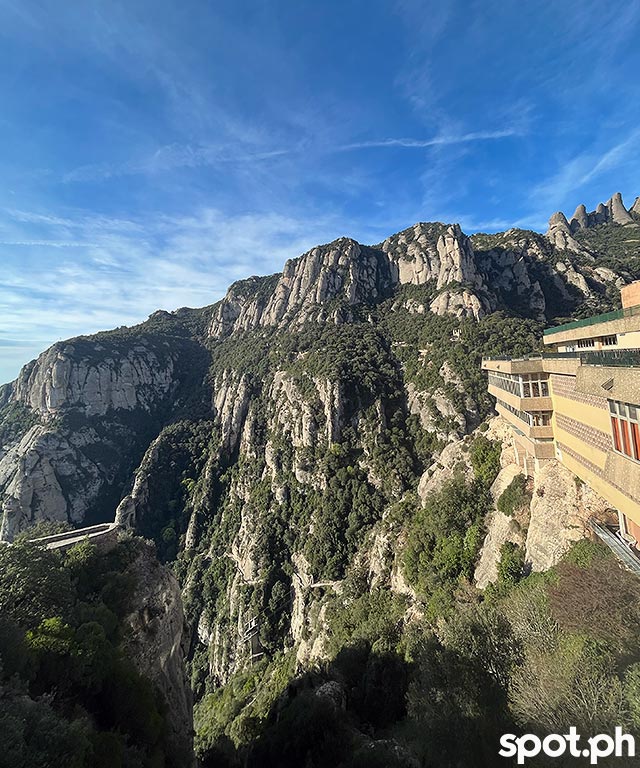
The history of Montserrat dates back to the time when shepherd children and their parents saw a bright light descending from the sky and heard angels singing. They believed that the visions were a sign from God, and the same visions occurred in a cave on Montserrat Mountain. When the religious elders explored the cave, they found an image of the black Madonna or the Virgin of Montserrat, which was eventually marked by a Holy Grotto in the mountain. Today, the statue of Catalonia's patron saint can be found in the basilica of Montserrat Abbey.
Montserrat is 45 kilometers northwest of Barcelona, Spain. It is recommended to go on a half-day guided tour, which includes round-trip transportation to and from Montserrat. The cost of the tour is 54 euros (P3,300) per person.
Also read:
10 Places in Tokyo for the Artsy Traveler
10 Places in Bali for the Artsy Traveler