

10 Best Places to Visit in Florence, Italy if You Love the Arts
Plus, other spots to check out in Tuscany.

(SPOT.ph) Florence, the capital city of the region of Tuscany in Central Italy, is definitely a vibe—as most Gen Zs would say. The tourist destination is utterly ethereal that you could not even put its beauty into words. Strolling through the cobblestone streets becomes a treat in itself because you will pass by musicians singing in the piazzas, merchants selling their carefully crafted genuine leather items, tourists chitchatting and sunbathing at al-fresco cafes, and kids and adults alike eating their nth gelato of the day. And even with these everyday wonders, this city abounds with flourishing Renaissance art and fascinating luxury fashion origins.
While Florence is a not-must-miss city, there are plenty of places in the Tuscan region that are worth a visit: the cultural city of Siena, San Gimignano with its exceptionally beautiful landscapes and family-owned vineyards, and the small town of Pisa that’s known for the leaning tower. Yes, this is your sign to apply for a Schengen visa.
Also read:
10 Best Places to Visit in Barcelona, Spain if You Love the Arts
10 Places to Visit in Paris if You Love the Arts
Here’s a rundown of Italy tourist spots to visit if you’re into arts and culture:
Accademia Gallery
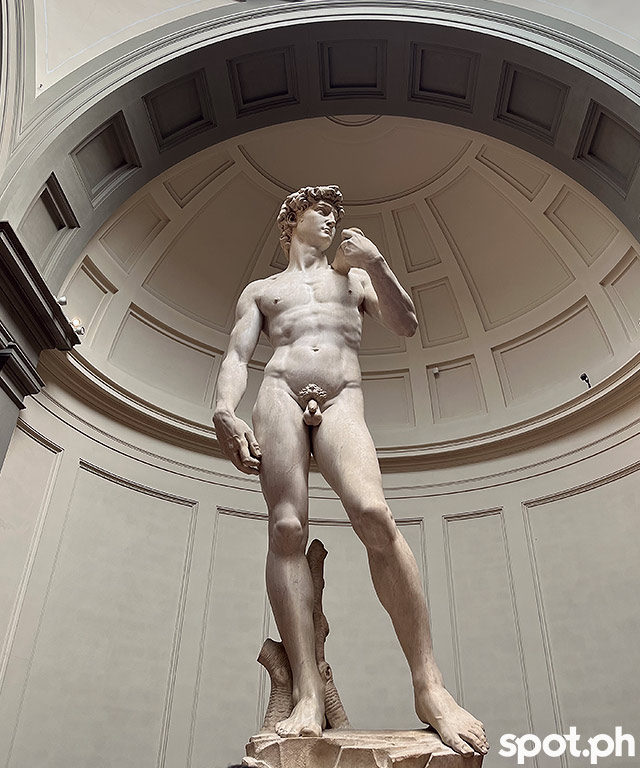
Galleria dell’Accademia di Firenze is one of the two renowned museums of Florence. Its foundations date back to as early as 1784 when the Grand Duke of Tuscany Pietro Leopoldo reorganized the Academy of Arts of Design and this new institution occupied an old hospital and convent. The defining event of the history of the museum was the transfer of the most famous sculpture of the world, Michelangelo’s David, from Piazza della Signoria in August 1873.
When you enter the main room of the gallery, you will be mesmerized by the marble sculpture and icon of the Italian Renaissance “David” by Michelangelo, an artist from Tuscany trained in both painting and sculpture. He later gravitated towards the latter because his love for marble was attributed to him growing up at his father’s marble quarry. A prominent figure commissioned him when he was 26 years old and he created “David” from a single block of marble. The sculpture portrays David from the Bible who knocks down Goliath, a heavily armed Philistine giant, using a sling and beheads him with a sword.
David is viewed as a perfect symbol of Florence as he embodies the courage and strength that the independent city-state has. Contrary to the depictions of other artists, Michelangelo’s “David” is portrayed as a young man with his sling before the battle instead of a boy. This larger-than-life 17-foot sculpture, showing David’s asymmetrical posture, is lauded for its realistic and highly detailed anatomy. As historian Giorgio Vasari noted, “No other artwork is equal to it in any respect, with such just proportion, beauty, and excellence did Michelangelo finish it.”
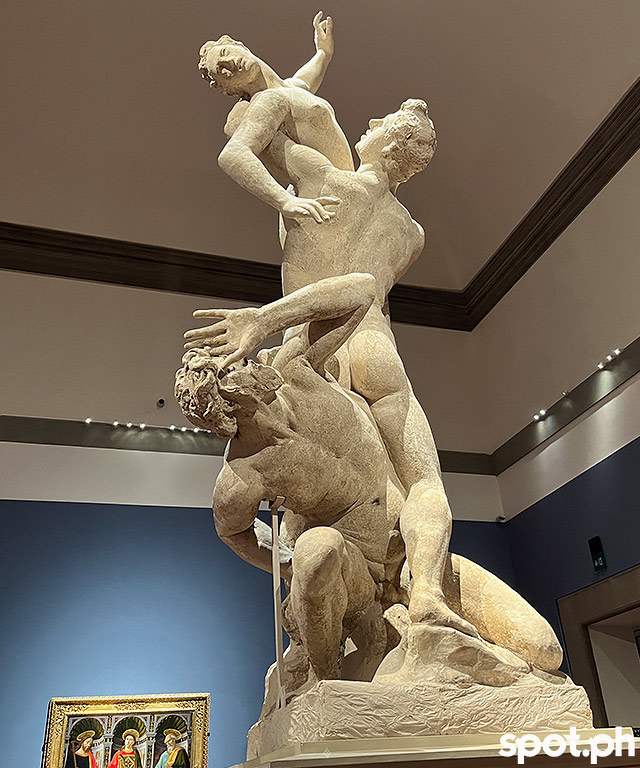
Other works in the museum include Giambologna’s (as Jean de Boulogne) “Rape of the Sabines” and Michelangelo’s “Young Slave.”
The Accademia Gallery is at Via Ricasoli 58-60 (near Piazza San Marco), Florence, Italy. It is open from Tuesday to Sunday, from 8:15 a.m. to 6:50 p.m. Ticket price is €13 (P800) per person.
Uffizi Gallery
Located at the heart of Florence is the Uffizi Gallery, a treasure trove housing remarkable collections of ancient sculptures and paintings from the 14th century and the Renaissance. Ordered by the first Grand Duke of Tuscany, Cosimo I de’ Medici, the building was erected to house the "Uffizi," the administrative and legal offices of Florence. The task was entrusted to Giorgio Vasari, who ingeniously addressed the space limitations. The ground floor accommodated the Magistrates' 13 offices. The second floor was transformed into a museum, opening to the public in 1769. The gallery's ceilings are adorned with grotesque motifs, while its wings boast a series of ancient statues, busts, and the treasures of the Medici collections.
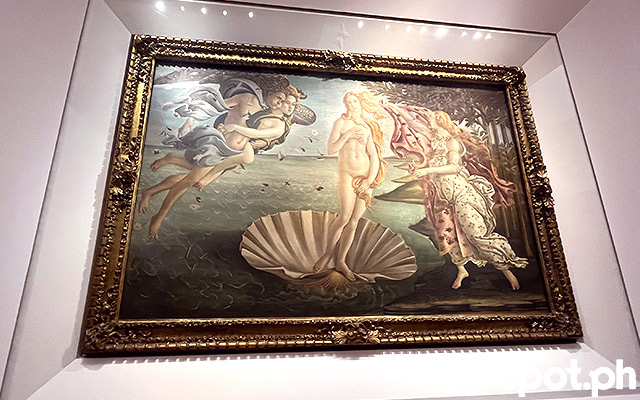
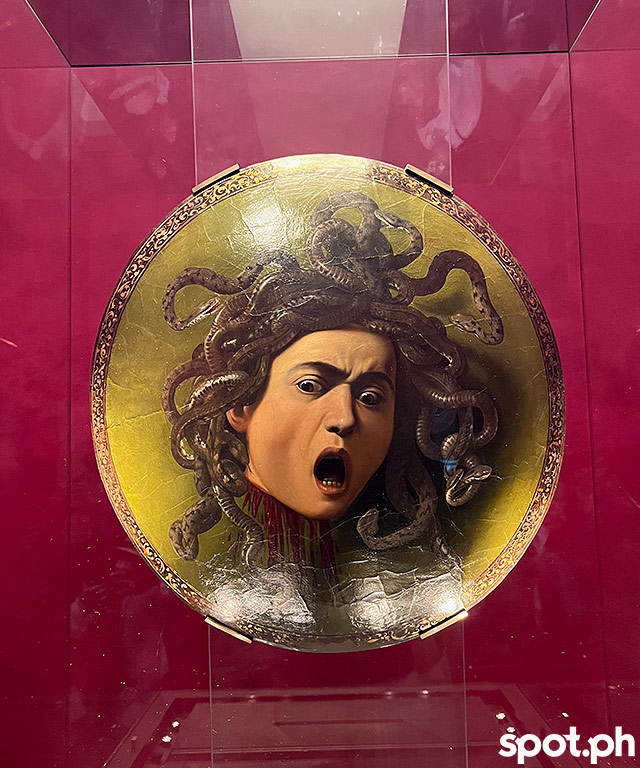
Among the most renowned masterpieces in the gallery are Sandro Botticelli's “The Birth of Venus” and Caravaggio's “Medusa.” “The Birth of Venus” captures the captivating beauty of the iconic Venus against the refined backdrop of 15th-century Florence. Intricate details such as the shell, fabric folds, and floating flowers enhance this dreamy masterpiece. In contrast, “Medusa” portrays one of mythology's most compelling characters. The artwork depicts Medusa's snake-adorned head, capable of turning humans into stone. The piece also includes the mirrored shield that ultimately defeated her.
Uffizi Gallery is at Piazzale degli Uffizi (near Piazza della Signoria), Florence, Italy. It is open from Tuesday to Sunday, from 8:15 a.m. to 6:30 p.m. Regular admission costs €26 (P1,600) per person, while children under 18 and PWDs enjoy free entry.
Officina Profumo-Farmaceutica di Santa Maria Novella
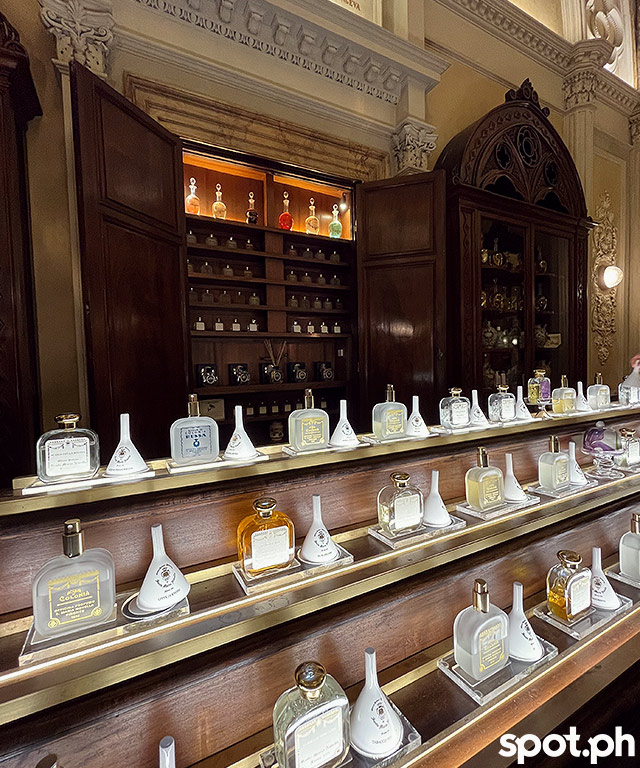
With its origins dating back to 1221, the Officina Profumo-Farmaceutica di Santa Maria Novella stands as the world's oldest pharmacy. Initially a Dominican friars' convent, the institution began cultivating a garden, eventually expanding to formulate perfumes and remedies from natural ingredients. The friars protected the crops within the convent's high walls using a method called hortus conclusus, where each garden element had symbolic significance, stimulating the senses.
The church was later fully converted into a perfumery, with the Chapel of San Niccolo transformed into the Great Sales Hall and the Sacristy into the Room of Waters. The Great Sales Hall features a Gothic vault adorned with frescoes symbolizing the four continents. Two wooden statues subtly promote healthy living, referencing Officina's products. The Room of Waters stored aqueous products from herb and rose distillation, known as "waters." The pharmacy doors opened to the public in 1542.
Officina Profumo-Farmaceutica di Santa Maria Novella is along Via della Scala, Florence, Italy. It is open daily from 9:30 a.m. to 8:30 p.m. Prices for Eau de Cologne range from €100 to €150 (P6,000 to P9,000), while Eau de Perfume starts at €180 (P11,000).
Duomo
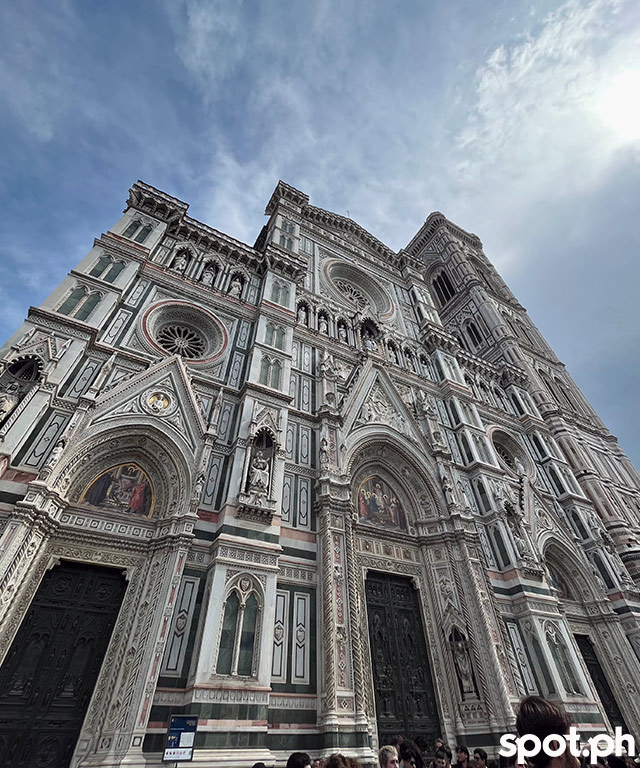
The Duomo (a.k.a. Cathedral of Santa Maria del Fiore) stands as Florence's main cathedral and one of the world's largest churches. Constructed by Arnolfo di Cambio and Francesco Talenti, the church was consecrated after the dome's completion in 1436. The unfinished medieval facade was later replaced with a 19th-century Neo-Gothic creation by Emilio de Fabris.
Two distinctive features of the church are its dome and the free-standing Giotto's Bell Tower or Giotto’s Campanile. The dome is a celebration of Florence, Renaissance culture, and Western humanism. Designed by Filippo Brunelleschi, it remains the world's largest masonry vault. Giotto's Bell Tower, on the other hand, is an Italian Gothic masterpiece by painter Giotto di Bondone. It features white, red, and green marble adorned with geometric motifs, flowers, and sculptures. Balconies at the summit can be reached by climbing over 400 steps.
Palazzo Vecchio
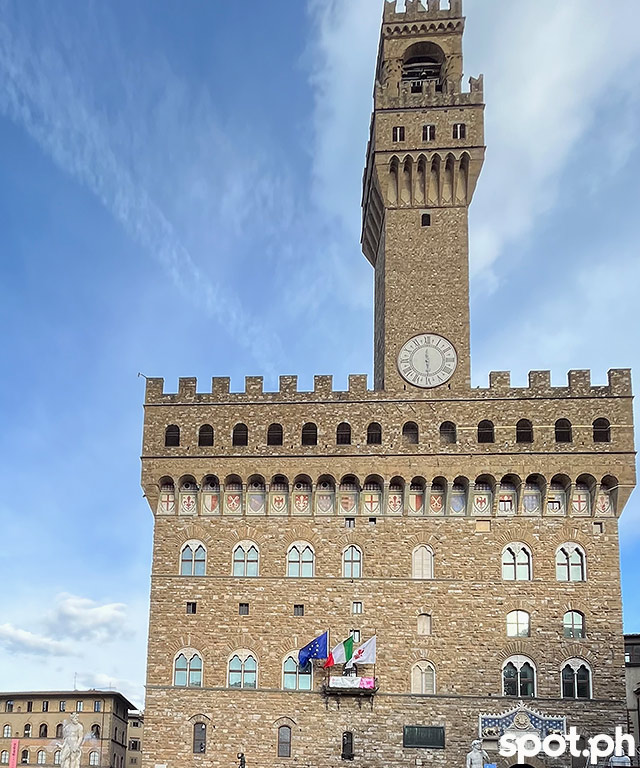
Palazzo Vecchio is the pivotal historic government building in Florence, once housing the city's most influential figures. Since 1872, it has functioned as the town hall overlooking the w-shaped Piazza della Signoria—home to famous Renaissance sculptures including Donatello’s “Judith and Holofernes,” a replica of Michelangelo’s “David,” and “Bandinelli’s Hercules and Cacus.”
Attributed to Arnolfo di Cambio, the same artist behind the design of the Duomo, the building's Tuscan Gothic design is evident. Its interiors were extensively adorned and embellished when it became the residence of Duke Cosimo I de’ Medici and his wife. This historical significance has also led to the discovery of secret passages intended for escape from Palazzo Vecchio.
Palazzo Vecchio is at Piazza della Signoria, Florence, Italy. It is open daily from 9 a.m. to 10 p.m., except Tuesdays when hours are shortened. Tickets are €13 (P800) each.
Ponte Vecchio
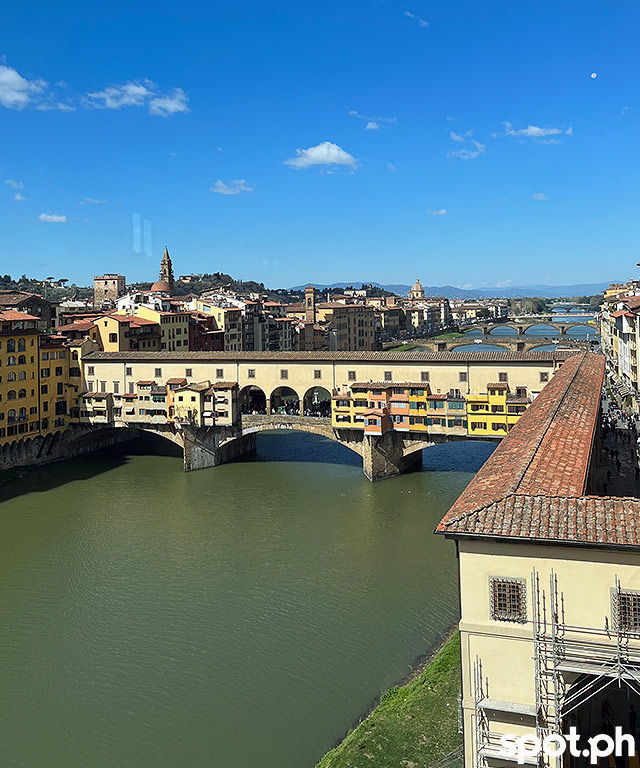
Illuminated by the golden hues of sunset, the view of the Ponte Vecchio (a.k.a. Old Bridge) connecting the picturesque sides of the Arno River resembles a scene from a postcard. This majestic spectacle is the result of millennia of history. Ponte Vecchio was originally constructed in 1218 but suffered destruction in a flood in 1345. It was then rebuilt by Italian painter and architect Tadeo Gaddi to serve as a defensive structure. Notably, it was the sole bridge in Florence to be spared destruction during World War II, due to explicit orders from Hitler.
Shops have existed on the bridge since the 13th century, originally selling meat and fish. Due to the overpowering smell, the merchants were replaced over time by goldsmiths and jewelers. Today, strolling from Palazzo Vecchio to Ponte Vecchio offers not only views of jewelry shops but also a line of merchants offering genuine leather shoes and bags.
Ponte Vecchio separates the northern and southern parts of Florence and is located at the narrowest point of the Arno River. For a quieter experience, visit early in the morning, while sunset provides stunning lighting for photographs.
Piazzale Michelangelo
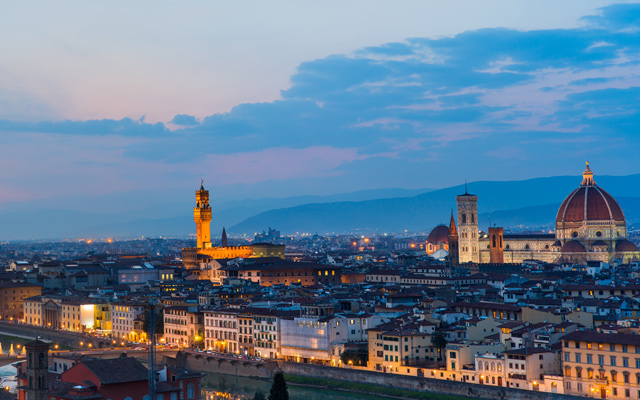
Piazzale Michelangelo offers a panoramic view of Florence. Given the city’s compact and charming nature, visiting this vantage point provides an opportunity to appreciate the place that nurtured renowned artists and brilliant minds.
Named after Michelangelo, the piazza was created in 1869 by architect Giuseppe Poggi as a tribute to Michelangelo's artistic legacy. The terrace features typical 19th-century design elements, showcasing Michelangelo's masterpieces. You'll find a bronze replica of Michelangelo’s “David” and sculptures from the Medici Chapel at San Lorenzo. Poggi also designed a hillside building that serves as a museum dedicated to Michelangelo.
Piazzale Michelangelo sits on a hill on the south bank of the Arno River. The best time to visit is during the golden hour before sunset.
Piazza del Campo in Siena
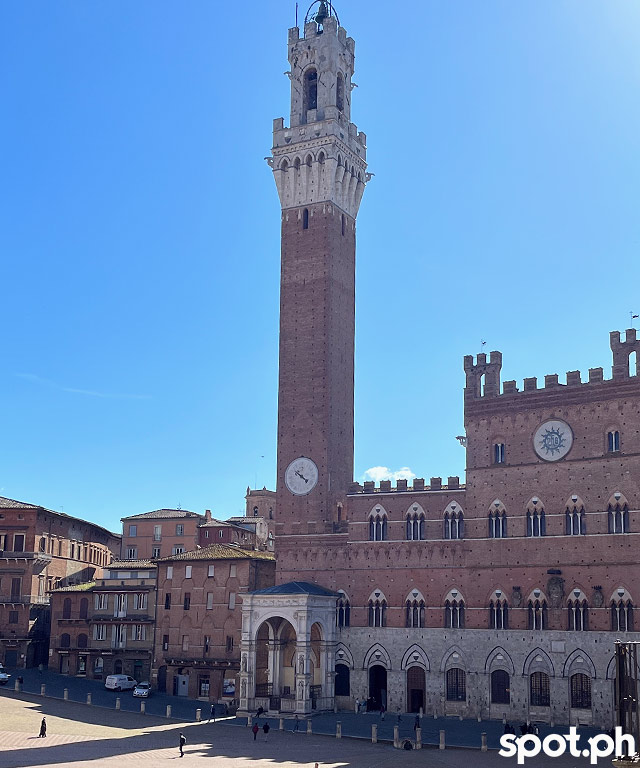
Siena, another medieval gem in central Italy, boasts a rich history as a commercial and banking hub. It's also home to the oldest surviving bank, Monte dei Paschi di Siena, established to provide loans to the needy. Additionally, Saint Catherine, declared a patron saint in 1999, spent much of her life here.
Piazza del Campo serves as the heart of civic life in Siena, where three main roads converge. The square features a unique fishtail design of red bricks, divided into nine sections that radiate toward Palazzo Pubblico, the civic headquarters. Tourists and locals alike gather in the square to witness civic events, particularly the Corsa del Palio, a famous biannual horse race. The intense competition involves three laps around the square, lasting about a minute. Monte dei Paschi di Siena has historically supported these races.
Siena is a one-hour and 15-minute journey from Florence by land, making it an ideal day trip. This guided tour, which also includes San Gimignano and Pisa, costs around €80 (P5,000) per person.
Fattoria Poggio Alloro in San Gimignano
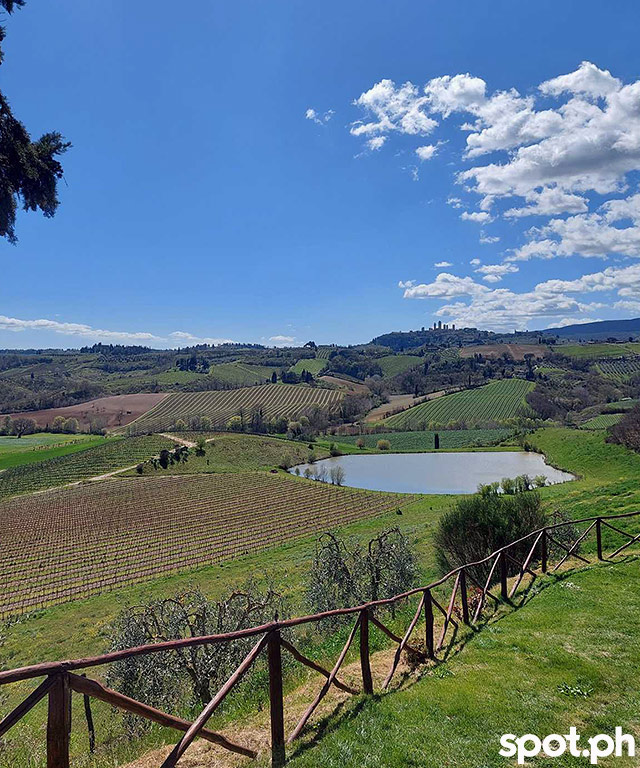
Perched atop the scenic Tuscan rolling hills, Fattoria Poggio Alloro offers breathtaking views and stands as one of the farm-to-table wineries in the region. This agri-tourism spot is housed in a restored farmhouse and comprises one apartment and ten rooms. Guests can relax by the swimming pool, gazing out over the city of San Gimignano.
Founded by the skilled farmers and breeders, the Fiorini brothers, the farm began with 25 hectares, cultivating grapevines, olive trees, fruits, vegetables, and cereal crops. The brothers later built barns for Chianina cattle and other animals, and even began saffron production. In 1989, they expanded into bottling and selling wines, producing around 200,000 high-quality bottles annually through meticulous grape selection during harvest and modern production techniques.
Fattoria Poggio Alloro is at Via Sant’Andrea, San Gimignano Italy. The farm is an hour from Florence by land, making it an ideal day trip destination.
Leaning Tower of Pisa
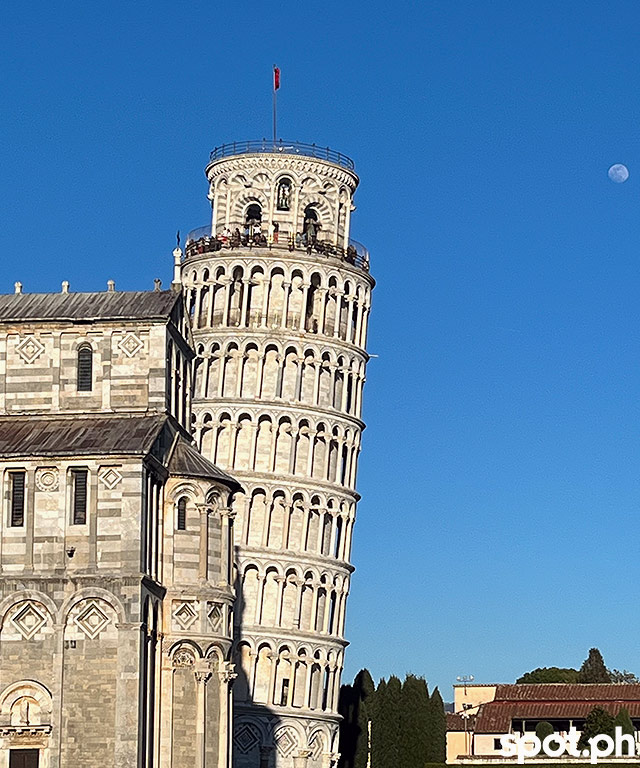
The Leaning Tower of Pisa is a global icon that captures everyone's attention when discussing travel to Europe. The wonder evoked by pictures of the structure is due to its foundation's ability to support its leaning position throughout the years.
Constructed in 1173, this bell tower is the final structure in the city's cathedral complex. Crafted from white marble, the uneven settling of its foundation became evident once three of its eight stories were completed. A pause in construction during wartime allowed the foundation to settle, potentially preventing an early collapse. Strengthening and straightening efforts occurred when construction resumed, with the final work completed in May 2001. Engineers expect the structure to remain stable for at least 200 more years.
The Leaning Tower of Pisa is at Piazza del Duomo, Pisa, Italy. It is a 1.5-hour drive from Florence. It can be visited as part of a guided day trip tour from Florence.
Also read:
10 Places to Visit in New York City if You Love the Arts
10 Places in Hanoi, Vietnam for the Artsy Traveler