

10 Beautiful Churches to Visit in Bohol
Go on a heritage tour in the island province.
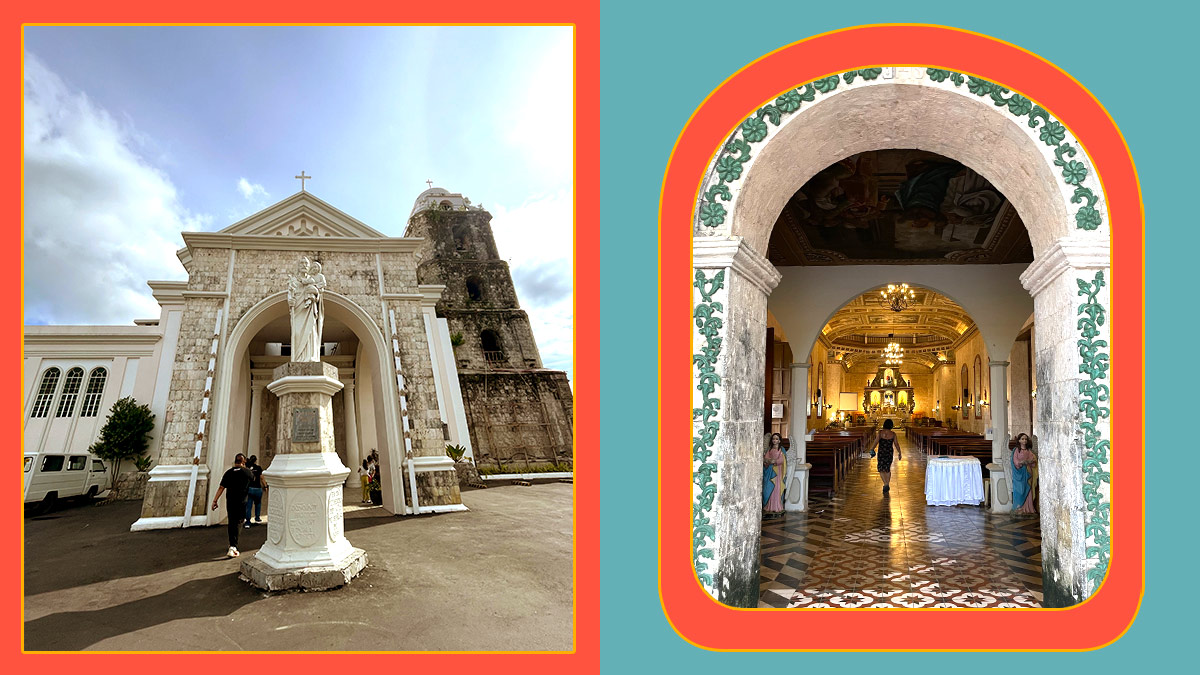
(SPOT.ph) When you think of tourist destinations in the Philippines, what immediately comes to mind are idyllic islands with white-sand beaches, verdant mountains, cheerful locals, delicious delicacies, and historic churches. Bohol, the country’s 10th largest island, boasts all these attractions and more, making it one of the country's premier destinations.
Bohol is not only home to world-famous sites like the Chocolate Hills and the sanctuary of the Philippine Tarsier, but it is also the first UNESCO Geopark in the Philippines and the fifth largest globally. Beyond its natural wonders, the island province holds a rich history, evident in its national heritage and cultural treasures that add depth and character to an already exciting destination. From centuries-old churches to vibrant cultural traditions, Bohol is a gold mine of heritage and cultural sites waiting to be explored, experienced, and enjoyed.
In August, the Department of Tourism - Central Visayas launched a pilgrimage and religious circuit, offering a heritage tour of Bohol's cherished churches. The itinerary, crafted by Bohol experts, caters not only to the Catholic faithful but also to any visitor keen on discovering Bohol beyond its natural beauty.
Also read:
10 Places to Stay in Bohol for Every Type of Traveler
The SPOT.ph Guide to Bohol
Here are Bohol churches to visit on your next trip:
St. Joseph the Worker Cathedral or Tagbilaran Cathedral
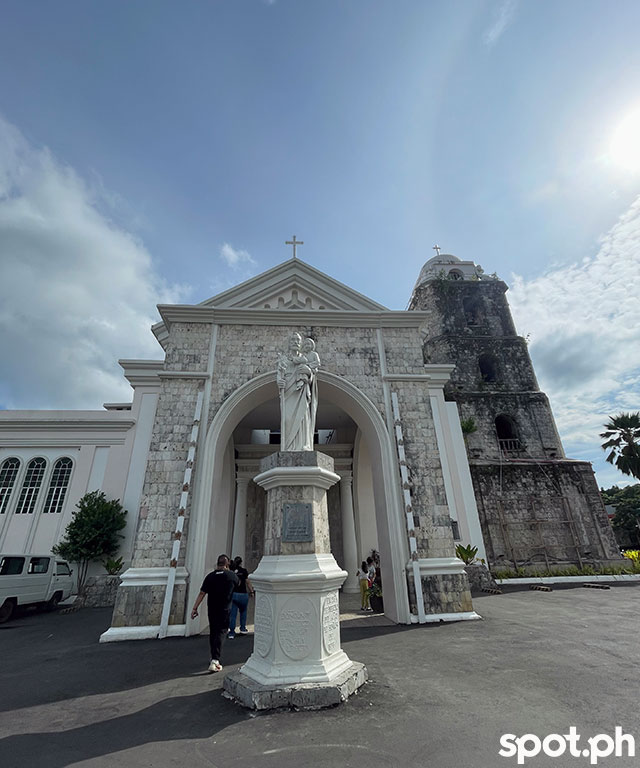
St. Joseph the Worker Cathedral, also known as Tagbilaran Cathedral, was one of the six parishes founded by the Jesuits in Bohol in 1595 but was later turned over to the Augustinian Recollects in 1768. It showcases a blend of architectural styles, from neoclassical to Baroque, evident in its ornate façade and massive wooden doors adorned with intricate carvings. The cathedral complex features a separate bell tower that houses historic bells, integral to the local community's history.
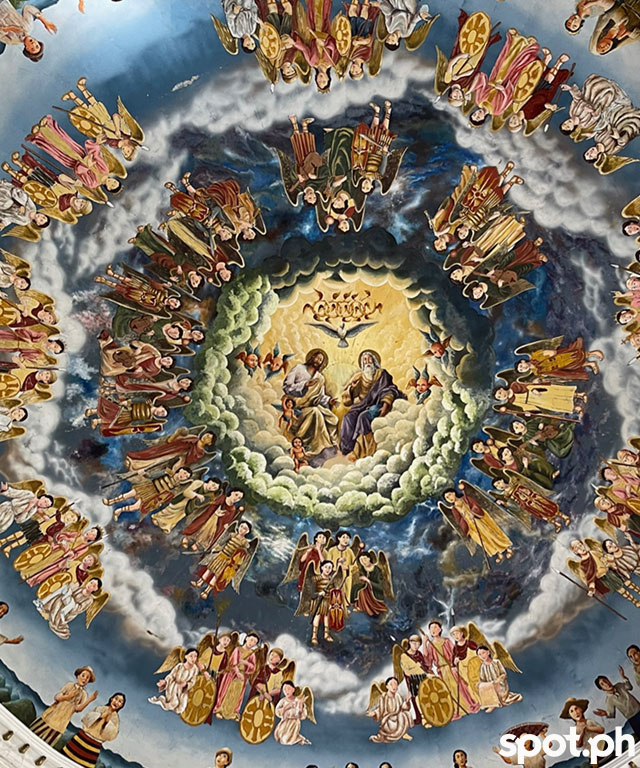
The current structure was completed in 1954 and has since undergone various renovations. Following the 2013 earthquake, the cathedral's exterior and interior experienced significant reconstruction, including the ceiling paintings, façade, and stained-glass windows. As the seat of the Diocese of Tagbilaran in Bohol, the cathedral is a popular tourist stop, partly due to its central location at the heart of the city.
The Assumption of Our Lady Parish or Dauis Church
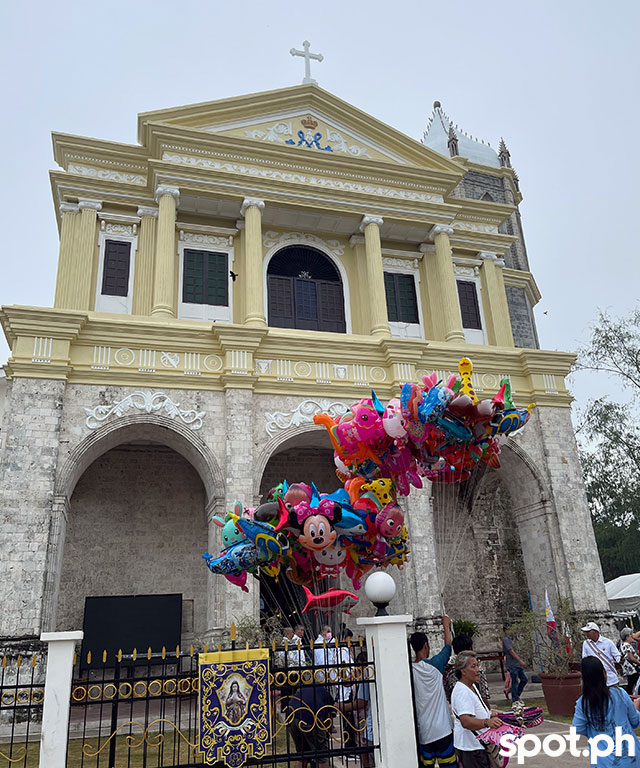
The Assumption of Our Lady Parish, also known as Dauis Church, stands as another significant religious site in Bohol. Situated in the town of Dauis, the church gained fame for its underground well, believed to possess miraculous properties. Visitors often collect water from the well, seeking healing and blessings.
According to legend, the well appeared miraculously when locals, seeking refuge in the church during a Moro pirate raid, faced starvation and dehydration. Since then, the well has provided drinking water even during droughts. Dauis Cathedral enjoys a splendid location near the coast of Panglao Island, offering panoramic views of the sea and nearby hills.
Pro-tip: If your visit falls on a Sunday or coincides with the Holy Mass being celebrated, make sure you eat an order or two of hotcakes sold by local hawkers. Melt-in-your-mouth, buttery goodness awaits.
La Purisima Concepción de la Virgen Maria Parish Church or Baclayon Church
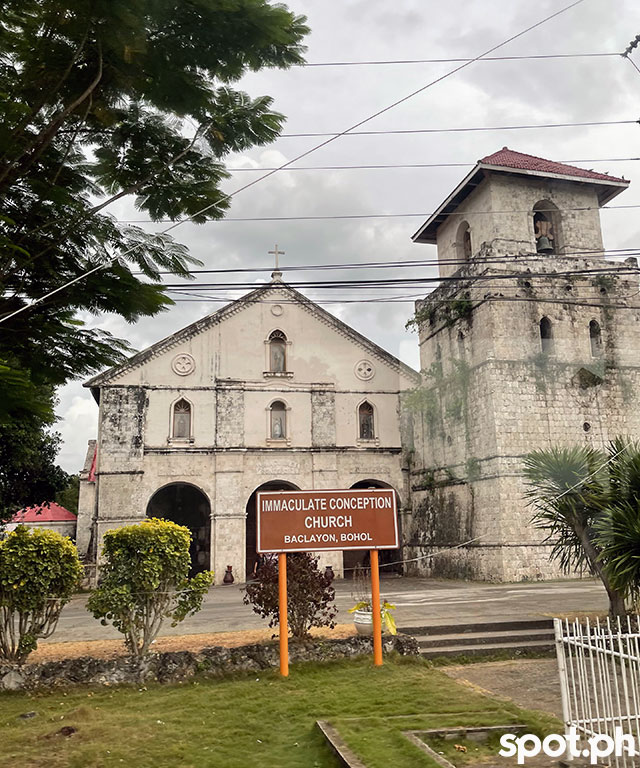
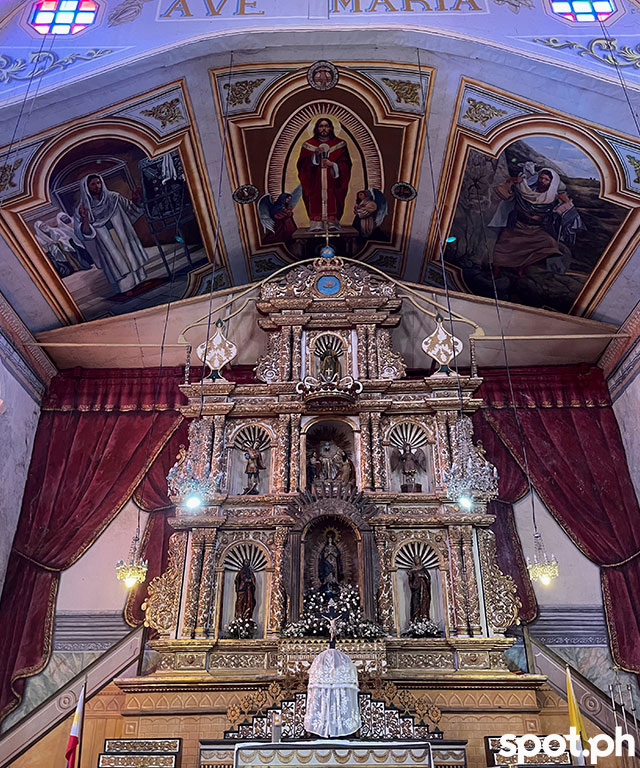
Baclayon Church, known as La Purisima Concepción de la Virgen Maria Parish Church, is considered one of the largest and oldest coralstone churches not only in Bohol but in the whole Philippines. Established by Jesuit priests Juan de Torres and Gabriel Sanchez in 1596, it later came under the administration of the Augustinian Recollects in 1768. Baclayon Church has inspired awe among churchgoers and visitors through its impressive Baroque architecture over the centuries. Despite major damage caused by the 2013 earthquake, the church underwent successful reconstruction and restoration led by the National Museum and the National Historical Commission of the Philippines in 2017.
Adjacent to the church stands the Baclayon Church Museum, housing religious artifacts and historical items linked to the church's history. The museum opens every day except Tuesdays, from 8:30 a.m. to 11:30 a.m. and from 1:30 p.m. to 4:30 p.m. Admission fee is P150, with a discounted rate of P100 for senior citizens, PWDs, students, and Baclayon residents.
The entire church complex, including the convent, museum, and school, holds the designation of a National Cultural Treasure by the National Museum of the Philippines and a National Historical Landmark by the National Historical Commission of the Philippines (NHCP).
Pro-tip: About three to five minutes away on foot from Baclayon Church is Cresencia’s, a heritage house-slash-restaurant that serves delicious local food and great coffee.
Santa Monica Church
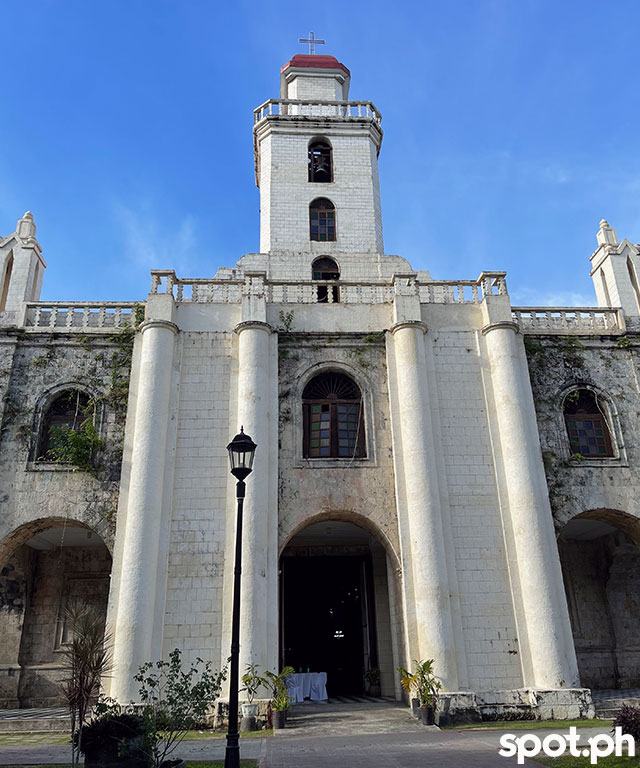
Santa Monica Church, inaugurated as a parish under the Augustinian Recollects in 1869, graces the town of Albuquerque (or Albur for short). Differing from massive fortresses like Baclayon Church and Loboc Church, Santa Monica Church is renowned for its elegant and subdued aesthetics.
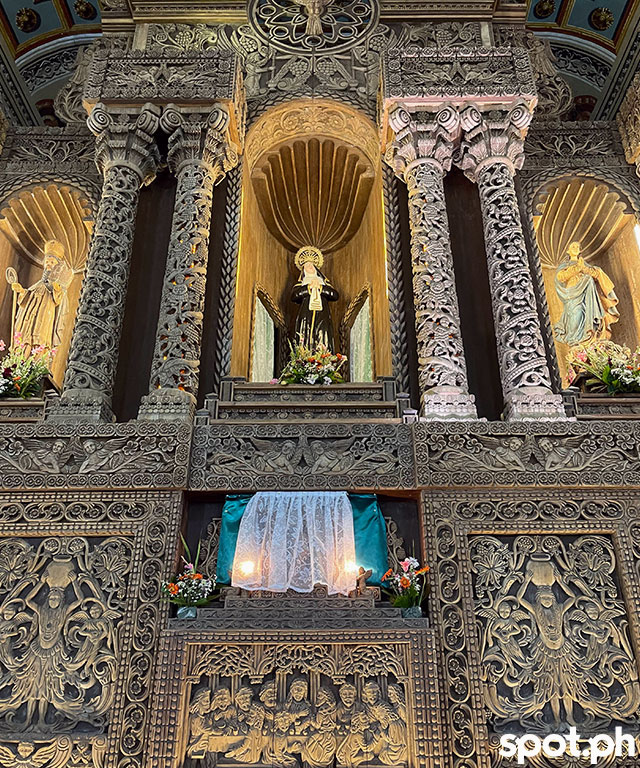
Its wooden retablos, crafted by local artisans, captivate with their intricate designs and symbolism—characteristics for which the town is known. Just outside the church, a woodcutting workshop offers the chance to observe artisans immersed in their work. Santa Monica Church proudly holds the distinction of being a National Cultural Treasure and a National Historical Landmark.
Pro-tip: For food enthusiasts and gourmands, a short detour to the asin tibuok workshop of Nestor Manongas is a must. A few minutes away by car or tricycle from the church, this workshop showcases asin tibuok, considered the rarest of Philippine sea salts and a vanishing tradition.
Holy Trinity Church or Santissima Trinidad Parish
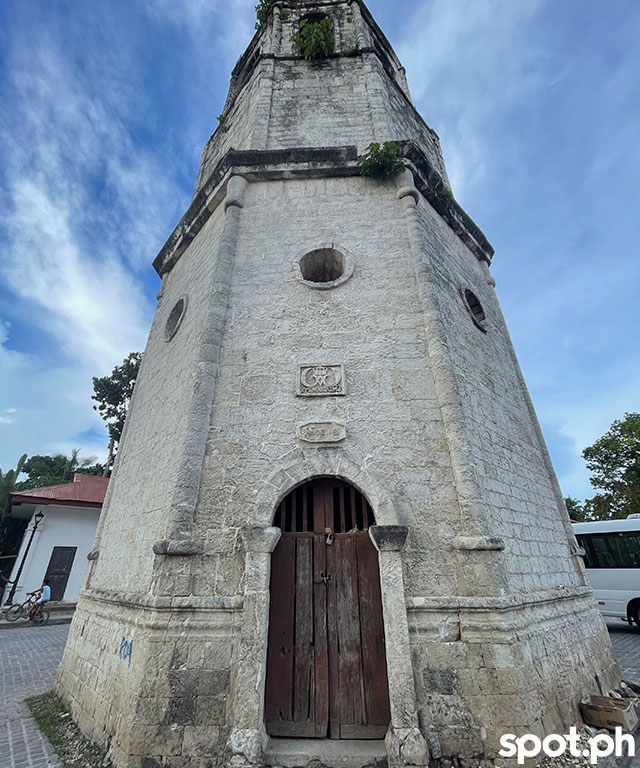
Founded by the Augustinian Recollects in 1799 in the serene town of Loay, the Holy Trinity Church, commonly known as Santissima Trinidad Parish, stands on a hill facing the sea and near the mouth of Loboc River. The church proudly exhibits impressive colonial-era architecture, embodying the essence of Filipino-Spanish design. In 2003, the NHCP conferred upon the church the distinction of being a National Cultural Landmark.
St. Peter the Apostle Parish Church or Loboc Church
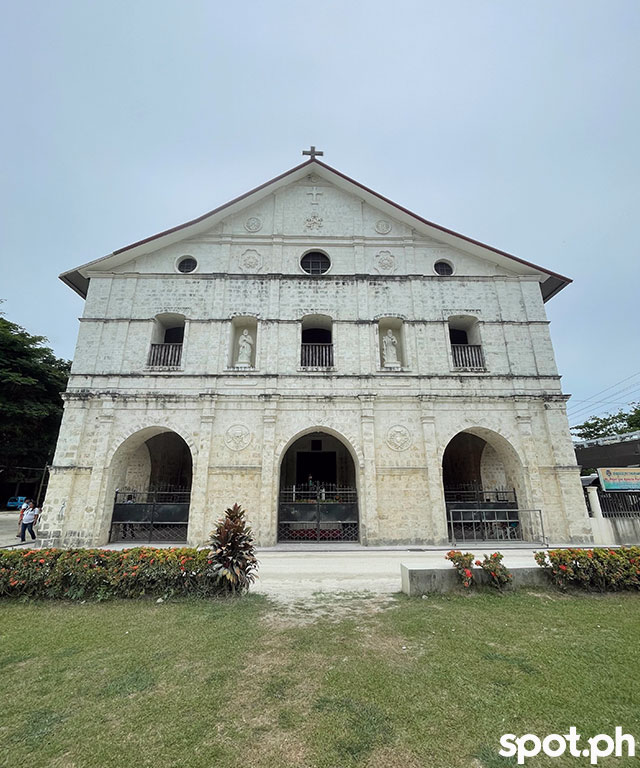
St. Peter the Apostle Parish Church, or Loboc Church, holds a prominent place among the province's significant churches. Classified as both National Historical Landmarks and National Cultural Treasures, the church, dedicated to St. Peter the Apostle, also pays homage to its “second patron,” Our Lady of Guadalupe de Extremadura.
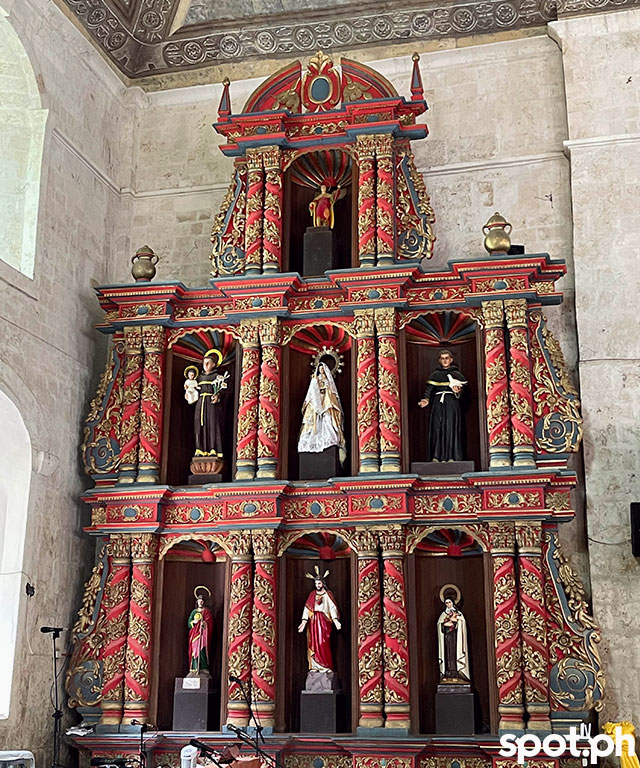
The Blessed Virgin's documented miracles in Loboc are vividly depicted in a fresco on the nave's ceiling by Cebuano painter Ray Francia. Severely damaged by the 7.2-magnitude earthquake in 2013, Loboc Church was meticulously restored to its former splendor by the National Museum of the Philippines and the NHCP, reopening on May 16, 2021. Tourists often begin their visit to Loboc by exploring the church before embarking on the popular Loboc River cruise.
Nuestra Señora de la Luz Parish Church or Loon Church
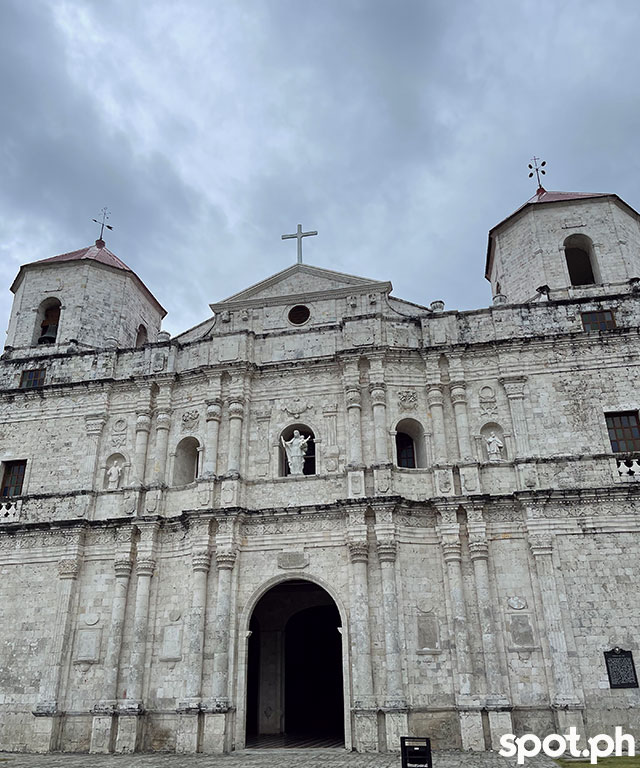
Nuestra Señora de la Luz Parish Church, or Loon Church, holds the distinction of being the largest coral stone church in Bohol. Like Loboc Church, it is classified both as a National Historical Landmark and a National Cultural Treasure. Reduced to rubble by the 2013 earthquake, Loon Church underwent total reconstruction and restoration over eight years, reopening to the public in October 2021.
Santa Cruz Parish Church or Maribojoc Church
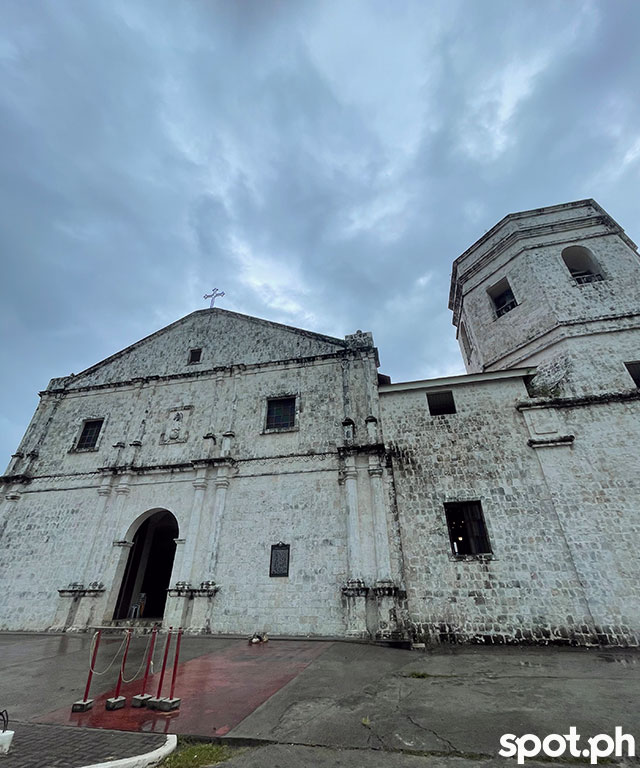
Santa Cruz Parish Church, also known as the Santa Vicente Ferrer Diocesan Shrine or Maribojoc Church, was established by the Jesuits in 1767 and later transferred to the Augustinian Recollects in 1898. Notable for its façade-incorporated watchtower, a defensive feature providing protection during perilous times or natural disasters, Maribojoc Church boasts the status of a National Cultural Treasure and a National Historical Landmark.
Nearly devastated by the 2013 earthquake, the church has been meticulously restored by the National Museum and the NHCP.
Santo Niño Parish Church
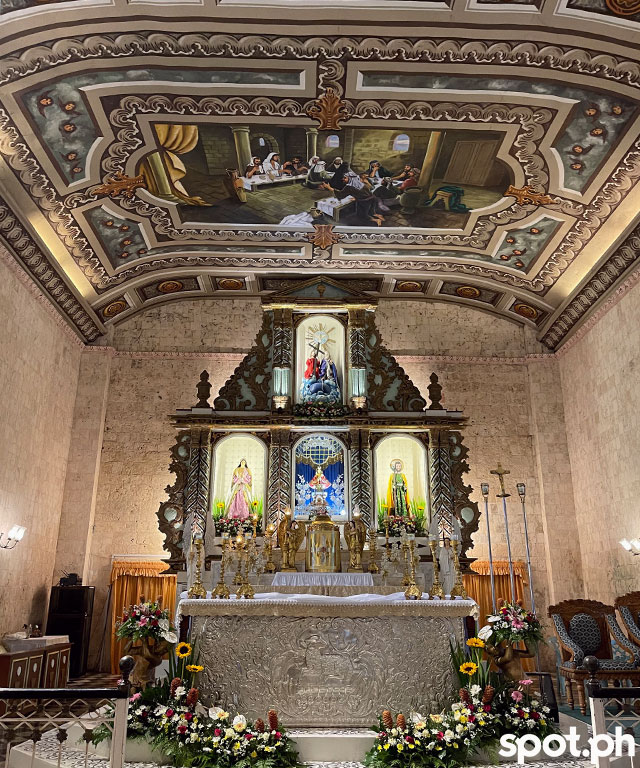
The Santo Niño or Holy Child Parish Church in Cortes is among the numerous churches in the Philippines dedicated to the Santo Niño. Though established by the Augustinian Recollects in 1880, the upper part of the bell tower was only completed in the 20th century. Reflecting the cruciform shape typical of many Bohol churches, the church's structure is predominantly crafted from coral stones. What sets it apart from others on the list is its charming main doorway, framed by floral carvings. The main retablo is adorned with twisted Solomonic columns and engraved flanges, showcasing a distinct Baroque-Rococo style.
San Nicolas Tolentino Parish Church or Dimiao Church
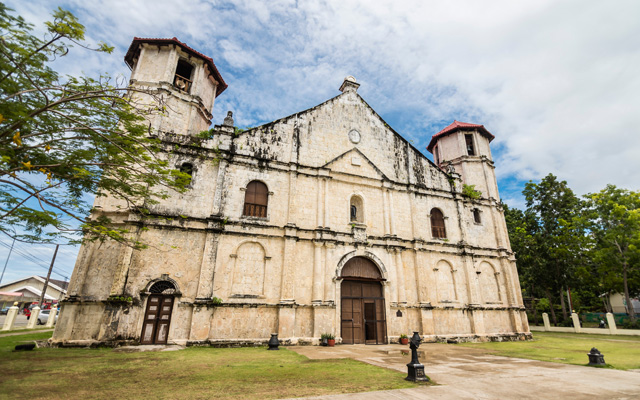
Dimiao Church, officially known as the San Nicolas Tolentino Parish Church, holds historical significance at the heart of Dimiao town. Its central location makes it a favorite among both locals and visitors. The church is renowned for its Baroque architecture, highlighted by a façade adorned with intricate carvings and sculptures. The church complex encompasses a detached bell tower, which functioned as both a watchtower against Moro invasions and a belfry during the Spanish colonial era.