

The Story of the Pahiyas Festival: History, What to Expect
In Lucban, Quezon, residents transform their homes into dazzling tributes to faith, harvest, and heritage.

(SPOT.ph) The word bayanihan is often associated with the picture of neighbors coming together to carry a bahay kubo on their shoulders. It's a scene straight out of a time when homes were built light enough it could be moved from one place to another; when communities were more tight-knit and gladly took on the task. Today when most houses are cement and basically stuck in one place, bayanihan continues to endure, its essence of a neighborhood coming together to accomplish a common goal still alive in different parts of the country.
For the people of Lucban, Quezon, bayanihan comes in the form of the community’s collective effort to uphold the tradition of hosting one of the country’s most vibrant festivals: The Pahiyas.
The annual festival pays tribute to San Isidro Labrador, patron saint of farmers. While many other towns in the Quezon province also celebrate the Feast of San Isidro—like the Agawan in Sariaya, Arañat Baluarte in Gumaca, Anihan in Mauban, Mayohan in Tayabas, Pabitin in Catanauan, and Sabungan in Agdanga—the Lucban feast is arguably the most grand.
The History of the Pahiyas Festival
Every May, houses in Lucban are dressed up with colorful kiping, rice stalks, fruits, and vegetables. Walk its streets and you'll see rows upon rows of homes beautifully adorned with arftul displays of the season’s harvest.


The Pahiyas is a celebration rooted in thanksgiving; a gesture of gratitude for all farming-related blessings. Family members help one another decorate the exteriors of their homes, with designs that follow customs that can be traced back to the first modern Pahiyas Festival in 1963, or even as far back as the 15th century, incorporating pre-Spanish colonization rituals and influences. Back in those days, farmers would gather their harvests and lay them on the foothills of Mt. Banahaw to be blessed by the Gods. When the Spanish arrived, this ritual was brought into the church and farmers began offering their harvests to San Isidro Labrador. Eventually, as harvests became more bountiful, they could no longer be contained within church grounds. So farmers began displaying their produce in front of their homes, and parish priests would stop by each of the houses to bless the offerings.

In 1963, Fernando Cadeliña Nañawa, the president of Lucban’s Art Club, drew inspiration from these old traditions and reimagined them into the first official Pahiyas Festival. Since then, the fiesta has evolved into a glowing showcase of agricultural abundance. Homes are decorated with farm produce, bamboo crafts, and wooden ornaments, transforming Lucban's streets into living pieces of art featuring the fruits of all their toil.
What to Expect During the Pahiyas Festival
Beyond the colorful homes and displays of abundance, the Pahiyas Festival in Lucban offers visitors a true taste of local culinary traditions.
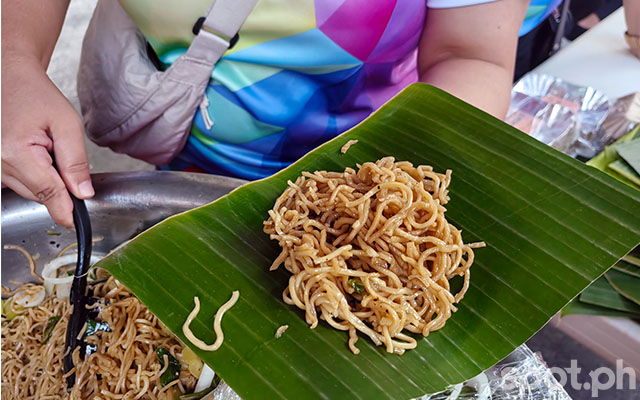
Wandering through the streets, especially the area near the church a.k.a., center of all the festivities, guests are greeted with free servings of pancit habhab at nearly every street corner. Pancit habhab is the locals' take on the classic noodle dish. What makes it unique is that it is eaten without utensils; often just slurped straight from banana leaves which serves as its serving vessel. The word habhab refers to the act of slurping.
Notice the colorful leaf-shaped ornaments adorning most of the houses? How could you not? These are called kiping and you must save space in your tummy for these visually appealing and surprisingly edible decor. Made from glutinous rice and dyed in bright colors, kiping is not only decorative but a must-not-miss eat. The thin, crisp wafers are a well-known local snack in Lucban. Though mild in flavor, Lucbanons enjoy them grilled or fried and are often served with vinegar for added taste.
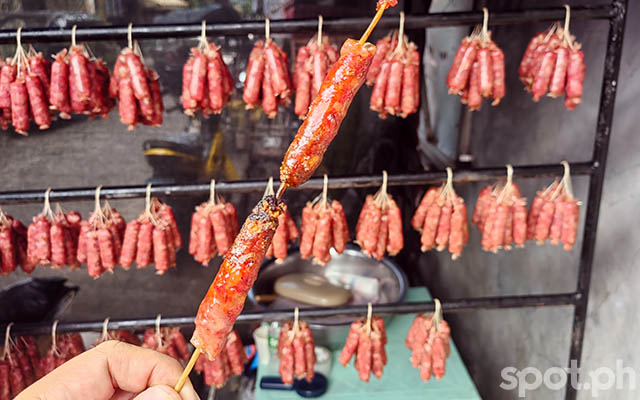
The area of the Saint Louis Bishop Parish Church, commonly known as Lucban Church, is a popular gathering place. Its surrounding streets include Gomburza, La Purisima Concepcion, Lopez Jaena, Gregorio del Pilar, and A. Mabini. Most of the decorated homes are found along these streets where you will also find numerous food vendors and stalls offering some of Lucban’s well-known delicacies: Lucban longanisa, kesong puti, espasol, pilipit kalabasa and hardinera, just to state a few. If you're lucky, you don't even have to shell out money to enjoy these local offerings—some turistas get invited to random houses to partake in the feasts! If you're granted an invitation, best not to decline. Lucban residents are known to cook their best dishes during Pahiyas Festival.
You may also catch a number of cultural performances and parades during the fiesta, such as the San Isidro Procession, the central highlight of the Pahiyas Festival. Expect to be awed by the sight of giant papier mache puppets gliding through the streets, accompanied by cultural performers and a lively marching band. Held on May 15 afternoons, the event features multiple statues of San Isidro Labrador, each representing different stages of the patron saint’s life. As the procession passes through the town’s colorfully decorated homes, the parade adds a layer of visual richness to the already vibrant celebration.
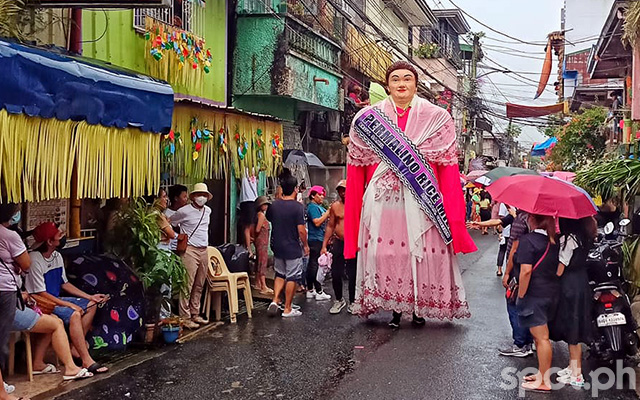

Aside from this parade, the festival also features a carabao procession, a nightly concert, a food market, and a night market highlighting local products.
In Lucban, the spirit of bayanihan is alive and well and can be found in how neighbors help each other decorate participating houses—with a side of a little friendly competition. Here, the prize isn't some grand trophy or huge amount of cash; keeping a tradition deeply inrgained in the community alive is the ultimate reward.

Also read: Guide to Non-Religious Festivals in the Philippines
Hey, Spotters! Check us out on Viber to join our Community and subscribe to our Chatbot.