
Guide to Non-Religious Festivals in the Philippines
And why you should visit them.

(SPOT.ph) Given that the Philippines has over 7,000 islands, it shouldn’t be a surprise that its cultural tapestry is kaleidoscopic. The country has festivals for countless occasions, and not all of them have a religious background.
Certain provinces, cities, and towns celebrate non-religious festivals open for all to enjoy. If you’re looking to attend a festival this new year, let this article be your guide.
Non-Religious Festivals in the Philippines and Why You Should Visit Them
While most festivals in the Philippines commemorate saints and revolve around religious observations, a non-religious festival celebrates an array of different cultural and historical aspects of the community. They’re chances for people to come together and appreciate local art, music, dance, and cuisine.
Each non-religious festival in the Philippines is a spectacle you wouldn’t want to miss. Plan your next trip with the following non-religious festivals.
Panagbenga Festival
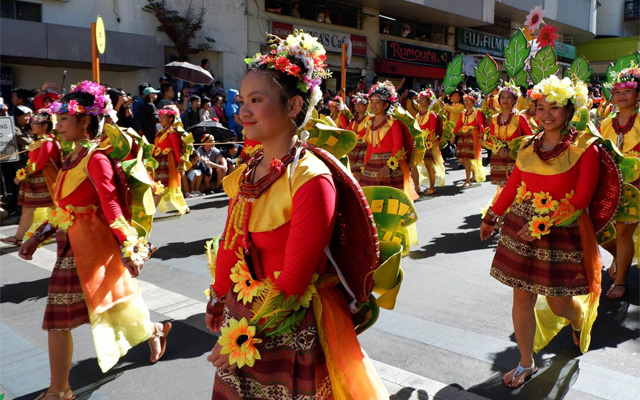
When: February
Where: Baguio City
The term “Panagbenga” is Kankanaey for “season of blooming.” It’s the perfect name for an annual celebration of flowers in one of the coolest destinations in the country—Baguio City!
The Panagbenga Festival is about celebrating the history of Baguio, the Cordilleras, and their beautiful flora. And with it being a month-long celebration in February, it’s a perfect Valentine’s trip for you and a special someone.
The festival kicks off with a Grand Opening Day Parade and Ceremony, which are usually held in the first week of February. Then there’s an exhaustive list of activities to attend, with a kite flying challenge and family fair squeezing in between an exhibit of entries from the Professional Landscaping Competition and the Flora and Flavor fair being open all month long.
This non-religious festival traces its roots back to 1995 and 1996 when Damaso E. Bangaoet, Jr., a lawyer and the Managing Director for Camp John Hay, had the idea of leading a flower festival in the city. Years of iterations and changes have made the Panagbenga Festival a must-experience festival if you’re looking for non-religious festivals in the Philippines.
Also watch:
The Best Things to See and Do in Baguio in 48 Hours
10 Bizarre and Fascinating Philippine Festivals
Love to Party? Here are 4 of the Must-Experience Festivals in the Philippines
10 Philippine Festivals for Your Bucket List
Kaamulan Festival
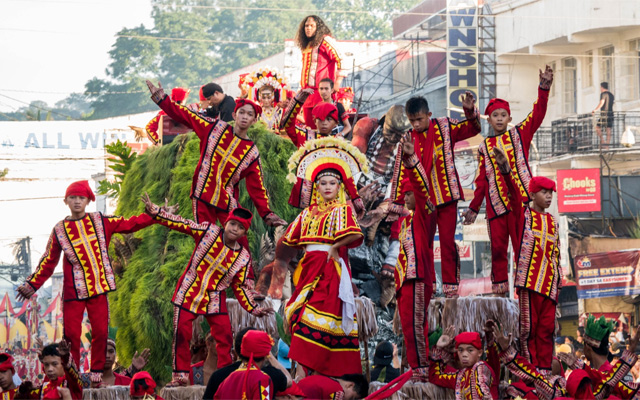
When: March to April
Where: Bukidnon
The Kaamulan Festival in Bukidnon, located in Northern Mindanao, is a non-religious festival that celebrates the seven tribes that reside in Bukidnon.
The origin of this festival goes all the way back to the pre-colonial era of the Philippines. The tribes would often gather to mark their year’s harvests and other milestones in their community. They’ve continued the tradition since, coming together for a celebration in Malaybalay, the capital of Bukidnon.
There are several days of activities, including a grand street dancing competition with participants coming from different tribes and wearing vibrant traditional costumes. The event also hosts a local beauty pageant to see who gets to become the next Higaonon Queen, focusing on each candidate’s cultural and historical knowledge besides their physical appearance.
Taking a walk around the city during this time becomes a highly memorable experience as traditional music and rituals fill the air. The festival grounds also come alive with cultural exhibits and an agro-industrial fair.
Bangus Festival
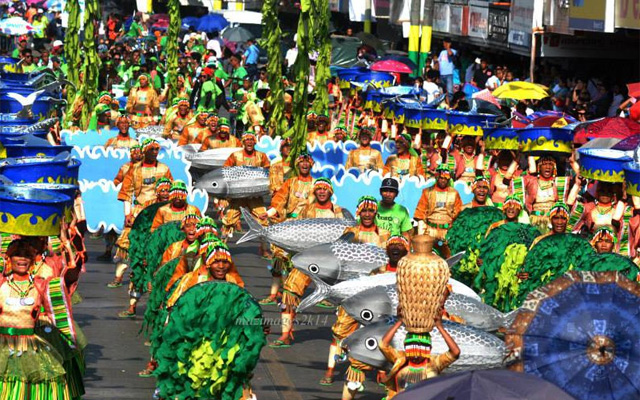
When: April
Where: Dagupan, Pangasinan
The Dagupan City Bangus Festival celebrates the community’s bangus (milkfish) production, primarily as it is known as the bangus capital of the country. In numbers, the province produces roughly 16,000 tons of bangus annually.
Bangus is a popular delicacy that every Filipino has grown up enjoying. What makes it such an excellent fish is how versatile it is; you can enjoy it dried, fried, or even smoked.
The annual Bangus Festival began in 2002 under the leadership of former Mayor Benjamin Lim. The festival itself has numerous events related to celebrating bangus, including:
- Bangus Rodeo: A beauty pageant type of event that awards the best-looking bangus or longest catch.
- Bangus Deboner Race: A race where participants must debone a bangus as fast as they can.
- Bangus Eating Contest: A competition to see which participant can eat an entire bangus the fastest.
There are also the usual Philippine festival events, such as the Gilon-Gilon ed Baley Street Dancing competition and the Kalutan ed Dalan Street Party.
Rodeo Masbateño Festival
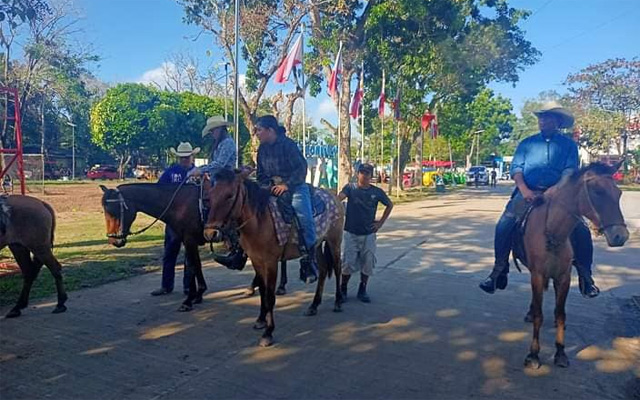
When: April
Where: Masbate
Have you ever wondered what it's like to step into the boots of a cowboy? There’s a popular non-religious festival on the Visayan island of Masbate that can give you a taste of that kind of life.
The Rodeo Masbateno Festival is among the more fascinating festivals in the country because of how it differs from traditional cultural celebrations. It’s more similar to celebrations in the American West, featuring cow-wrestling and lassoing events.
The festival was created in the 1990s by a group of ranchers known as Makusog as a way for them to celebrate the community’s strong livestock production. In 2023, it drew over 100,000 tourists to Masbate, further stimulating the island’s tourism industry.
Also read: The SPOT.ph Guide to Island-Hopping in Masbate
Kadayawan Festival

When: Every third week of August
Where: Davao City
Davao City’s Kadayawan Festival is one of the grandest non-religious festivals in the Philippines. What makes it so? A hint is from the name of the festival itself, “Kadayawan,” which comes from the Mandaya term “Madaya,” meaning “valuable” or “beautiful.” It’s a large celebration of the city’s 11 ethno-linguistic tribes and their yearly harvest.
For the third week of August, Davao City becomes a burst of color and energy, celebrating its local culture with bustling street markets, lively parades, and the distinctive aroma of Durian filling the air. It’s a popular destination for many first-time travelers looking to get a taste of what the Philippines’ festival culture has to offer.
This non-religious festival includes the hallmarks of a Philippine festival, such as street dancing, concerts, and a floral float parade. According to the City Tourism Operations, there was a record-setting attendance of 250,000 visitors during the 2019 Kadayawan Festival, underscoring just how remarkable this fiesta is.
MassKara Festival
When: October
Where: Bacolod
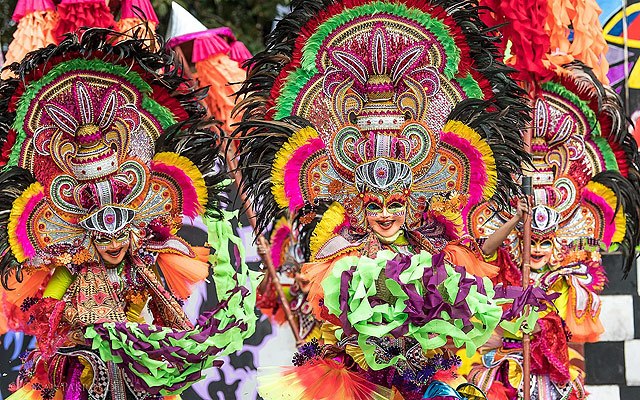
The MassKara Festival is a non-religious festival in the Philippines that’s one of the liveliest and most colorful. It’s certainly the most recognizable festival because of the ocean of masks that engulfs Bacolod every October. The non-religious festival celebrates the indomitable spirit of the people from Negros Occidental.
As lively as this celebration is, its origin is not one of the smiles. The festival began because of a tragic ferry accident involving the MV Don Juan that claimed the lives of many Negros natives. In its grief, Bacolod’s government decided to create the MassKara festival as a means to lift the community’s spirits after such a devastating incident. It’s how the smiling mask became the logo for the event.
There are countless activities to attend and watch during this October festival. There are dance competitions, electric MassKara competitions, street parties, food fairs, and more.
Also watch: The Best Things to See and Do in Bacolod in 72 Hours
Giant Lantern Festival
When: December
Where: San Fernando, Pampanga
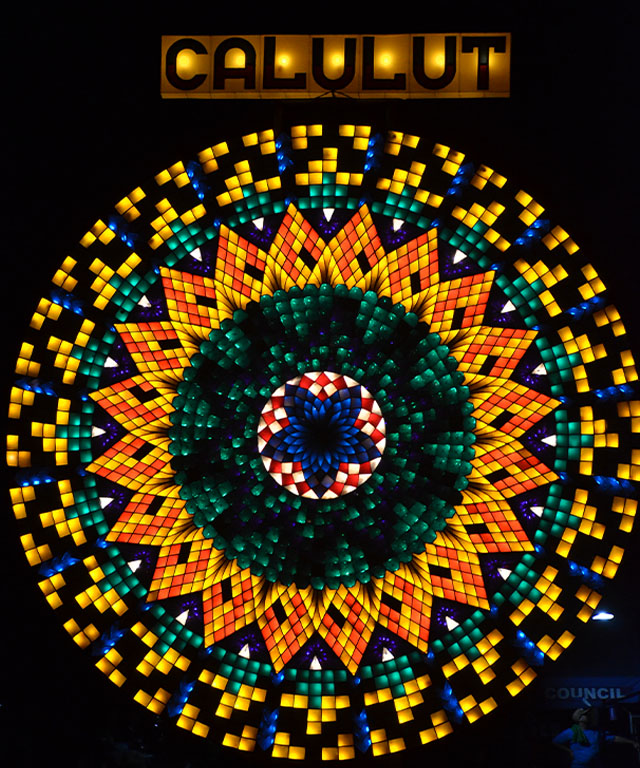
The Giant Lantern Festival in Pampanga is more than a non-religious festival in the Philippines; it’s also a spirited competition among the barangays in the area. Each barangay competes to create the most creative and stunning giant parol, and anyone can visit to see their entries. The lanterns can be as big as 20 feet in diameter and contain hundreds of bulbs.
The parol is an icon in Filipino culture that signifies the Christmastime. Nowhere is it better to appreciate these brilliant and unique lanterns than in San Fernando, Pampanga. The community has been holding this festival, commonly referred to as “Ligligan Parul,” for a little over a century now.
Many believe the festival began with Francisco Estanislao, a lantern maker and salt vendor from Pampanga, who created the first big parol. It’s since become a non-religious festival where members from each barangay can collaborate to light up the nights leading up to Christmas.
Binirayan Festival
When: December
Where: Antique
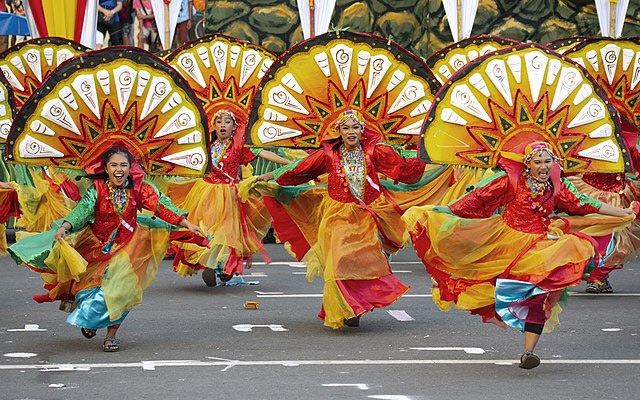
The Binirayan Festival in Antique is about celebrating a time in history when Malay migrants arrived in the pre-Spanish era of the Philippines. Compared to many other festivals, the history of the Binirayan Festival is relatively young; it began in 1974 when Governor Evelio Javier wanted to reclaim the people’s cultural identity.
The activities of this non-religious festival varied throughout the years, but among the highlights is the Biray Fluvial Parade. This event kicks off the celebration with a reenactment of the Bornean datus and their families landing on the coast of Malandog, Antique.
There are also awards ceremonies, Christmas bazaars, beauty pageants, and street dance competitions you can watch when you visit.
Tips on How to Enjoy the Festivals in the Philippines Safely and Responsibly
Any religious and non-religious festival in the Philippines aims to be a positive and enjoyable occasion. Here are a few ways you can make the most out of your attendance at these festivals.
Follow health protocols
Although the country has more or less overcome the pandemic, it’s still beneficial to observe the location’s health protocols. Washing your hands thoroughly and wearing a mask can help you avoid the spread of illnesses, especially in highly crowded venues.
Respect local customs
Being respectful of local customs allows you to connect with the residents better. For instance, learning a few words in the local dialect will help you show your respect in a way they understand and appreciate.
Dress comfortably and appropriately
You can expect to be dancing and walking a lot during these festivals, which means that it’s best to wear something light and comfortable. And don’t forget your sunscreen!
Be alert and aware
Festivals can attract criminals and pickpockets, so stay vigilant. Keep a small carry-on close to you to secure your devices and other belongings.
Prepare your accommodations
Non-religious festivals often go on for more than a few days. It would be a good idea to find accommodation nearby to experience the celebrations fully. Reading up on the festival traffic advisory would also help since local governments tend to close certain roads to make way for parades and street activities.
Practice eco-friendly habits
Throwing your trash in the appropriate receptacles is a small but impactful way of showing respect to the locals and their city. For one, a refillable water container will help you stay hydrated, minimize your waste, and help you enjoy the festival continuously.
Have fun and be responsible
It wouldn’t be a proper festival if you didn’t have fun! Of course, you must enjoy yourself responsibly without hurting anyone or breaking anything—especially culturally significant items.
Celebrate a Diverse Range of Philippine Festivals
Festivals are a core part of Philippine culture that spans decades. If you plan to immerse yourself in what the Philippines has to offer, attending a festival should definitely be part of your itinerary!
Many tourists don’t realize that there are plenty of non-religious festivals in the Philippines that can be just as exciting and fun to attend, even when the country is predominantly Catholic. Learning more about them and attending one yourself can give you a better glimpse at the rich and diverse cultures that define the archipelago.