
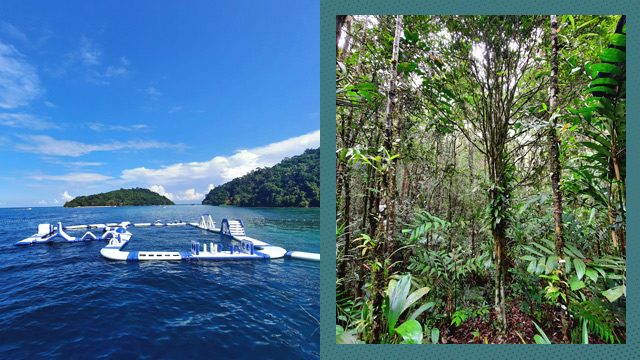
(SPOT.ph) Sabah, a Malaysian state on the northern part of Borneo Island, is one of the closest neighbors of the Philippines via the island of Palawan in Luzon and the archipelagic municipality of Sulu in Mindanao. If you think of Palawan and Sulu as left and right arms, it seems that it's cradling the Malaysian territory. So it doesn't come as a surprise that there are several similarities between Sabah's and the Philippines' climate, topography, biodiversity, food, culture, and language. The fact that both the Philippines and Malaysia are staking claim over Sabah is another story. But if you're looking to spend a weekend in this under-the-radar ecotourism destination, there's no better time than now, especially after AirAsia resumed their direct flights from Manila to Kota Kinabalu on May 27.
Also read: The Best Things to See and Do in Kota Kinabalu in 24 Hours
Here's a rundown of fun things to do in and around Kota Kinabalu:
This is by no means a comprehensive list. Sabah has a total area of 73,904 square kilometers, which is slightly smaller than the whole island of Mindanao, with an area size of 97,530 square kilometers. Known as a nature-loving adventurer's paradise, the Malaysian state has several beach resorts, national parks, adventure parks, heritage trails, and food districts that will make you want to come back again and again just so you can check off everything on your bucket list.
Climb to the summit of Malaysia's first-ever UNESCO World Heritage Site
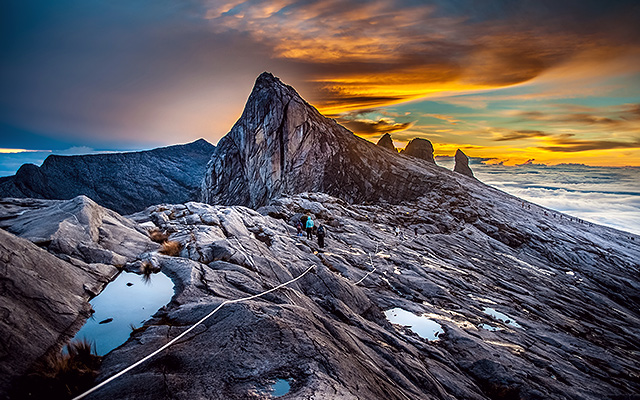
At 4,095 meters, Mount Kinabalu is the highest mountain between the Himalayas and New Guinea. It's even more special as it is the location of Malaysia's first-ever World Heritage Site—Kinabalu Park—as declared by UNESCO in December 2000. Climbing it is an incredible feat as granite peaks and glacier-carved pinnacles at the summit are like no other. Fortunately, it is also "one of the safest and most conquerable peaks in the world," according to its website's FAQ.
The highest point of the mountain can be reached after an 8.8-kilometer trek along the southern side. It "can be accessed relatively easily by any person with reasonable fitness, and required no technical climbing." Trekkers must stay for two days as the first day starts at 9 a.m., then ends after four to six hours at Panalaban (3,273 meters), where the Laban Rata Resthouse is located. The climb to the summit resumes at 2 a.m. to make it in time to catch the sunrise at the peak, also called Low's Peak.
Climbing Mount Kinabalu starts at Timpohon Gate, Kinabalu Park, Sabah, Malaysia. Rates for the two-day Mount Kinabalu Climb package start at 1330 Malaysian ringgit (P16,600). This includes a climbing permit, a mountain guide, and an overnight stay in Panalaban. To book, visit Mount Kinabalu's website.
Take a macro shot of one of the world's smallest orchids
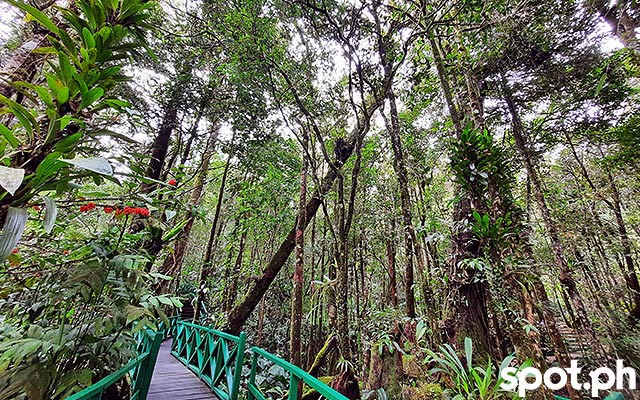
If you're not too keen about trekking but still want to get a glimpse of Mount Kinabalu's beautiful flora, you can take a leisurely walk inside Kinabalu Park's Botanical Garden. Established in 1981, the garden has an area of 1.4 hectares, which houses approximately 800 species of plants that are either replanted from the mountain or are already growing there naturally. But this is just a small percentage of the more than 5,000 species found within Kinabalu Park.
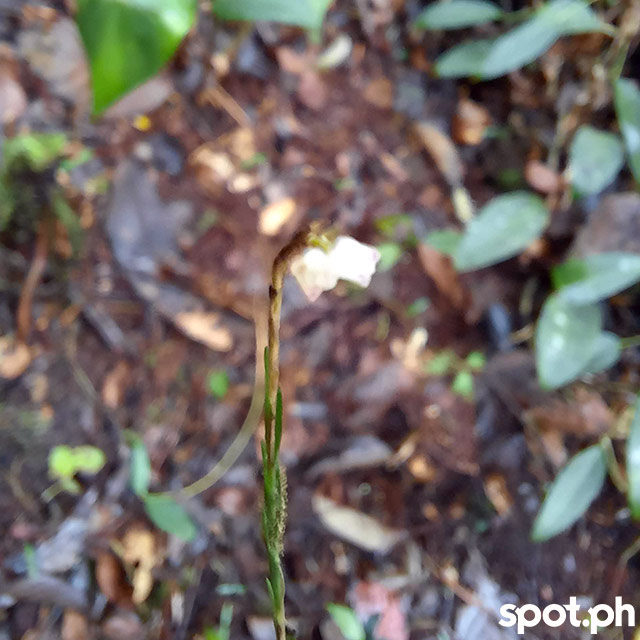
You can follow several trails inside the garden and look closer at labels that have four different colors. Common plant species have black labels, medicinal and edible ones are labeled blue, while the green and red ones are the endemic plants. Be on the lookout for the pinhead orchid (Podochilus tenuis), the smallest orchid in Borneo. It's only about two millimeters, even smaller than a fingernail, and you're bound to miss it unless you listen attentively to your tour guide.
Mount Kinabalu Botanical Garden is at Kinabalu Park, Sabah, Malaysia. It is open daily from 9 a.m. to 4 p.m. Admission fee is 5 Malaysian ringgit (P63). Visitors below 18 years old get a 50% discount.
Enjoy Kota Kinalau's beautiful sunset from the harbor
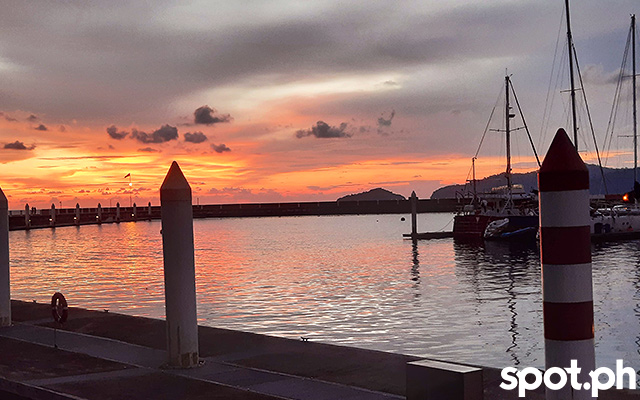
Sutera Harbour, an integrated resort in the city of Kota Kinabalu, is well known for a view of yachts in the foreground, the islands of Tunku Abdul Rahman National Park in the background, and the warm glow of the sunset. Reminiscent of our very own Harbour Square within the CCP Complex, it is home to a 104-berth marina, a 27-hole golf course, and two five-star hotels with luxurious facilities. The Magellan Sutera Resort and The Pacific Sutera Hotel combined has a total of 956 rooms, making it the largest resort in the whole of Borneo.
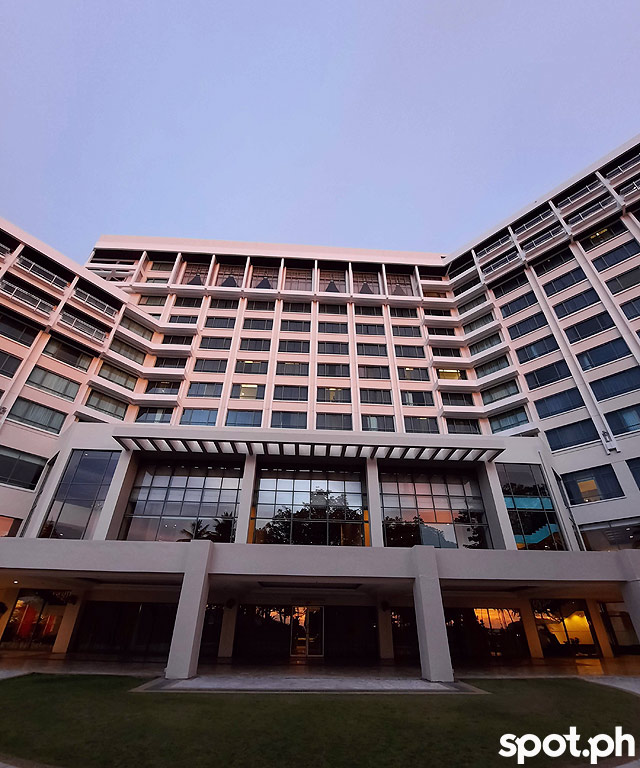
Sutera Harbour Resort is at 1 Sutera Harbour Boulevard, Sutera Harbour, Kota Kinabalu, Sabah, Malaysia. Rates start at 436 Malaysian ringgit (P5,400). For more information, visit Sutera Harbour Resort's website.
Jump on a bamboo trampoline inside a traditional house
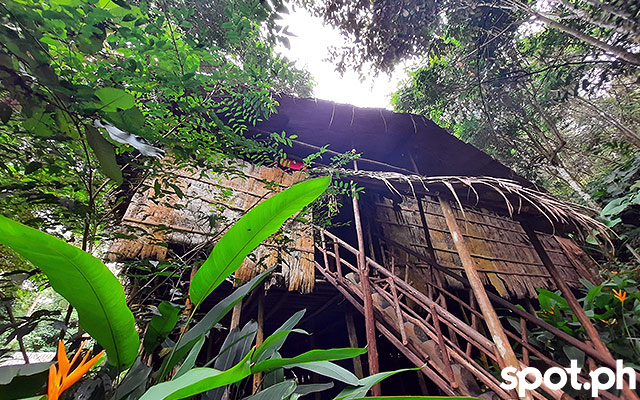
Set in a remote forest in Kionson, the Mari Mari Cultural Village is reminiscent of our Nayong Pilipino—at least when it was still open in Paranaque City. The outdoor museum gives locals and foreigners a look into the culture of five ethnolinguistic groups in Borneo: the Bajau, Lundayeh, Murut, Rungus, and Dusun. The whole village is divided into five parts, each featuring a traditional house that is built by the descendants of the community that they represent. You can also participate in their daily routines, such as a fire-starting demonstration just by using bamboo.
One of the most interesting practices that they have is the lansaran game by the Murut—an ethnic group that's famously feared for their practice of headhunting. In this game or dance, several men and women form a circle and bounce on the wooden trampoline inside the Murut's house. One of the players stands at the center, and with the right timing, jumps to reach the suspended kinkilat, which is similar to our pabitin.
Mari Mari Cultural Village is in Jalan Kionsom, Inanam, Kota Kinabalu, Sabah, Malaysia. It is open from Tuesday to Sunday. Tours are from 10 a.m. to 1 p.m. and from 2 p.m. to 5 p.m., with registration and briefing at 9:45 a.m. and 1:45 p.m. Admission fee is 100 Malaysian ringgit (P1,250). For more information, visit Mari Mari Cultural Village's website.
Snack on local Sabah delicacy
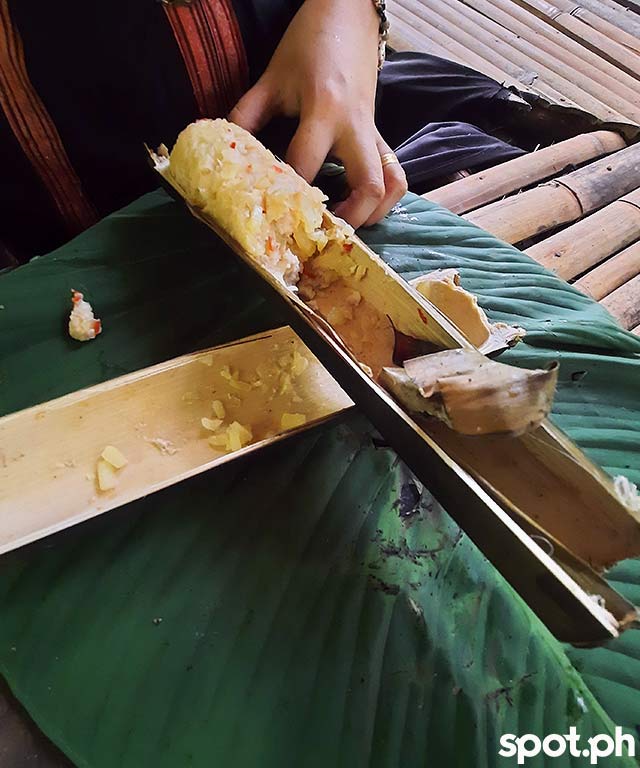
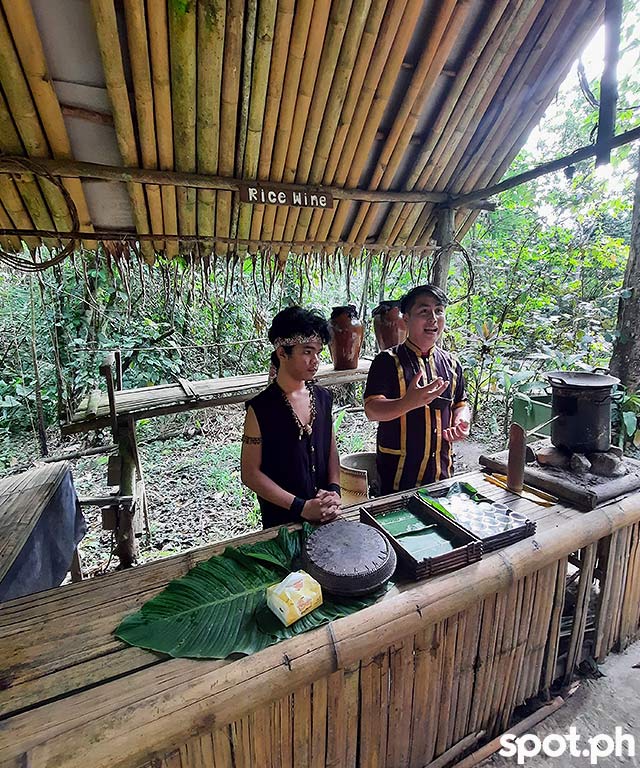
Aside from getting a glimpse of the ethnic group's houses, you can also have a taste of their delicacy when visiting Mari Mari Cultural Village. The Dusun, for example, has the linapak, which is a mix of chicken, potato, chili, and onions cooked in bamboo. They also have rice wine, which is made from fermented glutinous rice with sugar.
Conquer the rampaging waters of Kadamaian River
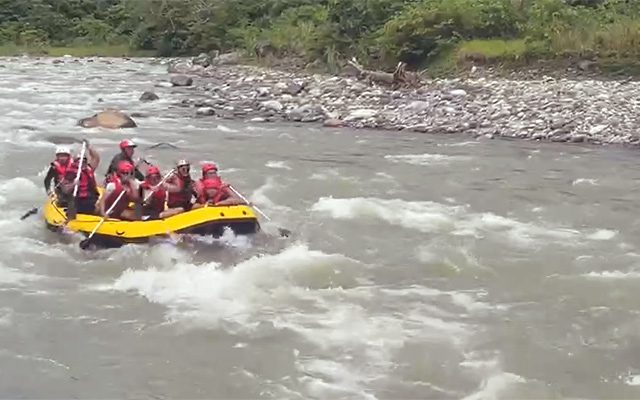
Kadamaian River, which stretches from the foot of Mount Kinabalu to the village areas in Kota Belud, is well known for its scenic view of the mountain. The more adventurous can try white water rafting with experienced local paddlers. Get ready to row in sync when the water's calm, and hold tight when you're amid white waters. According to the guides, the water in the Kadamaian River slightly changes course daily, so they themselves are also surprised by the rapids that they have to get through. Don't worry, though; everyone's required to wear a helmet and life vest just in case you fall off the rubber raft—which is pretty common in this adventure.
White Water Rafting Adventure in Kadamaian River is available on Klook for P1,627 and on KKDay for P2,504.
Down a bowl of Kota Kinabalu's famous bak kut teh
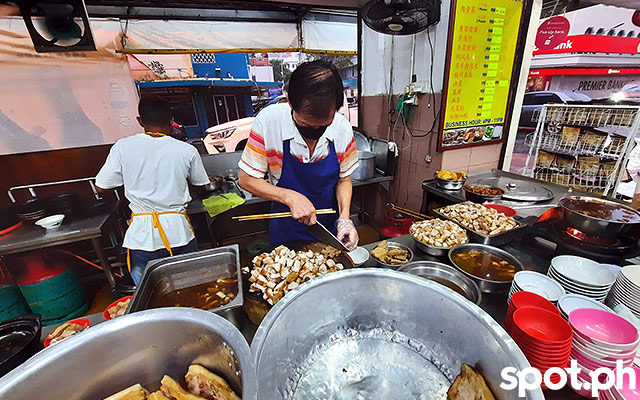
Bak kut teh is essentially a pork rib dish cooked in broth, herbs, and spices. It's popular in Malaysia and Singapore, where there are communities of Hokkien people. In Kota Kinabalu, one of the most famous restaurants that serve it is the Chinese family-run Sin Kee Bah Kut Teh. A small bowl of bah kut teh costs 14 Malaysian ringgit (P175).
Sin Kee Bah Kut Teh is at 26 Jalan Pantai, Pusat Bandar, Kota Kinabalu, Sabah, Malaysia.
Lounge around the white-sand beach of Manukan Island
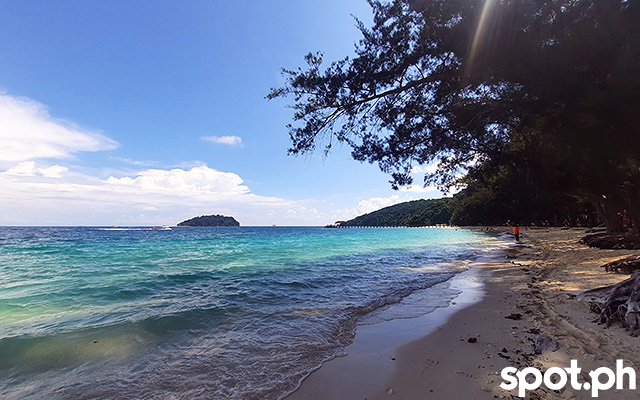
Tunku Abdul Rahman National Park, which is Malaysia's first marine national park, is a cluster of five islands off the coast of Kota Kinabalu. Except for Sulug Island, Gaya, Sapi, Manukan, and Mamutik are commercially ready for visitors. The most popular of the five is Pulau Manukan, which is also the second largest island within the marine park. It has stretches of white-sand beach and coral reefs that are ideal for snorkeling and diving.
Pulau Manukan is at Tunku Abdul Rahman National Park, Sabah, Malaysia. Conservation fee is 20 Malaysian ringgit (P250). For more information, visit Tunku Abdul Rahman Park's website.
Go through a floating obstacle course in one piece
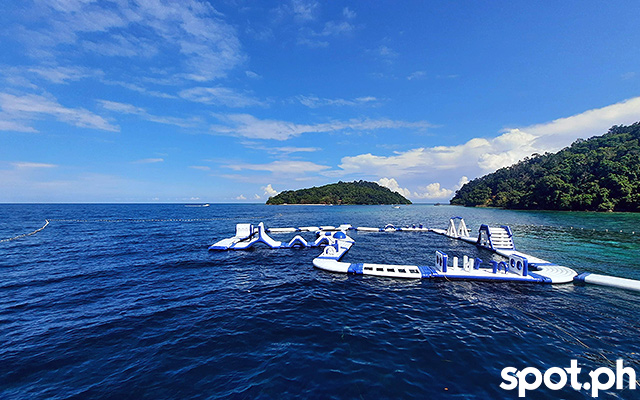
JSK Borneo Reef, which is recognized as the largest reef activity pontoon in Southeast Asia, can be reached via a speedboat from Jesselton Point in Kota Kinabalu. The 15,000-square foot pontoon is adjacent to Pulau Gaya and Pulau Sapi. One of its main attractions is an inflatable water park, which is the largest in Sabah. You can achieve your Wipeout or American Ninja Warriors dreams as you run through inflatable logs, climb through ramps, and jump down massive slides. After a tiring run, you can sit back, relax, and enjoy some fresh coconut aboard the pontoon.
JSK Borneo Reef is in Jin Haji Saman, Kota Kinabalu, Sabah, Malaysia. The check-in boat schedule is from 7:15 a.m. to 8:30 a.m., with boarding time at 8:45 a.m. Packages start at 99 Malaysian ringgit (P1,200). For more information, visit JSK Borneo Reef's website.
Walk with schools of fish at five meters under the sea
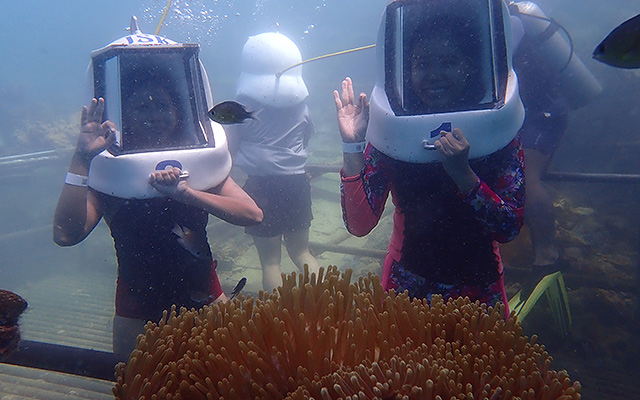
Another activity at the JSK Borneo Reef is sea walking or helmet diving, which gets you up close and personal with the underwater world. You don't have to wear scuba gears or hold your breath since helmet diving is all about wearing a head enclosure that comes with a breathing gas supply. All you have to do is follow the staircase and go down to the platform that's more than five meters (16 feet) under the sea. (Pro tip: Don't forget to equalize since the depth and pressure can hurt your ears.)
How to Get to Kota Kinabalu
AirAsia flies twice a week from Manila to Kota Kinabalu. The Manila to Kota Kinabalu route (Z2 501) is every Tuesday and Saturday at 12:10 a.m., while return flights (Z2 502) are on the same days at 2:50 a.m. The travel time is two hours.