

Beauty and Ugly: Complexities in Philippine Art
It's about time we talk about this.

(SPOT.ph) Art has always been historically contentious. There are moments when aesthetic standards dominate practice and sensibilities, but at the same time, art also resists and attempts a different path forward. There are various approaches to art, and in the contemporary context, the given globalism of the present condition leans further toward diversity. Art embraces complexity and nuance, giving way to complicated conversations typically shied away from.
Exploring Complications in Juan Luna’s "Hymen, oh Hyménée!"
Juan Luna’s “Hymen, oh Hyménée!” pushes the art world toward a difficult and complicated conversation on art history, the role of an artist, and the creator’s context. Further, it unveils a discussion on 19th-century art, colonialism, patriarchy, and the ultimate role of institutions in framing art and art history. By now, plenty of articles were published about the piece and the exhibition. Though it may appear that everything that can be said has been said, the piece and its contentious context still open itself up to further critique.
Beauty in Art
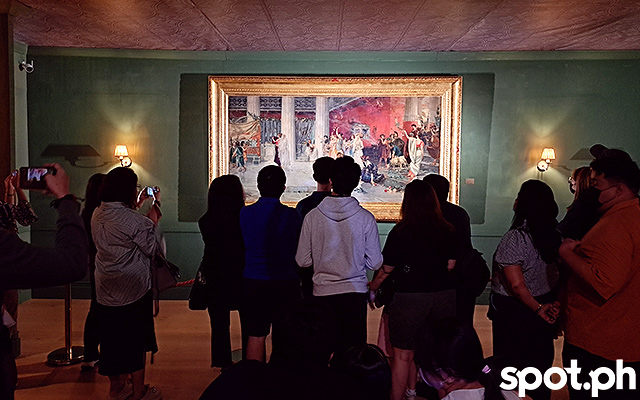
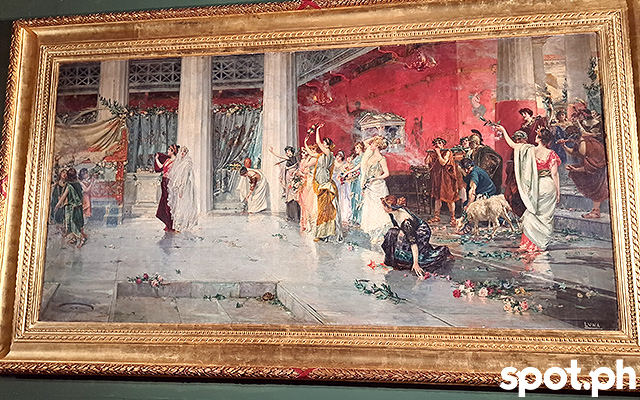
Splendor: Juan Luna, Painter as Hero is a beautifully designed exhibit, the tight movement within the space transports the viewer to Pompeii, much like the painting “Hymen, oh Hyménée!” does. The exhibit also comes with a voluminous full-color and hardcover publication of the same title. Ayala Museum and its partners launched the exhibit in full grandeur, and—much like the title—splendor. It was a glamorous affair, with the glitterati of the Philippine art world and society in attendance, honoring the artwork, the painter, and the patrons. The painting itself was hailed and toasted to as a “holy grail,” it earned Luna a bronze medal at Exposition Universelle of 1889 in Paris, and it supposedly featured his wife Paz Pardo de Tavera painted during their honeymoon. It has been touted as a “happy Luna,” given the theme of a Roman wedding.
Violent Contexts
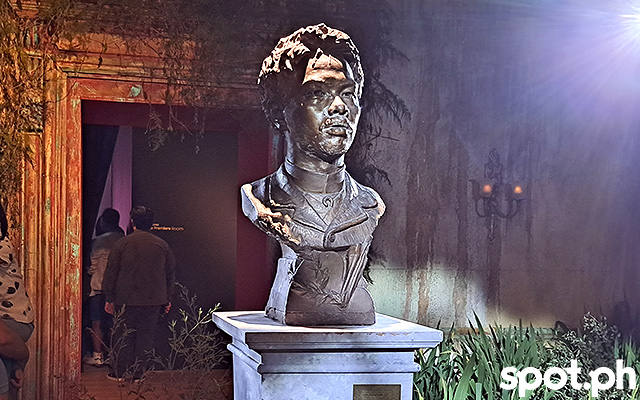
Brewing beneath the veneer is a complicated story. Luna and Pardo de Tavera’s marriage was a tumultuous one, marred by Luna’s jealousy and violence. Plenty of articles available to the general public exist about Luna killing his wife and mother-in-law, yet the story is often brushed aside when talking about Luna’s paintings, artistry, and heroism. Many called for a separation of art and artist, pointing to the beauty and technique of the artworks. Though the formal value of the painting is inherent, the context cannot be denied. It is not a matter of "canceling" Luna or erasing his narrative from Philippine art history, rather, a need for fuller recognition of the context of the time.
Racism in Art
Racism also came into play, strangely enough in favor of Luna, as European sensibilities do not apply to him due to his race. His lawyer argued, "You have before you a man who is not moved by the same impulses as we are. God has made him so. We have to pry into his nature and soul and inquire if he should be judged as a Frenchman." Framing Luna, as a colonial subject—as less than, led to his freedom.
Confronting Controversies in Vinyl on Vinyl's Despedida
Such a complicated context is difficult to highlight within the shine of heroism, medals, and celebration in the art world. It is not just with Luna, but with the possibility of controversy in idealized institutions of contemporary art. When problems arise, it is difficult to question authority, confront powerful institutions, and bring forward complaints and arguments that disrupt the current structure.
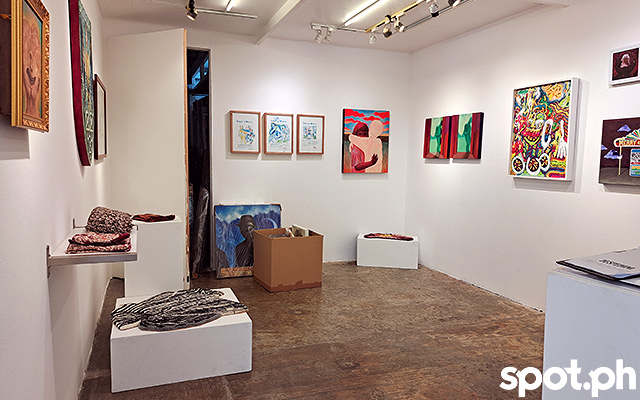
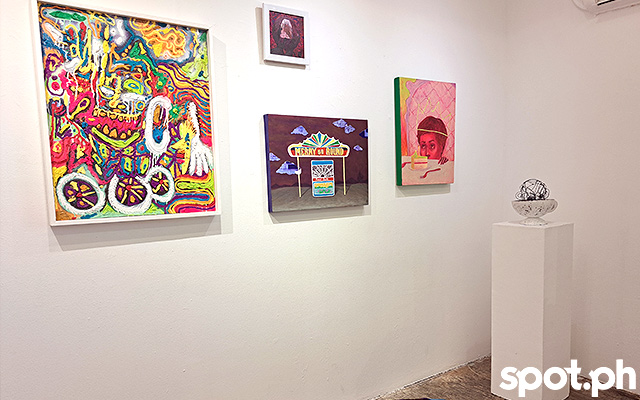
Vinyl on Vinyl’s group exhibition Despedida (2023), for example, brings forward a narrative of artists confronting uncomfortable, lived truths in the face of possible backlash and rejection from a tenuous art world, often wrapped up in comfortable power structures.
Concept of Community
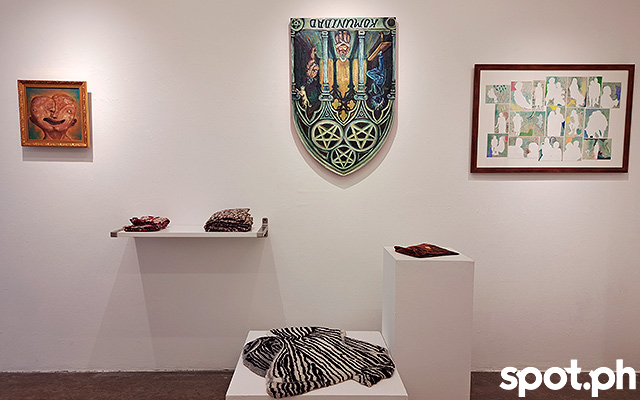
Laura Abejo’s “Komunidad” was hung upside down, referring to a shared community the group truly believed in, but is now placed into uncertainty. This work was based on tarot cards, specifically of three pentacles, indicating a harmonious collaboration. Abejo presents a community in chaos, fracturing what was believed in by so many. The current iteration of the artwork was painted over an older work, changing the perspective and siding with those oppressed by the current structure.
Maternal and Emotional Labor
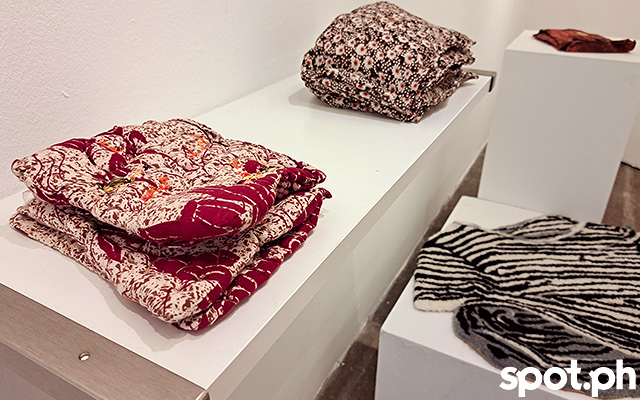
Using textile and fabric, Sarah Conanan and Maricar Tolentino highlight the challenges of domestic labor, together with artistic endeavors. Conanan, in “Grandmother's Garden” and “Sweet Nothings,” reused garments from her grandmother in creating fabric books. The intersections of domestic and artistic labor for a community, on one hand, may aid in collaboration, and on the other, may also prove problematic. Women artists assigned with a maternal role to nourish a community, without taking into consideration personal choice, additional emotional labor, and criticality on a gendered role may burden rather than enrich an experience.
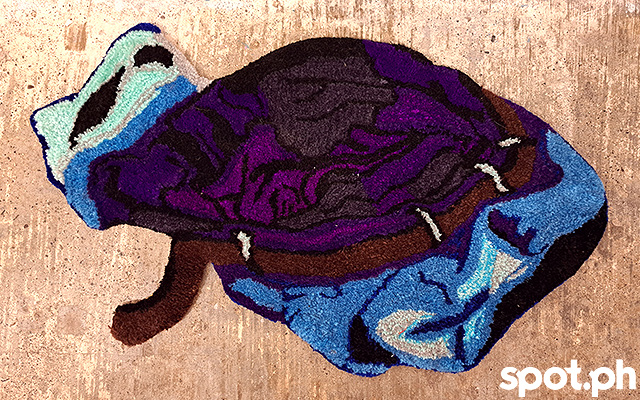
Maricar Tolentino’s hand-tufted rug pieces, “dirty laundry,” is a play on the conversation of problems and undercurrents within a community. Though figurative in argumentation, it also proved literal, as her entrusted artworks were eventually found dirty and damaged.
Broken Trust
Piling on the problem of damaged and lost artworks is Roger Mond’s "Certificate of Authenticity of a Lost Painting 1, 2, and 3," three pieces recreating his lost artworks in the form of a certificate of authenticity—a document often accompanying an artwork when sold.
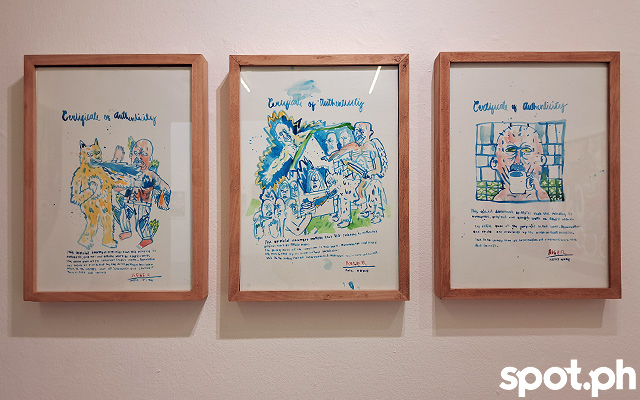
Similar to Tolentino, Mond questions the care of his artworks after it was entrusted. Lack of transparency, documentation, and clear communication when it comes to art objects are necessary conversations to be tackled. The shared frustrations on the unfortunate treatment of their artworks resonate across the group, and needing a safe space to process their grief over the loss and damage to their seminal works.
Precarity of Creative Labor
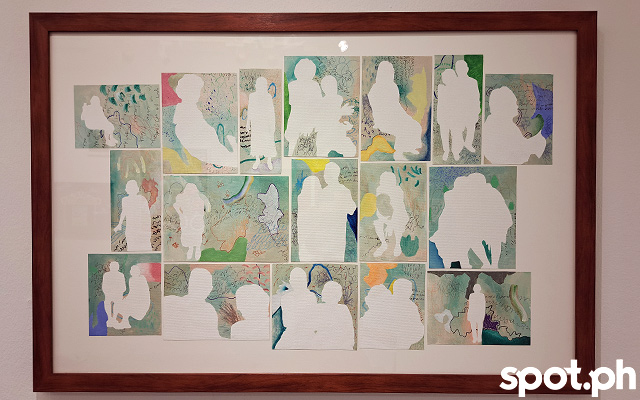
Raffy Ugaddan presents another complication in artistic labor with his work “Nauna Na.” He recalls being unable to go home despite a death in the family, a tipping point in a labor situation he experienced. “Nauna Na” opens the precarity of labor in an artistic community. Often, artists and cultural workers are burdened with the idea of passion as the ultimate goal and motivation. Yet, in reality, artistic labor is still a form of labor that needs rights and protection, not just an honorary veil of passion. Expecting clear job descriptions, healthy boundaries, living wage, and benefits are just necessities, in any labor–including creative labor.
Leavetakings
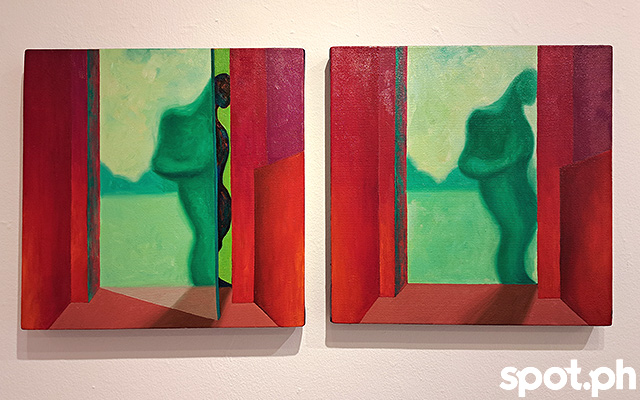
Processing the grief brought about by frustration in current art practices sometimes forces a decision to leave–thus Despedida. For Carla Gamalinda, this is never an easy decision. In her pair of works–“Are you sure you want to leave? (Y/N)” and “Are you sure you want to leave? (Y)”, she looks into the art of leaving.
She writes, “The artwork shows the smallness of the act of leaving: a figure closing the door behind a dangerous place.” The two works were meant to be sold as a pair, with one door still ajar and the other closed. Leaving an established and well-known community, despite its fractures and problems, is still a difficult act. Often, there are fears of possible retaliation, and the pains of being rejected and dismissed but places that once embraced. Yet, Gamalinda further writes, “Looking back at the goodbyes I have made over the years, I often find that many new landscapes open from closing doors behind abusive and neglectful places.” Sometimes the risk is worth it, particularly if closing one door opens another for a complicated conversation that needs to be done.
Power Struggles in Art
Power struggles in established institutions are always difficult to contend with. During the opening of Despedida, Hannah Nantes had a live print demo and performance for her two pieces, "One for the Devil" and "One for the Lord." She points toward Judeo-Christian imagery and the idea of sacrifice in the purging of sins.
She states, “The concept is driven by experiences of struggling in one-sided power relationships, both in person and in collectives.” As often, when faced with an imbalance of power, it is never a simple thing to confront uncomfortable narratives. For the Despedida group, there was a solid show of support during the opening and beyond, creating a safe space to state their struggles. Yet, as it always was, the established power structure may remain untouchable, as seen in so many instances, even in the time of colonization, when fine arts sensibilities reached the Philippines.
Missed Opportunities
Going back to Luna’s "Hymen, oh Hyménée!," though attributed as a “happy Luna,” it is a particularly gruesome work, knowing what is known now and the fate of Paz Pardo de Tavera. Though the surrounding is certainly celebratory, the bride’s morose face clues the viewer into something more sinister. Yet, for Splendor, it was more about grandeur rather than exploring a more difficult context. Perhaps Luna may still be considered a hero for his artistic production, but failing to include the imperfection of the narrative gives little justice to the 19th-century context of colonialism, machismo, and racism. Toasting to the artwork feels hollow, a missed educational opportunity to entrench the complexities of Luna and his artworks into the country’s more nuanced history.
Starting Conversations
Yet, as in Luna’s rediscovered "Hymen, oh Hyménée!" and the contemporary Despedida group exhibit, one of the common themes is the power of institutions. The Luna piece belongs to one of the biggest auction houses in the country and is currently exhibited in one of the most prominent private museums. It is difficult to critique, especially with a supporting publication written by illustrious names.
Despedida faces the same struggle, as it critiques an established community backed by influential individuals. Most of the people in the group exhibit are young artists looking for a big break into the art world, and were ultimately faced with unjust situations. As it was, Despedida as an exhibit—much like its contributing artists, was uncertain of what it wanted. There were no established points of action, no demands–just the need to put their voice out there.
Ultimately, art in its beauty and ugly should at least be that: a space to put voices out there, no matter how complicated, threatened, and nuanced. There is fear, yes, it cannot be helped. But fleshing out the narratives of art, from its grandeur and power to its gritty and displeasing realities, is an important aspect of the growth and maturity of the art world. It is not always so simple, but to spark a conversation is a start and an important step forward.
Also read:
Navigating Internet Culture and Memes Through Mideo Cruz' Latest Exhibit
This Provocative Exhibit in Iloilo Sparks a Dialogue on "Aesthetic Cuisine"