

EXHIBIT REVIEW: Art Evokes Excesses in Philippine Culture and Politics
It features the works of Filipino artists at a gallery in Singapore.

(SPOT.ph) The idea of excess in Philippine art resonates on a socio-cultural level. On one hand, the possibility of success and exceeding what was before can be empowering, especially when living in a developing economy where struggle is often the norm.
Excess is also noted in everyday life, with Filipinos loving a filled space—the design of jeeps, altars in the home, sari-sari stores and tiangges overflowing with goods, and a full overlay of figurines on the mantelpiece. Such sensibilities can be traced back to the pre-colonial era, as reflected in the clothes and jewelry in the "Boxer Codex"—a 16th-century manuscript containing the first illustrations of Filipinos documented during the initial contact with Spain. Colorful and complex patterns remain in contemporary indigenous art and creative expressions—tattooing, textiles, and jewelry, among others.
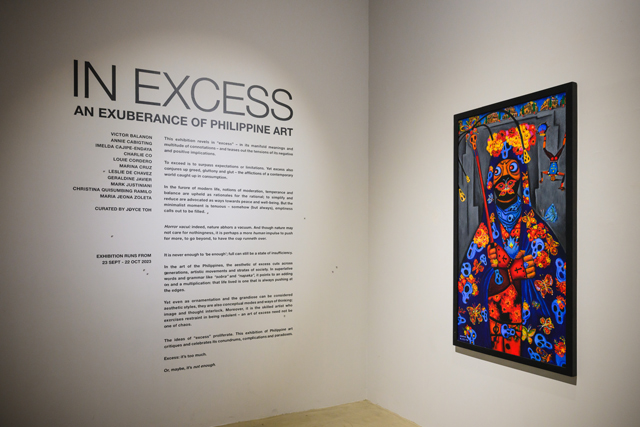
In Excess: The Exuberance of Philippine Art, a group exhibition by Filipino artists held at Gajah Gallery in Singapore, explores this idea of excess in Filipino sensibilities. The show ran from September 23 to October 22, and features the works of Victor Balanon, Annie Cabigting, Imelda Cajipe-Endaya, Charlie Co, Louie Cordero, Marina Cruz, Leslie de Chavez, Geraldine Javier, Mark Justiniani, Christina Quisumbing Ramilo, and Maria Jeona Zoleta. It is curated by Joyce Toh.
The exhibition is also part of the Philippine Embassy’s Art Trek for 2023, where they partnered with Singapore galleries. Looking into contemporary ideas of excess as well as the notion of "horror vacui" or the fear of empty space, a concept often related to Philippine art, In Excess opens the discourse of Filipino aesthetics.
Projecting Excess in Fiestas and Festivals
Imelda Cajipe Endaya’s "Bagong Nobena Kay Isidro Labrador" (1988) introduces the concept of excess well, with fiestas and festivals being key events in displaying the ideas of excess in Philippine society. The Feast of San Isidro Labrador, the patron saint of farmers, is widely celebrated in agricultural societies, particularly in the Southern Tagalog region.
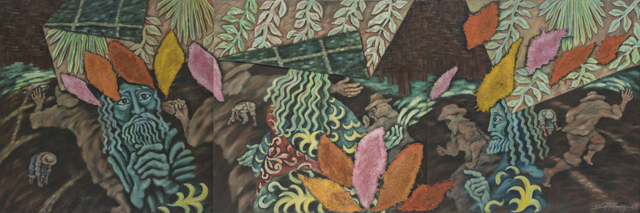
In farming, excess is a great boon, as a good harvest blesses not only the farmers and their families but the community as a whole, knowing there will be sufficient food for the months to come. A good harvest would also translate to more affordable prices when it reaches the palengke. In celebrating the feast, though, the idea of excess could be detrimental.
In projecting excess and blessings, the expectations may exceed what a particular family can afford. Celebrations of fiestas and festivals are the highlight of the social event of a town or city, where people are expected to go home, create a feast, celebrate, and entertain guests. The Feast of San Isidro, in particular, involves detailed and complex decorations—such as the Pahiyas Festival in Lucban, Quezon; or a sharing and distribution of harvests and treats—such as the Agawan Festival in Tayabas, Quezon. Nearby towns have different takes on the celebrations—but the key thing is to celebrate, give thanks, and hope for a good harvest.
Power, Politics, and Excess
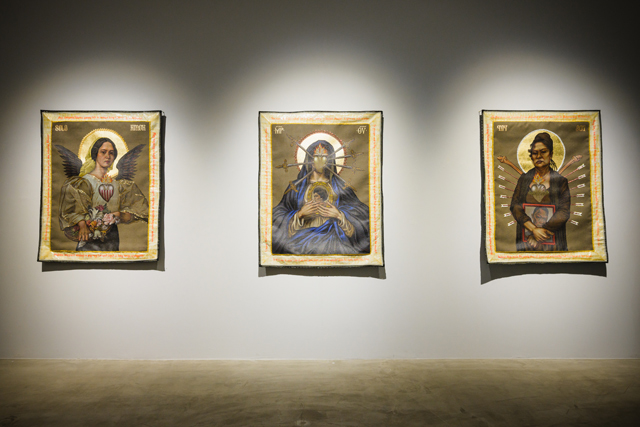
Irrevocably tied together with the concept of festivals and fiestas is the idea of religion. Leslie de Chavez, an artist from Lucban, Quezon, presents excess through religious and political iconographies. His three works—"Mater Piedad: Fernanda," "Mater Superiora: Imelda," and "Mater Dolorosa: Luzviminda" (2023)—delve deep into the complex narratives of excess religious fervor. At the same time, it looks into the worship of a former dictator and his wife, resulting in the endless suffering of Luzviminda—the Filipino people of Luzon, Visayas, and Mindanao.
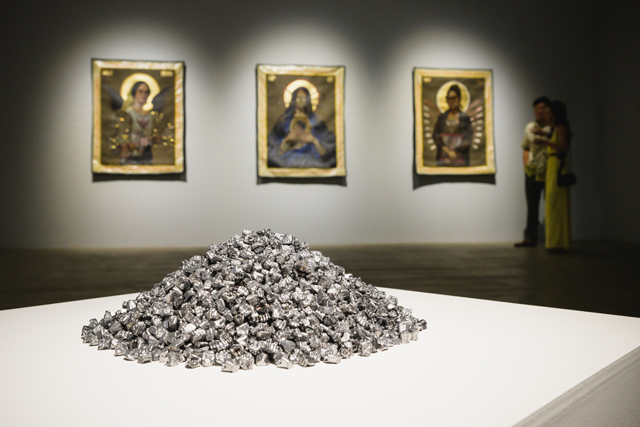
De Chavez’s other piece, "Seeds" (2023), comprises approximately 2,500 pieces of cast lead closed fists, calling back to resistance to oppression. Each piece is about 1.2 x 1.2 x 1 cm, small in size, similar to how small individual voices could be, but potent and ever-present.
In Philippine politics, the closed fist, unfortunately, was coopted by an excess of power. The closed fist, since 2015/2016, also became emblematic of former President Rodrigo Duterte, especially as he espoused his "war on drugs," resulting in thousands of deaths.
Performance of Resistance
Another take on the excess of power is Victor Balanon’s "Congress of Crows" (2023), where he presents the violence in Philippine society—with a crowd of people being crushed by police wearing their riot gear.
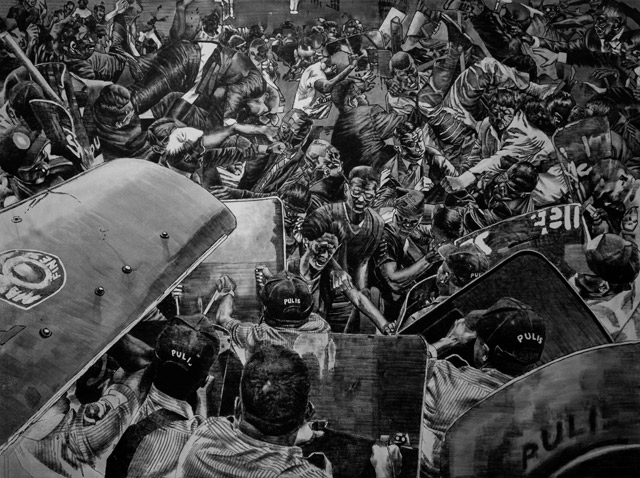
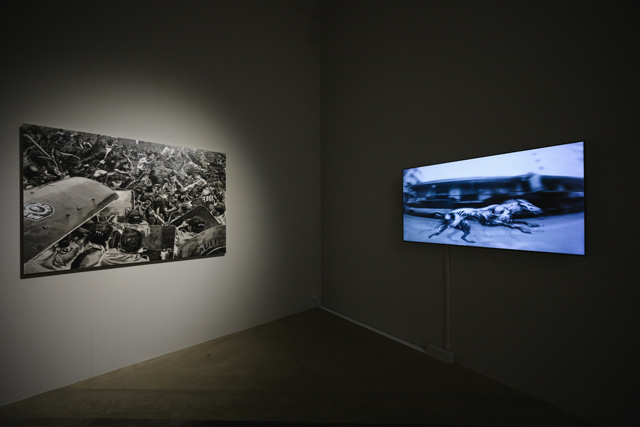
Unfortunately, this scene is now ubiquitous in news items, especially during moments of resistance. Big crowds would often gather to voice their dissatisfaction with the government and the current state of Philippine economics, politics, and society. Police are often present with their riot gear, barring the way. The two forces would often meet—and almost ceremonially, tensions would rise, push and pull would occur, and often enough, it would overflow into shouts, rocks getting thrown, striking of arnis sticks, and shields pushing protesters back. Then, things will eventually settle where the protesters often hold their programs for those willing to listen.
Choices in Excessive Information
Living in Philippine society, with all the noise and oppression, is often a struggle. Louie Cordero’s "The Choice" (2023) looks into how Filipinos process the excess of information. As demonstrated in the artworks above, resistance to excess power often feels futile as people are easily manipulated away from the truth. Filipinos are among the highest users of social media in the world. But instead of using the Internet as an endless pool of information, Filipinos are often misled and manipulated—often falling for fake news and misinformation.
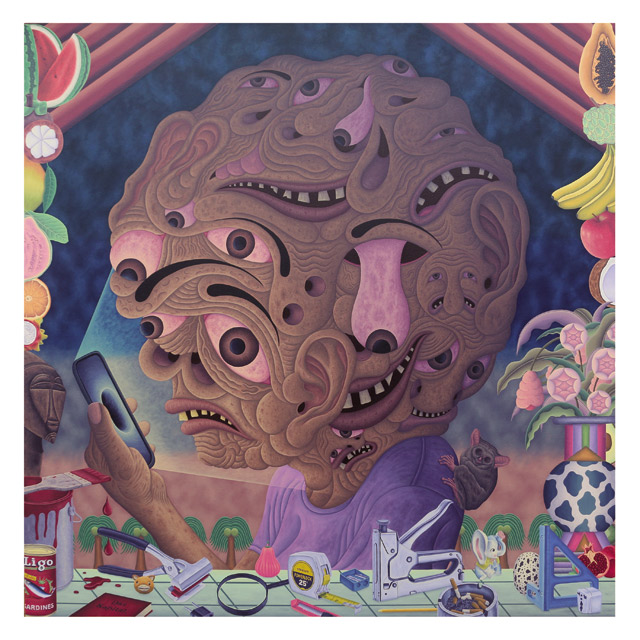
The past election cycles demonstrate how Filipinos are bombarded with information powerholders want to amplify, leading them to vote for and empower sectors that do not have their best interest in mind. Cordero evokes such complexity, with an excess of information unmanaged with the lack of literacy to manage and discern different types of information.
Hidden in Plain Sight
Tying together the idea of excess is Annie Cabigting’s "superfluous" (2023). The artwork, compared to the other pieces in the exhibition, is simple. It is a nail in a box, encased in plexiglass. But, it should be noted that the nail is 18k gold, which is definitely excessive.
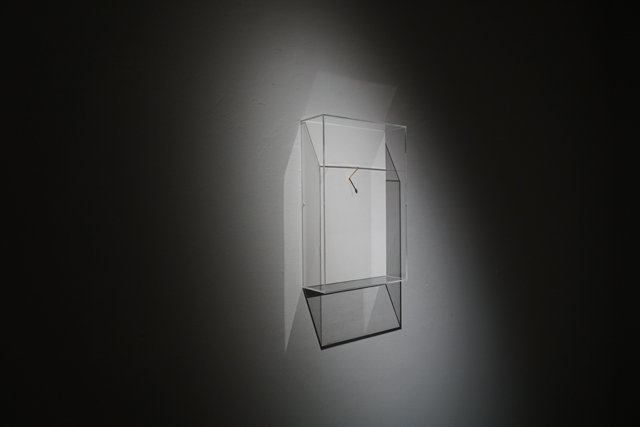
The nail is a common material found in homes and endless construction sites in a developing economy. The lavishness of the singular nail puts forward the question of excess, necessity, and what it means for the country—culturally, metaphorically, economically, and politically. Though most of the artworks presented excess straightforwardly, Cabigting took a quieter approach, inviting the viewer to question excess. While many excesses are apparent, some are hidden in plain sight.
Philippine Excess in Singapore
Presenting an exhibition with the theme of excess in Singapore, a city-state far wealthier in resources compared to the Philippines, is an awkward meeting point. Yet the ideas behind the individual artworks dig deeper into the prompt—giving critical lenses to ideals Filipinos have to contend with daily. With so many Overseas Filipino Workers (OFW) currently in Singapore providing the necessary labor to keep the city-state afloat, it gives context to where the laborer comes from—culture, politics, religion, and socioeconomic conditions. Excess in the exhibition goes beyond exuberance but rather a complex idea that Filipinos embrace and struggle with.
In Excess: An Exuberance of Philippine Art ran from September 23 to October 22 at Gajah Gallery, 39 Keppel Road, Singapore.
Also read:
Beauty and Ugly: Complexities in Philippine Art
Sneak Peek: Relive the Magic of Van Gogh's Art in BGC