

Framing Women Artists in the Philippines
We ask questions about women in the contemporary art world.
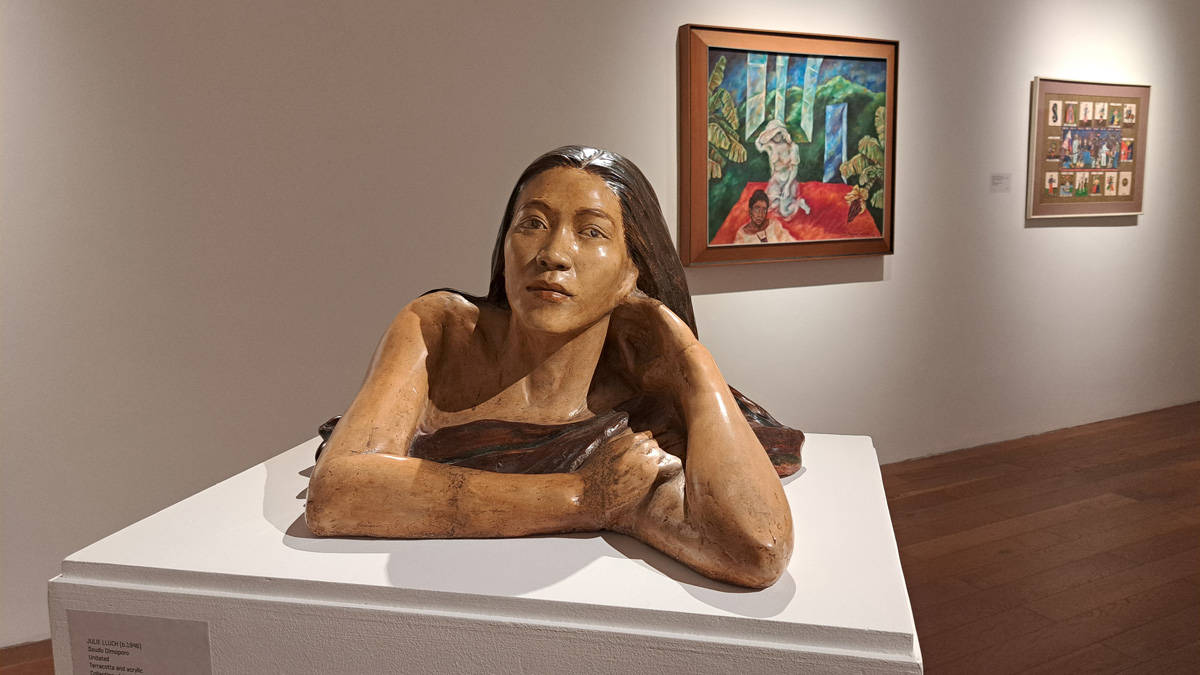
(SPOT.ph) More than 100 years after the original publication of Linda Nochlin’s Why Have There Been No Great Women Artists? in 1971, we still find ourselves contemplating the question. We have come a long way since then, with feminist theories dissecting the questions of context and privilege in the idea of “greatness.” Women are now welcome in art schools, at times with more women enrollees compared to men. Women have exhibited in smaller, intimate spaces and larger institutional spaces. There is a rise in the sales of women artists in international markets. Women have won prestigious awards in the local scene; plenty have won in the prestigious Cultural Center of the Philippines’ Thirteen Artists Awards, Ateneo Art Awards, and Metrobank Art and Design Excellence, among many others.
Yet, the Order of National Artist in Visual Arts remains elusive for women artists. Was no Filipino woman artist good enough for the recognition? Or are we still playing catch-up when it comes to recognizing women artists?
Also read:
Rethinking Land and Labor Through Art
Beauty and Ugly: Complexities in Philippine Art
Art and Labor in Women’s Month
March is Women’s Month in the Philippines. Globally, we celebrate International Women’s Day on March 8. Looking more into the history of the celebration, we can trace it back to International Working Women’s Day, with women laborers’ strike as they demanded better working conditions.
In New York, the "Uprising of 20,000" in 1909 saw mostly immigrant women working in garment factories strike for better wages and working conditions. What followed were many strikes fighting for the rights of garment and textile workers. In 1917, Russian women marched in the "Bread and Peace" protest to oppose World War I.
The women’s protests in the early 20th century tied together to women’s right to vote—with Russia gaining it in 1917, the United States in 1920, and the Philippines much later in 1937. The issue of women’s labor, rights, and suffrage and inextricably fused.
What does this mean for women artists facing issues together with fellow women, alongside the struggles of the art world and its complex ecologies? Certainly, Women’s Month has been translated into multiple exhibitions highlighting and celebrating women, but to what purpose and at what end?
Women Abstractionists
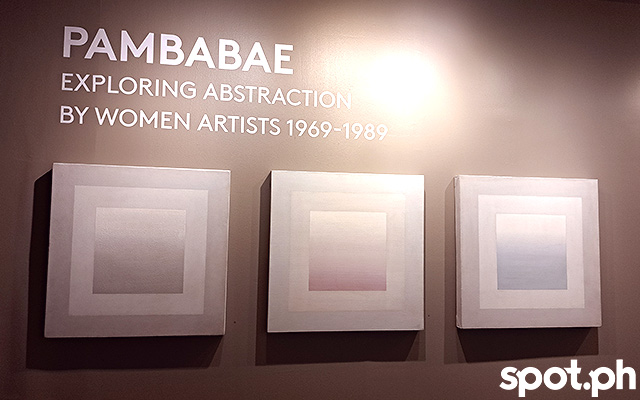
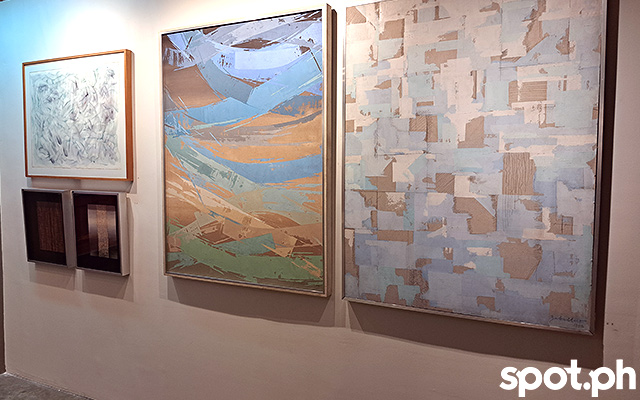
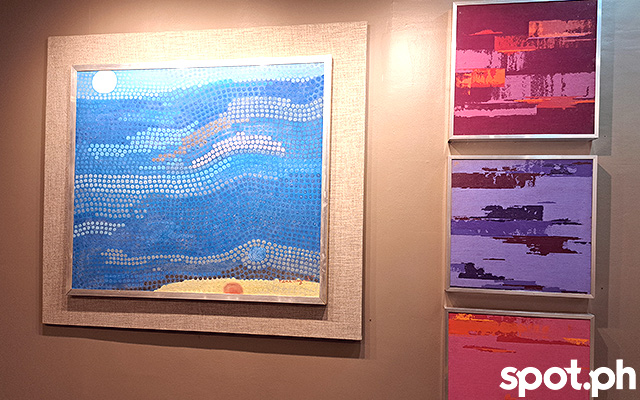
In February, Art Fair Philippines 2024 featured an exhibition on women abstract artists entitled ArtFairPH/Projects 2024 | Pambabae: Exploring Abstraction by Women Artists 1969-1989, ironically curated by a non-woman curator, Miguel Rosales. The exhibition material states, "This exhibit will showcase a mix of names from the recognized to those who are ready to be reexamined for their contributions. Most of these female artists have largely been overshadowed by their male contemporaries, and many rightfully deserve a reappraisal." The exhibition was certainly interesting, inviting the audience to reconsider and rethink abstractionists in a period caught in social unrest. At the same time, enjoying state appreciation—with abstraction and conceptual art dominating institutional support.
Breaking Comparisons
Included in the exhibition are Pacita Abad, Ivi Avellana Cosio, Evelyn Collantes, Lilian Hwang, Jeannie Javelosa, Yola Johnson, Cipra Kamatoy, Ileana Lee, Impy Pilapil, Nelfa Querubin, Nena Saguil, and Phyllis Zaballero. Though the idea anchored on overshadowed women artists, the personalities chosen were not unknown, especially in the art world. Perhaps it would’ve been a more potent presentation to show them as artists in their rights, delving into their form and practice, rather than belaboring the comparison with male peers.
The exhibition also states, “The special exhibit aims to explore abstract art created by a selection of female artists between 1969 to 1989, framed within two decades that saw an explosion of creativity in the arts, starting from the creation of the Cultural Center of The Philippines, and capped off by a year where many historic world events and changes took place ranging from the fall of the Berlin Wall to the beginnings of the World Wide Web.”
Voicing Out the Blank Lines
The exhibition note is quite silent about the two decades they covered also saw Ferdinand Marcos’s authoritarian rule, with Martial Law lasting from 1972-1981. Though we see the Cultural Center of the Philippines at present as a more inclusive institution, it was part of the Marcosian project and is an edifice complex remnant. Furthermore, before the fall of the Berlin Wall in 1989, one of its early catalysts—the 1986 EDSA Revolution—toppled Ferdinand Marcos Sr.’s 21-year presidency. With Ferdinand Marcos Jr. returning the power to the family in 2022, perhaps it is understandable to minimize such context. The period saw social realists on the streets and at the fringes of the art world—while abstractionists were exhibiting in state institutions.
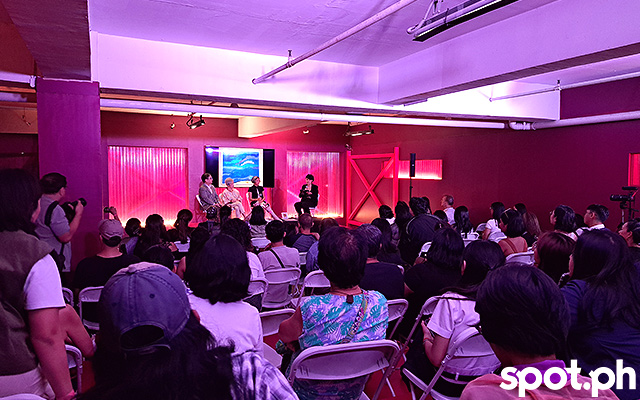
After all, Phyllis Zaballero, one of the speakers in the ArtFairPH/Talks part of the exhibition, was able to show in The Small Gallery of the Cultural Center of the Philippines in 1978. Not to minimize Zaballero’s achievement as an abstractionist, she returned to school and graduated magna cum laude at the College of Fine Arts at the University of the Philippines while serving the role of wife and mother for her family. She then passionately pursued a career in the arts, something not so common for women of the time.
Of Privileges
The talk was enlightening, but we cannot deny the role of privilege in the story. Zaballero is an interesting artist and a lively personality. Her jabs at women’s role in the arts cannot help but elicit smiles. Her struggles and feelings of liberation as her child started kindergarten are relatable. But looking at her success, it did not matter to her if she managed to sell her art or not.
She has financial support from a banker-husband, as was mentioned several times. She managed to go to school and grow as an artist without the burdens of ordinary working women. Though one cannot begrudge a successful artist of her privileges, the reality for most women artists of the time is quite different. Claims of a strong and masculine name and a non-feminine style were thought of as contributory factors to her success, which may be true. Yet, a more honest conversation of privileges and opportunities would’ve been a helpful addition to the narrative rather than putting a bravado of nothing stopping women artists at the time.
KASIBULAN in the Wake of EDSA
The conversation brings to mind KASIBULAN (Kababaihan sa Sining at Bagong Sibol na Kamalayan), a women’s collective founded in 1987 by Imelda Cajipe Endaya, Julie Lluch, Brenda Fajardo, Ana Fer, and Ida Bugayong. It was the aftermath of the 1986 EDSA Revolution, with the Philippines placing Corazon Aquino in the presidential seat, a first for a woman in the country. The early days were full of hope and joy, with the eventual shadow and dissatisfaction eventually coming to the fore in later years.
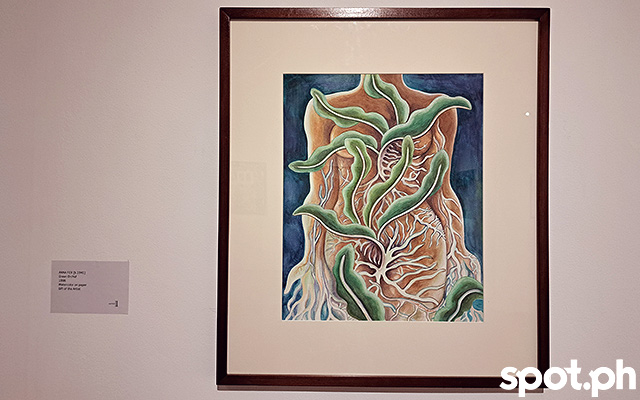
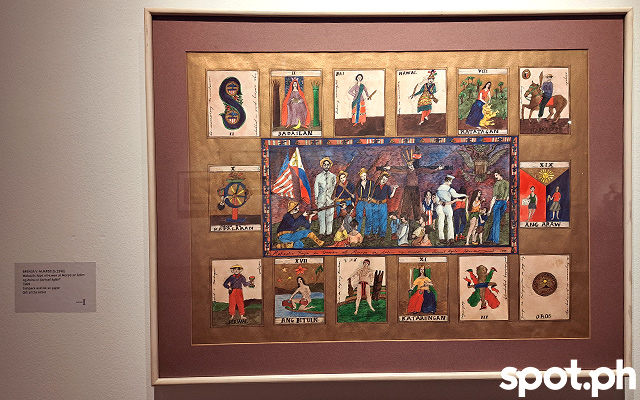
Yet, the energy for women in politics, society, and the arts was high. KASIBULAN opened up the art world—not in institutional recognition—but in vigorous creating and critique, hosting workshops, and training fellow women in arts and crafts. The early beginnings of blurring—if not yet eradicating, the line between fine art and craft found its place in KASIBULAN artists as they painted, embroidered, sewed, made bags, and essentially dismantled expectations–the early burgeoning of contemporary art in the country. The group has seen a resurgence in the past few years, with newer members joining exhibitions, talks, and markets.
Feminism in the Arts
KASIBULAN, especially in the early days, was active in the community and did not shy away from politics. Compared to the claims of abstractionists—whose approach veered away from gendered conversation and social contexts, claiming a masculine or at least a non-feminine ideal, social realists and feminists leaned toward the discomfort of the time.
Imelda Cajipe Endaya produced prints in protest of the nuclear power plant, Julie Lluch delved into the social expectations and trappings of women artists, Brenda Fajardo re-examined local lores, and Ana Fer and Ida Bugayong invited a re-thinking of craft as artistic expression. Though it is easy to think of women artists as overlooked with the need to think and re-think how they were and are represented, it is also productive to look at their art practice in the context of their time and how it relates to the context of the present.
Evolving Careers
Imelda Cajipe Endaya’s retrospective at the Cultural Center of the Philippines in 2022, Pagtutol at Pag-Asa (Refusal and Hope), curated by Lara Acuin and Con Cabrera, looks at the shifting socio-political contexts of the past 50 years, situating Endaya’s works into the complex frames of the times, and the lenses of the present.
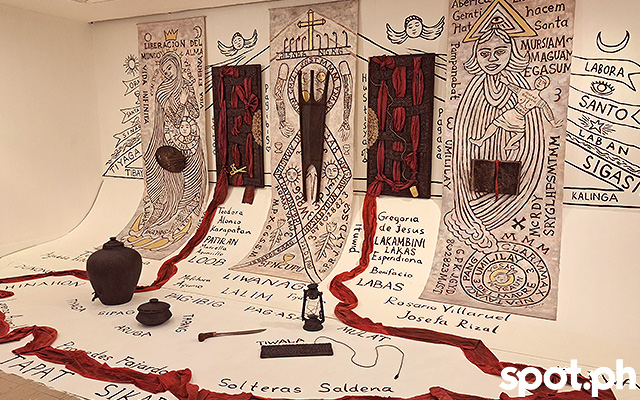
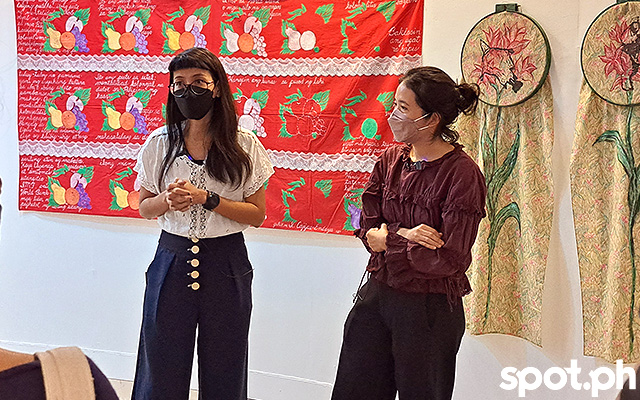
Her practice continues to evolve—Silverlens announced its representation of Endaya last February, which led to her first participation in Art Basel Hong Kong and a forthcoming solo exhibition in May. Endaya's delving into the global contemporary art ecology is a new turning for her career at almost 75, demonstrating key changes in the dynamics of the scene, given its typical age-ism and market-oriented demands.
Embracing Femininity
Another important shift in contemporary art is the possibility of embracing and demonstrating femininity and struggle beyond the mother and child tropes. Though seen in Julie Lluch’s earlier sculptural works, more recent pieces, such as the installation works of Len-Len, embrace the feminine. She has vibrant pinks, reds, and purples. Her figures have breasts, not in a goddess or feminine ideal of breasts, but breastfeeding ones with pronounced nerves in their imperfections. Her goddess imagery is on Mebuyan, the mother of the underworld who breastfeeds deceased babies. She represents figures on high heels washing clothes and talks about sexuality and the loss thereof in childbearing and childrearing.
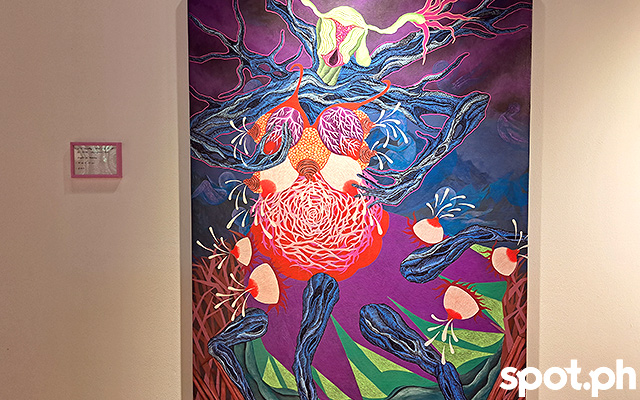
Though there is much to be done, the renewed and reinforced spaces for women—struggling, working, laboring, art-making—are present and rendered visible. There is no need to hide or feel shame for the feminine in contemporary art.
Ongoing Questions
There is no way to encompass the story of women artists in the Philippines in one article. This is in no way representative of the history of women artists or the arts of women. The idea is to pick threads of resonance.
With Women’s Month, there are dozens upon dozens of shows exhibiting so many women artists. The message is clear–the women artists are there. But what do we hear, what do we learn? Is it a distinct enough voice, narrative, and form—when almost every space features women artists at the same time just for Women’s Month? What are the continuing struggles? There is value in celebrating Women’s Month, it is time to honor and celebrate women, especially so in the arts. Yet the bigger issue here is why we still need to.
Why is it not ever-present and commonplace? Why do we feel there is a lack of representation? How do we catch up to decades, if not centuries, of women artists placed in more challenging contexts, making it more difficult to excel in the arts? Why do we not have a woman artist in the Order of National Artists in Visual Arts?
Women and Art in and of Society
As mentioned, we still have come a long way. Ateneo Art Gallery opened Matrix II, for Women’s Month, 22 years after the first one.
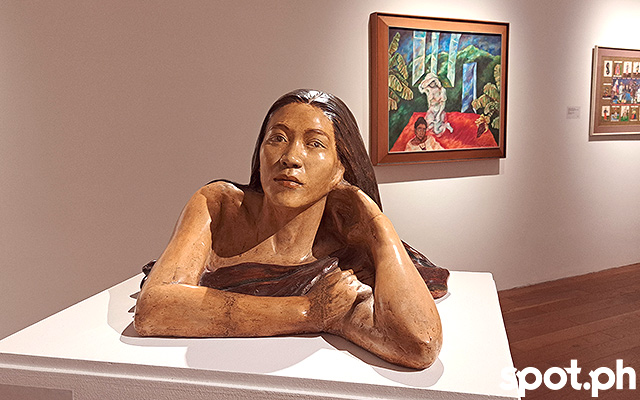
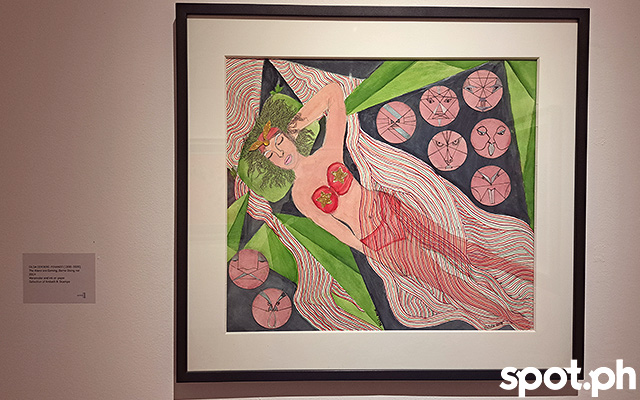
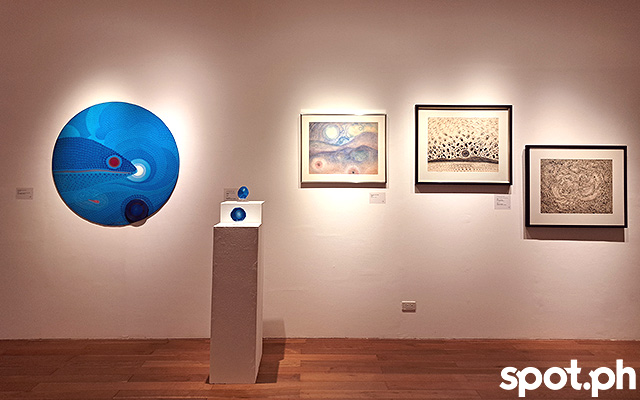
Though my questions still hold, it is breathtaking to see a full wall of different Nena Saguil works, something that I didn’t get an opportunity to see as a young art student. There were pieces from the founders of KASIBULAN, a rare experience to see their works together in one space. There were abstract works, socio-political commentaries, personal narratives, paintings, installations, videos, photographs, and prints. The beautifully curated show—an almost unintentional retrospective of sorts picks up threads of the narrative. It did not feel tokenistic in throwing together as many women artists as possible in one space.
I think the challenge for us is to continue recognizing the strengths, challenges, and the tapestry of stories of women artists and all that comes with it. Art as creative expression, art as labor, and art in and of society—with women artists as part of the narrative—not an afterthought cobbled together so there are women artists represented in art history, exhibitions, and market presentations.