
How This 'Important,' 'Brilliant' Emilio Jacinto Musical Got Made
Tanghalang Pilipino's Pingkian started with an idea from a National Artist.
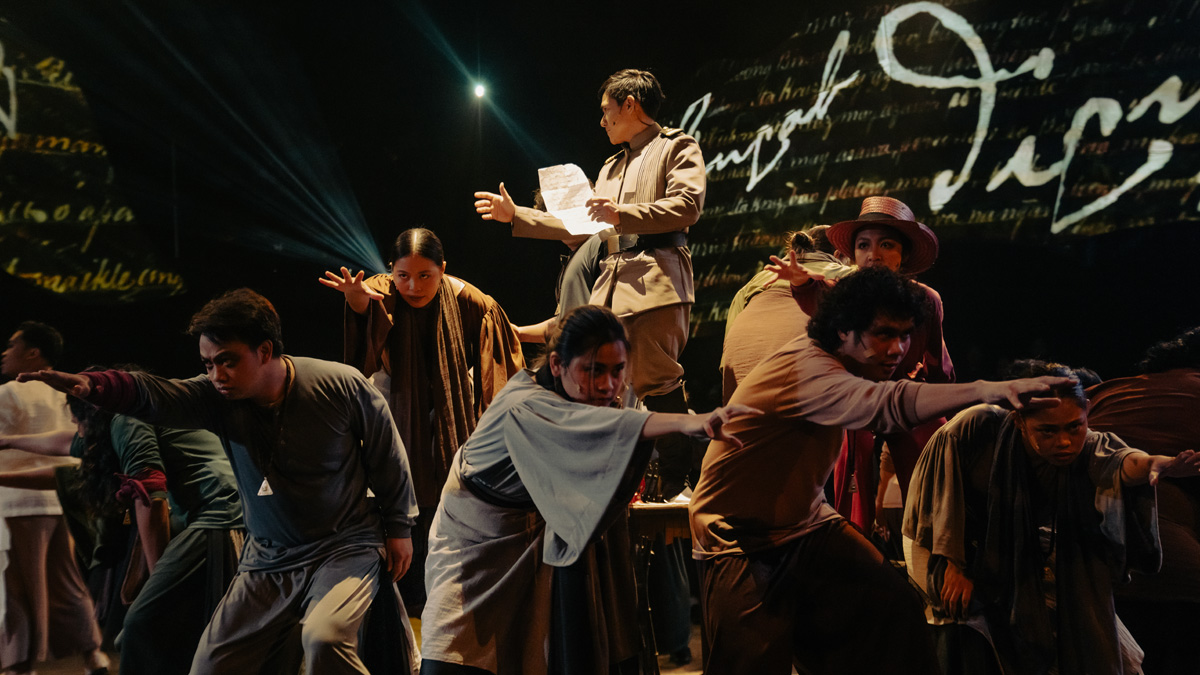
(SPOT.ph) On February 27, 1898, Emilio Jacinto, the young general from Tondo, Manila, bravely commanded a ragtag band of Filipino insurgents known as Katipuneros against Spanish forces in Maimpis, Magdalena in Laguna. Despite their gallant efforts, the Katipuneros fell short and were defeated, with Jacinto sustaining severe wounds before being captured and taken to Santa Cruz.
That event is commemorated today as The Battle of Maimpis. It also serves as the cornerstone of the latest stage musical honoring the life and heroism of Emilio Jacinto.
Pingkian: Isang Musikal enjoyed favorable reviews during its almost four-week run in March at the CCP Tanghalang Ignacio Gimenez in Pasay City. It's been called brilliant, important, with people being moved to tears as early as the first few minutes of the performance. "Unang kanta pa lang napasinghot na ako sa damdamin," wrote the poet Mikael de lara Co in a Facebook post, describing his emotional experience. "Sa halos lahat ng eksena nakaramdam ako ng pagbabara sa lalamunan. By the last song openly na akong nagpapahid ng luha."
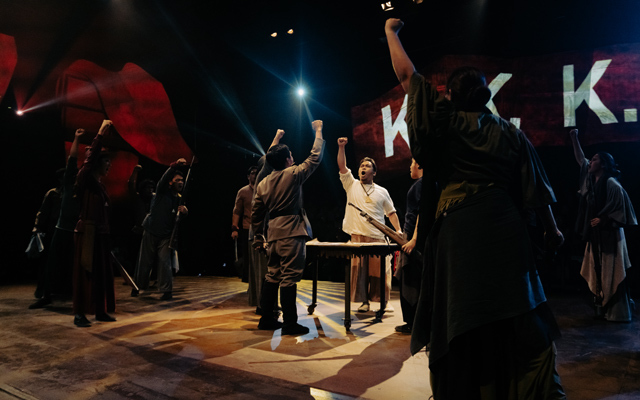
“Pingkian,” by the way, refers to a flint that, when rubbed against another surface, creates sparks through friction. It was also Jacinto’s alias in the Katipunan.
Emilio Jacinto as challenging subject
The initiative to bring the story of Jacinto to the stage came from the poet Virgilio Almario, National Artist for Literature, also known as Rio Alma. He approached playwright and poet Christian Valles, known by his pen name Juan Ekis, and broached the idea of crafting a play centered on the life of the young revolutionary.

“I submitted a short draft, an outline for a short play na one-act play. Tapos sabi niya, ‘Baka gusto mo habaan?’ Sabi ko, ‘Sure!’ Tapos sabi niya, ‘Baka gusto mo gawing musical?’” recalls Ekis whose one-act play Twenty Questions won a Palanca Award in 2003.
Writing about Jacinto was no breeze. As Ekis discovered, written records detailing the life of the “Utak ng Katipunan" is scarce. Although his well-known writings such as “A la Patría,” “Liwanag at Dilim,” and “Kartilya ng Katipunan” are accessible, information regarding his personal and public life, before and after joining the Katipunan, could only paint a faint portrait.
Eventually, Ekis sought the help of several people including historians Alvin Campomanes and Michael “Xiao” Chua for insights about his subject. He also read the book Buhay at Mga Sinulat ni Emilio Jacinto written by Jose Santos, as well as the illustrated biography Emilio Jacinto: Henyo ng Himagsikan created by Edilberto Villegas. Ekis also consulted playwright Paul Dumul, known for writing historical plays like Ang Paglilitis Kay Mang Serapio, Kabesang Tales, and Ang Pagpatay kay Antonio Luna, to know more about the dos and don’ts of writing narratives for theater based on historical figures and events.
Don't tell the story, just sing it
Yet Ekis was clear from the get-go not to present Jacinto’s entire life story. He delved into the latter part of the hero’s life, weaving references from various stages through dreams and hallucinations. These visions include dialogues and interactions with the likes of Andres Bonifacio and Jose Rizal. For the playwright, they illustrate Jacinto’s thoughts and internal struggles.
Director Jenny Jamora, who labels Pingkian as “historical fantasy,” tells SPOT.ph: “We have historical basis for many of the events in the play. But then, what the emotional arc of the characters go through, that's something that we can only surmise and that we can only take artistic license with.”
When it came to the music, Ekis, Jamora, and musical director and composer Ejay Yatco were aligned in their vision for Pingkian: they wanted it to exude a similar style and swag as the rock opera Jesus Christ Superstar.

To achieve this, Yatco infused elements of rock—and also rap— to the dialogue, making them more entertaining and contemporary. “I think bagay talaga siya [Pingkian] mag musical kasi number one yung deliryo aspect niya, yung fantasy aspect niya, napakabagay siyang i-score with music,” says Yatco.
Ekis acknowledges the profound impact of music in evoking emotions more powerfully than straightforward dialogue, something that magically works within a theatrical setting. “When I started learning musicals and started writing musicals, what I learned in the process was you make your characters sing when words cannot express emotion anymore,” Ekis says. “And most of the time that happens. In cinema, there's a rule of show-don't-tell. In musicals, it's like that: You don't have to tell the story, you just have to sing it. And you can attract your audience with that.”
Expounding on the latter, Yatco credits the musical nature of the production as a significant ingredient in catching the curiosity of viewers. “The truth is, we're at the age of musicals,” says Yatco, attributing this trend to the success of stage musicals like Hamilton and the popularity of the TV series Glee from years ago. Locally, the popularity of jukebox musicals such as Rak of Aegis and Ang Huling El Bimbo have exposed the bigger Filipino audience to the allure of this genre.

Interestingly, Yatco created the music for Pingkian with an injured hand, making the project even more special, a true labor of love and sacrifice. For Jamora, Pingkian marks her directorial debut in musical theater. “I never thought I would understand the medium. But I think I do now,” she tells Spot. Ekis describes Pingkian as "one of the most challenging plays" he's ever written. “Ang pinakamahirap siguro na part is versifying the already poetic works of Jacinto, transforming them into rhyme and meter,” says Ekis.
Emilio Jacinto wanted to be good
Jacinto died a young man at the age of 23. He perished not in the battlefield but succumbed to malaria mere months following The Battle of Maimpis. In hindsight, this makes Jacinto relatable to today’s youth. Sure, he was no ordinary young man, possessing both courage and intellect beyond his years. He was a skilled soldier and war tactician – joining the Katipunan at 19 and being named a general at 21 – and he was a gifted writer, making him a fusion of Bonifacio and Rizal.
Still, young viewers of today can take valuable lessons from Jacinto’s short but inspiring life, proving that genuine love for one’s country transcends age and experience.
Jamora and Yatco perceive Jacinto as a visionary figure, someone who “saw our weaknesses as a people.”
“He already has some advice on how you run a country, what kind of government you should have, what kind of leaders should you elect. Ang galing! He was so wise,” Jamora says about the play's central figure.
“What’s fascinating for me is ‘yung kanyang philosophizing and ‘yung kanyang ethics, ‘yung kanyang moral code," muses Ekis. "Talaga ba, iniisip niya ‘yang moral code na ‘yan at that age? Well, kasi it was a different time, of course."
He continues: “Yung concern ko ng mga panahon na ‘yan paano magkakajowa, paano ga-graduate, paano ako magkakaroon ng trabaho. ‘Di ba, yung mga ganun. Samantalang sa kanya iniisip niya yung ethics ng samahan nila. Ito, bata pa lang, iniisip na niya [na] kaya hindi tayo umuunlad dahil nakakalimutan natin [kung] paano maging mabuting tao.”
Catch Pingkian: Isang Musikal at the GSIS Theater in Pasay City on April 12, 2024, 3pm and 8pm. Visit the Facebook page of Tanghalang Pilipino for ticket information.