

Spot Shelf: Discovering Sexuality in Blaise Campo Gacoscos' Kites in the Night
The novel follows the story of Victor Molina, a gay man in his 40s.
Products recommended on our websites are independently selected by our editors. If you buy something through our links, Summit Media may earn an affiliate commission at no extra cost to you.
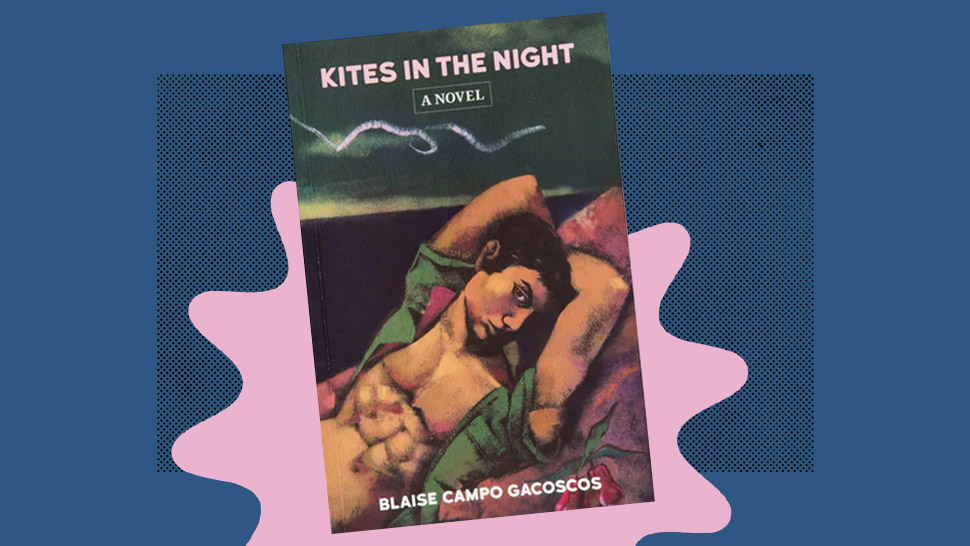
(SPOT.ph) Life is a journey full of uncharted territory, where we strive for self-realization and often face difficult ethical and internal struggles. Along the way, we ponder our identity, purpose, and where we fit in. Despite the complexity of this journey, it can lead us to discover our true essence and unleash our potential. Kites in the Night, a new novel by Blaise Campo Gacoscos, delves into these moral dilemmas and inner conflicts with depth and subtlety.
The book follows the life of Victor Molina, a gay man in his 40s. It is narrated through eight stand-alone but interconnected stories, from his childhood in Ilocos to his adulthood in Manila. The stories are presented in chronological order and written in a memoir style, emphasizing significant events in each period.
The novel effectively evokes a vivid sense of place and its language is accessible, enhancing its realism and relatability. Its composite structure, featuring 114 pages and artworks in each chapter, allows for easy reading in short sittings while also providing readers with visual cues of the story's content.
Filipino Novel Kites in the Night on Discovering Sexuality
Gacoscos depicted Victor's exploration of his sexuality through strings of events that hinted at his eventual self-discovery, rather than simply stating it matter-of-factly.
It starts with the arrival of a boy from Canada to whom Victor has gotten close after frequently flying kites during the day and playing hide-and-seek at night. This closeness leads him to be curious about his friend’s body while they were on the beach, sometimes catching himself staring at his friend and being conscious of his own body. He also becomes intrigued by his mother’s gay beautician, whose ability he once doubted due to his appearance. While sitting on a guava tree branch during a game of hide-and-seek, he witnesses two guys kissing. He gets his first taste of young love when his childhood friend and schoolmate confesses his love in a letter.
Interestingly, the narrative doesn't delve into Victor's thoughts or feelings at the time of his discovery, leaving the readers to their own judgment.
Also read: 10 Philippine LGBTQ+ Books to Read for Pride Month
An Introspection on Life Choices
Victor learns at a young age that having connections and resources gives people a powerful advantage. A less-talented but well-connected competitor gets the music scholarship he's been aiming for. Victor and his mother must do errands like peeling garlic and selling longganisa for the district supervisor in exchange for his brother's free lodging.
Later in life, Victor trades his autonomy for a job and perks with a talent manager who takes over his life. Even around his family, he feels powerless, as his bossy brother constantly reminds him of his shortcomings, despite the distance. His relationship with his mother is also strained, as she treats him like an inconvenience and favors his older brother all the time.
In the book, there's a part where the reader can reflect on Victor's moral struggles. When he reunites with his college best friend, who is now a family man and a lawyer, he finds himself becoming a target of immoral people. This makes him question how others perceive him and why they take advantage of him.
"Why did he always fall prey to unscrupulous human beings? Was he too naïve, too kind, or too trusting to be had often? Was it his social class that drove people to take advantage of him? Where have the few good men and women gone?"
Through self-reflection, Victor solidifies his moral beliefs and defies the stereotype that gay people are morally loose. He tells himself that his sexual orientation doesn't define his morals and that he won't tolerate immoral behavior.
Melding Literary and Political Tropes
Gacoscos' writing is intriguing with subtle details that leave readers wanting more. He tells stories with minimal description, inviting readers to contemplate the implications. This style may challenge or inspire readers to explore the text further.
Victor's astute observations of those around him provide readers with intricate details about his daily life and realizations that prompt introspection. Gacoscos uses personification and analogies to create vivid literary tropes. For instance, he compares a bathhouse (where gay adults walk around in towels or underwear) to a battlefield where everyone fights for the love and affection they believe they deserve.
"The bathhouse is like a battlefield. Guns are fired and people emerge victorious. Those who are defeated—the old and the weak, the fat and the effeminate, and the fucking ugly—they all stand on the sidelines as mere spectators. Lugubriously, they will march on home without a conquest."
Gacoscos cleverly combines the kite and the moon to create a relatable and profound symbol. The kite represents human limitations, while the moon represents the seemingly unattainable. Together, they form a beautiful image in Victor's mind, representing his longing for someone who may return, his personal struggles, and his complicated relationship with his father. The rat also plays a significant role in the book, as Victor fights a personal battle to kill it. This reflects his struggles with his family, resentment towards his father, and his longing for a lost love.
Political leanings are apparent in Gacoscos’ book, as the narrative is sprinkled with anti-dictator commentaries. He notes Filipinos' tendency to have a short memory and forget history in Chapter 4, citing the return of the dictator's family to power. In Chapter 6, the author challenges the notion that all Ilocanos are "loyalists" referring to avid followers of the dictator and his heirs.
The story has come full circle, ending on a positive note that champions forgiveness over anger and values familial relationships over personal resentments. The novel is an invitation to readers to pause and reflect on the paths they choose to take in life.
Kites in the Night (Ateneo Press, 2022) by Blaise Campo Gacoscos is available on Lazada and Shopee for P350.
Also read:
Post-War Manila Comes Alive in Mookie Katigbak Lacuesta's Assembling Alice
Jerry Yapo Reminisces About Elbi Life, Art, and Dogs in New Collection
Links are updated regularly and as much as possible but note that products can run out of stock, discounts can expire and listed prices can change without prior notice.