

What's Up With Those "Filipinos" Biscuits?
In which we ask, what's in a name?

(SPOT.ph) Filipino food is no stranger to being at the forefront of culinary discourse on the world stage. Between adobo collab-ing with Google and Mickey Mouse, a local ube cream liquer winning top prizes at the World Liquer Awards 2022, the controversy sparked by Kinalas and Pinoy Spaghetti appearing on the Worst Rated Dishes list, or even superstar Olivia Rodrigo being a big fan of lumpia, there’s no denying the Philippines’ rich and diverse vocabulary of eats, tastes, and dishes brings out the most passionate of food enthusiasts (with the most piping hot takes).
However, those with the unwavering—and ungodly—ability to retain gigabytes of weird historical trivia will undoubtedly remember the time Filipinos were instead at the forefront of one of the world’s strangest chocolate controversies. No, not the nostalgic eats you’d gladly want to revisit; we’re talking the snack that’s hard to swallow for a whole host of different reasons: the doughnut-styled chocolatey biscuit snack called “Filipinos.”
Also read: Fort Santiago Now Has an Outdoor Food Fair for Your Post-Tour Cravings
Why is the Filipinos biscuits from Spain called that?
Taking the biscuit for the most needlessly controversial chocolate this side of the globe, the “Filipinos” is a snack that isn't even officially sold here. It is sold in Europe, primarily in Spain, and North America. And for what is essentially just a chocolate-and-cookie combo, the snack has repeatedly been the subject of backlash and protest for a couple decades now.
Though the Filipinos snack isn't exactly permanently at the forefront of our collective consciousness (the Lord knows we have more at stake), the fact that it continues to be sold elsewhere in the world means that every so often, it gets brought up. Whether through some sort of international level incident or if you simply happen to be the type to be up all night wondering why they ever had to come across the snack while grocery shopping in the first place (i.e. this very writer from SPOT.ph).
The question that makes this particular snack branding gobsmacking (and not in the way we want our sweets to be) is “Why on Earth are these biscuits—whose manufacturing likely has nothing to do with the Philippines—called Filipinos anyway?” After all, what’s in a name?
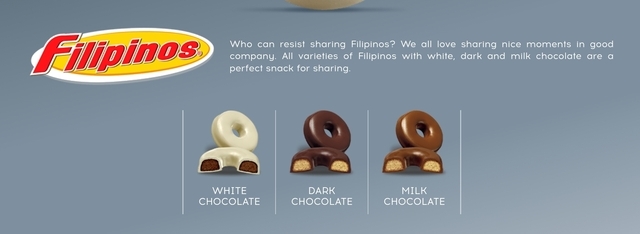
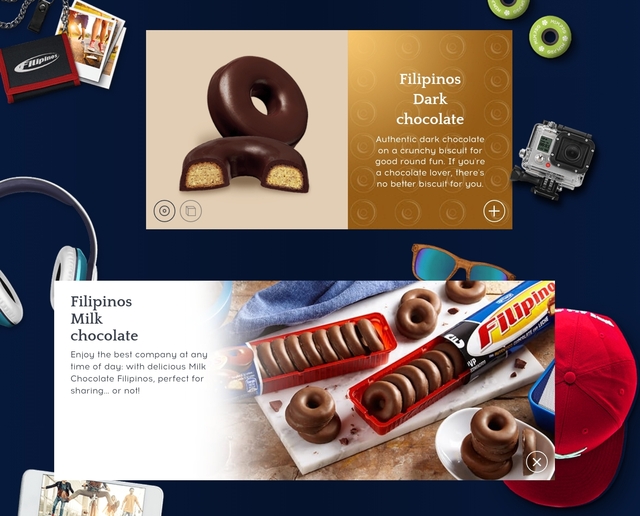
Filipinos (the snack) is manufactured by Artiach, a company based in the town of Orozko, in the Basque Country of Northern Spain. According to the company’s website, they’ve been around since 1907 and have a total of eight original recipes: Chiquilin, Dinosaurus, Princesa, Marbu, Artinata, Surtido, bio-ecologic (yes, it sounds better in Spanish), and, of course, Filipinos (this one, well, we can’t say we know how it sounds in Spain).
There’s no offering of any sort of explanation as to the biscuit’s name. What the site does say though, is that Filipinos are “perfect for sharing”.
The most popularized reasoning, which has circulated so much along the grapevine that its original source is difficult to pinpoint, is that the snack is so called due to its appearance of being “dark on the outside yet white on the inside,” or “striving to be” white on the inside, in some cases. We will note, though, that the cookies are available in a range of flavors (white, milk, caramel, et cetera) that don’t all go by a black-inside, white-outside type of build.
This was a sentiment shared by the late Congressman Sonny Alvarez, who filed a resolution calling the Department of Foreign Affairs to launch an investigation into the Spanish biscuit brand. This then led to a resolution filed within the House of Representatives and even then-sitting President Joseph “Erap” Estrada weighing in to call the branding an “insult” to the Filipino people. (1999 Kyodo News International). Meanwhile, the usual reports say that then Philippine Foreign Secretary Domingo Siazon was reluctant to file protests, reportedly making some sort of comparison by noting that Austrians are unbothered by Vienna sausages.
Even for the more conservative late 1990’s, the cookie-created controversy is unsurprising. After all, even barring the centuries of colonial history the Philippines has with Spain, the truly unfortunate flavor name of “chocolate negro” on the biscuit’s wrapper is enough to sound the alarms and make any Filipino’s stomach turn. Sure, it could arguably simply have been lost in translation—chocolate negro meaning dark chocolate—but anybody with basic knowledge of world history could see how it might be misconstrued in the global context.
When the biscuits somehow made their way into the local market two decades later in 2019, it was met with similar ire. The Department of Trade investigated the product’s entry, with then Secretary Ramon Lopez citing trademark laws. “If you try to recall what's in the law, at least in the Philippine law, sa trademark, we are not allowing the use of a country or a nationality as a brand," Lopez said on GMA’s 24 Oras. Our laws, of course, do not cover what’s outside of the Philippines.
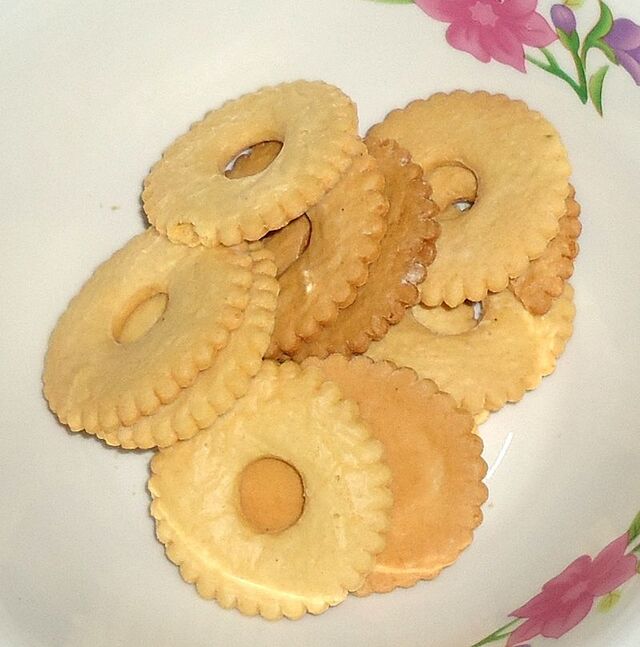
While the general mood surrounding the cookie brand tends to lean towards insulting, there could also be a good portion who view the snack branding as a playful homage. Some food bloggers as early as the mid 2000’s put forth a theory that the name, despite how it comes off, was born out of good intentions, as perhaps Spaniards came across the similarly crafted Filipino cookies rosquillos and wanted to create their own version, while paying respect to the people that authored the original biscuit. (Market Manila). A 2006 Manila Times article is one example. In a round up of supposed "trivia," it states that the “cookies resemble the ‘rosquillo’ biscuits produced in Iloilo and Negros and the Spaniards added another twist by coating it with brown or white chocolate.”
Perhaps the question of “Why?” has, in time as well, also become arbitrary. Without going full Think-Piece mode, it has been an observation that there are only two reactions to this biscuit brand (that don’t necessarily contradict one another).
Those deeply aware of Filipino colonial history are most likely to be insulted by the—let’s just say—explicit packaging, or at the very least likely to give it some major side-eye. On the other hand, it wouldn’t also be surprising for the casual Pinoy to stumble upon the packaging and simply make a joke about how tasty Filipinos can be. Whatever your initial reaction may be, we can all agree on one thing: it is a sobering reminder of how historical wounds remain.
Also read: PH History Bites: Why Cebu’s Most Magnificent Church No Longer Exists