
At Kazu Café in Makati, Modern Japanese Flavors Find a Colorful Home
Nosh on Hitachi Wagyu burgers, temarizushi, and more in their vibrant, Yayoi Kusama-esque space.
Kazu Café
Ayala Triangle Gardens, Makati
Contact: 0917-502-0320
Instagram: www.instagram.com/kazucafeph
Open from 8 a.m. to 10 p.m., Monday to Sunday
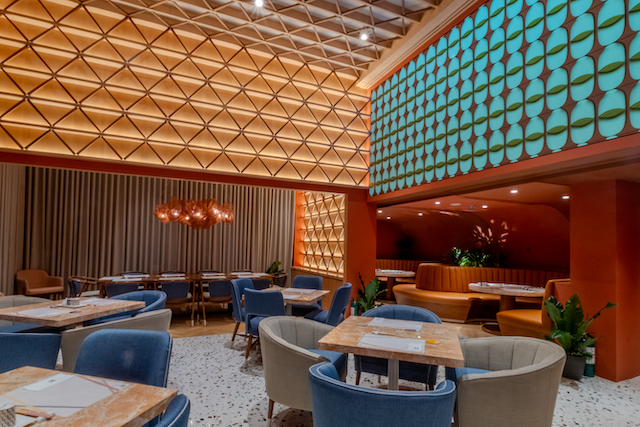
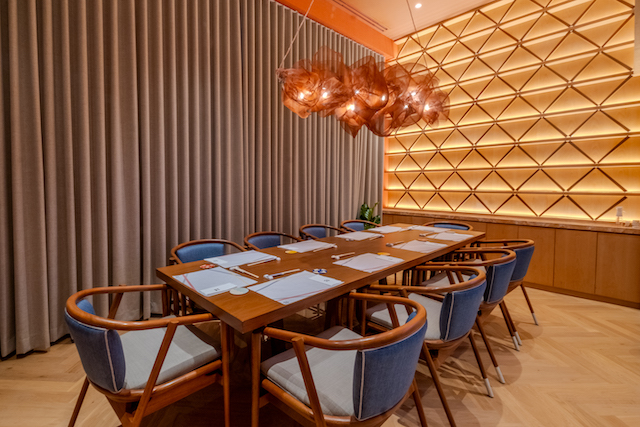
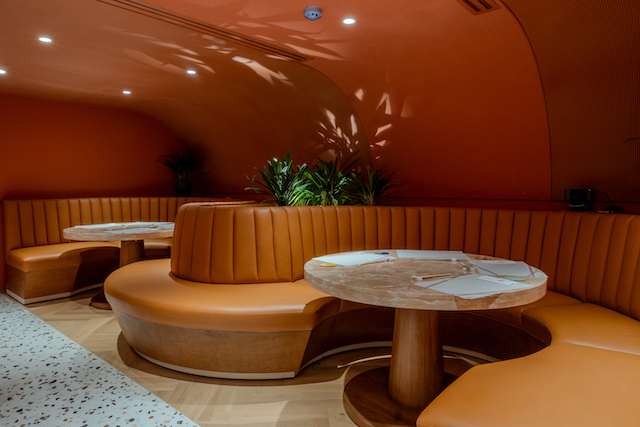
(SPOT.ph) Younger siblings in families would well know the pressure that comes with having to live up to the success an older sibling has achieved. It’s a kind of pressure I imagine Kazu Café has had to wrestle with, given the superb reputation its older brother (or sister?) Kazunori holds for their A+ sushi and omakase. I go in with no expectations and my eyes grow in size at the sight that greets me: a spectacle of geometric patterns and vivid hues like gold, pumpkin orange, cyan, and admiral blue from the floor all the way up to the high ceilings. Clearly they’re out to make an impression—and an unforgettable one, they make.
Also read:
Psst, Kazunori's Bringing Their Omakase to Your Home
Here's Where You Can Find Excellent Sushi and Sashimi for Delivery
10 Splurge-Worthy Japanese Spots for Omakase + Kaiseki in Manila
Kazu Café at Ayala Triangle Gardens, Makati
Of course, Kazunori’s not new to dipping their toes into the more casual side of Japanese fare. The restaurant along Chino Roces Avenue has long had a café half that, in contrast to the more traditional approach of their sushi bar and restaurant half, served more modern, at times playful dishes with Japanese inflections—yoshoku (essentially Western-Japanese fare) like omu rice and uni cream pasta, onigiri (rice balls), Japanese sando (sandwiches), and so on. “We always saw that people gravitated towards a lot of our café items [at Kazunori],” says Ryan K. Cruz, President and CEO of the restaurants’ parent company Nippon Hasha Inc.
The new Kazu Café, being a standalone shop in the more populated area that is Ayala Triangle Gardens, is thus a strengthening of this side of Kazunori’s identity. In Cruz’ words, if Kazunori is a senior woman who walks slowly, thinks before speaking, and abides by traditional Japanese etiquette, Kazu Café is a “very young Yayoi Kusama.” “If you look at [Kusama’s] work, you will find the Japanese elements of balance and harmony… but there's a lot of [influences from] Western culture [like the] very bold colors and shapes. This is what we felt Kazu Café would be.”
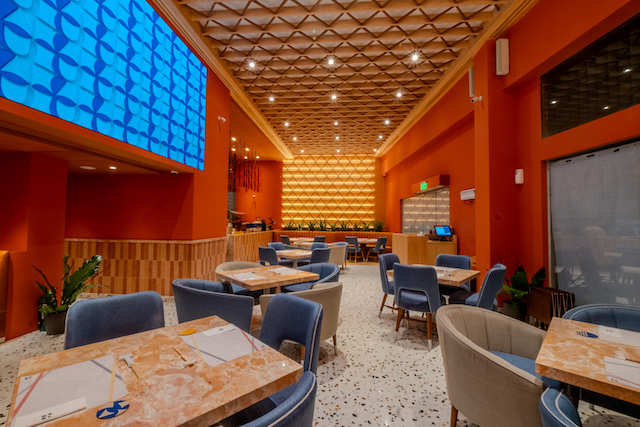
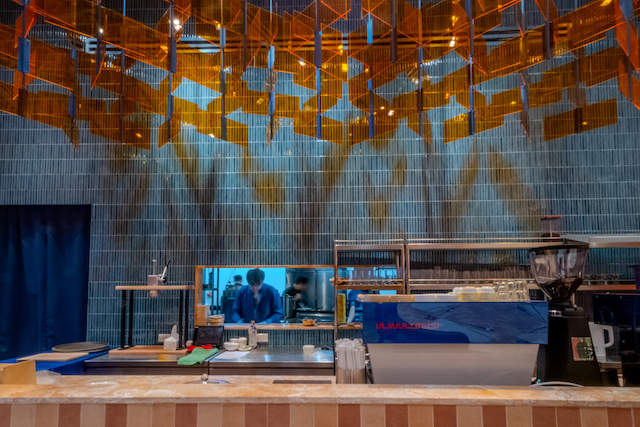
This striking design comes courtesy of Liza Crespo of Ecotecture Design Studio, who gives Japanese tradition and present-day quirkiness with details like custom sculptural lights and denim-upholstered seating, the latter being a reference to Japan’s denim industry. Nippon Hasha also enlisted the skills of Singapore-based ACRE Design to work on their brand identity, described to be “bold and artistic yet approachable” by ACRE co-founder and creative director TY Zheng.
Kazu Café carries this meshing of opposites over to their food menu, which is as playful and creative as it is one to pay ode to Japanese tradition. And, this being the Nippon Hasha group, the use of proper techniques and premium ingredients from Japan form the backbone of their dishes. There’s just enough deviation from classic Japanese fare where applicable, without the result becoming in any way alienating.
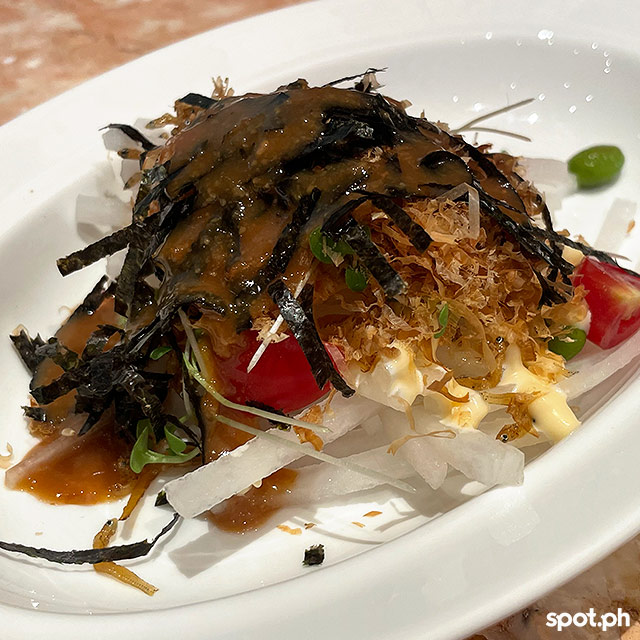
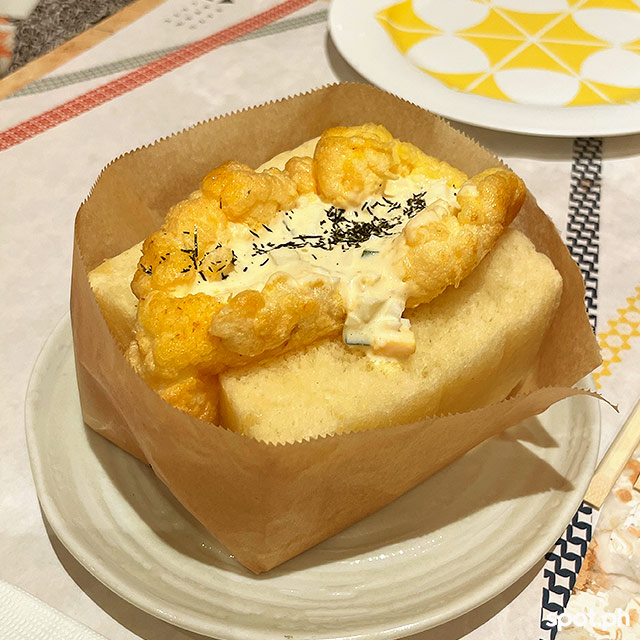
Pastries like the Curry Cream Danish (P320), and Japanese pasta dishes like the Napolitan (P420) with bacon and Napolitan sauce, demonstrate Kazunori’s great hand at bridging Western and Japanese worlds. There’s also the Tamago Sando (P290), an elevation of the konbini classic with karashi-spiked egg salad and a fluffy soufflé-style omelette in between slices of buttery brioche each about an inch thick.
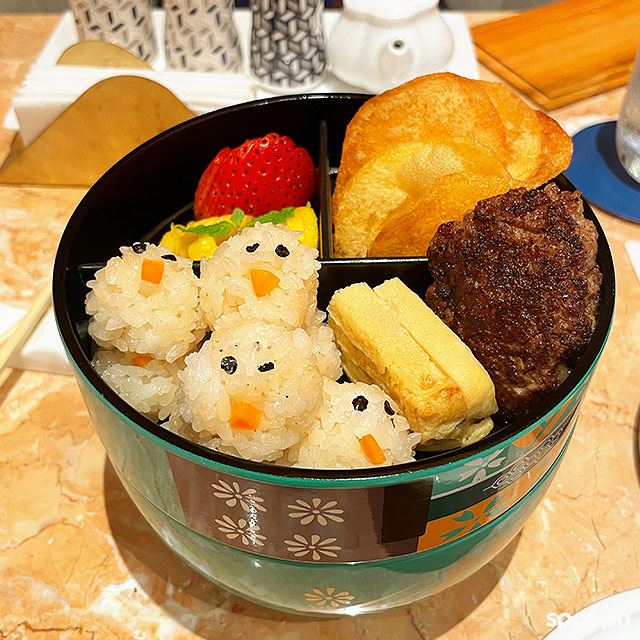
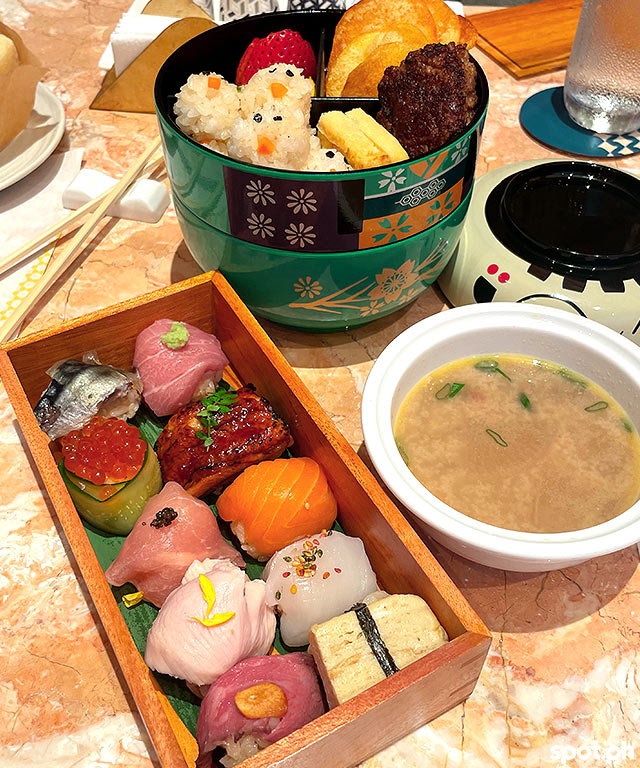
For the kids (and kids at heart), kiddie sets like the Okosama Curry—mild curry-spiced rice balls adorably shaped like chicks and served in a lacquered bento with sides—are happy to please. Equally captivating is the 10 Kinds Temari listed under their breakfasts. Here Kazu Café shines the spotlight on temarizushi, a style of sushi believed to have originated from Kyoto (and from a more recent period); open the box and you’re met with glistening sushi balls with a rainbow of toppings: tamago, ika, salmon, unagi, otoro, saba, ikura, sous-vide chicken, and roast beef.
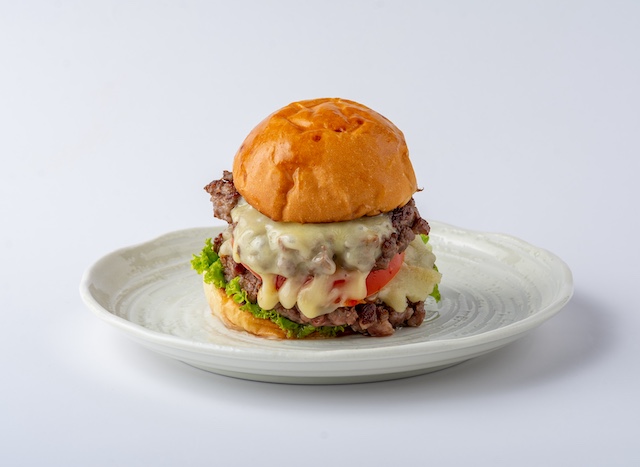
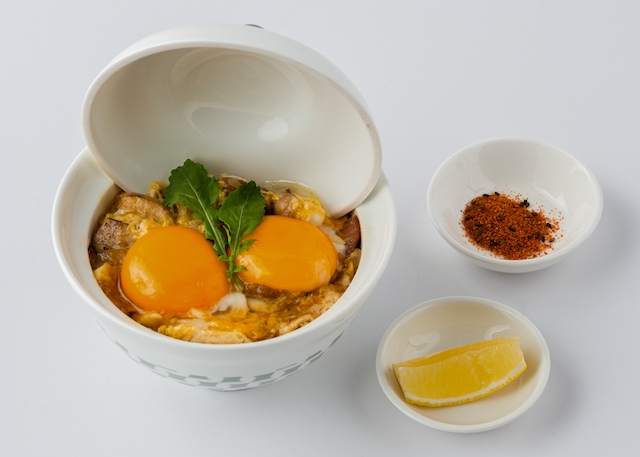
Decidedly decadent is the Hitachi Wagyu Burger (P1,400), a bougie burger made uber-juicy by A5 Hitachi Wagyu and subtly umami by bonito in the aioli. Even the humble donburi gets the high-caliber treatment—take for example the Kazu Oyakodon (P450), where torched chicken thigh and sous-vide duck breast join forces, united by soft-set scrambled eggs and topped with egg yolks waiting to gush open as you poke your chopstick through.
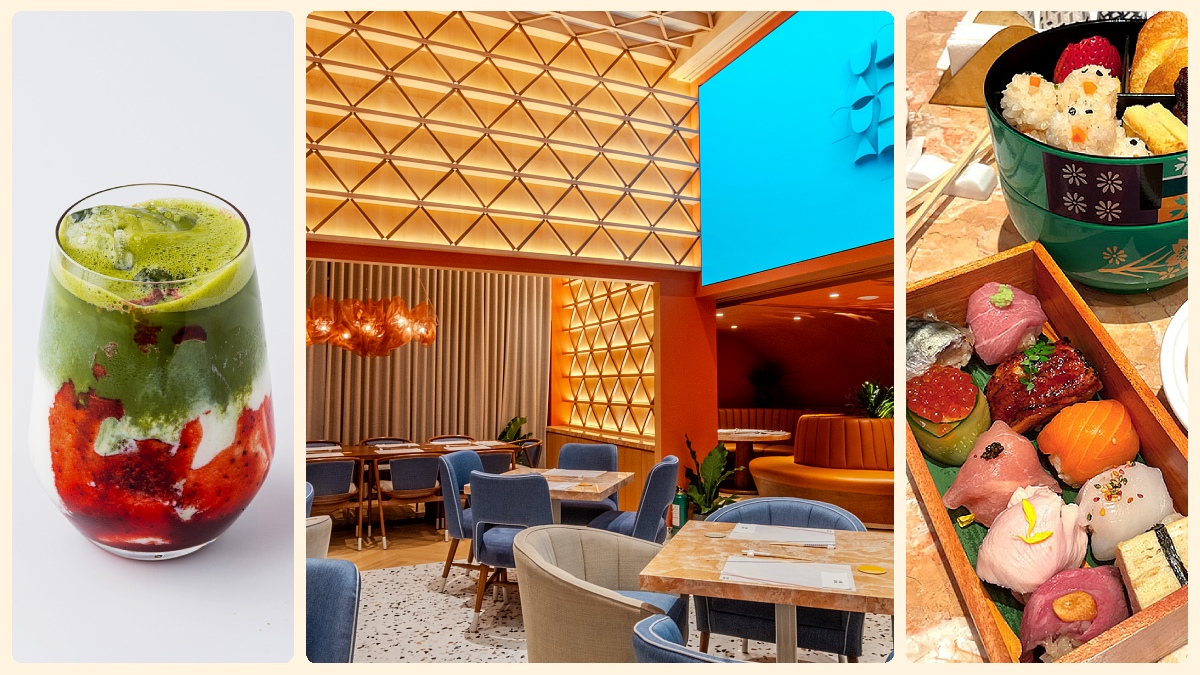
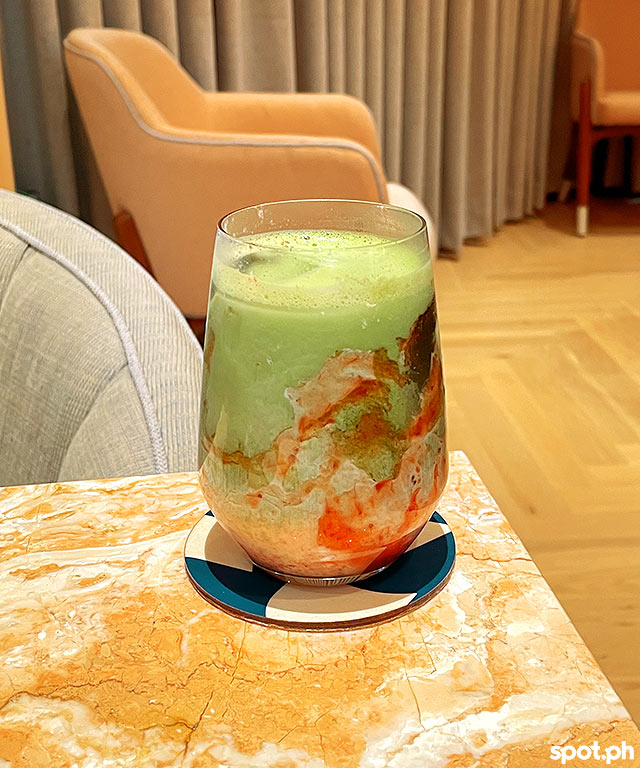
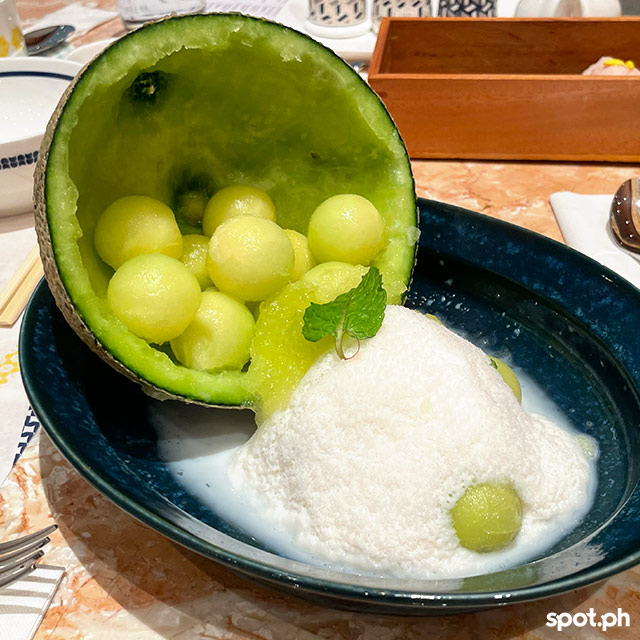
This being a café, getting drinks is a must—and there’s something for everyone, with options like the Honey Latte (P190/hot, P220/iced) tinged with Sorsogon honey, the espresso sunrise-esque Iced Yuzu Americano (P180), and the crowd-favorite Strawberry Matcha Latte (P260). Don’t forget dessert, and in particular, don’t miss the Musk Melon Kakigori (P650), which highlights the taste of its namesake with juicy spheres of melon over shaved ice that dissolves on the tongue like air.
Cruz professes his love for the culture that Japanese cafés have upheld. “[It’s] something where, instead of the more traditional stuff where it's bound by rules… cafés are more, perhaps, ambiguous. They like to take things from other cultures, which I consider fun, and they do their own twist—all of a sudden, they call it their own,” he explains. “It's not something that you consider cerebral, where you're thinking about the techniques and what they did to the certain protein and the certain approaches that they employed. It's something that is… fun.” And without the restaurant group sacrificing their core philosophy and eye for quality, fun is very much what Kazu Café has happily managed to be.