

The Making of Hapag's Much-Talked About Western Visayas Menu—And How Empathy Can Make Flavors Sing
Chefs Thirdy Dolatre and Kevin Navoa sought to learn more about the cuisine the best way possible: through first-hand experience, in the company of local experts.
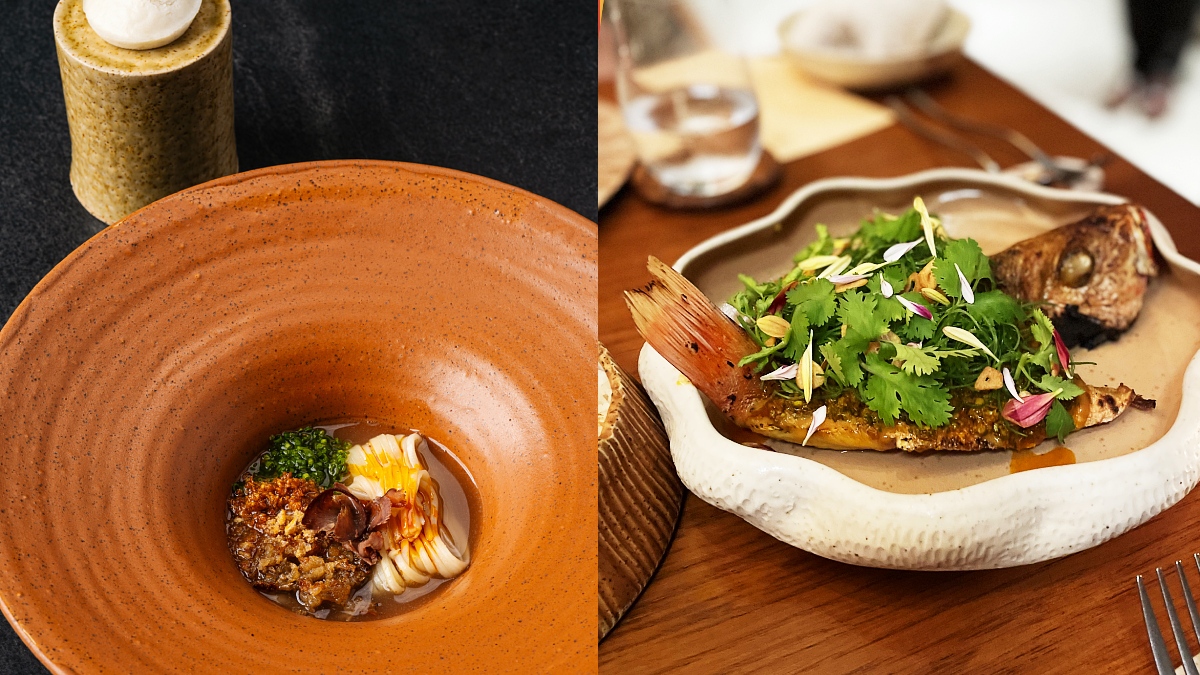
(SPOT.ph) “I think that batchoy-making is reminiscent of Japan’s ramen culture—each version is unique, reflecting the personal touch of its maker,” says Chef Thirdy Dolatre. Together with his fellow chef and owner at Hapag, Chef Kevin Navoa, Dolatre embarked on a trip to Iloilo in 2021 and visited batchoy's birthplace, the La Paz Public Market, with the goal of trying as many variations of the dish as possible. Every batchoy shop, he explains, has their own distinct style or signature take: “Some serve it with a clear broth," he recalls, "while others use a rich, cloudy, collagen-packed base. Some use egg noodles, while others opt for misua.” Amid this diversity of styles, he learned an interesting tidbit that made the batchoy-downing experience distinctly Ilonggo: the pairing of the pork noodle soup with puto. “Locals told me that batchoy isn’t complete without this combination, often accompanied by their favorite soda, Mountain Dew.”
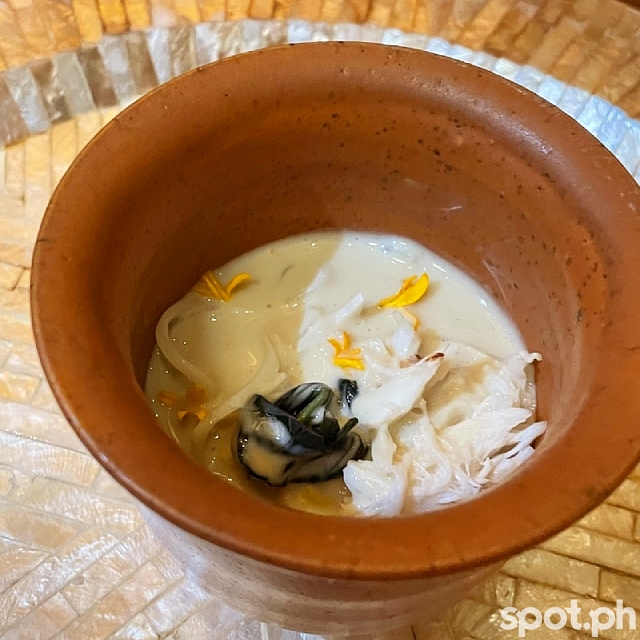
The dish—and in particular, the said pairing—inspired their own version at the restaurant, which is the opening act in their recently released Western Visayas tasting menu. Dubbed Batchoy at Puto, it comes as a concentrated batchoy shot of sorts with homemade noodles, fried garlic, crispy pork face, and chicharon. This same dish was central in what’s been deemed the Big Batchoy Debate on social media a few weeks back; more on that in a few. For now, the noodle-soup plus rice-cake duo in front of me.
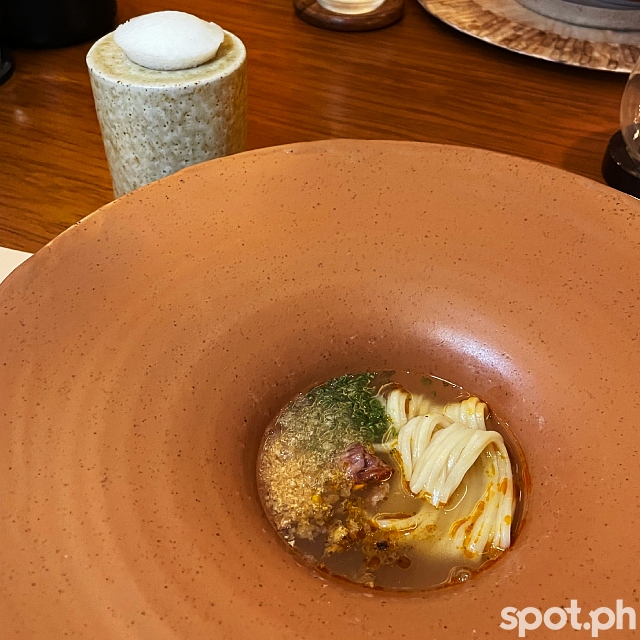
Compact size aside—which is standard in a tasting menu where this is just one of many courses anyway—what I get in every slurp is more than a literal warmth, with the velvety soup leaving a slick feel on the lips and the rich, naturally sweet taste of pork broth indicating it’s been cooked low and slow for hours. Hapag pairs this bowl with puto fermented using sourdough (done by mixing a sourdough starter into the batter of day-old rice that’s soaked in water and blended with rice flour, Navoa tells SPOT.ph), introducing a twist to the classic Ilonggo pairing they had learned. I first alternate nibbles of the puto between spoonfuls of the soup before going straight into dipping the rice cake into the soup. Subtly sour and just a touch sweet, it was—just the thing to balance out the buttery broth.
Also read:
Hapag's New Makati Outpost Proves They're Only Growing Bigger and Better
The SPOT.ph 50 Great Restaurants of 2024: Best of Manila and Beyond
The Batchoy Debate: Is Hapag Wrong To Take On The Ilonggo Soup?
Hapag's Western Visayas tasting menu
Learning the Defining Tastes of Western Visayas
Hapag’s embarkment on Western Visayan cuisine entailed plenty of research done the best way possible—through firsthand experience in the place itself, and in the company of local experts. Dolatre and Navoa were inspired to take on the region’s food following the said trip to Iloilo they had taken in 2021, when they were asked to judge a cooking competition. Dolatre describes the experience as “eye-opening”: “We discovered many dishes and ingredients we had never encountered before—and that was just one part of Western Visayas.”
Navoa adds: “We have always remembered how much we loved the food and how deep their cuisine was—it was one of those moments you knew that the only way to understand their cuisine was to be there and try it for yourself.”
Of course, dishes like inasal, kinilaw, and the aforementioned batchoy are common enough in the Metro to be part of the typical Manileño’s consciousness—but traveling to the source made them realize their understanding of the cuisine was only “surface-level.” After drafting an initial menu, the two sought to expand their knowledge even further, taking another trip to Western Visayas that would help “give the menu legs and more soul.” They planned a “very hectic” itinerary and traveled by car as well as roll-on, roll-off (ro-ro) ships accompanied by Jairus, a local cook from Bacolod.
Dolatre and Navoa found themselves ro-roing their way through Typhoon Kristine (!) to visit Iloilo. It was here that they’d meet with Chef Tibong Jardeleza, legend and long-time advocate of Ilocano cooking, who tried the dishes on the menu they’d initially drafted. The next place on their itinerary? Guimaras, where they sought to learn more about (and meet makers of) asin tultul, a traditional—and rare—salt. Asin tultul is made using the ashes of seawater-inundated driftwood that’s burned with a continuous sprinkling of saltwater, then mixed with coconut milk and cooked into slabs of salt that’s then cut into blocks. “We made sure we understood the [asin tultul-making] process, and we brought a few blocks home,” Navoa relays.
They soon made their way to Bacolod (also via ro-ro) and met with organic farmer and slow food advocate Ramon "Chin Chin" Uy Jr. of Fresh Start Organic. Uy planned out an itinerary for the chefs, leading them to meet local farmers who grew rare local produce—among them, the prized Criollo variety of cacao. Dolatre and Navoa also got to meet Enting Lobaton, who’s been dubbed a “Kinilaw Artist” by Doreen Fernandez herself. “As an enthusiast of the kinilaw method, I learned from a guy who has been doing this for decades,” says Navoa. “He impressed all of us.”
All of these experiences—the stories they came to learn, the people they met, the flavors they tasted—come together in the 10-course (technically 13-part) degustation. The idea, Navoa shares, isn’t just to “create flavors,” but to tell the story of the region and its people.
The menu is a tribute to Western Visayas, in that it's meant to "tell the story of people from there," Navoa says in an exchange with SPOT.ph. "So we did not try to go too far. Some dishes are inspired by [classic dishes], some are meant to be the same and just look different and smaller." It doesn’t mimic the region's homegrown dishes 100%—nor is it meant to. "I guess the most important talaga for us is telling their story. Dishes will always be interpreted by others differently, even us." Consider this a retelling from the Hapag perspective—that is, the Hapag team’s interpretation of the cuisine and their experiences, with the team taking creative liberties as would be fit while retaining the core form or flavor profile or mood evoked. Some of the ingredients and cooking methods they encountered have made it to the menu as well, peppering their offerings with tastes true to the Western Visayas region.
Smoky Skewers, Savory Piaya, Sinugba + More on Hapag’s Western Visayas Menu
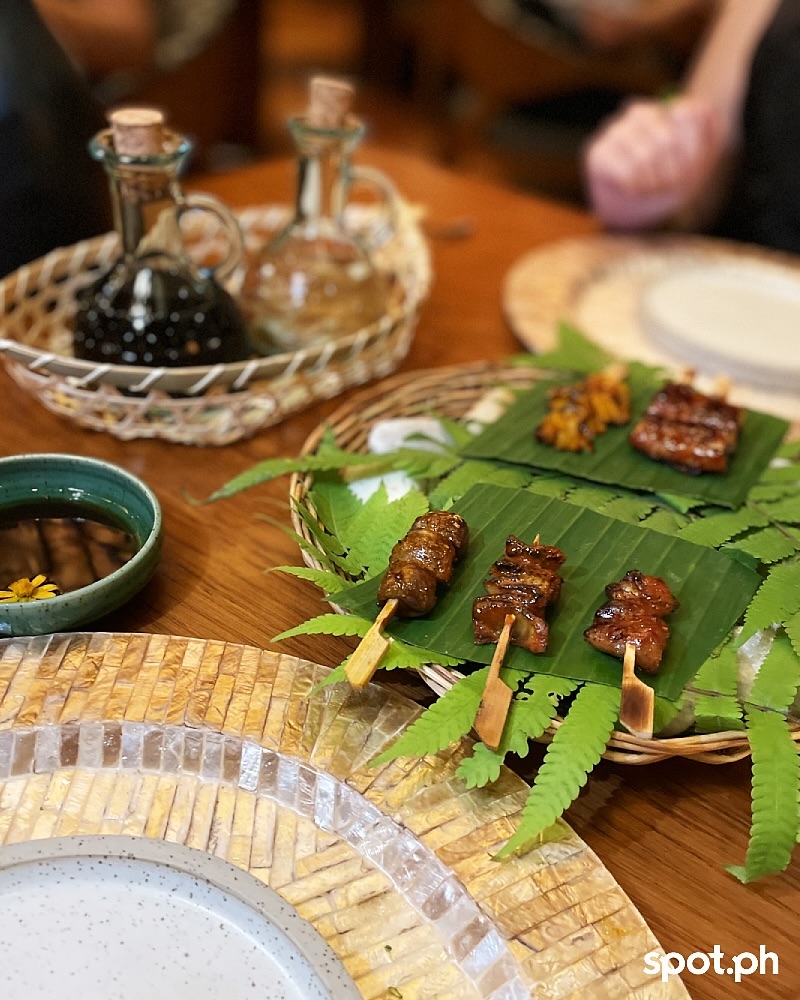
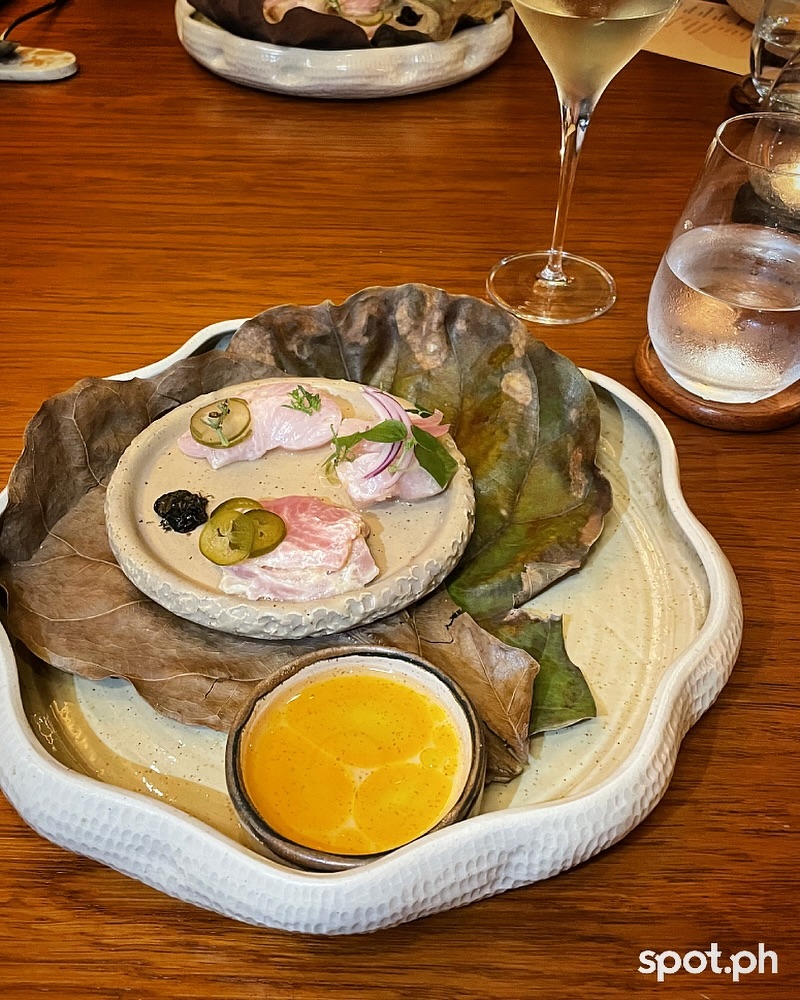
After the aforementioned Batchoy, Hapag’s take on the Negrense staple that is Inasal comes next; on our plates are smoky skewers of batikolon (chicken gizzard), bulo (skin), and isol (tail), all gleaming from being brushed with an annato glaze and offering a more tender bite than other versions in the Metro. Inasal, of course, demands to be partnered with sawsawan; rightfully then, Hapag’s is served with garlic-tinged coconut vinegar and chicken super stock shoyu that we’re instructed to make our own mix of, in our desired proportions. Their trip to Enting’s also inspired the creation of their version of Kinilaw, starring dorado fish and tanigue seasoned with just salt, ginger, and calamansi in the style of Sir Enting himself. Garnishes of baby cucumber, mizuna, pickled onions, and pickled gamet (seaweed) lend textural contrast to the plate; further zip can be had with a quick dip in the side vessel of Negros Criollo cacao vinegar that flaunts a soft fermented tang.
plus caviar-topped cold prawn salad on the side.
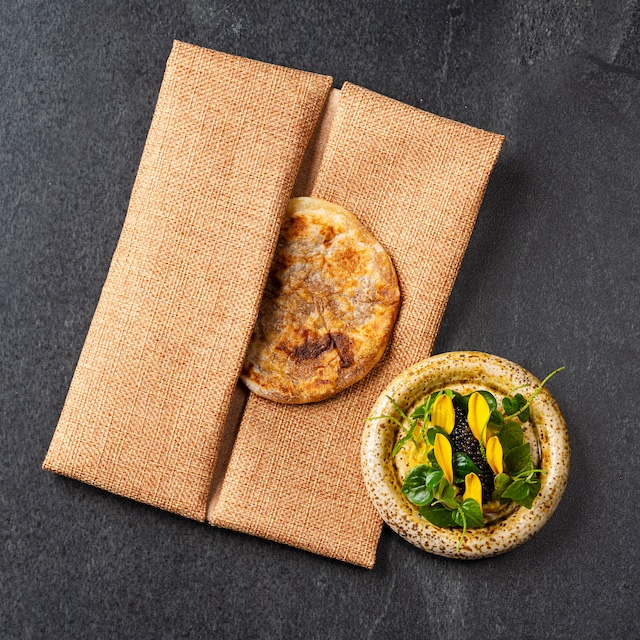
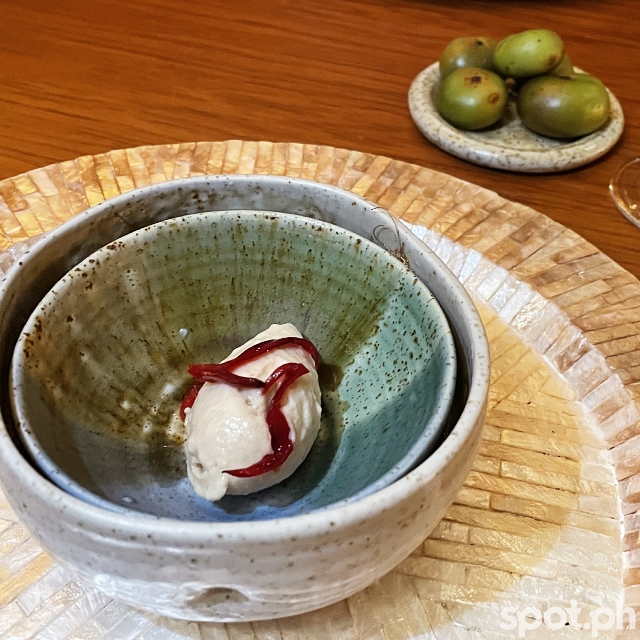
The Hapag boys then pay homage to a home-cooked dish they tried at the cook Jairus’ home in Bacolod—a meal prepared by the guy's mother. Tambo features its namesake (bamboo shoots in English) cooked in coconut milk, a ginataan dish called labong; it’s then served over a subtly sweet base of corn custard and steamed blue crabs. Piaya, the Negrense streetside and pasalubong favorite, is given the umami-rich direction with potato miso and blackened rice buro plus a cold sidekick of caviar- and local herb-adorned prawn salad. We also see batuan, typically the souring agent for dishes like kansi and KBL, but here used in a sweet, refreshing palate cleanser called Batuan Sorbetes, scoops of which are crowned with Habilin Farms pickled roselle.
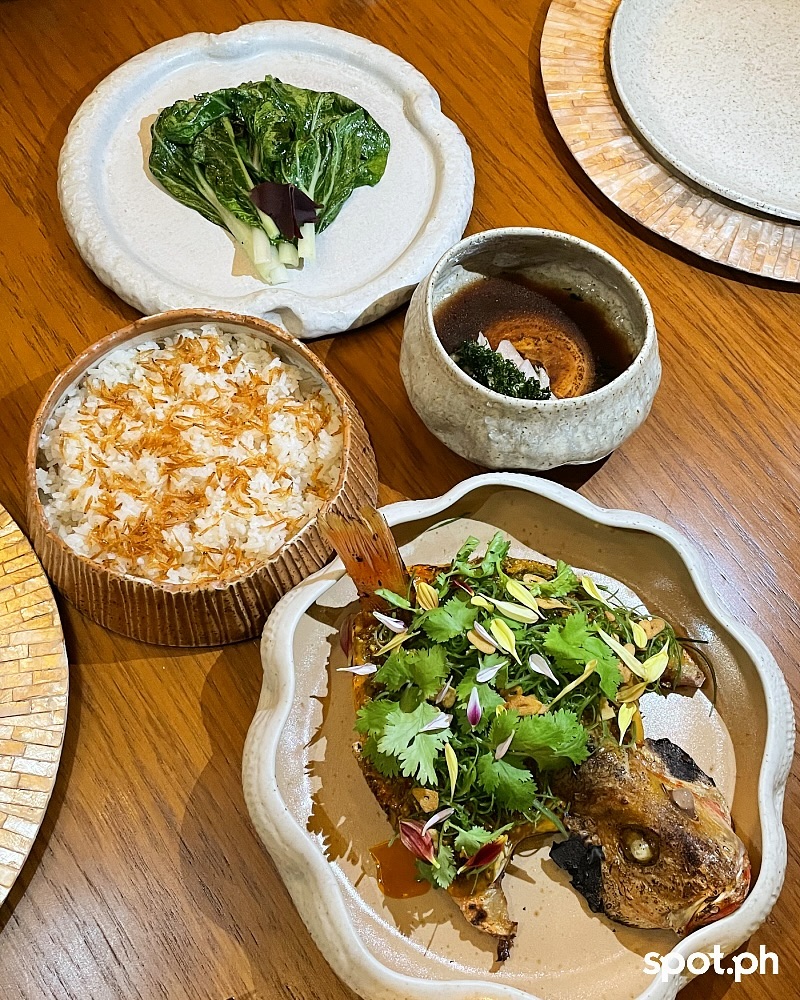
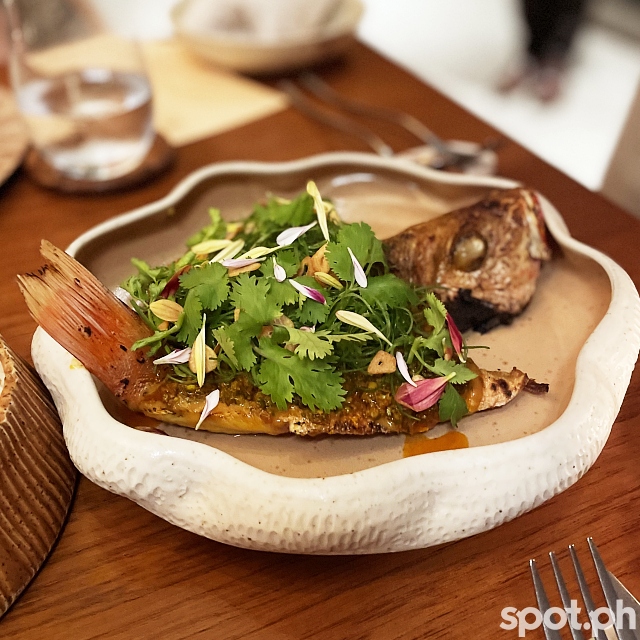
We get to the mains, served family-style as Hapag is known to do. Leading the battalion is Sinugbang Adobado, a platter of grilled maya-maya (sinugba translates to broiled or grilled) taking after a dish of sinugbang managat or grilled maya-maya the chefs tried at Breakthrough restaurant in Iloilo, where Navoa dined with Jardeleza and tried “all the excellent seafood we could get our hands on.” The fish is dressed in inadobado sauce—a sauce that’s similar to paksiw, enriched with coconut milk—and given a smattering of local herb salsa that vivifies the mix. On the soul-warming end is KBL—bowls of 24-hour slow-cooked pork belly stuffed with Negrense chorizo, unripe jackfruit, and pigeon peas in a pork-trotter soup base.
Balance comes by way of an Ensalada tossed in Hapag’s jackfruit vinaigrette. Of course, the rice part of this whole equation is represented by Kalkag nga Kalo Kalo—fried rice with kalkag, or dried baby shrimp, which adds subtle bursts of umami to each spoonful.
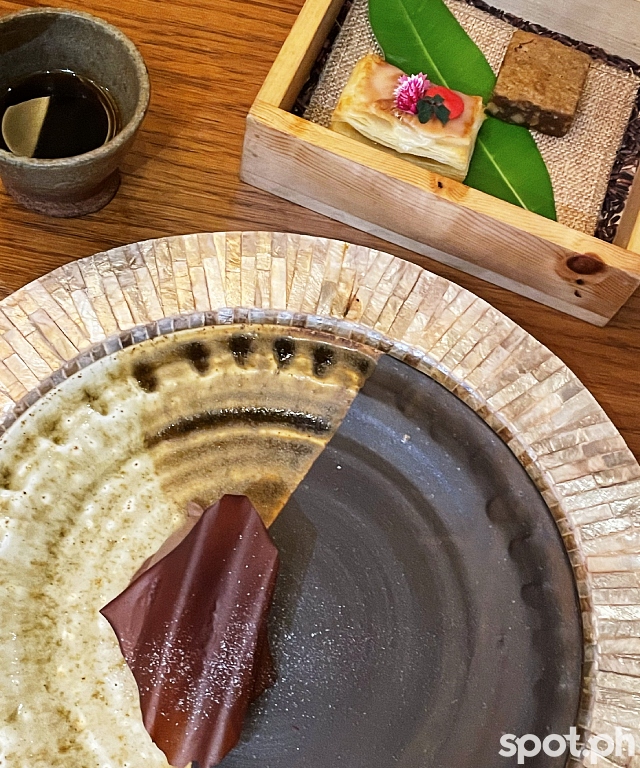
The meal comes to a sweet close with a treasure chest of Criollo Cacao Ice Cream—bittersweet scoops that get their fruity, robust, chocolatey hum from the coveted cacao variety Criollo sourced from Negros. Asin tultul is then grated over it upon serving, so every spoonful gets a sweet-salty-subtly mineral hit. And finally, rounding out the degustation is a treasure chest of Hapag-fied Western Visayas pasalubong staples: chewy Pili Nut Butterscotch with nuts from local purveyor Querica; and Napoleones brightened by Guimaras mango and made nutty by toasted rice pastry cream.
On Tradition and Modernity, and How Empathy Helps Everyone
Hot topics on social media come and go but many do leave a lasting mark in that they open discussions on bigger, more evergreen matters—issues rooted in the trending topic’s surrounding context, particularly the social and economic realities around it. The Batchoy Debate in particular brought to the surface complex interplay between tradition and modernity, a subject we’re bound to return to again and again anyway.
Weeks have passed since the height of Batchoygate, but to quickly recap: on December 16th, Hapag posted a photo of their batchoy on Facebook with a brief rundown of its story—a standard social-media practice for modern restaurants—and this quickly racked up engagement via comments, both of the commending and the critical sort.
A number of commenters—many presumably Ilonggos themselves—expressed disapproval, cautioning Hapag (with varying degrees of tact) against doing what was perceived to be a “deconstruction” of the original—a dish that holds a special place in the Ilonggo heart—and dubbing their version an act of gentrification or cultural appropriation, or even plain “disrespect.” Some poked fun at the serving size, which is tiny compared to that of the classic versions (“What is this? [Batchoy] for ants!???”). These judgments were made based on a mere social media post; did the commenters take the time or made the effort to understand that the dish is part of a bigger ensemble? Was consideration given to the hard work that went into crafting what might be one of Hapag’s best menu yet?
Then, there was the backlash to the backlash—commenters who, although perhaps with noble intentions, dismissed those locals’ concerns completely with quips like “What’s the big deal?” or “Just chill." Or for being “archaic” and not accepting of change. Did they make an effort to understand where the locals were coming from, what with gentrification and whitewashing (the Imperial Manila equivalent in this case) of food traditions being very real phenomena? Some blamed the critics for their lack of understanding of the nature of tasting menus—never mind that tasting menus are admittedly expensive and inaccessible to many. Some others went as far as to pull the you’re-not-the-target-market card, perhaps without realizing the classist implications that come with it.
What seems to be missing from many folks who've participated in either side of the debate is empathy for the other party, and an understanding of the bigger picture. I’m not just talking about food here. Food after all is inseparable from the context surrounding it—particularly the people who make and eat it, their lived experiences, and the material conditions that surround them that shape the way they see and interact with the world.
Celebrated food writer and book designer Ige Ramos brings up the different ways food—batchoy in this case—can be viewed, using French sociologist Pierre Bourdieu's ideas of cultural distinction and habitus. "While upscale versions may appeal to a more affluent, cosmopolitan audience, the traditional batchoy, rich in heritage and local ingredients, represents a connection to Negros’ and Iloilo's past," he writes on Instagram.
For those of us from the city or those who enjoy the experience of fine dining, the uproar from some of the locals might appear extreme or intolerant of progress; but their sentiments also doesn’t arise from a vacuum, particularly in this socioeconomic climate. John Sherwin Felix of digital Filipino food archive Lokalpedia, who recognizes the "culinary innovation" of Hapag but acknowledges how it may not have resonated with locals, writes on Facebook: "What really bothers me about this brouhaha is how some so-called food advocates revealed themselves as advocates only for food, not for the people. Take the time to understand why locals reacted the way they did."
In the Philippines, there’s a large disparity between the living conditions of the rich and the poor, and that affects how people of different classes view different facets of their life—food, of course, included. Food in particular is one avenue where one's senses of cultural and national identity comes about. And there is, indeed, danger of cultural appropriation and gentrification when traditions are lifted without ample research or care for the communities behind it. This isn't what Hapag has done, if you ask me—but it also makes a world of difference to acknowledge and validate these concerns. Checking your privilege doesn't hurt, either.
At the same time, modernization in and of itself need not be demonized. Food is an art form in its own right—its core function of providing fuel notwithstanding—and chef remixes are avenues for creativity. There's beauty in seeing the many possibilities within Filipino cuisine (or any cuisine), where it can go when new flavor combinations are explored, novel techniques are employed, other cultures or genres are taken inspiration from. Done right, embracing growth and evolution doesn't have to mean erasing heritage and history; the key is finding the right balance between bringing in innovation, and preserving the dish's original soul.
We’ve also seen how fine-dining restaurants’ use of endemic local ingredients and age-old cooking methods have helped bring awareness to their existence and create demand for them—thus aiding in their survival. I'd like to think there’s merit to upholding both tradition and modernity; if proponents of both can work together, they can well go hand in hand, or at the very least peacefully coexist.
Hapag never meant for their food to replace their original counterparts. What they've done is undertaken plenty of research to get to know the subject matter on a fundamental level, and found a way to share the beauty of Western Visayas' food from a fresh perspective. And the result, on its own, happens to be absolutely delicious.