
One Man’s “Such Drudgery!” Is Another Man’s Heritage and Artistry
Or why that Toyo review could use more nuance.
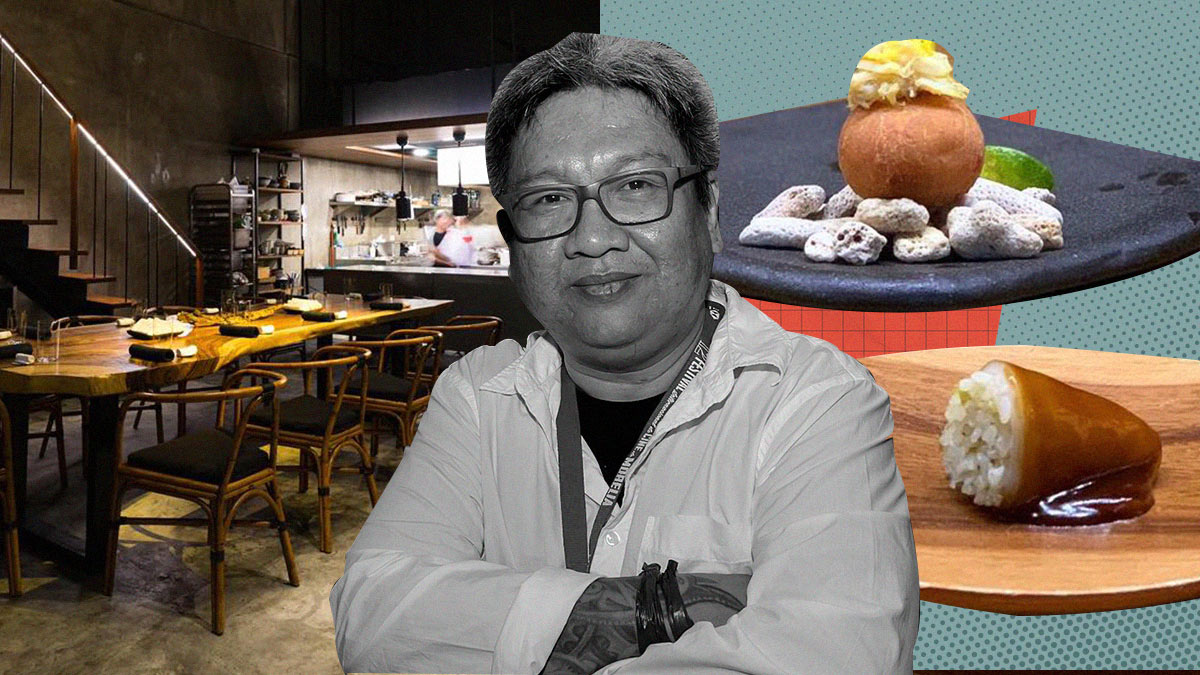
(SPOT.ph) Director Erik Matti knows what makes a good film, having brought us celebrated movies like On the Job and Honor Thy Father. The more recent subject of his focus, however, is a restaurant—and not just any restaurant, but Toyo Eatery.
The director took to his public Instagram to share his thoughts on a recent dinner at the acclaimed Filipino dining spot. He brings up good and valid points on where Toyo could use improvement. But some parts of his critique leave something to be desired, especially with regards to setting the right expectations—and as with movies, food's value beyond entertainment.
Also read:
The SPOT.ph 50 Great Restaurants of 2023: Best of Manila and Beyond
When Food Reviews Toe the Line Between Being Critical and Callous
No, Nas Daily, Filipinos Don’t Eat Dino Eggs—Asin Tibuok Is an Artisanal Salt
Thoughts on Erik Matti’s social media post on Toyo Eatery:
Matti published a 10-slide carousel on Instagram on January 22, the first couple of slides containing an acount of the dissatisfying visit he recently made to Toyo. He points out the discrepancy between his experience and the expectations Toyo set, what with their very “technical” execution, use of ingredients from the “rarest regions in the Philippines,” elaborate explanations (“keep the intro to the dish shorter so we can eat the dishes while they’re hot,” he advises toward the end), and just the sheer length of the meal (“my God, the dinner was so long. Such drudgery!”).
All in all, he writes, Toyo feels “giddy… [and] too gimmicky,” with dishes that are “cerebral” yet fall short on “execution,” and the flavors not being harnessed properly” or matching up to the “supposed glory.” Toward the end, he also (albeit indirectly) calls Toyo deceptive and pretentious. “I want an honest-to-goodness restaurant. Something that doesn’t deceive me into thinking more than what they actually are. I get irked with that pretentiousness.” Strong words.
For context: Toyo Eatery opened in 2016, gaining fame for their contemporary Filipino fare that pays respect to local traditions and culture. You’ve likely been there, or at least seen it on that foodie friend’s upkept Instagram feed. Led by Chef Jordy Navarra, Toyo’s earned global acclaim in the past years: they were bestowed the Miele One To Watch Award in 2018 then placed on the Asia’s 50 Best Restaurants list almost every year, in varying spots: 43rd in 2019, 44th in 2020, 49th in 2021, 94th in 2022, and 42nd in 2023 (same year they were given the Flor de Caña Sustainable Restaurant Award).
Before anything, some limitations: taste is subjective, and Matti’s preferences (or dispreferences) for certain flavors neither right or wrong—the “lasang lupa” flavor profile just isn’t his cup of tea. Getch. We can't comment on the accuracy of his claims on execution either—we weren’t there the very night Matti visited and there’s no way for us to determine, outside Matti’s words, whether the “execution” as he calls out is actually faulty (that is, whether it’s actually designed to taste as it did, or if this arose from errors in the kitchen—note that Matti's "execution" comments are grounded on personal dissatisfaction vis a vis expectations, rather than objectively faulty cooking techniques or facts ). His dissatisfaction with the resulting dishes is also valid. No one likes going out of their way to visit a location only to be met with a subpar experience.
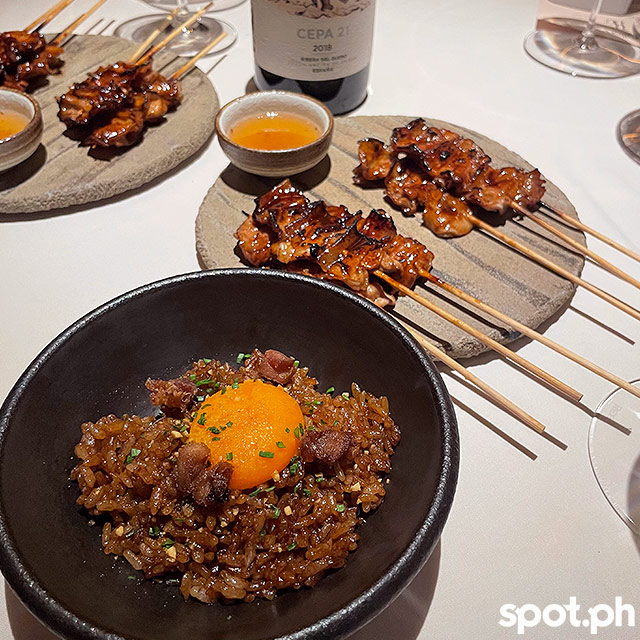
But the labels he’s slapped onto Toyo in light of these impressions ought to be examined. “[Toyo’s buildup] are fine if the food lives up to it, but I feel all that showmanship and the lead up to the food was a letdown when I tasted the food,” he says—hence his calling Toyo “gimmicky” and displaying “pretentiousness.” Even the leche flan ice cream that served as that night’s dessert got its share of a poke of Matti's sword: “Stop calling the ice cream leche flan ice cream if it’s just literally a salted caramel ice cream. Stop it with the gimmicks,” he writes toward the end.
Gimmick, or a Dedication to Keeping Heritage Alive?
To be gimmicky means to be “not serious or of real value that is used to attract people's attention”; to be pretentious on the other hand is to try to appear or sound “more important or clever than you are, especially in matters of art,” per the Cambridge dictionary. Leveraging these words toward Toyo calls into question not just how Toyo’s food tastes or the balance of flavors or the less-ing and more-ing of this and that, but the value or significance the restaurant has in the grand scheme of things.
Respectfully, I don't think that's a fair observation. Or at the very least, I hope to offer a different perspective. Maybe the execution had some shortcomings, at least going by Matti’s subjective dissatisfaction, but these mishaps in flavor shouldn’t invalidate what Toyo is about and what its people do.
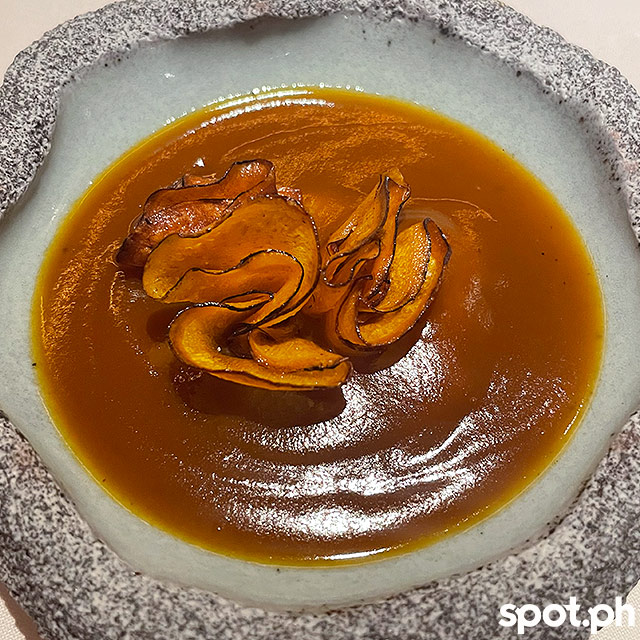
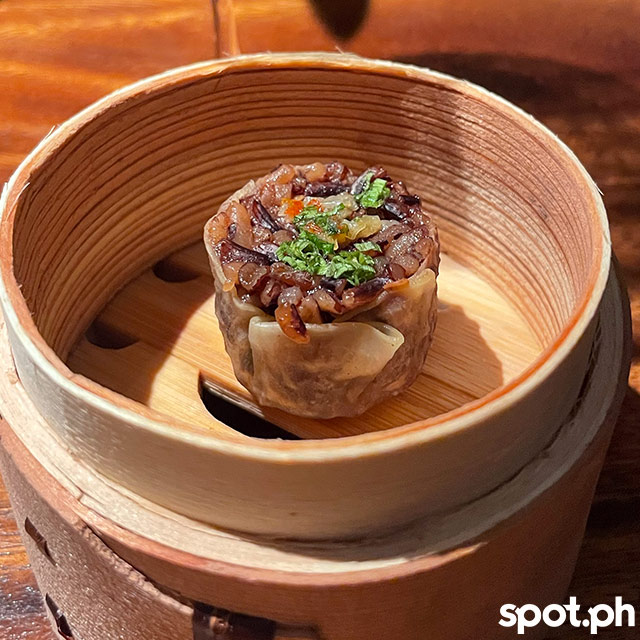
In particular, Toyo emphasizes sustainability in their ethos and one of the ways this comes across is their use of heritage ingredients across their menu: Tinawon and Mountain Violet rice, both heritage varieties of rice native to the Cordillera region; taogtog berries, a wild berry with a menthol-esque taste; lemons from Tublay, Benguet; and asin tibuok, a rare salt from Albuquerque, Bohol listed in in the Slow Food Organization's Ark of Taste that’s on the brink of extinction. The restaurant is also known to work with local producers and farms, and have even helped raise funds for female farmers’ cooperative Good Food Co.
To dismiss this usage of rare Filipino ingredients, and of age-old traditions and techniques, as “gimmicks” or mere novelty, does a disservice to the bigger ideas of food as culture and preserving food heritage. “Using ingredients from the rarest regions of the Philippines goes beyond a mere gimmick,” shares Lokalpedia founder John Sherwin Felix in an exchange with SPOT.ph. Doing so, he explains, promotes education about the “biodiversity and cultural diversity of our country,” both keys to “fostering a deeper appreciation for Filipino cuisine.” As Toyo collaborates with other acclaimed restaurants from around the world from time to time, they're also sharing awareness on these markers of Filipino heritage on a global scale.
Side note: Matti brings up a salt Toyo uses that’s “almost extinct,” and follows this rather sardonically with a short commentary: “if there’s such a thing as extinct salt.” Conveniently, there is such a thing—presumably this is the asin tibuok we mentioned—and indeed, Felix assures extinction can be used beyond the biological context to also apply to "culture, practices, and all their expressions." He shares: "Before asin tibuok rose to fame, the practice of making this artisanal salt was on the verge of disappearance. Fortunately, it was saved due to the efforts of various sectors. Sadly, this is not the case for many of our ingredients, and we are losing significant parts of our food heritage and biodiversity. That's why it's commendable for food establishments to prioritize these ingredients.”
Why Do We Dine Out?
There’s a bit of an anti-intellectualist sentiment to some parts of Matti’s post, especially where he goes: “We want to eat. Not a lesson in agriculture and livestock,” apart from aforementioned points about their supposed pretentiousness. This begs the question of why people dine out anyway—or at least how it might differ for different circumstances.
It sounds simple on paper: of course we eat out for enjoyment. For pleasure. To entertain ourselves. At the very least, there’s the perk of not having to shop, prep, cook, or do the dishes. It’s more so rewarding when you’re met with food that delights the taste buds and physically satisfies. Hence the popular (albeit reductionist) questions: “Is (insert establishment) worth the hype? Masarap ba?”
But the idea of enjoying food need not be limited to enjoyment in a hedonistic sense. Pleasure, too, can be had in other forms, and forms perhaps less fleeting. Like the fulfillment in gaining knowledge—knowledge from getting to know, say, the history or procedure behind making a certain dish, and/or the ingredient(s) that they used. E.g., that asin tibuok. Making it involves the soaking of coconut husks for months—hence its sharp saltiness and earthy, subtly smoky undertone. Pleasure can also be derived from the human connection in learning the story behind the restaurant, a certain dish (slash its constituents or ingredients), or its people.
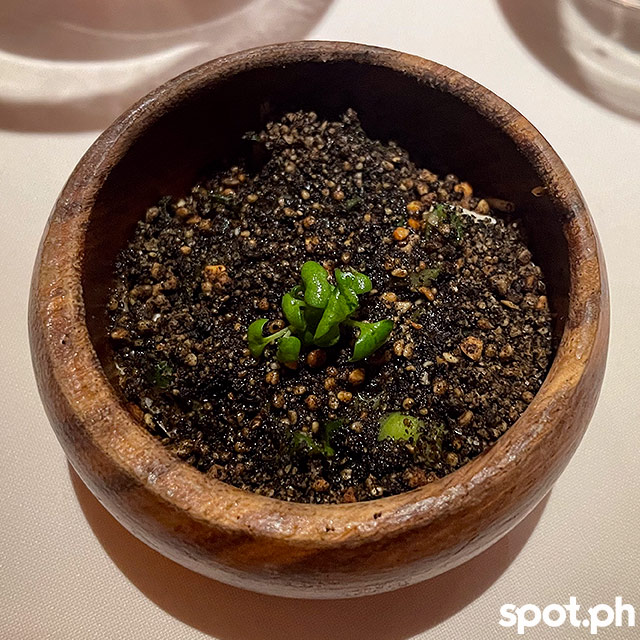
There stands the bigger (and widely debated) question of whether food—an energy source for one’s body, at its core—can be art, and not just fuel or entertainment. Sure, we could debate on and on given contemporary notions of what it even means to be art, but for our purposes, I would at least contend that some food, or some situations that involve consumption, can be thought of as art—in that they are expressions of their creators’ imagination (especially in the tasting-menu chef-driven establishment sphere); elicit an emotional response; and/or are deeply tied to certain cultures. Toyo’s food, I’d argue, belongs here—or is best thought of along the food-as-art lens to best be appreciated. And as an art form, the artist’s intentions and the surrounding context—not just the diner’s perceptions—ought to be considered.
Not all food or situations might be equal in this regard; sometimes you’ve just gotta eat to fill your stomach or to sate a quick craving. Nothing wrong with that. Still, maybe eating for pleasure and eating for “art” aren’t mutually exclusive. I’d like to think they can coexist, in the same way both blockbuster action movies and arthouse film can both exist and be enjoyed by people—with the proper expectations to match, of course.
P.S., that quip about the leche flan ice cream? There’s some ambiguity in this statement, but it's worth examining either way. It could either mean he thought the two to be one and the same—a mistaken belief, as although they’re similar, there’s a clear difference between the taste and constituents of salted caramel (caramelized sugar and dairy plus salt) and leche flan (which also has caramel and dairy elements—but is distinct in its inclusion of egg yolks, and at times, dayap). The other reading is that he maybe found what was labeled leche flan ice cream to just taste like any old salted caramel. Anyone who's had, say, supposedly "five-cheese" flavored potato chips only to be met with a generic cheese-powder taste would know this to be very possible. For what it's worth, I will say other food-loving friends and chefs I surveyed who've tried the same dessert confirm it to actually taste of leche flan; not salted caramel, but leche flan.
Good Restaurant Reviews
Time and time again we’re faced with the question of whether food criticism and restaurant reviews have their place in the Philippines. The answer isn’t so simple, at least if said reviews are to be done fairly, and when you consider the impact on restaurants of negative feedback—especially when coming from established public figures. But it stands: any good reviewer ought to know the subject, and any good review ought to have fair premises and be fair in its reasoning. Showing some compassion doesn't hurt, either.
Good commentary on anything, food included, entails holding knowledge of the subject and the theories behind them—so you can think critically and make informed opinions. In the absence of these factors, what remains is just noise.
Hey, Spotters! Check us out on Viber to join our Community and subscribe to our Chatbot.