
No, Nas Daily, Filipinos Don’t Eat Dino Eggs—Asin Tibuok Is an Artisanal Salt
We consulted with experts to bring you the lowdown on this heritage ingredient.
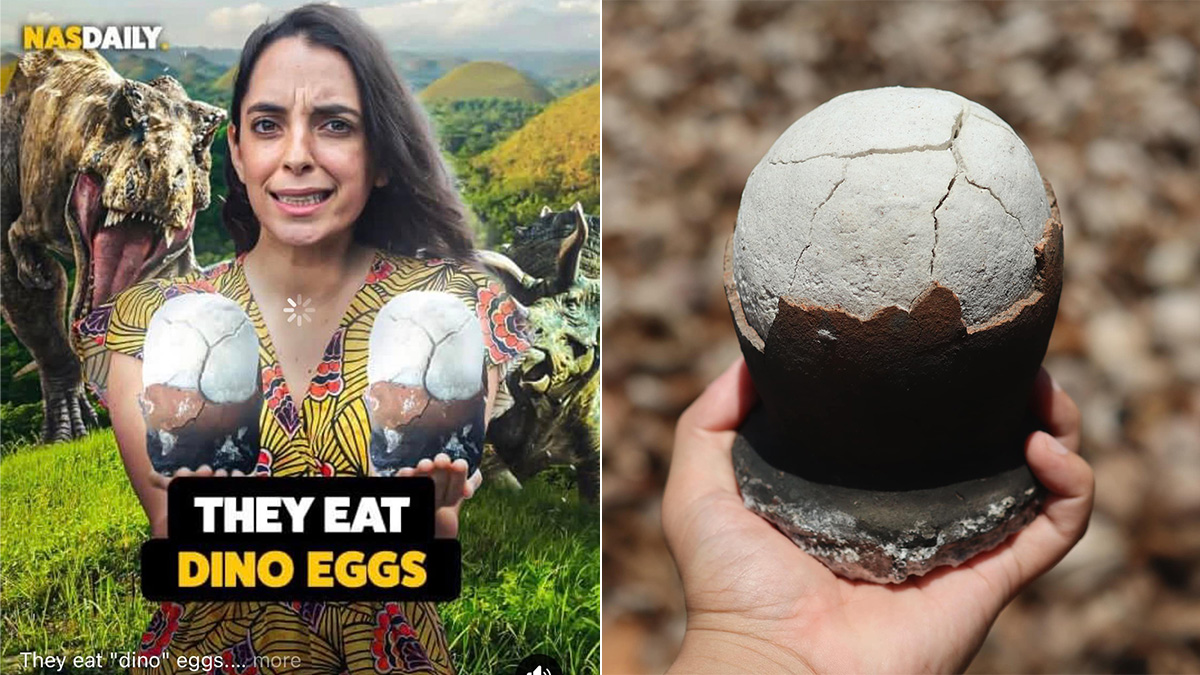
(SPOT.ph) It wasn't too long ago when a video by controversial content creator Nas Daily made the rounds of social media. While videos from the guy are often just internet virality fodder, this specific one hit close to home. It dealt with a Filipino cultural product called asin tibuok.
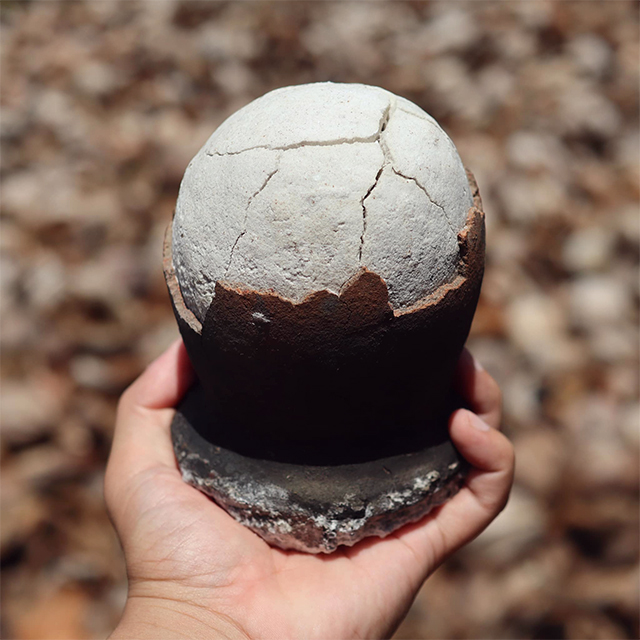
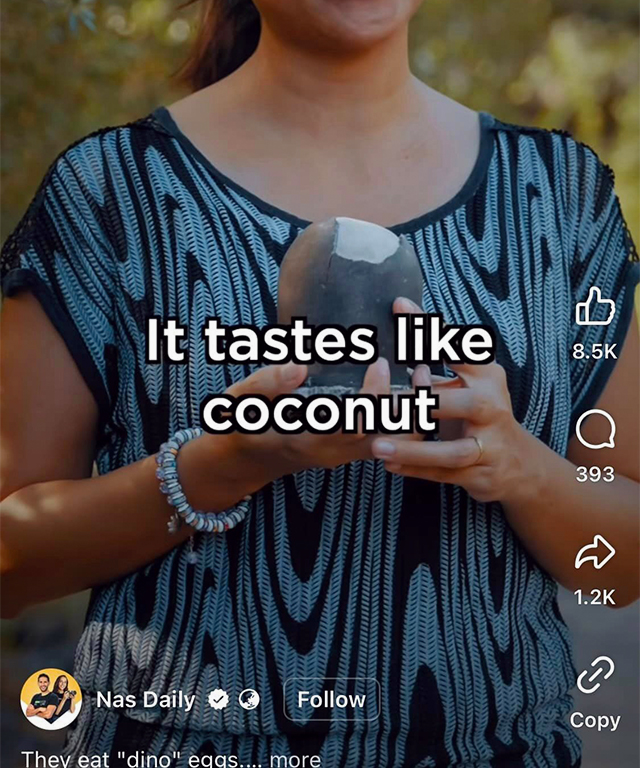
In the video, Nas Daily teased the public about some "Dino Eggs" originating from Bohol, Philippines. In his usual one-minute "informational" format, the video told audiences that what appears to be a dinosaur egg is actually a kind of rare salt from a community in Bohol. The salt is also supposedly "coconut-flavored" and made by "soaking coconut husks in seawater for three months."

As of writing, the video has already garnered over 12,000 views on Facebook alone. Many comments on the post are positive. There were foreigners and Filipinos alike praising the content of the video for shining the light on this rare and unique product, as well as the dying tradition of making it.
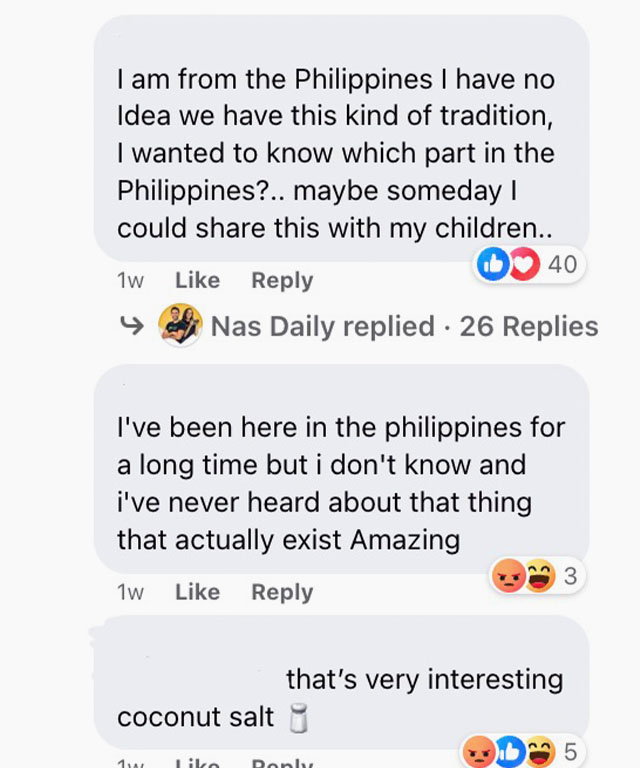
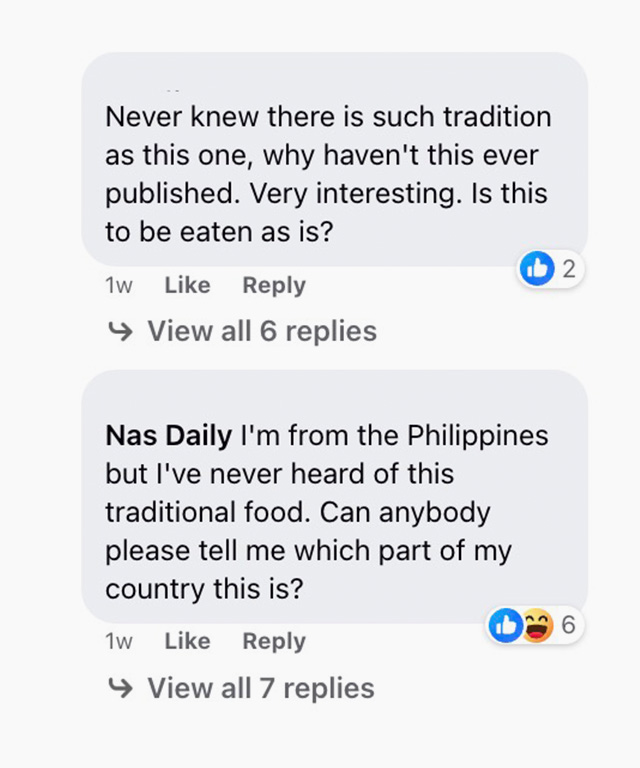

Much as the video seems to praise the Filipino ingredient, the bigger question i: Is what it's saying even true? Sadly, it looks like it falls short on the fact-checking. Just as many lauded the video, it also received a considerable amount of criticism on the accuracy of certain claims it makes.
One of those who called Nas Daily out was Lokalpedia founder and food heritage advocate John Sherwin Felix. In a public post on his Facebook profile, Felix slammed the video, describing the piece as "an example of how people exoticize our culture just for content."
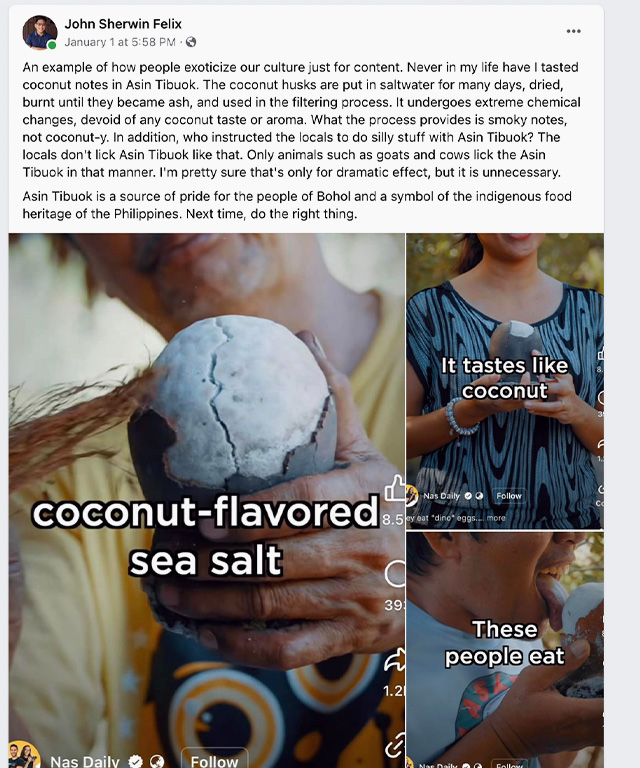
In an interview with SPOT.ph, Felix says his issue is not specifically with Nas Daily, nor is it with the guy's content in general. This particular video just doesn't sit well with him. "I called them out because, as an advocate of food heritage, I can't let any misuse and misrepresentation of it go unchallenged," says Felix. "Before I called them out, they got thousands of engagements already. A lot of them only heard (of) the Asin Tibuok for the first time in their video tapos inaccurate pa."
Felix laments how Nas Daily "picked a bad angle" and "stretched" it. "It’s my first time hearing na coconut-flavored siya. They are a prime example of the bad side of content creation. They are so [focused] sa engagement [that] they sacrifice the authenticity [and] sensationalize."
If there's one good thing that out of the incident, it's the increased awareness about our asin tibuok.
Also read:
Asin Tibuok, Siakoy + More: Must-Try Bohol Eats and Where to Get Them
Bohol Declared the Philippines' First UNESCO Global Geopark
Important things you need to know about Asin Tibuok:
To learn more about this rare Philippine food gem, we asked Sherwin Felix more questions and consulted with Dr. Kathleen Apilado, a known Filipino artisanal salt advocate and the Dean of Hospitality and Tourism Management at José Rizal University.
What Is Asin Tibuok? How Is it Made?
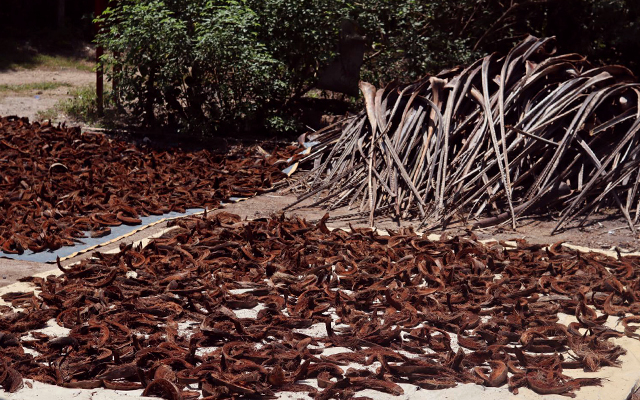
Asin tibuok (or asin tibook) is a rare artisanal salt from Albuquerque, Bohol. Included in the Slow Food Organization's Ark of Taste—a catalogue of endangered heritage foods around the world—it is the result of a labor-intensive, pre-Hispanic production method. Coconut husks are soaked in saltwater for months, in the process creating a giant egg-shaped salt ball with a distinctly earthy and subtly smoky flavor.
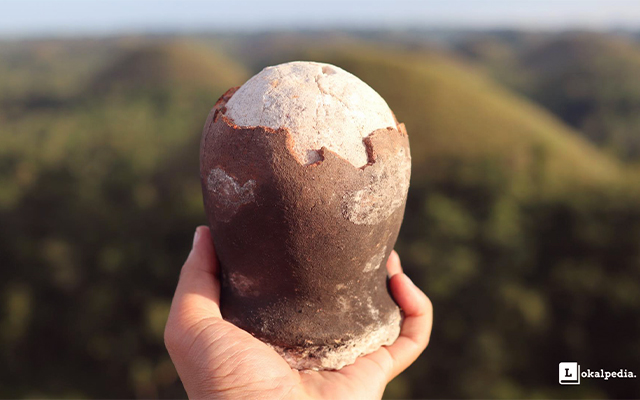
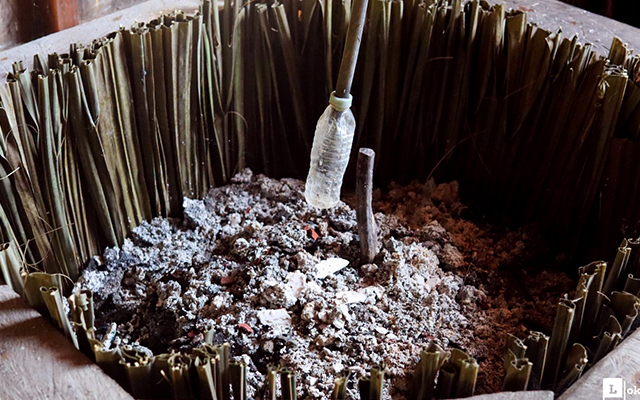
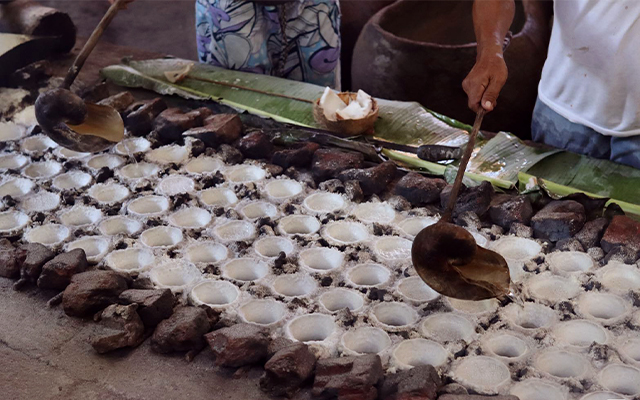
The seawater-soaked husks are sun-dried and then carefully burnt—in a controlled space—by regularly pouring seawater into the flames. This leaves a heap of concentrated salty ash, which is then filtered and poured with more saltwater, creating a very salty brine. This brine is then continuously boiled in clay pots over a wooden fire for eight hours, leaving salt sediments that will ultimately form a roughly one-kilo orb of salt.
Why Is Asin Tibuok Rare?
Though it may seem to some like a simple process, there are a few things taken into consideration when it comes to making asin tibuok . First, because it requires being sundried, production can only be done during the dry months. Moreover, a certain seawater salinity is required to achieve the salt's ideal flavor profile. Thus, asin tibuok is most ideally made during the months from December to May.
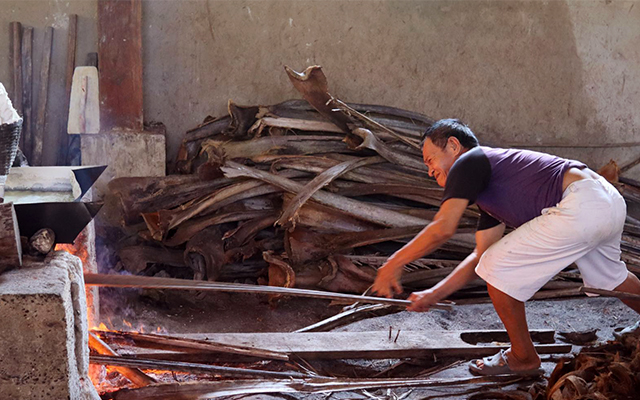
Perhaps the biggest roadblock to its popularity is that there is simply not enough people making it. Which is not difficult to understand. Producing asin tibuok is highly labor-intensive. It requires long hours exposed to intense heat, apart from tons of patience, and a skillset only a few people have.
Back in the day, many community members of Albuquerque, Bohol, were involved in salt-making. Many were asinderos, but following the passage of the Salt Iodization Law (ASIN) in 1995, which mandated that all salt producers and manufacturers iodize their products, the demand for artisanal salt declined, leading many asinderos to look for sources of income elsewhere. This has resulted in the asin tibuok being marked as an endangered heritage product.
What Is Asin Tibuok Used For?
Much like other salts, asin tibuok can be used to improve flavors in foods. Many who have tried it say the product is smoky, earthy and very rarely fruity.
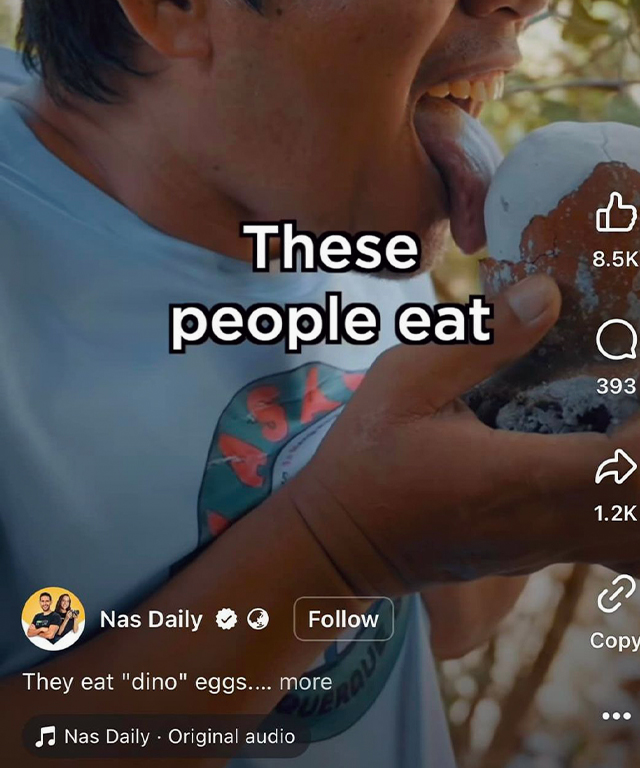
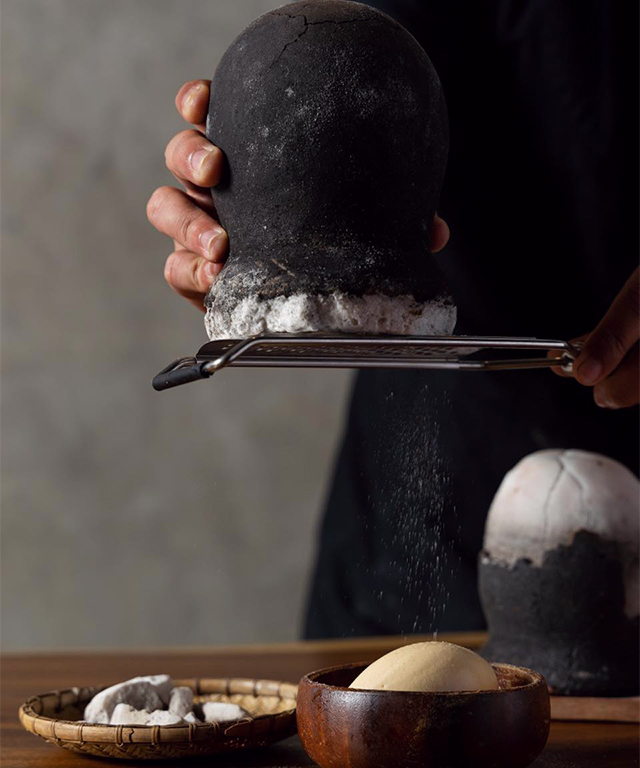
Unlike in the Nas Daily video, where people are shown licking the egg to get a taste of the salt, the normal thing to do really is to use a microplane or a grater to shave flakes or grains off it and sprinkle these bits over food. You can use it for seasoning while cooking, or as a finishing salt to impart the cooked dish with another level of flavor.
A number of local restaurants have taken to using it in their dishes. The Chef Jordy Navarra-helmed Toyo Eatery, one of Asia's 50 Best Restaurants for 2023, adds a light dusting of asin tibuok on the Leche Flan Ice Cream in their current tasting menu—for a subtly savory touch to the dessert. It's also used in other fine dining restaurants like Chef Don Baldosano's Linamnam.
How Can We Advocate for Asin Tibuok?
But let's give credit where credit is due. Sure, Nas Daily's video really did shine the spotlight on asin tibuok. As can be read in the comments on the social media post, many were surprised to know about this Filipino product. Though not the entire video was wrong, our experts both agree it requires more review and revisions.
Dr. Apilado acknowledges the limits of the short video format but still emphasizes the need for accurate information. "The content has gone viral, but it’s... a [challenge] also [for] any content creator to squeeze in all the information [into] video/content [that's just a minute long]. [Consider] the use of proper actions, wordings, and facts that are research-based and [that come] from a reliable source."
It's going to take a lot of work to keep asin tibuok alive but let's do it right. To properly advocate for the preservation and awareness on cultural products, Dr. Apilado's advice for aspiring content creators is to "research, collaborate and coordinate with advocates, researchers, culinary heritage groups, and use only information based on research and reliable sources. Lokalpedia, for example, has a lot of information about Philippine ingredients from first-hand information. [Also the] Philippine Culinary Heritage Movement, created by passionate chefs and advocates who are dedicated to preserving classic Filipino food and heirloom recipes and ingredients. These are some of the reliable sources that are willing to share information."
Also read: The Best Things to See and Do in Bohol for Two Days
Hey, Spotters! Check us out on Viber to join our Community and subscribe to our Chatbot.