
Bohol Declared the Philippines' First UNESCO Global Geopark
Find out what it means to be a Global Geopark.

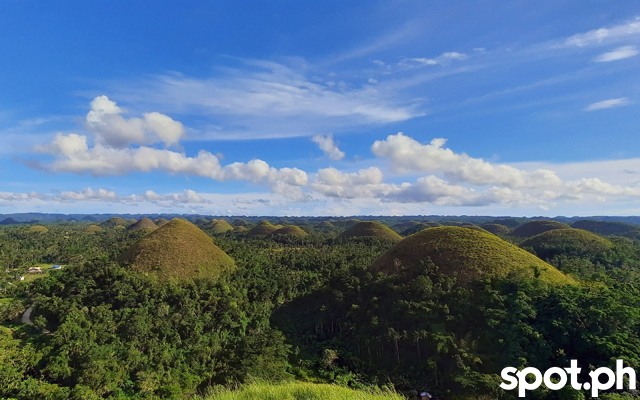
(SPOT.ph) For Filipino students who went through Hekasi, Sibika, or its other variations, Bohol is known as that place with the Chocolate Hills. But this collective of limestone structures is just one of the many reasons why this island in the Visayas is a geological wonder—so it doesn't come as a surprise that Bohol Island is now the Philippines’ first UNESCO Global Geopark, as officially declared by the United Nations Educational, Scientific, and Cultural Organization on May 24.
"The island’s geological identity has been pieced together over 150 million years, as periods of tectonic turbulence have raised the island from the ocean depths," said the United Nations Educational, Scientific, and Cultural Organization's (UNESCO) citation of Bohol Island. The designation includes 8,808 square meters of the island, including land and marine areas.
How did Bohol become a UNESCO Global Geopark?
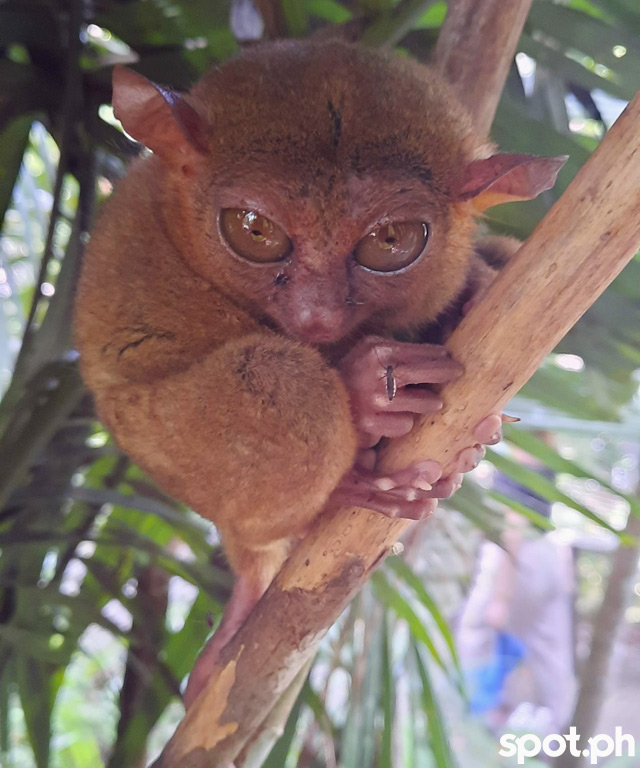
According to the Bohol Island Geopark website, it was in 2013 when researchers from the University of the Philippines - School of Urban Planning started looking for a locality that best qualifies for the UNESCO Global Geoparks Network. Following years of research and investigation, Bohol's world-famous Chocolate Hills, Danajon Double Barrier Reef, and Hinagdanan Cave; diverse flora and fauna; and the intangible heritage of the Eskaya Tribe proved to be enough reasons to push for the island's bid as a Global Geopark.
The Technical Working Group for the Bohol Island Aspiring Geopark project was formed in 2017. Funding from the local government supported workshops, forums, assessments, and completion of the necessary documents. The multi-sectoral Bohol Island Geopark Management Council was also formed. A year later, Bohol Island Aspiring Geopark project finally submitted its comprehensive application to UNESCO. By 2019, two evaluators from UNESCO came to the island for a field assessment; the international body initially deferred the designation and pointed out other ways for the Bohol Island Aspiring Geopark to improve.
All efforts were not lost when UNESCO finally declared Bohol Island as a UNESCO Global Geopark on May 24, 2023.
Seventeen other newly designated UNESCO Global Geoparks are Cacapava and Quarta Colonia in Brazil; Lavreotiki in Greece; Ijen, Maros Pangkep, Merangin Jambi, and Raja Ampat in Indonesia; Aras and Tabas in Iran; Hakusan Tedorigawa in Japan; Kinabalu in Malaysia; Waitaki Whitestone in New Zealand; Sunnhordland in Norway; Jeonbuk West Coast in Korea; Cabo Ortegal in Spain; Khorat in Thailand; and Mourne Gullion Strangford in United Kingdom of Great Britain and Northern Ireland.
Also read:
10 Places to Stay in Bohol for Every Type of Traveler
WATCH: Riding an ATV, Paddleboarding + More Exciting Adventures in Bohol
What does it mean to be a UNESCO Global Geopark?
UNESCO defines Global Geoparks as "single, unified geographical areas where sites and landscapes of international geological significance are managed with a holistic concept of protection, education, and sustainable development." There is now a total of 195 Global Geoparks across 48 countries with New Zealand and the Philippines as the newest members of the networks.
What's significant about the development in these Geoparks is the "bottom-up approach." This means that the local communities (land owners, community groups, tourism providers, indigenous people, and local organizations) are regarded as the primary stakeholders in the area. The cohesive partnership among these sectors is expected to raise awareness about the importance of the area's geological heritage as well as its effects on key issues faced by society, especially the effects of climate change.
While "geo" is in the name of the title, a UNESCO Global Geopark doesn't only care about geology. The site must also be able to "explore, develop and celebrate the links between that geological heritage and all other aspects of the area's natural, cultural, and intangible heritage."
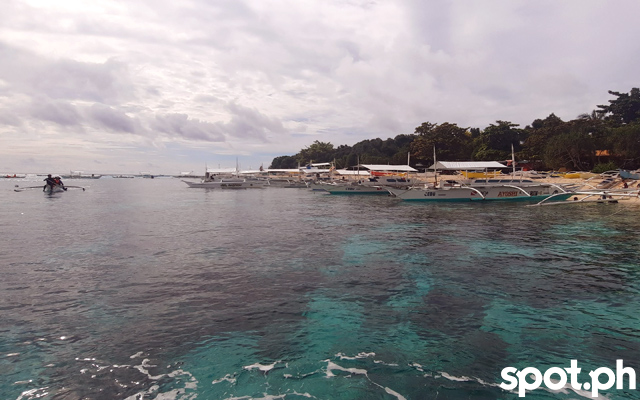
In Bohol's designation, for example, UNESCO pointed out how the island sustains local communities of 1.4 million inhabitants. Its local livelihoods were enumerated to be agriculture (rice, coconut, and corn crops), fishery and aquaculture, and tourism. "Its traditions and culture are proof of how its people adapted to their natural environment," UNESCO added.
Also read:
How Bohol Is Bouncing Back, One Tour at a Time
How Bohol Bee Farm Supports Their Community During the Pandemic
Is the UNESCO Global Geopark title forever?
No. The designation by UNESCO is only valid for a period of four years. After this, the UNESCO Global Geopark is scheduled for a revalidation process. The field evaluation's results may be a "green card," which means the designation is renewed; a "yellow card," which means there's a probationary period of two years as a chance to basically up their game; and a "red card," which means that the area loses its status as a UNESCO Global Geopark.
What's the difference between a UNESCO Heritage Site and a UNESCO Global Geopark?
You might be more familiar with the title UNESCO Heritage Site. In the Philippines, we have six sites included in the World Heritage List: Baroque Churches of the Philippines (1993), Historic City of Vigan (1999), Rice Terraces of the Philippine Cordilleras (1995), Mount Hamiguitan Range Wildlife Sanctuary (2014), Puerto-Princesa Subterranean River National Park (1999), and Tubbataha Reefs Natural Park (1993, 2009).
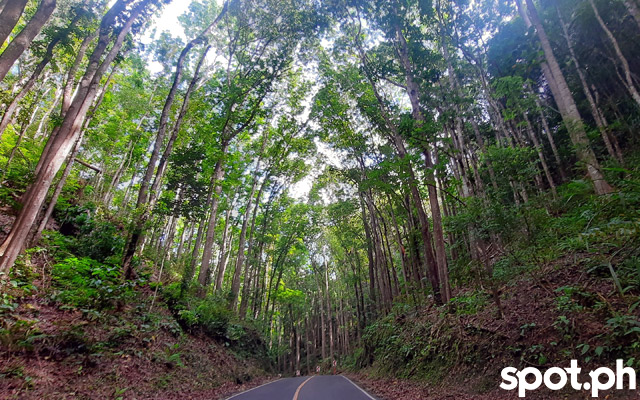
World Heritage Sites, Global Geoparks, and Biosphere Reserves are all UNESCO-declared sites that holistically promote our heritage while conserving culture, biological, and geological diversity. A Global Geopark focuses on the importance, significance, and protection of Earth's geodiversity vis-a-vis its local community; a Biosphere Reserve looks at the harmonized management of biological and cultural diversity; and a World Heritage Site (either natural or cultural) has an outstanding universal value.
One site can have two designations as long as there is justification and added value of being independently branded.
Also read:
10 Places in the Philippines That Should Be UNESCO World Heritage Sites
10 UNESCO Heritage Sites You Can Check Out From Your Couch