
The Day Histolinarya Collective Revived the Iconic Bruun Butter
Ask your mom about it, or better yet Google it.
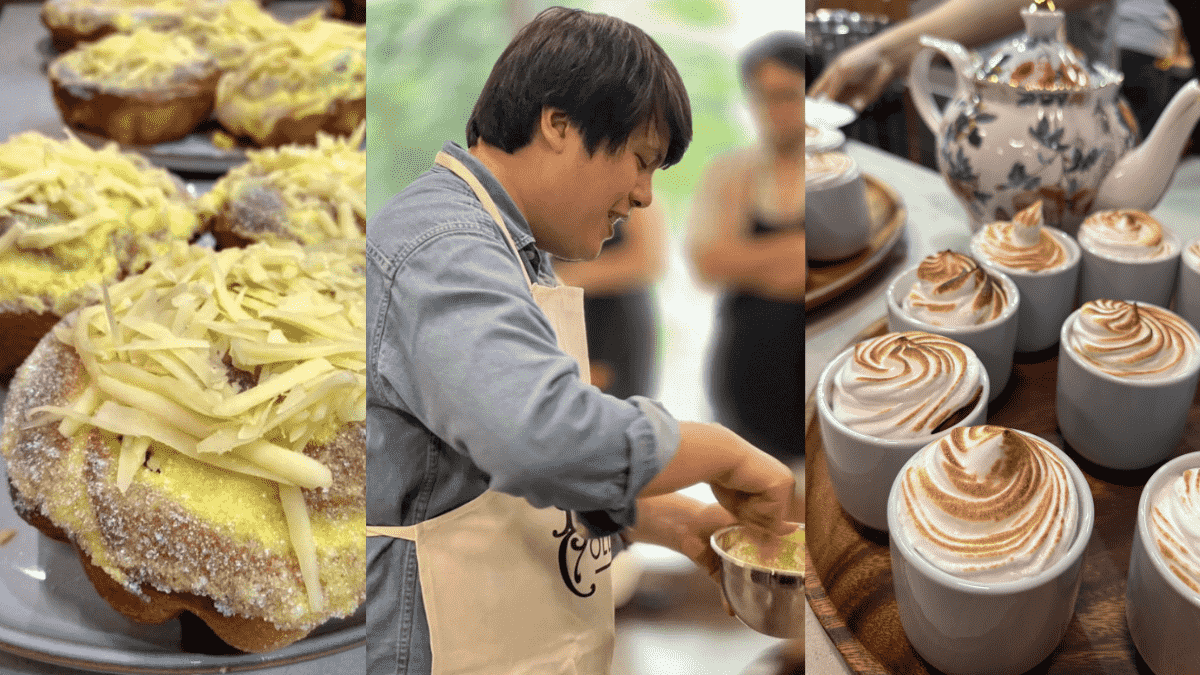
(SPOT.ph) Ask any Filipino who grew up in the 1980s (or later) if they’ve ever tasted Bruun butter. Chances are they’ll shake their heads. If they’re lucky, they may have heard about it from older relatives who would wax poetic about how rich and extra buttery were the pastries of yore—“basta yung may Bruun butter!”
This iconic canned butter imported to the Philippines from Denmark since the turn of the 20th century (Marketman posted about it many years back on his blog, if you wanna see what it looks like) was used for the most premium pastries, even giving its name to the famous Bruun Butter Cake. Sadly, while the name lived on in Filipinos’ memories, the actual product may have disappeared from store shelves by the 1970s or so. But thanks to one intrepid culinary journalist and heritage activist, it may be that the long-lost (but never forgotten) Bruun butter has been brought back from the dead.
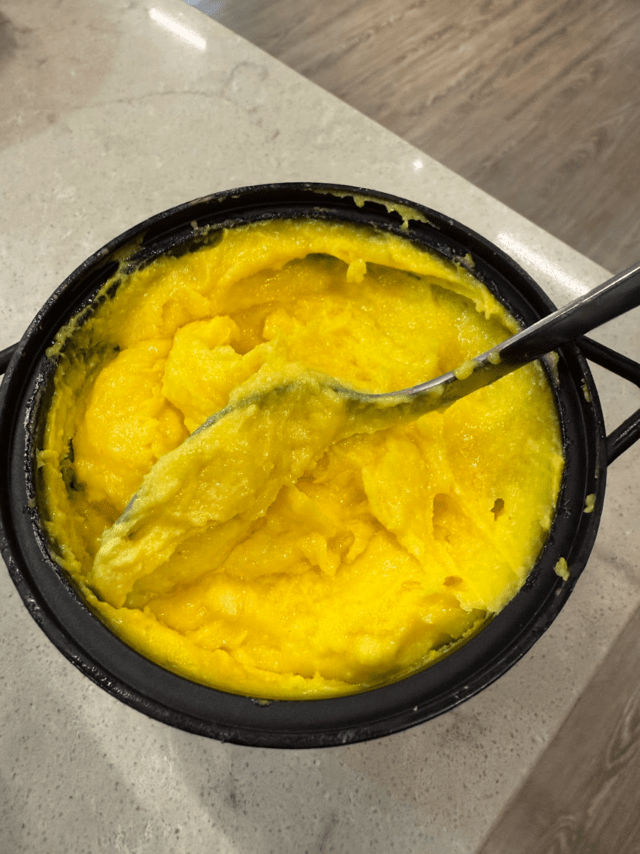
Recreating the iconic Bruun butter
If you can’t find it, learn to make it yourself. That seems to have been the thinking of Roberto “Rob” Villarcabral, founder of The Histólinarya Collective, who recently debuted his “Bruun-style compound butter.” The occasion was a cooking class-cum-workshop titled “Whisking Thru Tradition: A Sweet Retrospective of the Filipino Pastry Kitchen, Vol. 1” at STUDIOM in Proscenium Rockwell. Rob demonstrated his well-researched and much-experimented recipe for Bruun-style butter, using them in two recipes, Ensaimadas de la Decada Treinta (a 1930s-style ensaimada) and Lenguas de Gato, alongside The Perfect Tsokolate-Eh to accompany the pastries.
“We have lot of things that are being lost through time, and there are people who just whine about it, lament about it. 'Oh it’s going to be gone forever,'” observes Rob. “I took up the challenge and said I want to do something about it and make people remember that such a thing exists.”
At first, that meant sharing vintage and antiquated recipes culled from resource persons and archives that he shared through social media and videos. He soon moved on to face-to-face classes to actually teach these old recipes to those interested. “I’m not selfish, I’m not a gatekeeper. So everything I learn out of my curiosity I want to share with others, hoping that people who are like-minded could also pick up something and learn something.”
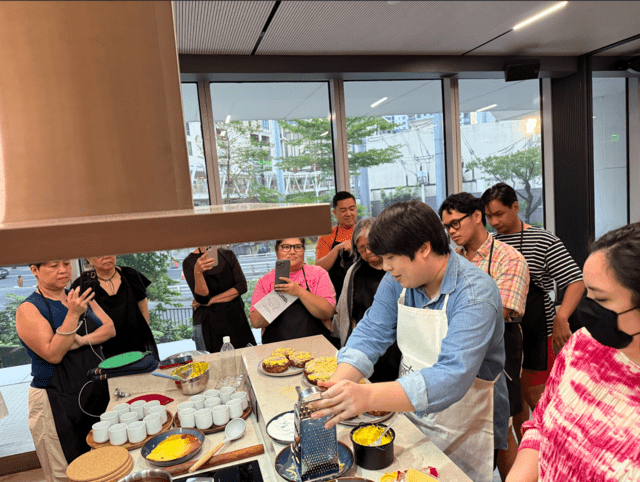
The Whisking Thru Tradition class is a prime example, and STUDIOM afforded the perfect venue, with a small but efficient demo kitchen and enough space for about a dozen or so attendees to crowd around for a closer look at the proceedings. The vibe was relaxed and chill, with Rob and his team greeting attendees with dayap spritzes and pâté with toast to whet our appetites, then handing an apron and booklet to get us ready for the workshop at hand.
Also read: Roberto Villarcabral is Teaching Us the History of Filipino Culinary Delights, One Video at a Time
This 18-page booklet is perhaps the most valuable take-home of the workshop. Aside from the recipes, it contains much of the culinary research that Rob put together to create the recipes. “When I offer my booklets," he says, "I really want to make every detail count. That you’re not just learning the recipes, but you’re learning the stories behind a lot of these recipes… I make sure that everybody can walk away from the venue learning something and appreciating the many forgotten elements of our heritage cuisine.”
The secret to Bruun-style butter? A bit of cheese
Speaking of “forgotten elements,” Rob discovered that Bruun butter was named after Lars Emil Bruun born in Denmark in 1852. Funnily enough, Mr. Bruun didn’t like the taste of butter, even as his L.E. Bruun Preserved Butter Company would export this butter in cans to warmer climates all around the world until it stopped production around the 1970s or thereabouts, although evidence is sparse. “People tried to replace it with Queensland but it’s not the same,” Rob admits, referencing another brand of canned butter currently available in local supermarkets.
In his booklet, Rob explains how he was able to recreate this now-extinct ingredient: “After conducting interviews and research, I was able to formulate an approximation using a bit of food science magic.” This magic involved fermenting cream with cultured buttermilk and churning it, then recreating that distinct tangy-cheesiness with the addition of Parmesan cheese “dust” and some salt. While the original Bruun butter was a distinct bright yellow, a color inherent in Danish cow’s milk, Rob replicated this with a few drops of yellow food coloring (optional) to achieve that same golden color.
Of course, the big question is how does this Bruun-style compound butter compare to the real thing? While a side-by-side comparison is impossible, Rob found a handful of testers who still remember the taste of the original. Their verdict? “They said [my butter is] spot on!”
Also read: This 1850s Home has Served Some of the Best Filipino Chefs
Ensaimada, the richer the better
Who doesn’t love ensaimada? But the buttery-cheesy-sweet rolls we know today are miles apart from the original, much less rich ensaimadas mallorquinas from Spain. The Philippine version evolved to include egg yolks, canned butter instead of lard, and grated Edam cheese. Clearly, our localized version is the better one, hands down!
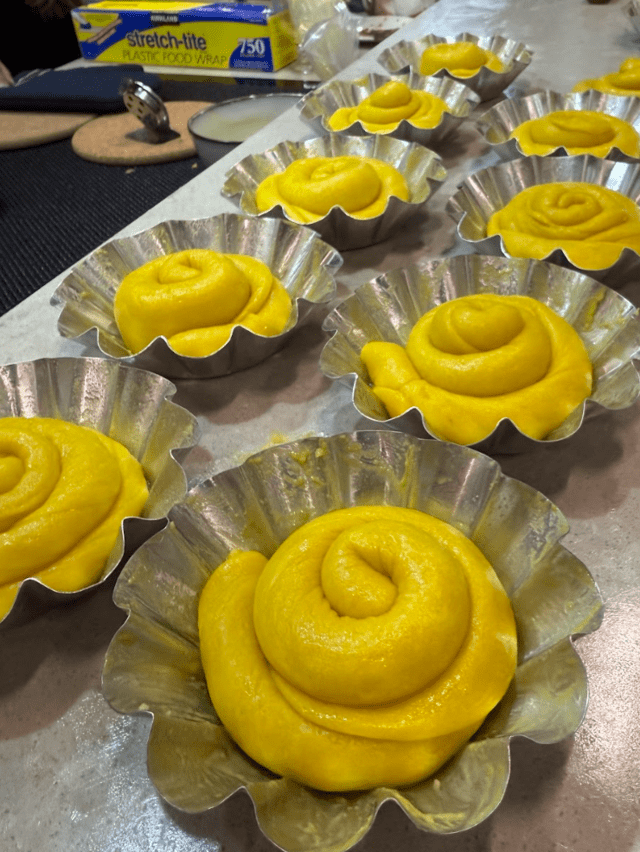
Ensaimada is truly the perfect recipe to maximize the taste of Bruun butter. It is incorporated into the dough, spread generously on the rolled-out portions before they’re coiled, and when the buns are baked, spread some more on top before being sprinkled with sugar and grated cheese. Rob’s 1930s-style ensaimada version oozes butter in every crumb, with the Bruun’s extra cheesiness enhancing the richness even more.
Tubâ for a proper rise
In demonstrating his ensaimada recipe, Rob introduced the class to yet another long-lost pastry technique: tubâ-fermented sponge. Instead of the instant yeast of modern pastries, he uses fresh tubâ or coconut sap to create his sponge (akin to a sourdough starter) for “a very robust flavor.” While mixing the tubâ with buttermilk, sugar and flour, Rob laments, “Now you can’t even find [tubâ]. You have to go all the way to the province… But hopefully by doing this, we can bring that part of our heritage back in the forefront. I think a lot of chefs would get inspired by that too.”
While a tubâ sponge is the preferred method, Rob does provide substitutes in his recipe, including instant dry yeast. Rob also reduces the traditional three-stage proofing method in his original recipe to just two stages, without compromising that “heirloom” quality.
Using up the egg whites for lengua de gato
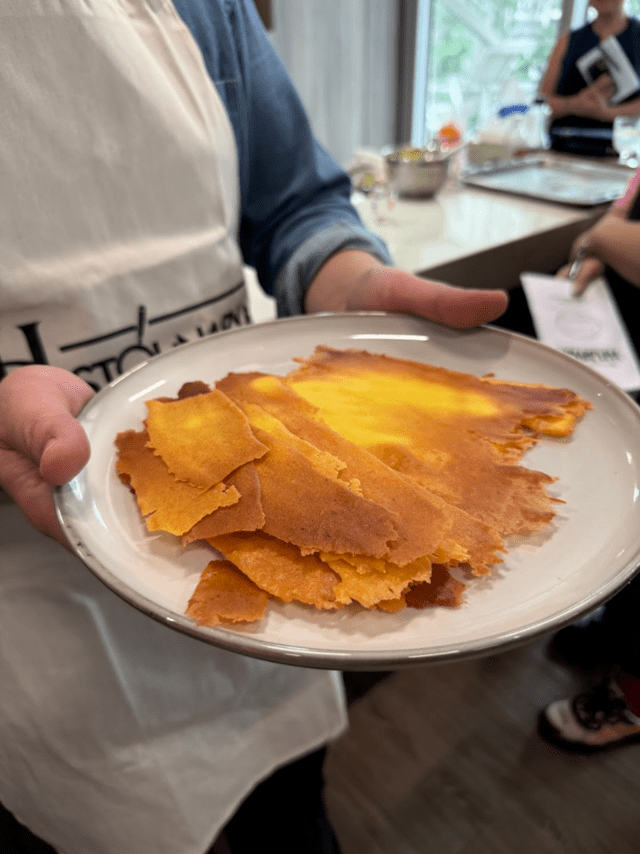
Lenguas de Gato, translated as cat’s tongues, are prevalent all over the Philippines, but according to Rob, are rarer to find nowadays in their mother country of Spain. One may wonder why he included a recipe for these extra thin buttery biscuits in class. For sure, lenguas are quite easy to make. But an even better reason is that they’re a handy way to make use of the egg whites left over from the 12 egg yolks used in the ensaimada recipe. Rob hand-mixed his Bruun-style butter with sugar, egg whites, flour, teasing the need to do this step ever so delicately to avoid overmixing. “Gotta make the contact a little more gentle. It’s like when you like someone, you don’t want to just approach her or him right away like that,” he says with a chuckle. Not something you’d usually hear in a baking class!
Tsokolate-eh for merienda
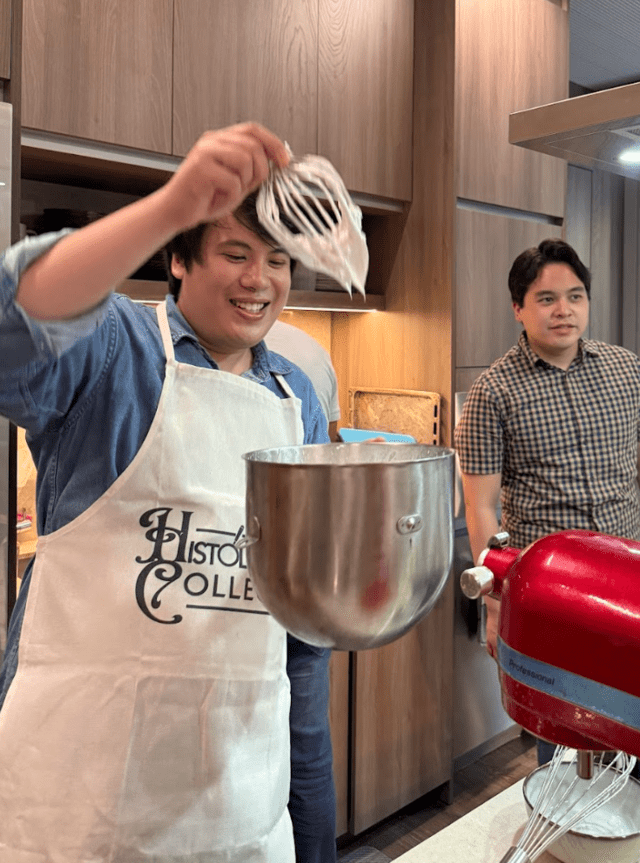
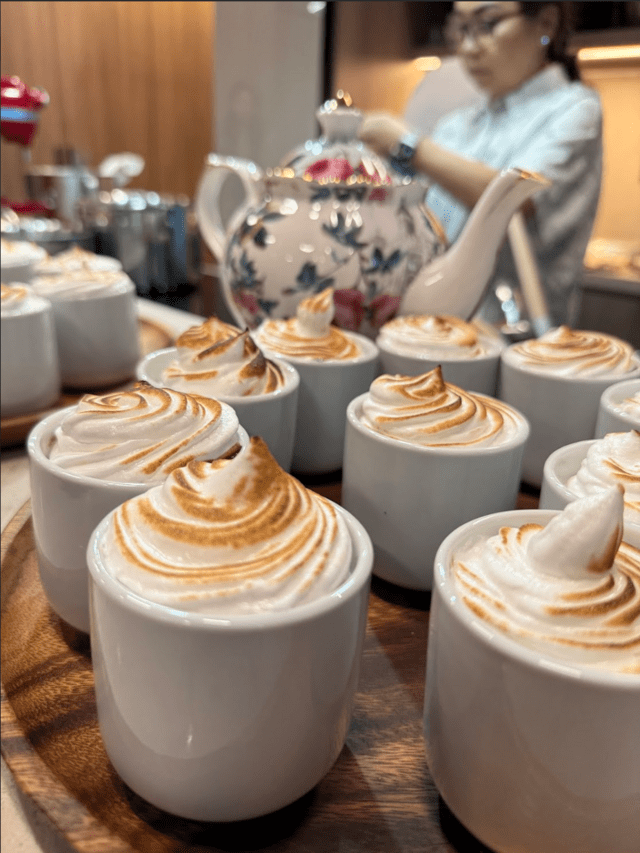
While the ensaimada buns were proofing, Rob worked on the final component of the class, the ever popular Tsokolate-Eh. The “eh” stands for espeso, the thicker variant reserved for important guests as depicted in Jose Rizal’s Noli Me Tangere. Rob’s recipe boasts the perfect ratio of chocolate tablea, brown sugar and water to achieve that extra rich quality. But as if the “eh” wasn’t enough, he brought this beverage to the next level with a torched marshmallow meringue topping, making use of the last remaining egg whites from the ensaimada recipe.
As soon as the tsokolate was ready, Rob brought out a batch of ensaimada baked earlier in the day for the attendees to try. He finished them with a slathering of his Bruun-style butter, a coating of white sugar and freshly grated cheese. After our three hour-long class, merienda was finally served! The finished ensaimada were lusciously rich and dense, with a layered crumb, but still pillowy soft and with that hard-to-describe intensely buttery-cheesiness that permeated each bite. Piping hot tsokolate-eh mixed with sweet meringue made the experience even more pleasurable.
Coming soon
The Histólinarya Collective is planning more classes on a monthly basis, but possibly more “as soon as I get the hang of it,” says Rob. He hopes to conduct more sessions at STUDIOM, an experience center conducive to all sorts of events in an inclusive and welcoming setting, including activities for neurodivergent teens and adults. “People can socialize and learn something new," says Rob, "while also learning something about themselves and the people around them.”
Until the next announcement, The Histólinarya Collective can be found at the Palms Country Club in Alabang until the end of April, presenting its “Tastes of the Archipelago” menu that “highlights culinary gems from Luzon to Mindanao themed around the Lenten season,” with a special one-day class to be announced soon. In the meantime, Rob hopes to do a repeat of the Whisking Thru Tradition class with, as always, the same objective: “to promote lost heritage and learn something new while also enjoying.”
----
Follow The Histolinarya Collective on Instagram (@histolinaryacollective) and The Histolinarya Collective, A.D. on Facebook. Visit STUDIOM here.