
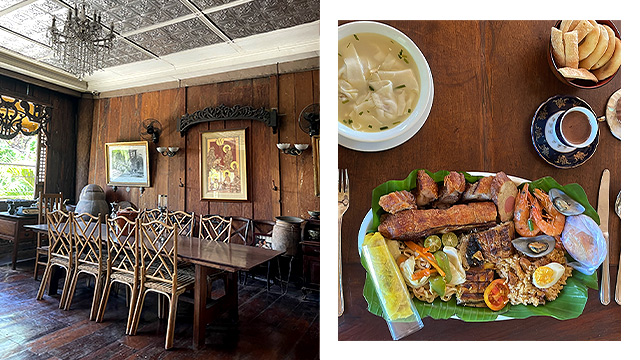
(SPOT.ph) Iloilo City is best known both for its mouthwatering food and its rich heritage. Those who have been to the city know that one wouldn’t run out of places to go for great eats and a dose of history. But there’s one place in Iloilo City where you can have a taste of both—Camiña Balay nga Bato, a 162-year-old ancestral home that doubles as a restaurant famous for its Ilonggo heritage recipes.
Also read:
You Haven’t Been to Iloilo Until You've Tried These Famous Dishes
Spot Stays: This City Hotel Is a Stone's Throw Away From Your Fave Iloilo Food Haunts
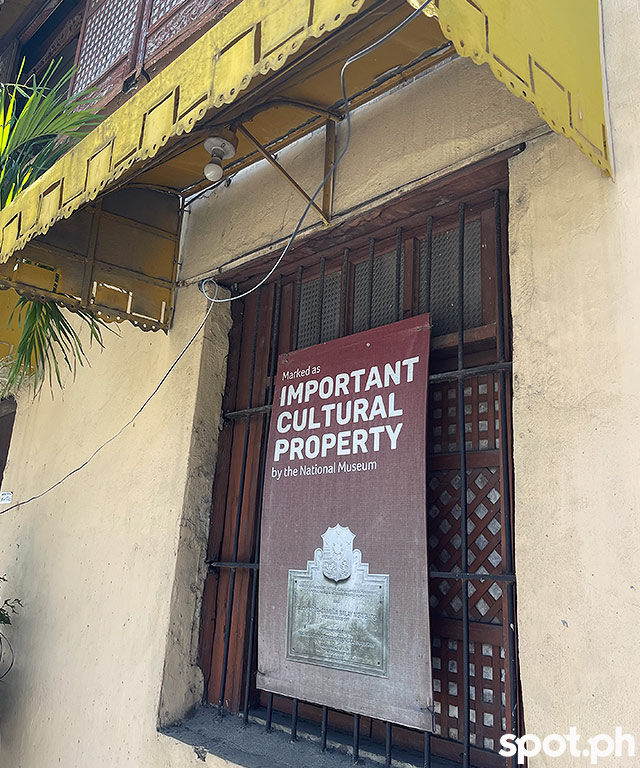
This Iloilo Restaurant Traces Its Roots to More Than a Century Ago
It was in 1860 when Fernando Avanceña and his wife, Eulalia Abaja, started having the house built in the town of La Villa Rica de Arevalo. Its strategic location by the Iloilo River allows the family, which is into the textile weaving business, to transport their goods to neighboring towns with ease. Built in a style called arquitectura mestiza because of its mix of indigenous Filipino and Spanish colonial influences, the house took five whole years to be completed.
Its walls are made of sand from the river mixed with limestone, thus the name "balay nga bato," a Hiligaynon phrase that means "stone house,." The structure was also made to look like a bahay kubo with batten and board walls and a roof made of bamboo and nipa. The floors are of narra and kamagong; its ventanillas or shutters are made of capiz (mother of pearl).
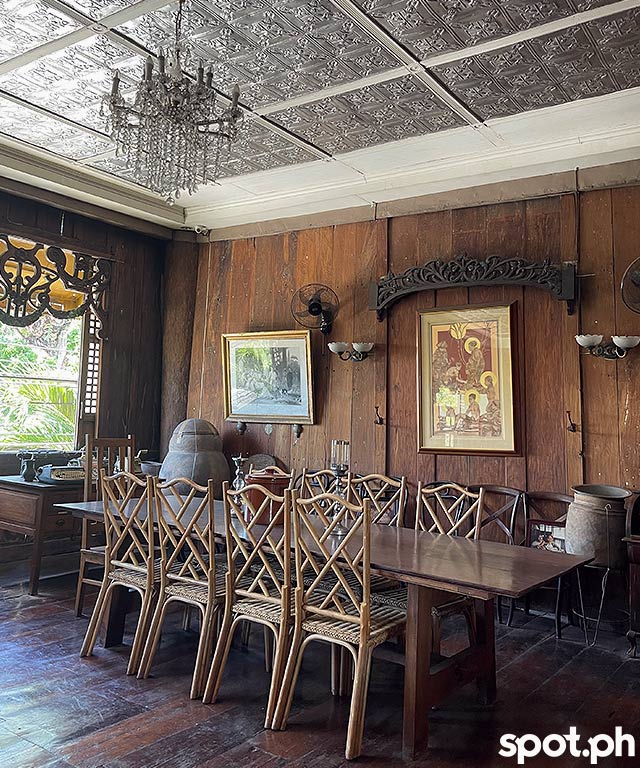
Twenty-four rough-hewn tree trunks serve as the pillars of the house. Known as haligi, these were a status symbol during that time—the more posts of this kind used to hold up a structure, the wealthier the family was.
The outside of Camiña Balay nga Bato looks like any other well-maintained ancestral home, but a step inside reveals how it’s so remarkably preserved. It’s like a time machine that whisks you back from when the house first opened its doors.
Camiña Balay nga Bato as A Living Museum
On the ground floor is the almacen (Spanish for "store") called Lola Rufina’s Heritage Curio Shop. The shop carries handmade crafts from around Panay Island.
This section also has looms where weavers continue to work on textile products like shawls, patadyong (indigenous wraparound skirt), and slippers. These can be bought at the almacen.
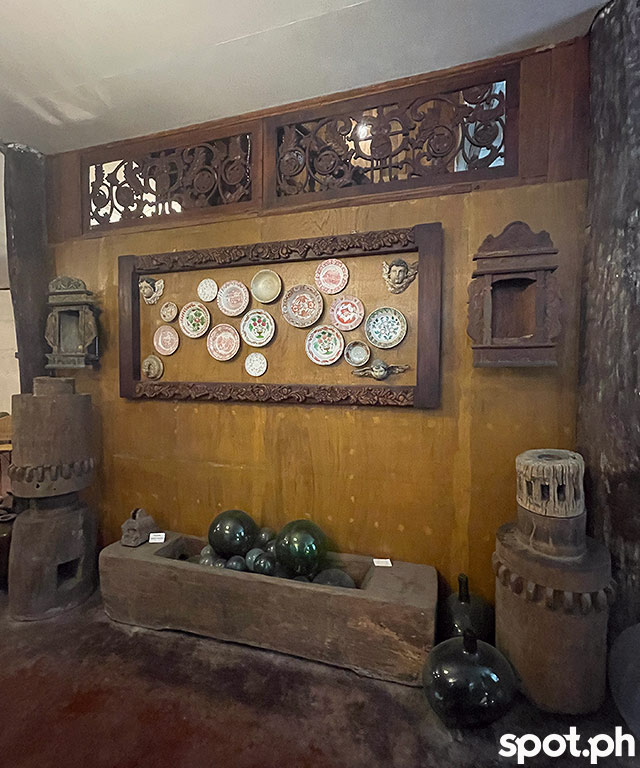
One would also notice the assortment of pottery around the house. Most of these are from Islas de Gigantes, a group of 10 islands about three to four hours away from Iloilo City.
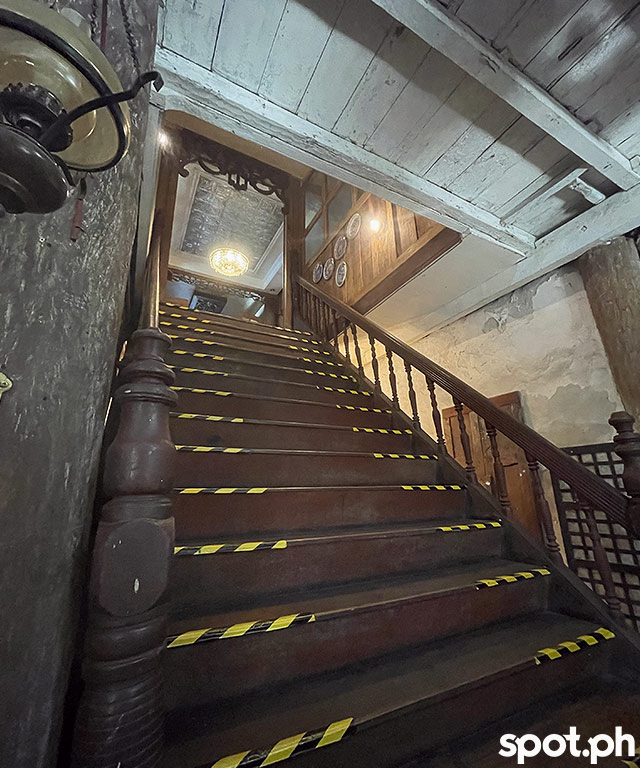
A few steps away from the store is one of the highlights of the house—the grand staircase. Similar to a bamboo ladder, each step was designed to be steep and narrow as a deterrent against thieves. Indeed, going up is quite challenging and it’s advised to ascend slowly with one’s feet sideways.
When you reach the top, you’ll be greeted by two heavy hardwood doors with a locking mechanism that’s a product of Japanese craftsmen who specialized in designing fortress doors.
Behind the massive doors is a private area where fourth-generation members of the family continue to reside, making the house truly a living museum. Among the current residents are Luth and Gerard Camiña who devoted a decade to renovating Camiña Balay nga Bato to its current state.
The central foyer serves as the intersection of the different areas of the house including the sala or main salon and two large bedrooms.
The sala is a mish-mash of architectural influences. The windows are Spanish-influenced and one can see a smattering of English and French inspiration in the decorations and furnishings.
The house has an oratorio or chapel beside one of the main bedrooms, which is where the family prays and old images and statues of saints are displayed.
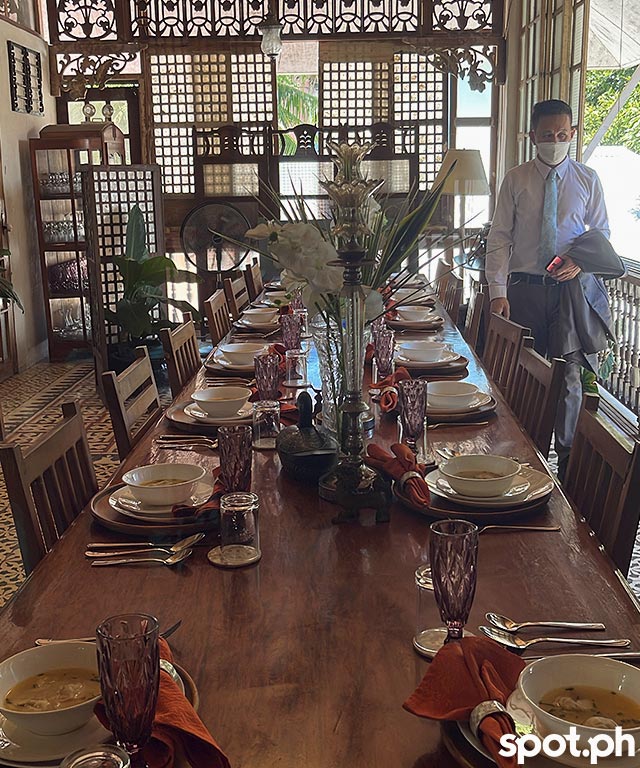
Through the foyer, one can also reach the dining hall where the buffet is served. From there, a bamboo and nipa longhouse is attached that leads to a pantaw or a platform where the kitchen, bathroom, and toilet are located.
At the height of the family’s textile trade, the pantaw doubled as a pantalan or wharf where the family boats dock. These are used to transport their goods to nearby Molo and Jaro.
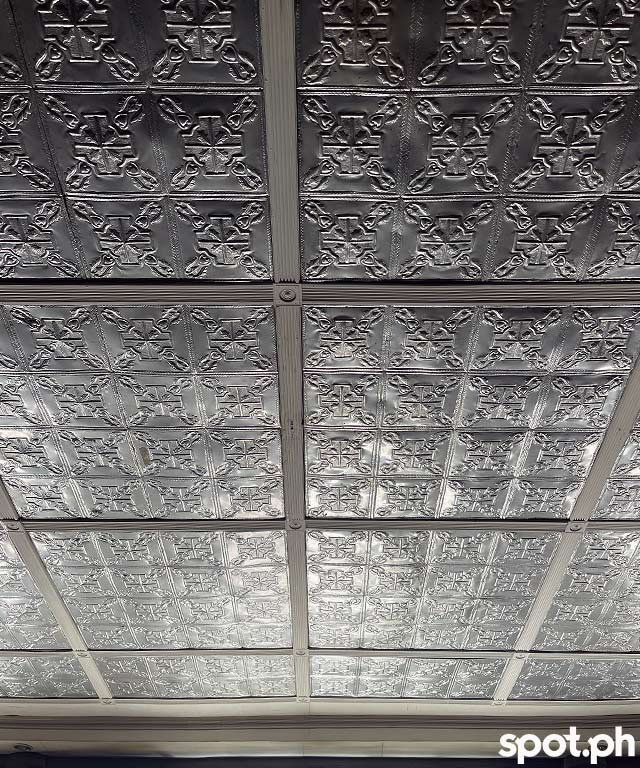
One of the most striking features of Camiña Balay nga Bato is its pressed metal ceilings. When the house was built, the ceiling was made of plaited bamboo. But as their business flourished, the family opted to replace the original material with metal.
A Feast of Heirloom Recipes at This Iloilo Restaurant
One can’t visit Camiña Balay nga Bato and not try their Heritage Buffet, a medley of Ilonggo heritage cuisine punctuated with their famous tsokolate de batirol.
Included in the menu for starters are pancit molo (Filipino wonton soup), lumpiang ubod (fresh spring roll), atsara (pickled papayas), and malabar nightshade.
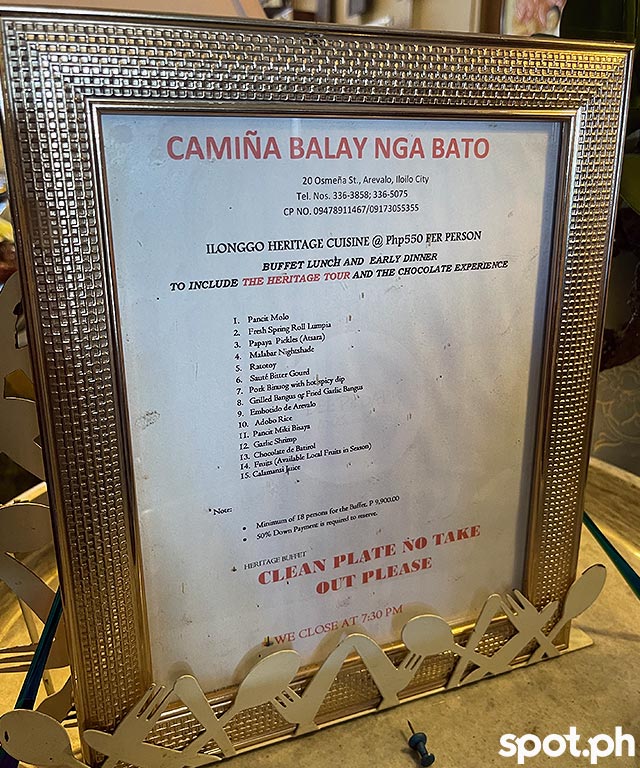
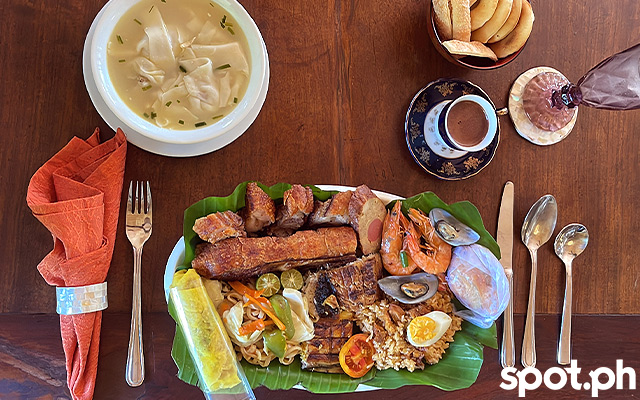
Vegetable dishes are ratotoy, which is like a local version of ratatouille, and sautéed ampalaya (bitter gourd).
Mains include bino-ug nga baboy (grilled pork) with spicy dip, grilled bangus (milkfish) or fried garlic bangus, mussels, Embotido de Arevalo (the family’s version of Filipino-style meatloaf), garlic shrimp, adobo rice, and pancit miki Bisaya.
Fresh calamansi juice and fruits are also served.
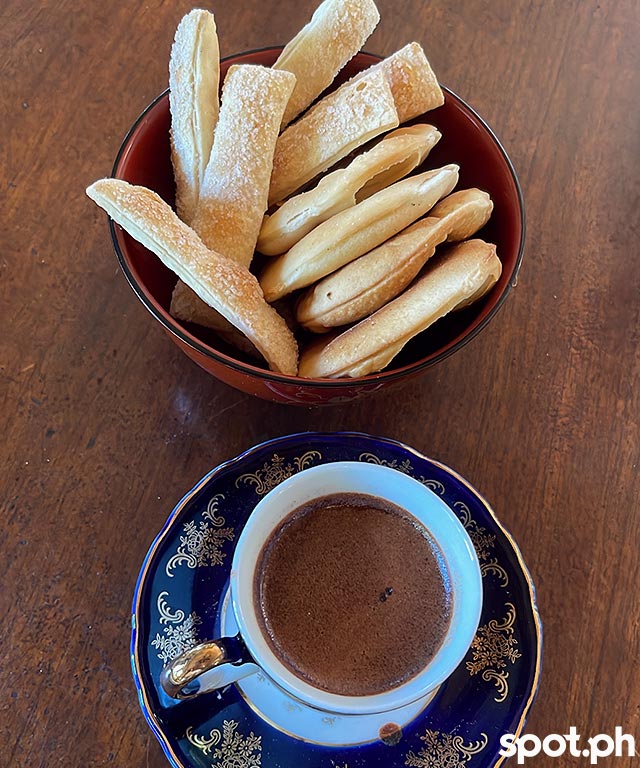
Something worth a special mention is Camiña Balay nga Bato’s tsokolate de batirol. Their version is so rich it could be mistaken for pudding! This is served with a bowl of ugoy-ugoy, a kind of layered biscuit topped with sugar that is native to Iloilo. The ugoy-ugoy’s crunch complements the tsokolate’s lusciousness.
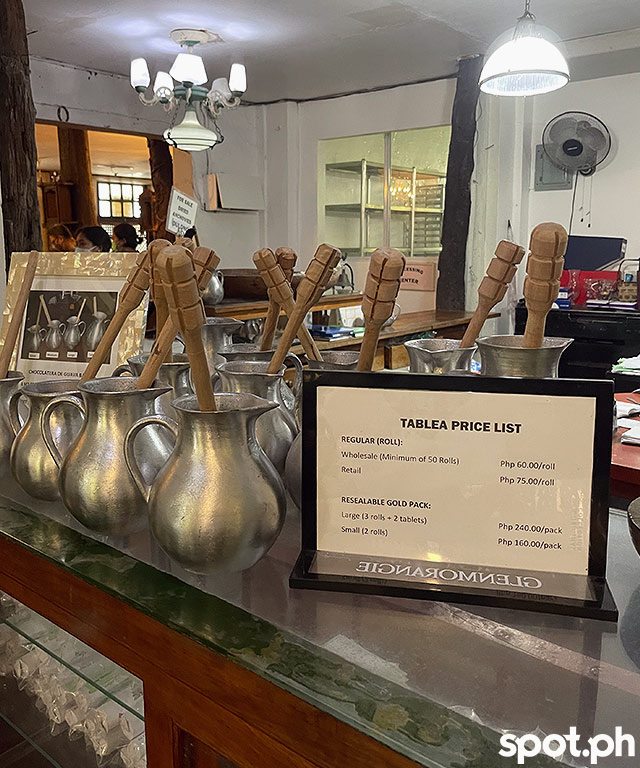
Each cast-iron tsokolatera holds a decadent concoction of four rolls of tablea or 20 tablets of cocoa, evaporated milk, and half a liter of water. The mixture is heated for about an hour and whisked using a batirol made of guava tree wood.
Pro tip: You can ask for a second serving (or more) of this cup of decadence—we’d say you absolutely must. You can also buy your own set of Tsokolatera de Guava Batirol at P1,000 for a small cast-iron tsokolatera, batirol, and two rolls of tablea at Lola Rufina’s Heritage Curio Shop.
The Heritage Buffet costs P550 per head. Reservations are required three days before your visit, so plan ahead.
Entrance to Camiña Balay nga Bato is priced at P150 per person, including a tour of the main house, the almacen, and a serving of tsokolate de batirol with a bowl of ugoy-ugoy.
If you want a bowl of pancit molo to go with the tour and hot chocolate, it would set you back only P50 more.
Camiña Balay Nga Bato is at 20 Osmeña Street, Arevalo, Iloilo City, Iloilo. It is open from 9 a.m. to 6 p.m.