
(SPOT.ph) Food has always had the ability to transport its diners to different places and times. It being a necessity for survival means that it has always been ingrained in the fiber of cultures, places, and people. Good food allows you to explore the world without having to leave the confines of your table. All have stories to tell—and it takes a good chef to find those stories and share it with the world.
Chef Chele Gonzales and Chef Carlos Villaflor of the Gallery by Chele seem to live by this guiding principle. Defining themselves as explorers beyond being chefs, these men have found a way to tell the story of Philippine Cuisine in a new light. In their new tasting menu, Hereatage, the Gallery by Chele duo shines the light not only towards the usual culprits when we talk about Filipino food (i.e. the adobo and the sinigang) but also towards ingredients, dishes, and even techniques that are more obscure to the common metropolitan Filipino.
Also read: 10 Best Tasting Menus in Manila Right Now
The HerEATage Tasting Menu at the Gallery by Chele is a celebration of the Philippines and its people
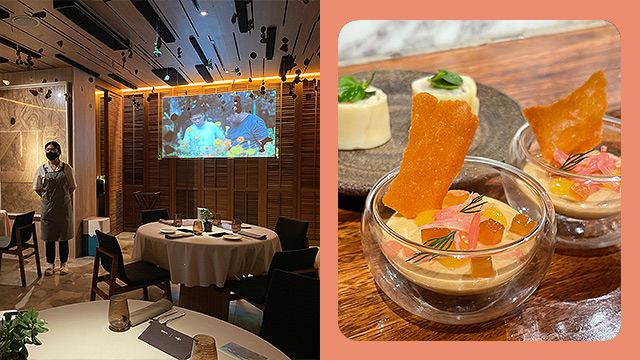
Upon arriving at Gallery by Chele for the new Hereatage Tasting Menu, you will be presented with a tablet that shows you a trailer of the HerEATage series which follows the travels of Chefs Chele and Carlos around the Philippines. We learn that it is in these travels that they found inspiration for their menu items—may it be through learning traditional cooking techniques, using endemic ingredients, or simply by observing the way of life of the people they meet. They are telling the stories of the places they have visited through the lens of food—elevated in the same way a writer spins their tales.
The tasting menu is offered two-ways, either as a six-course (starts at P3,500/head) or a 10-course (starts at P4,500/head) experience. Either can be paired with a cocktail and/or wine pairing, or a non-alcoholic option. The entire experience takes about two to four hours to complete—excluding the occasional chit-chat in between courses. This is definitely an experience that is to be savored, not to be rushed, reminiscent of the typical Filipino salo-salo that goes on for hours on end. Cards on the table: we were served the 10-course tasting menu which means we may have spent more than four hours dining at the Gallery by Chele—four hours we will never get back but also, four hours we do not regret spending in that manner.
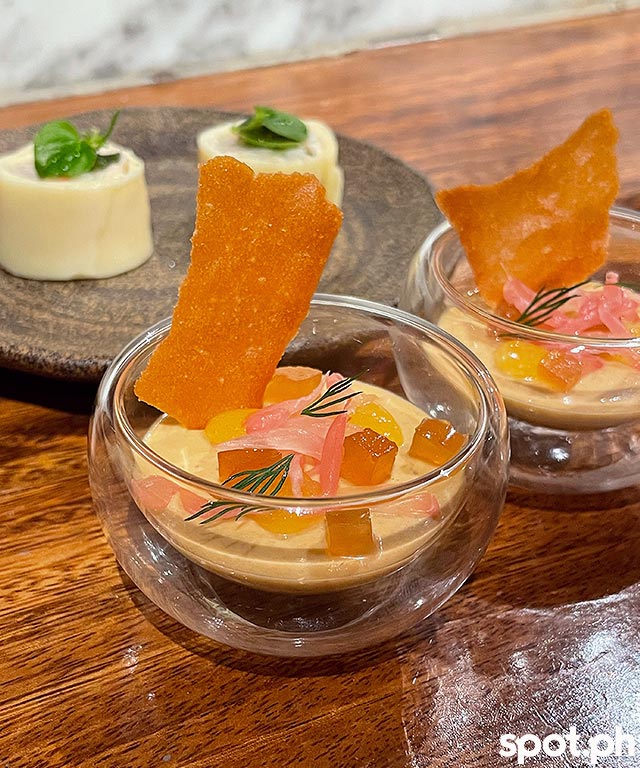
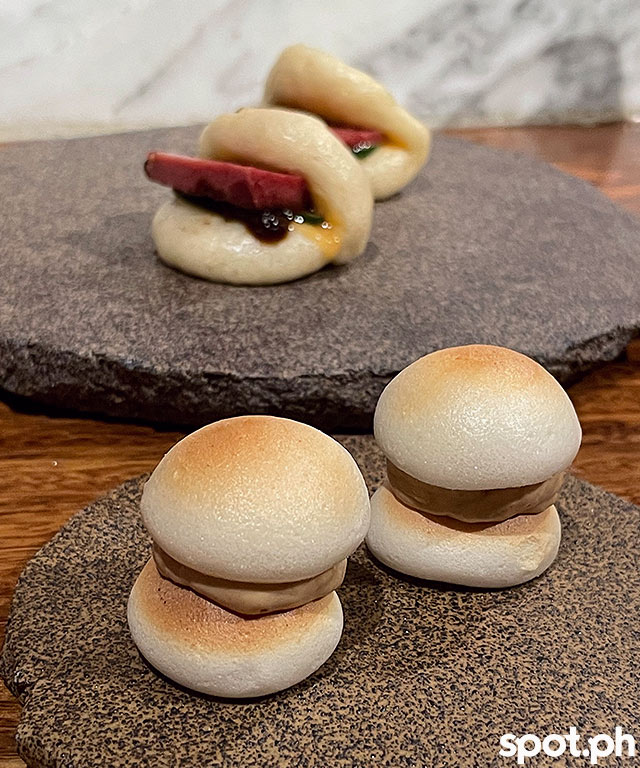
To kick-off the meal, you are first seated at the bar for quick bites. You are presented with the first of three: Bicol, a cacophony of seafood flavors courtesy of the Uni Mousse with Bignay Jam paired with Dalandan Jelly and topped Pomelo and an Uni Twill, and a Crab and Lato Fresh Lumpia roll. A surprising choice to represent the province of Bicol—considering the province is widely known for its use of coconut milk and chilis to deliver flavor, but then again there are always more ways to tell a story than one. Following that is another bites course dubbed Binondo which features more familiar Manila flavors served with a twist. Binondo consists of the Meringue De Sal, a savory meringue with adobo mousse and the Pastrami Bao—their version of the siopao—a steamed bao with a char-siu flavored pastrami slice. Worth noting in this set is the meringue. It is so delicate; incredibly light and airy with just the right amount of sweetness to cut through the savory flavors of the adobo’s soy-sauce and vinegar combination. The last set of bites hails from Pampanga, a province known for delivering flavorful Filipino dishes with hints of Spanish influence. For this destination, we tried the classic Filipino dishes Kare-Kare and Sisig, but in true Gallery by Chele fashion, it is elevated with a twist.
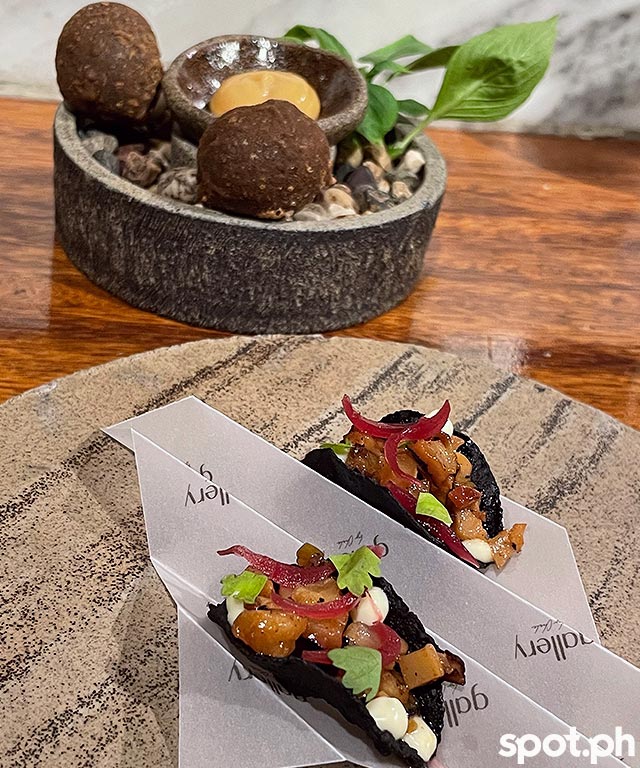
Here we were presented with the Squid-Ink Sisig Taco and the Kare-Kare bonbons with Bagoong Mayo on the side. The Squid-Ink Sisig Tacos are small butter and beef fat sous-vide octopus bites with pickled onions, dayap mayo and micro-cilantro on a squid-ink infused mini taco shell—an interesting fresh tasting and zesty take on sisig which is traditionally heavily pork-centric. The octopus, cooked exceptionally, takes on the role of the pork texturally so well that you do not miss the familiar. The Kare-Kare bonbons are balls of beef cheeks in buckwheat flour which from the outside look like it might have a crispy meatball-like texture but when you bite into them are actually tender, saucy, and moist much like a typical chunk of meat from a traditional serving of Kare-Kare.
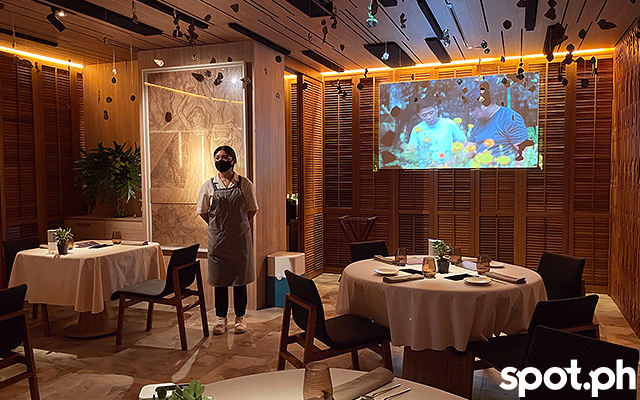
After your bites, you will soon be moved into the dining room for the main event. The dining room is a sensory experience on its own with videos of Chef Chele and Carlos’ trips playing on a loop as you have your own journey through the food. On your table, you will be given postcards and souvenirs from your journey that provide the context for your meal. There are also QR codes in the postcards that lead you to the full docu-series that delve deeper into the origins of the Hereatage tasting menu and the trips that inspire it.
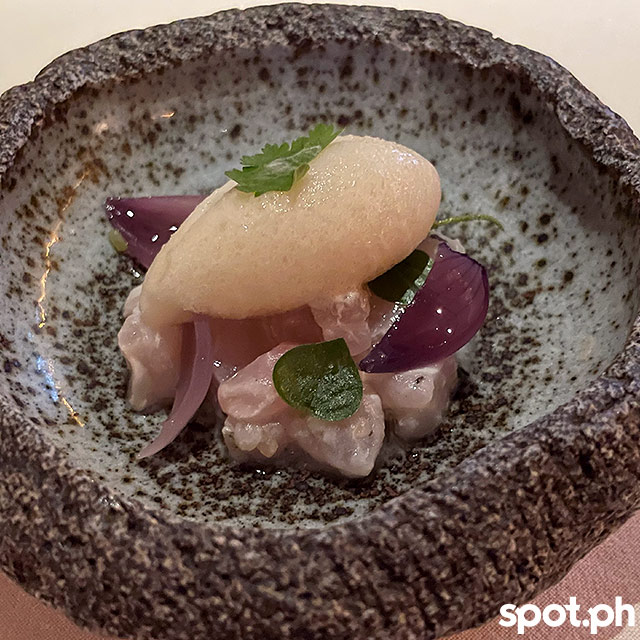
Soon enough the first of the 10-courses arrive, Siruma—named after a remote island in Camarines Sur where Chef Chele was inspired to learn about the traditional food preservation method of Kinilaw. The course is mackerel ceviche with house-made pineapple vinegar, topped with a roasted pineapple sorbet, onion petals and cilantro. A light and fresh start to the night—the mackerel and the sorbet work hand in hand to make this happen with the mackerel taking on a slight cheese-texture close to how mozzarella cheese is like in contrast to the smooth and cool pineapple sorbet. Each bite is an interesting and balanced one, in which the Kinilaw method is perfectly highlighted sans the overpowering taste of vinegar in every bite.
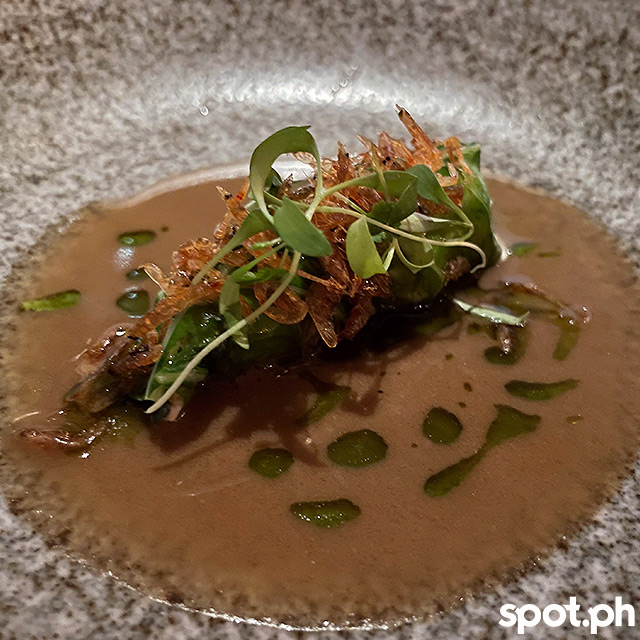
Next stop is the Camalig—known as the Pinangat capital of the Philippines, it is only apt that the Chefs learned the art of this dish here. Traditionally, Pinangat is mixed-seafood wrapped in taro leaves but the Gallery’s version is a little different. It features lobster wrapped in kale which is then combined with another technique the chefs learned in Albay, which is to smoke coconut milk. This results in a final dish of a sous-vide lobster wrapped in kale swimming in smoked coconut milk with cilantro oil topped with fried alamang and pancit-pancitan—definitely a creamy and rich dish that is cut through by the briny notes of the fried alamang.
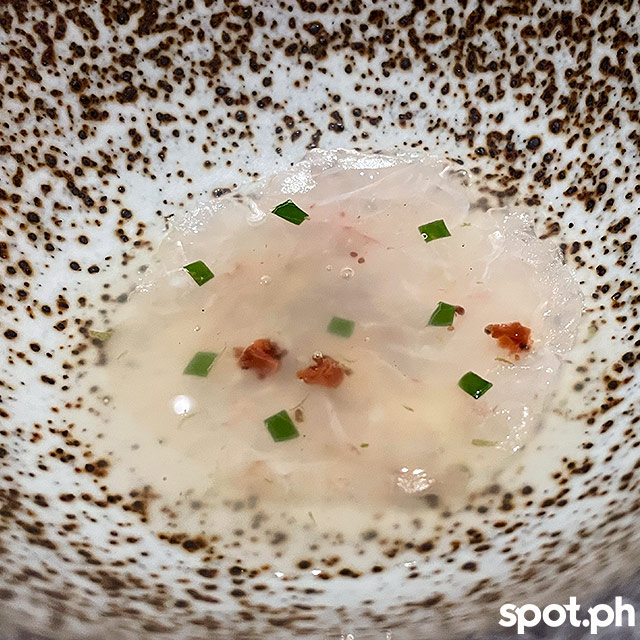
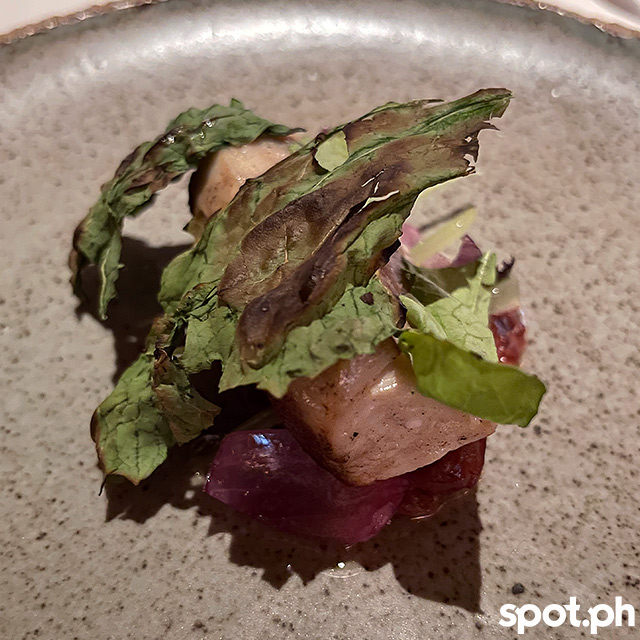
Our next course brings us to El Kabayo, a small community of Aetas in Bataan who rely heavily on foraging in the forest for their meals. This course features a salt-and-sugar-cured snapper with a citrus kombucha pour-over and topped with tibig (a Philippine fig found in Bohol), and pingol leaves. This course is a very Filipino version of the carpaccio but with a flavor very similar to the santol fruit. Next, we head on over to Cabiao in Nueva Ecija, the country’s rice capital to learn about Buro, the art of fermenting rice. The course features red rice fermented in Japanese koji with heirloom tomatoes and mangoes topped with a succulent perfectly seasoned pan-seared mahi-mahi and mustasa leaves two-ways, fresh and charred. This dish left us wanting more—more of the buro and its sweet and pickly taste but most of all, more of the perfectly cooked, well-seasoned mahi-mahi. The combination of flavors and textures in this dish is arguably one of the best of the night.
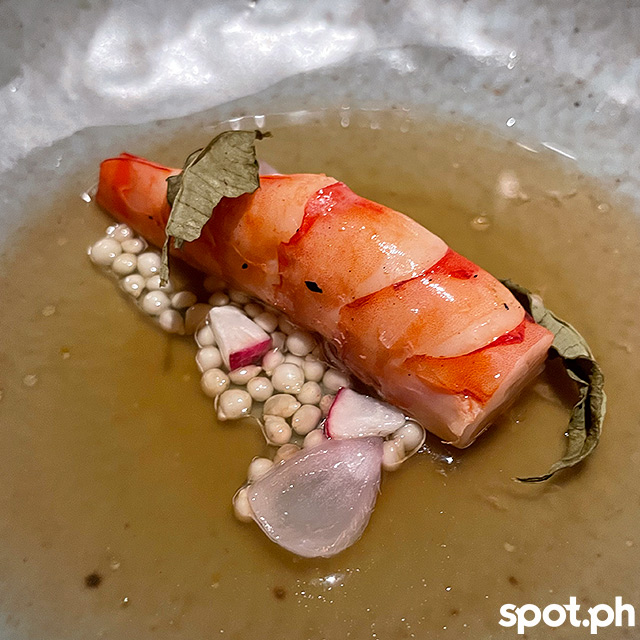
Following the exceptional Mahi-Mahi, another seafood course is served. This time the dish is inspired by the Aetan technique of Binuho which is cooking inside bamboo stalks over an open flame. This course is named Hermosa for the town in Bataan where the chefs learned the technique. The Gallery’s version of Binuho-style cooking is modified to better suit the modern kitchen; they switched out the bamboo stalks and open-flame with bamboo leaves and a grill. For Hermosa, they wrapped a river prawn in bamboo leaves and charred it over the grill; this gives the prawn a smokey and earthy flavor; then to balance it out, a bilukaw broth is poured over the dish along with some sous-vide okra seeds and ginger oil. For those of you unfamiliar with bilukaw, it is a souring agent used similarly to tamarind and kamias; that being said, the addition of the broth brings a sour taste to the dish making it similar to Sinigang na Hipon.
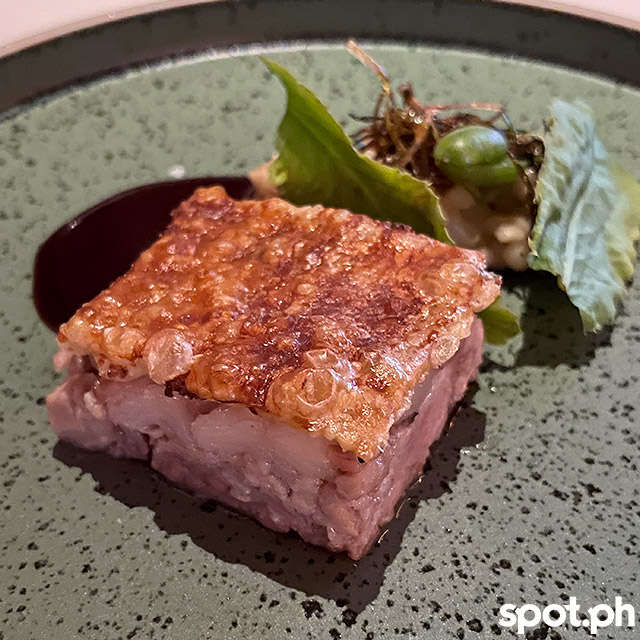
The next course features a very famous dish, Cochinillo or roast suckling pig—don’t let the familiarity fool you because there is more to this course than meets the eye. The course is called Silang for the location of the farm, Lucciole Farms, where the pigs and the vegetables for this dish are sourced. This Cochinillo isn’t your usual roasted pig. The Gallery’s version of Cochinillo is 16-hour sous-vide pork slab with extra crispy skin. This is served with beef jus infused with curry leaves and five-spice with a side of adlai cooked in chicken broth. The skin is very crisp—think the-chicharon-you-buy-from-manong-selling-balut crispy—and the secret to keeping it that way, we were told, is to separate it from the slab and cook it on its own. This has got to be one of the best versions of Cochinillo we’ve had. The pork is fork tender; the pork skin is crunchy; the sauce complements the flavors of the pork without overpowering it and the adlai well-seasoned and definitely not an after-thought. All components work together well making a very balanced dish. The only thing we wish we could change about this dish? We wish there was more of it.
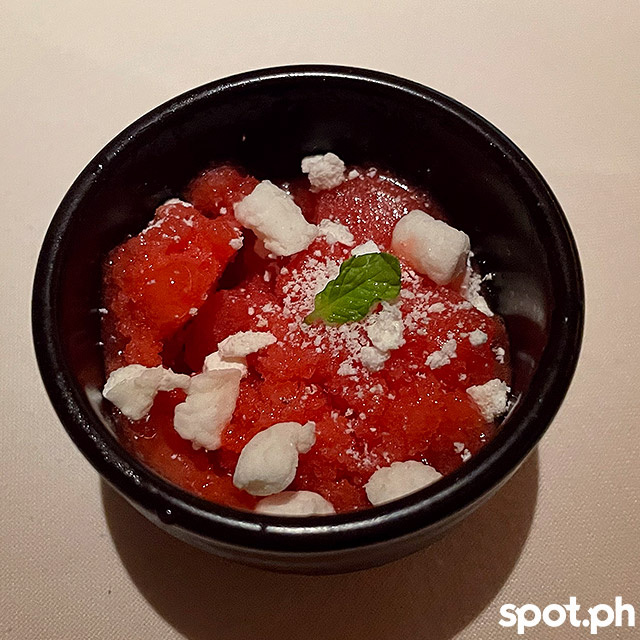
At this point, we have had a little over nine dishes and with five more in line, it seems apt to have a little palate cleanser especially with the main course coming up. The palate cleanser for the tasting menu is everyone’s childhood favorite Iskrambol—that is of course a more elevated fine dining version of this street food. We learned that Chef Chele took a liking to this street dessert after trying it during their teambuilding sessions; it made such a mark that it just had to go on the new tasting menu. Their take on this classic cooler is a strawberry sorbet with banana essence topped with a dayap meringue and dayap marshmallow. Truly refreshing and a nice break from all the savory items we’ve had so far during the meal. The sweetness of the fresh strawberry sorbet is perfectly balanced by the creamy essence of the banana and made all the more refreshing with citrus notes from the dayap bites. Its play on texture is also not lost on us, with smooth icy feel of the sorbet counteracted by the crumby and chewy texture of the marshmallow and the meringue, this palate cleanser was a treat and a necessary pause in the overall meal.
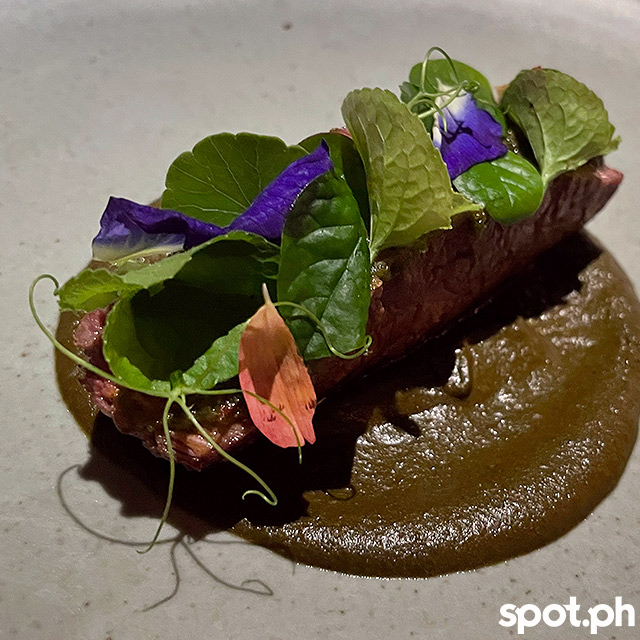
And now for the main course, we travel all the way back to Camarines Sur to try the famous Bicol Laing but with a grilled tenderloin and malunggay chimichurri on top. Of course, the main course has to be steak because steak, though it may seem easy to cook, is also very easy to get wrong; but, wrong it is not at Gallery by Chele. Proving that not only do they specialize in modernizing traditional techniques but also in performing the basics, this sumptuous juicy, melts-in-your-mouth steak is perfectly seasoned and surprisingly goes well with the pureed Laing base and the mild heat from the chimichurri. Commonly a very strong presence in any plate, the Laing base does not dominate the taste but sings in harmony with the other flavors of the dish. The dish may look small but it is packed with flavor and suprisingly quite filling. A star in the tasting menu.
The last three courses are all desserts, a welcome shift after over 10 savory dishes (including the bites) taken in succession. It may seem excessive having three desserts, but we are already at the point of having eaten almost 10 courses anyways, so why the heck not. Though all the desserts are sweet, they each have their own special quality that makes them stand out.
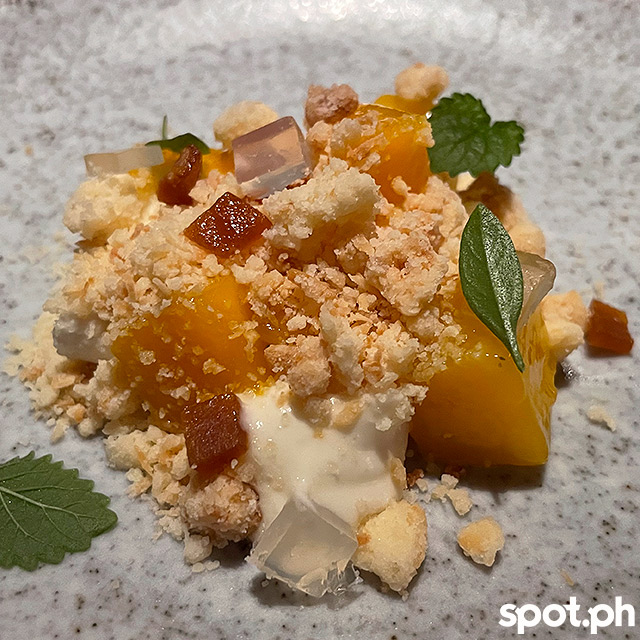
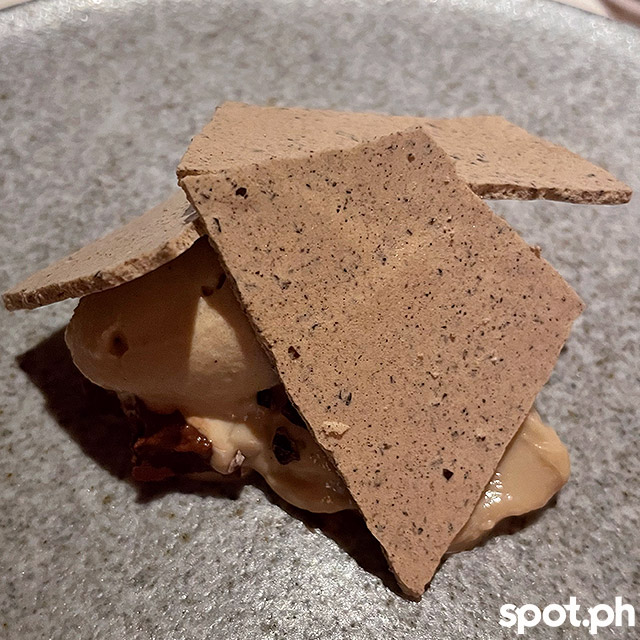
The first dessert takes us to the familiar roads of Manila and features mangoes and coconuts. Mango Manila, as this dessert is fondly called, is a coconut panna-cotta with a coconut-lime chantilly cream topped with fresh and dried mangoes and coconut streusel. Another interesting note with the Manila dish is that it contains fresh herbs like basil and cilantro lending a peppery, almost savory aspect to the dessert, cutting down the sweet notes a tad. You get fresh fruity sugar flavors and not the artificial sweetness that comes from processed desserts. The next dessert takes an earthy more full-bodied flavor profile as it features the key ingredient coffee. The Amadeo, named after Amadeo, Cavite—the coffee capital of the Philippines—consists of coffee three-ways with three different kinds of coffee blends. The dish is made up of the blends Liberica, Robusta and Excelsa presented as crispy coffee meringue, coffee ice cream, creamy coffee ganache. But that's not all, to complement and accentuate all the coffee flavors in the dish there is also a banana and chocolate mousse topped with kaffir lime zest and cacao nibs. This rather surprising combination, and its interesting play of textures, was our favorite of the three desserts. Every component of the dish feels incomplete and ordinary just by itself, but taken all together, they form a synergy of flavor and textures delightful on the palate. The added touch of the kaffir lime zest and the cacao nibs are also interesting choices because as one adds a citrus and fresh zing to the dish, the other takes it down a notch and makes it earthier, kind of a play on the acidity and earthiness of coffee itself.
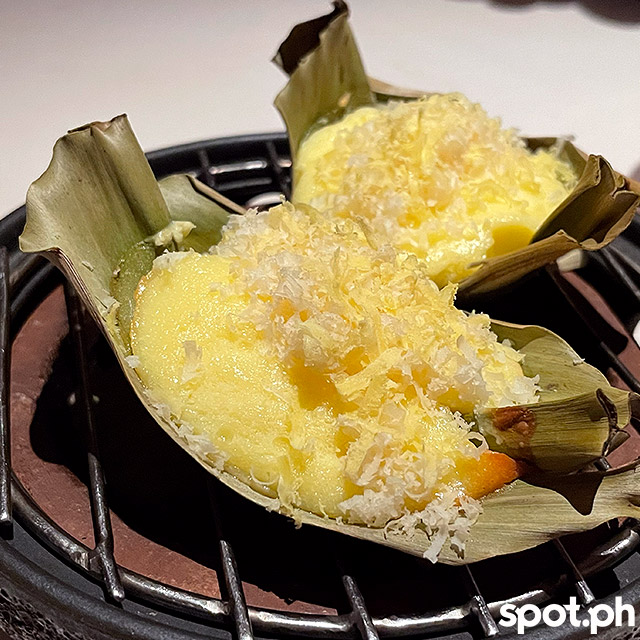
And the last piece of this epic tasting menu is called Tradition. True to its name, the last item on the menu is something we Filipinos traditionally have at the end of the year, Bibingka. Gallery by Chele's take on the humble bibingka is something akin to a japanese cheesecake crossed with Chele's own burnt basque cheesecake. It has the light, creamy and fluffy consistency that you would expect from japanese cheesecake but with the flavor profile of a burnt basque cheesecake. Another deviation Tradition has taken from the usual bibingka is with its toppings. Bibingka toppings are usually salted egg and cheese but Gallery by Chele's take on the bibingka is topped with cured duck yolk and shaved pili nuts which lend an additional layer of creaminess and saltiness to the dish much like its traditional counterparts.
A lot more can be said about the Hereatage tasting menu from the cocktails and wine pairings to the sheer production quality of the mini-docu series. Really, to summarize this entire experience is no easy feat. It is like going on a journey with the Chefs; often expecting the familiar yet always surprised one way or another. The menu transports you to these places and teaches you the stories they hold; somehow you end up feeling as if you were there. You learn about traditional techniques and see them implemented and modified for the modern kitchen. You learn about obscure ingredients and connect them to your usual pantry stock. These lessons leave you feeling like you are now privy to something more than what you knew when you came in. But most importantly, you feel full—both literally and figuratively.
The Hereatage tasting menu is available as a six-course (starts at P3,500/head) and as a 10-course (starts at P4,500/head) experience. Each offers the choice of a cocktail and/or wine pairing, or non-alcoholic beverages at additional cost. Vegetarian options are also available. The Gallery by Chele is located at 5/F Clipp Center, 11th Avenue corner 39th Street, Bonifacio Global City, Taguig. For more information, you may visit the Gallery by Chele website.