
(SPOT.ph) To cook a specific cuisine well takes talent, discipline, and expertise. One has to know the ingredients, techniques, and flavor profiles—a feat that becomes even more challenging when preparing cuisine not endemic to where one is located, especially when talking about a restaurant. Then it becomes about finding a point between the authenticity of flavors and ensuring it still hits a note of familiarity with your audience. Chefs must perform a balancing act—a balance between authenticity and appeal.
It truly takes one to know one, and, in the case of Thai food, we ought to trust the Thais, which is why when we heard that Thailand's Department of International Trade Promotion and Ministry of Commerce launched a program designed to promote their cuisine around the world called "Thai Select", we knew we had to keep tabs on which restaurants and products made the list. Thai Select is a seal of approval from their government that tells the world you're serving authentic, high-quality Thai cuisine or products, thereby challenging chefs and restaurateurs to innovate and improve their quality without sacrificing authenticity. There are only eight Thai Select restaurant awardees in the Philippines. Among them is Benjarong at Dusit Thani in Makati, an institution in the dining scene that recently launched an eight-course tasting menu we got to try ourselves.
Also read:
Tom Yum Goes Crispy at This Cool New Thai Food Shop
This Thai Restaurant Is Freshening Up Their Menu With Veggies Grown in Metro Manila
To say that Benjarong is a Thai restaurant is an understatement; here's why:
Benjarong's eight-course tasting menu is dubbed the Benjarong Manila Experience, as prepared by the restaurant's Chef de Cuisine, Chef Watcharaphon Yongbanthom or Chef Ja as she's affectionately called. To say Chef Ja is on top of things and making Benjarong the place to be for Thai food is putting things lightly. Chef Ja has been at the helm of Benjarong since 2015 and has been updating and elevating centuries-old recipes to give them modern flair for the discerning palates of the time. This talented chef not only lends her skills to the kitchen but also to conceptualizing the menu design; the tasting menu features Chef Ja's hand-drawn illustrations and notes about the ingredients in each dish.

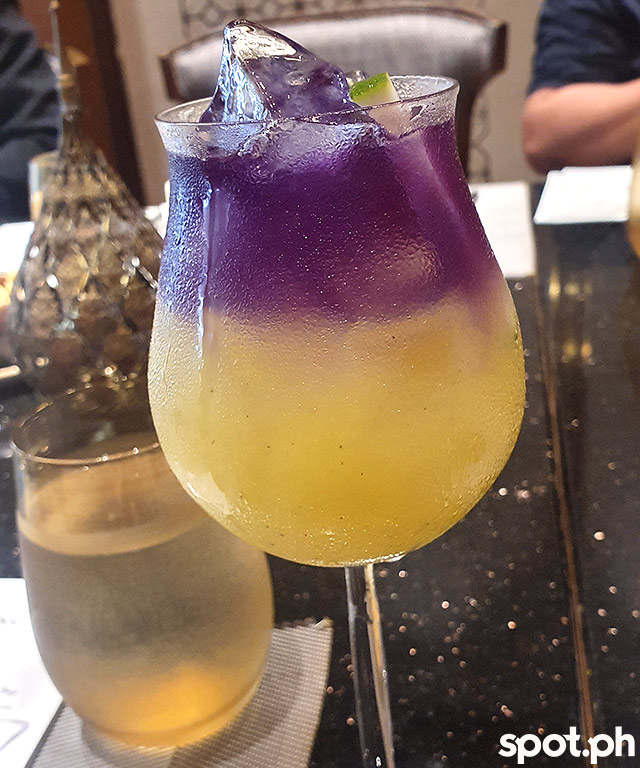
We were served a gin-based cocktail with butterfly pea extract to kick things off. So beautiful to look at you almost wouldn’t want to consume it, but that would be robbing it of its purpose—don’t feel too bad either as you’ll be rewarded by a taste as wonderfully refreshing and light as it looks. You barely taste the gin, almost as if you were drinking citrus cider. Indeed a perfect start to a meal full of unexpected flavors.
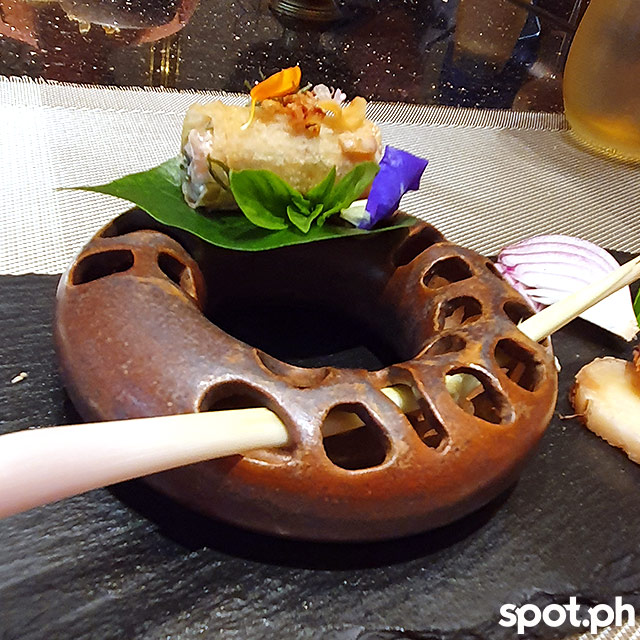
The first dish served was an appetizer called Pla Samun Prai, which is fresh salmon with Tom Yum spice mayo wrapped with rice paper on a betel leaf. The dish is a quick bite—you could easily down it in one go, but that would mean missing out on savoring the strong ginger notes from the galangal and the mild heat that creeps up on you just as you think you're safe from the chilis. Another thing to note is the presentation; you could easily dismiss this dish as a mini Thai-style lumpia which it technically is, but as a not-so-subtle reminder that you are eating a Thai dish, the bite is presented alongside all the usual aromatics used in Thai cooking such as the galangal, lemongrass, kaffir lime, and shallots.
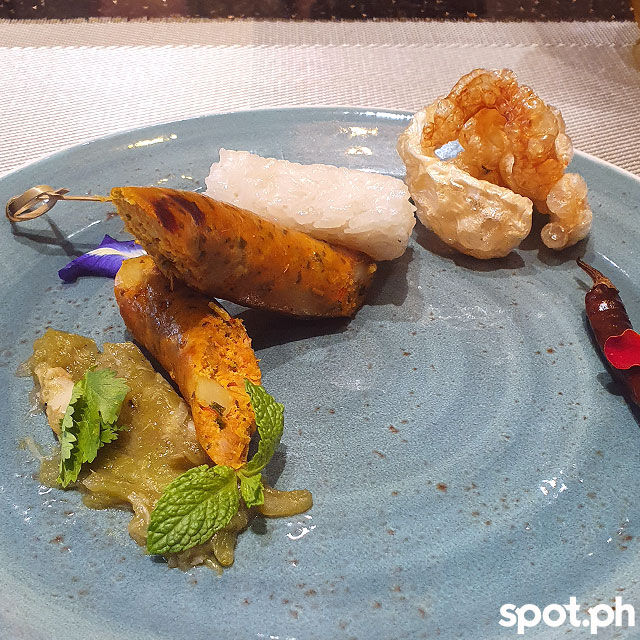
Next on the menu is another appetizer called the Sai Oua, a dish that stars Northern Thai Sausage, crispy pork skin, coconut milk sticky rice, and a green finger chili paste. The sausage, made of pork and a blend of herbs with prominent notes of galangal, possibly coriander, and a hint of coconut, creates an impactful bite with all these powerful flavors coming at you, yet not in an overwhelming manner. The green finger chili paste is not at all the overpowering too-hot-to-handle type but more of a subtle tangy heat that complements the flavors of the sausage; a great mix, especially when taken with a bite of the coconut milk sticky rice, which may have helped reduce the heat of the chili paste. When you're done with that bite, alternate it with a crunch from the pork skins, and you've got a winning combination.
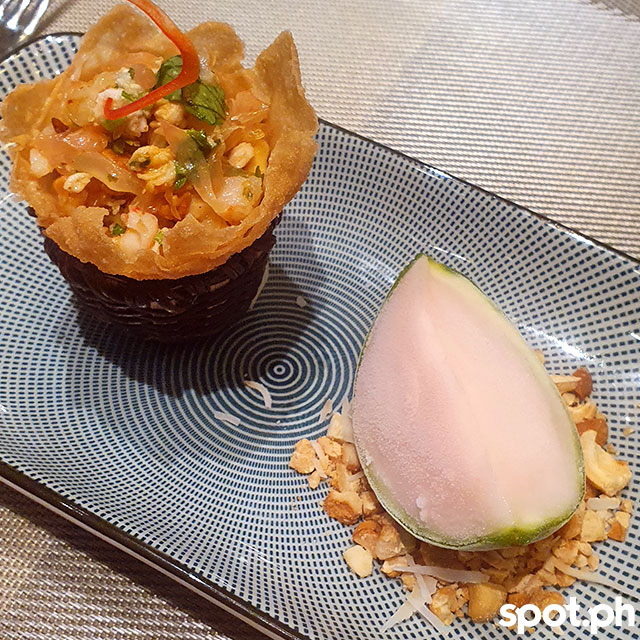
A brief pause from all the savory dishes comes in the form of the third dish, Yum Som O. A palate cleanser before we head into the big guns, this dish of a pomelo sherbet served on a lime skin with a little basket of flavors from pad-thai crossed with a pomelo salad and tons of nuts and cashews is nothing but refreshing and familiar. Familiar in a good way, such that you don't feel lost in all the new flavors that are about to come; the dish pulls you back down to earth and reminds you that you're still eating something you know, just an elevated version of it. Yum Som O is an excellent play on texture with the smooth and light sherbet served alongside a crisp and nutty rice-paper cup bite.
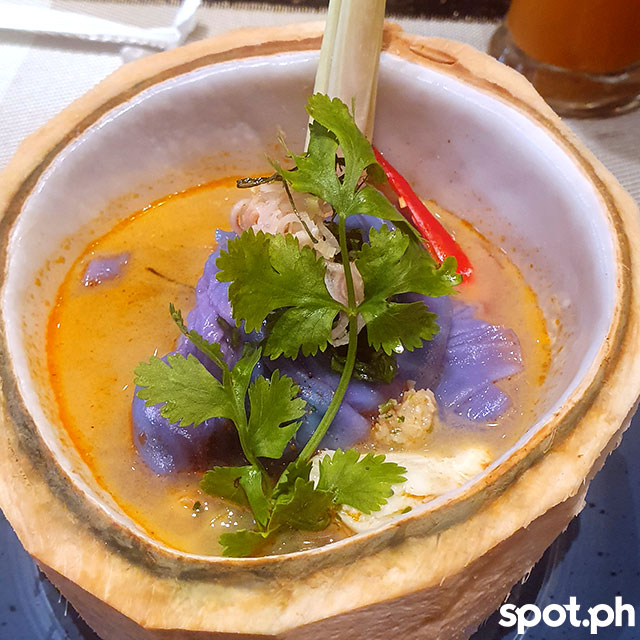
The first of the heavy lifters for this eight-course meal comes in the form of the Khao Griep Pu Ma Prao On, a dish of shrimp and crab dumplings served with Tom Yum broth inside a young coconut. This dish is equal parts sweet and savory, but the catch is no sweeteners were added; the secret, according to Chef Ja, is that her Tom Yum broth uses young coconut water, and the natural sweetness husk itself seeps into the dish. Many Filipinos are familiar with the taste of Tom Yum; it is, after all, a classic dish that many Thai restaurants carry. This version is different from others we've tried in that sour notes take a step back, and there is no punch-in-your-face heat. Instead, the dish has this balance of flavor, a mix of sweetness, saltiness, tang, and a mild heat that can only be achieved by someone who knows the flavors and spices well enough to experiment with their proportions—and by God, Chef Ja has got this down pat.
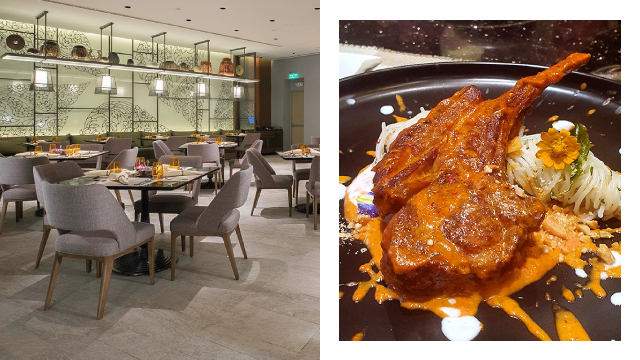
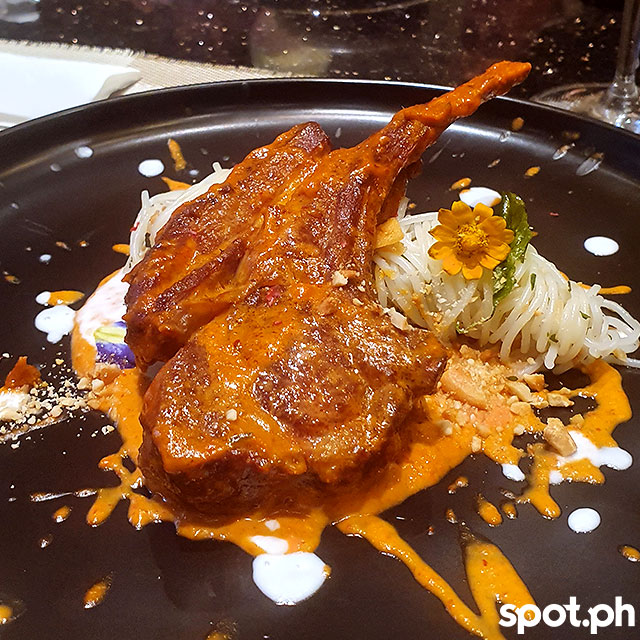
The next dish served was our personal favorite. Panaeng See Krong Kae is a grilled lamb dish with red curry sauce, coconut milk, and basil oil served with rice noodles and a sprinkling of cashew nuts. This dish is a must-try; something we could see ourselves craving and ordering repeatedly. The red curry sauce mixed with the coconut milk and the basil oil produces the creamiest, nutty, earthiest sauce that, when paired with the charred smokey flavor of the lamb, is a flavor bomb in every bite. Lamb can often be gamey and is not an easy meat to handle. When overcooked, it become tough, and when undercooked, it can have an aftertaste so overpowering that you would not want to eat it. But Chef Ja does it again with this dish. It is a well-balanced dish from the flavors to the cook of the meat.
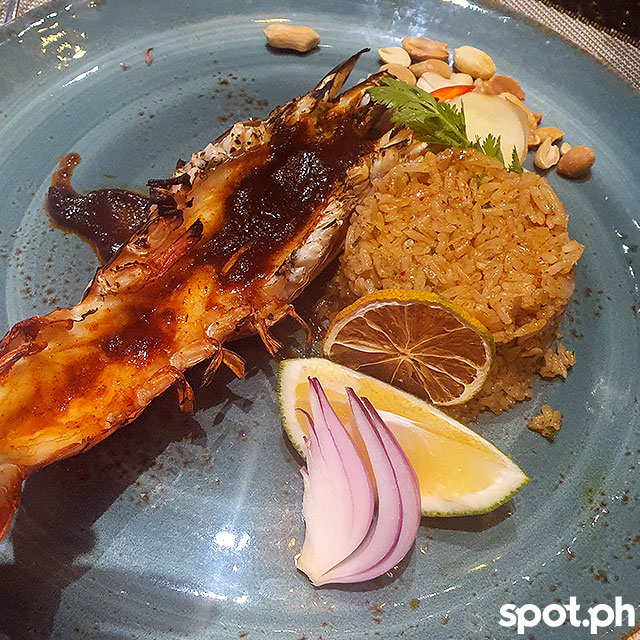
The last savory course is the Khao Phad Tom Yum, a butterflied grilled prawn brushed with chili paste and served with Tom Yum fried rice. We can't help but commend the Benjarong team for their use of such fresh produce. Eerything we had was fresh-tasting and cooked in a way that lets its freshness shine, and this prawn is the perfect example. The prawn is grilled to perfection, easily taken off the shell but with a charred smokey flavor that lets you know it's been grilled. Second, the chili paste is divine. Listen, we're not too great with spicy flavors, but this chili paste was the right amount of heat mixed in with a balance of sweet and salty notes. There is something with the way Chef Ja and her team work with heat and chilis that allows it to shine without letting the spiciness be the focal flavor. It makes you appreciate the taste of the chili beyond the heat, balancing it so well with other aspects of the dish that the chili itself becomes a bridge between the flavors. The other thing about this dish is that it is not just an afterthought to the meal. Its spicy and sour notes blend well with the freshness and heat of the prawn and chili sauce, and when you squeeze lime on the entire plate, you are hit with a rush of umami that'll craving another bite immediately.
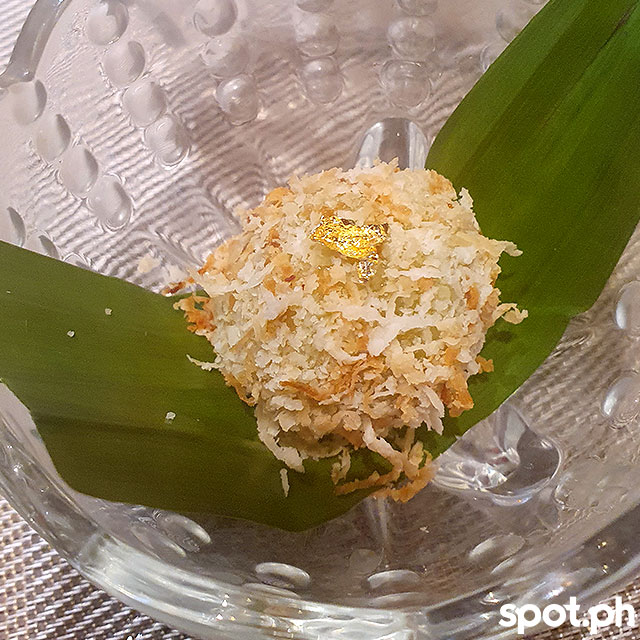
The tasting menu had two desserts, the Ka Nom Tom and the I-Tim Durian Thed. The Ka Nom Tom is a traditional Thai dessert that is essentially a coconut dumpling with a palm sugar center; a glutinous rice ball shell rolled in coconut shavings served on a pandan leaf and topped with edible gold, which signifies wealth. The Ka Nom Tom is a very familiar flavor; just by the ingredients alone, one can say it is a Thai rendition of our Filipino suman and biko.
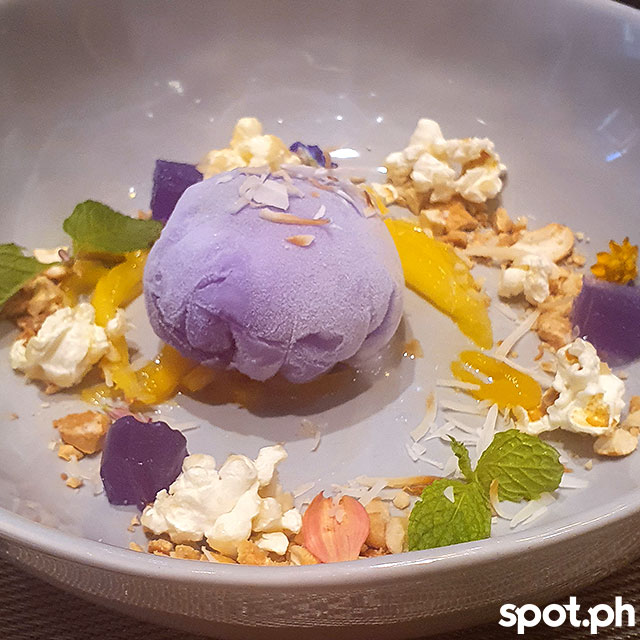
But the star dessert is the I-Tim Durian Thed. Don't be fooled; there isn't durian in this dish. Durian happens to be the Thai term for soursop, a.k.a. guyabano. This sweet and sour treat consists of soursop ice cream with a soft coconut jelly outer shell and sprinkles of fresh mango and caramel popcorn. This dish is another fantastic palate cleanser, thanks to the fresh tangy taste of the soursop and the sweetness of the coconut, plus the nutty caramel notes from the popcorn. Fresh mangoes elevate the flavor of the soursop by creating a fresh-tasting but saccharine push and pull between the two fruity flavors. The textures in this dish are also noteworthy; you have the smooth, creamy texture of the soursop ice cream, the jelly-like coconut-flavored outer shell, and the crunchy bits of popcorn sprinkled around the dish, all making for a crunchy, gooey, and smooth mouthfeel with every bite.
There was not a dish we did not enjoy. All were surprising and delicious in their own way, and surpassed how we imagined a Thai tasting menu would go. It is clear to us why Benjarong is one of Thai Select's best restaurants in the Philippines thanks to their knack for expertly mixing tradition with the modern palate, the familiar with the unknown, and the way they elevate flavors beyond the usual. Chef Ja and her team clearly have a master's grasp of the flavors and techniques to make Thai cuisine shine brighter than it already does.
Benjarong is located at G/F Dusit Thani Manila, Makati. For reservations, contact 7238-8888. For inquiries, you may visit their website.