
Hotel Okura's Michelin-Starred Kaiseki Spot Showcases Japanese Haute Cuisine
Yamazato transforms seasonal ingredients into works of art on a plate.
Yamazato
Hotel Okura, Portwood Street, Pasay City
Contact: 5318-2888
Facebook: www.facebook.com/hotelokuramnl
Open from 11:30 a.m. to 2 p.m., 5:30 to 9:30 p.m. (Monday to Sunday)
(SPOT.ph) Japanese food needs no fixing. The cuisine is among those that rely on quality ingredients to shine, and shine they do—especially when utilized for the art of kaiseki. Also called kaiseki-ryouri, these multi-course meals are a way for chefs to shine the spotlight on the best fresh produce, meat, fish, and the like in season, as well as their own culinary prowess.
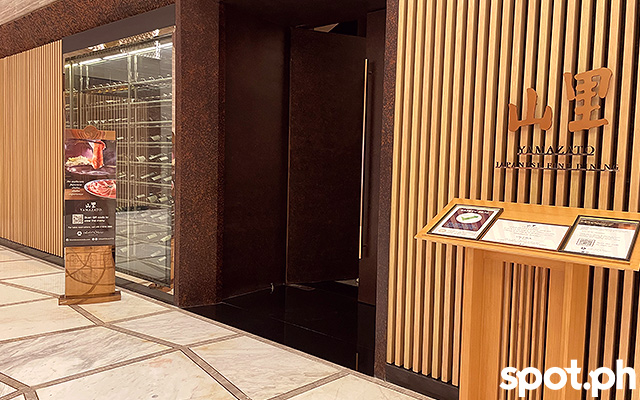
On the global scale, Hotel Okura’s Yamazato is a key name on the kaiseki front. Its Amsterdam outpost was awarded a Michelin star in 2002—and was the very first kaiseki spot outside Japan to have received such acclaim at that. And with the hotel chain’s arrival in the Philippines, Yamazato, too, is here on our shores, giving us a taste of the signature cooking they’ve come to be known for.
Also read: The SPOT.ph Guide to Japanese Food
Drop by Michelin-starred Japanese restaurant Yamazato for a taste of the Land of the Rising Sun's haute cuisine:
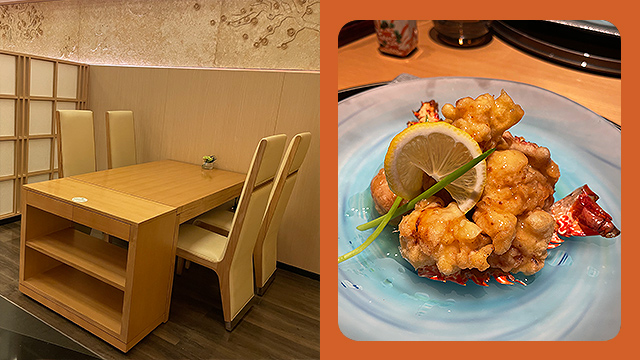
Yamazato highlights its Japanese roots from the second you step in as you’re greeted irasshaimase by the kimono-clad receptionists. Take a look around their space and it’s pretty much a tribute to the Land of the Rising Sun from corner to corner. Warm browns and wooden panels and tables dominate the space, along with murals depicting what look to be cherry blossom trees on the walls.
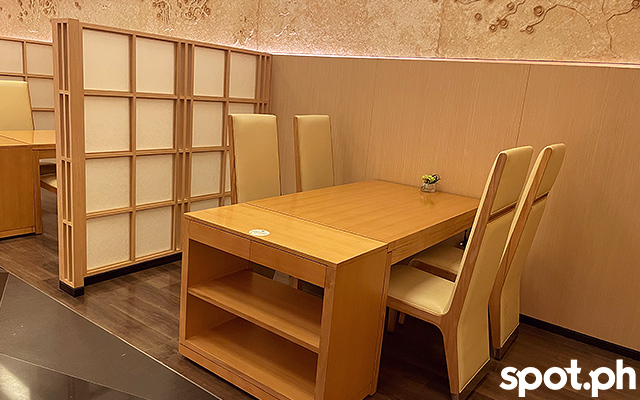
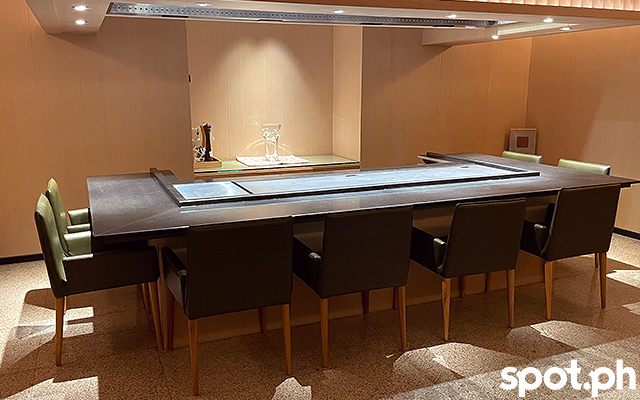
Look up, too, and you’ll see the use of lines in different angles on the ceilings—a tribute to the art of origami, we’re told. Though there’s no mistaking its traditional backbone, the restaurant also gets a snazzy upgrade with its marble floors and high ceilings, which fits right in with the rest of Hotel Okura’s space.
The best way to experience what Yamazato does best, of course, is via their Omakase Kaiseki (P8,000+); in true kaiseki fashion this changes up seasonally, but generally follows the pattern of having appetizers, soup, sashimi, a grilled dish, shiizakana (a simmered dish), a deep-fried dish, shokuji (a rice course with pickles), and dessert.
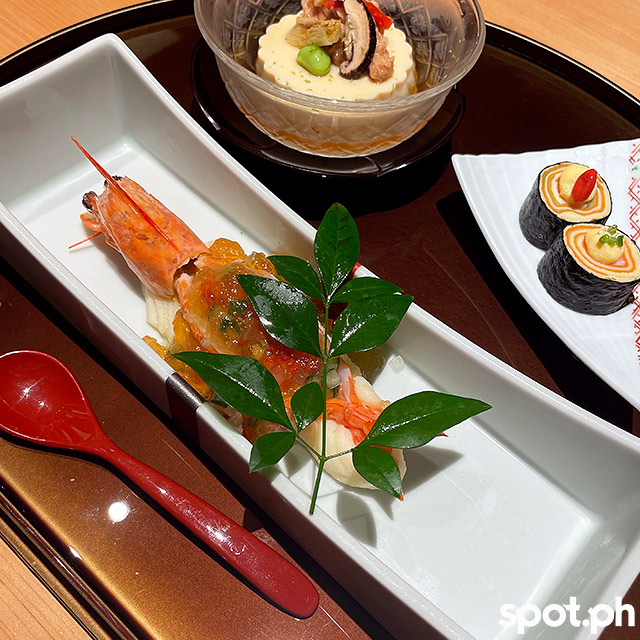
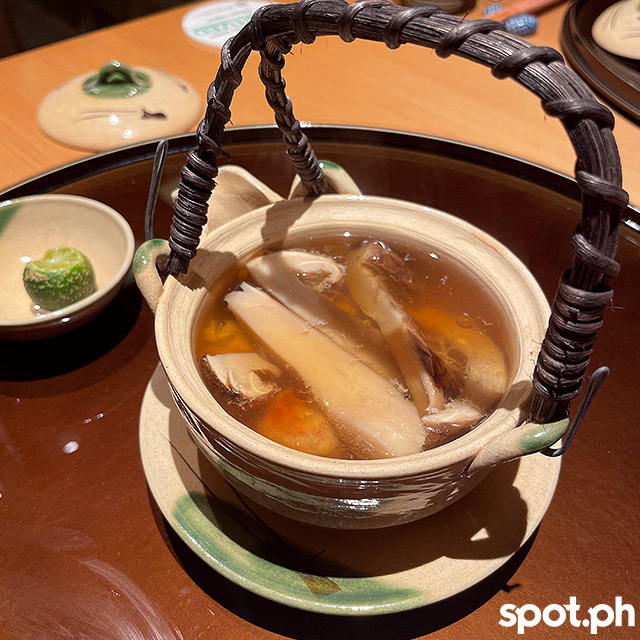
In our case, appetizers included a plate of deep-fried shrimp brightened with vinegar jelly and served as a salad with veg for color and crispness; egg tofu, similar to chawanmushi; and a rolled omelette-esque crab kinshi maki. From that vibrant start, we were led the soothing direction with doubin mushi—a course of a clear yet umami-filled soup served in a teapot, along with matsutake mushrooms, shrimp, chicken, ginkgo nuts, and fish. Though stick-to-your-ribs and homey through and through, it's also accompanied by sudachi—a Japanese citrus very similar to our own calamansi, in which we're instructed to stir the juice to illuminate the mix.
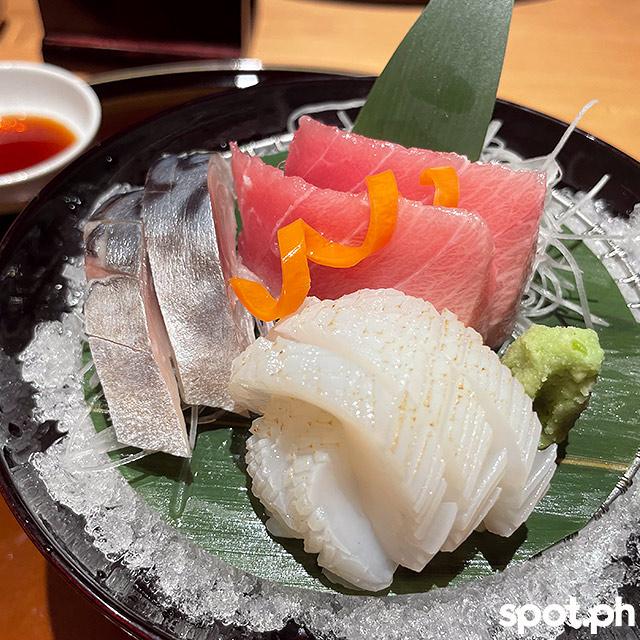
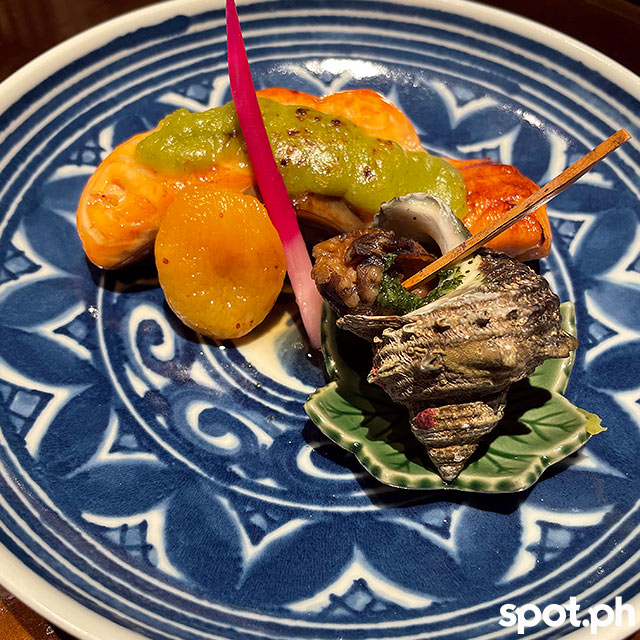
Fresh slices of bluefin chuutoro, squid, and vinegared mackerel shine in the sashimi course that followed; the squid, in particular, blew us away for its succulent character that made for melt-in-the-mouth chopstickfuls. To showcase their prowess for grilling in such a way that leaves the interiors moist and the outsides properly charred, Yamazato brings out a plate of salmon, lent umami by a scallion-miso sauce; and hime sazae, a small turban shell (yup, as in the snail) that has an earthiness reminiscent of mussels or clams.
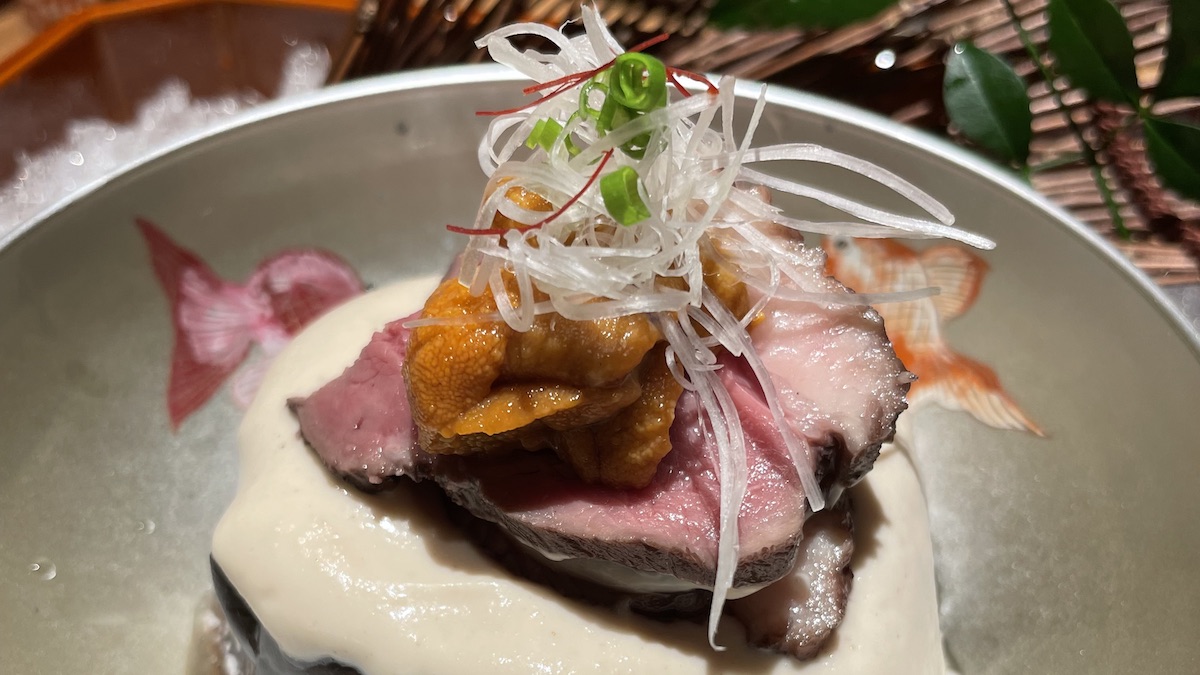
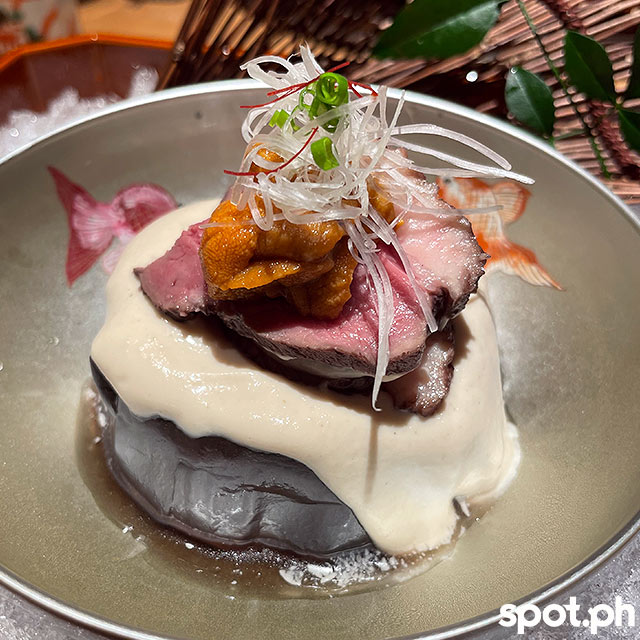
What shone the brightest, in our book, was the simmered course that starred duck that's braised and steamed with wine. Duck isn’t a meat you commonly find being given the Japanese treatment—at least not here in the Philippines—but its slightly gamey character worked beautifully given the savory-sweet, umami-rich sauce imbuing it. Serving as its base was a slab of eggplant given a similar braised treatment, rendering its flesh silky and flavorful while retaining a satisfying meaty bite. And—as brilliant as things already were—the dish was brought to even more luminous heights with its partners in crime: slivers of sea urchin, a rich sesame sauce that brought to mind tahini, and thinly shredded daikon that kept the whole from being cloying.
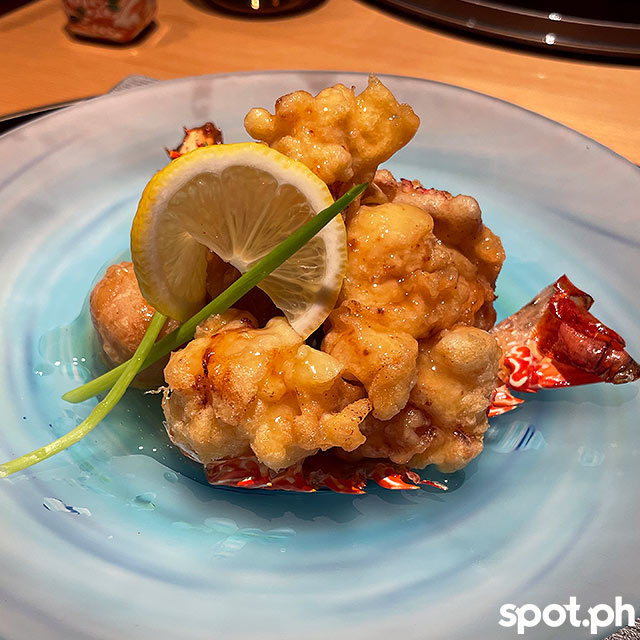
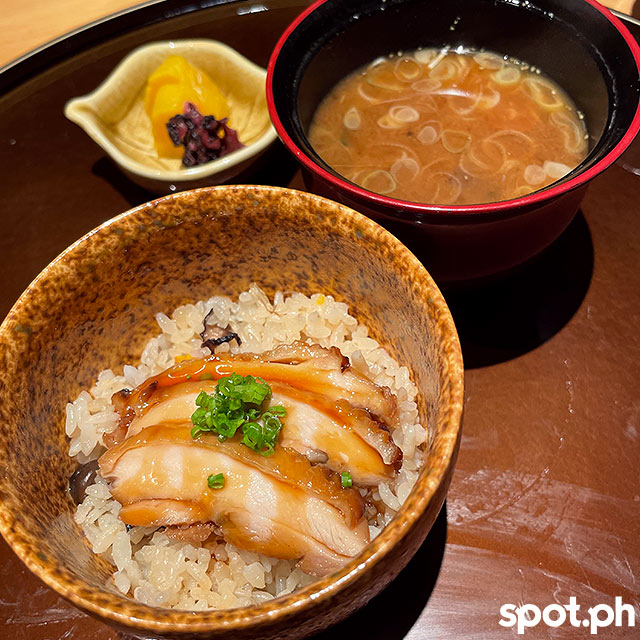
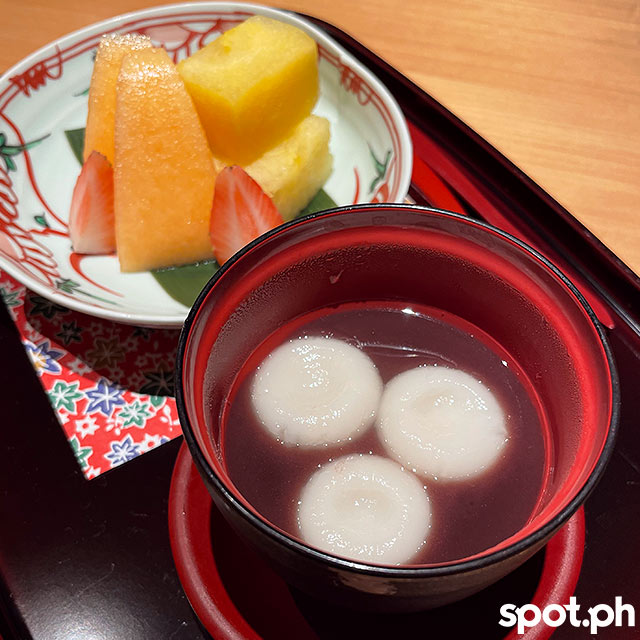
On the heftier end came the deep-fried course of lobster, cooked tatsua-style—tatsuta comes from the term tatsuta-age, where meat is given a potato-starch coating and then fried for a thin but crispy crust that makes a distinct crunch as you bite in. Yamazato brightened the flavors further by dressing the fried pieces in a tangy, lemony sauce, and gave it accompaniments of deep-fried Japanese taro, squash, and carrot. Rice—a staple in any Japanese meal—came by way of the succeeding shokuji of Japanese rice steamed and topped with chicken, which infused the grain with its richness. Also with it came tsukemono (Japanese pickles) and miso soup, which transported us by taste to the homey izakaya of the Land of the Rising Sun. Finally, we got to dessert: a no-fuss, no-frills, but always-nostalgic bowl of cold sweet red bean soup, along with chewy balls of mochi and a small bowl of fruit.
High-end as kaiseki can be, there's something about the genre and its dishes that—as opposed to other variations of haute cuisine—manage to retain a comforting character we always find ourselves relating to. And we don't know about you, but that sense of comfort is ultimately what we yearn for at the end of the day; the feeling of acceptance, and of being at home.
Hey, Spotters! Check us out on Viber to join our Community and subscribe to our Chatbot.