

MOVIE REVIEW: Timothée Chalamet's Wonka Is Less Psychopath, More Mary Poppins
Short answer: It's more Mary Poppins than subtle psychopath.

(SPOT.ph) There have been three distinct versions of Willy Wonka that have existed throughout the character’s near 60-year history in pop culture. All of whom have been—let’s face it—some form of demented torturers, like a candy-themed Jigsaw from the 2000’s Saw franchise with the mantra, “Kids these days are no good.”
The first, the original children’s book character created and written by Roald Dahl as a mythical celebrity—not just in the world of chocolate manufacturing—who acts as a bizarre jester as kids run into happy little accidents while touring his factory, only to reveal it all to be one grand moral test to find the one virtuous kid who will inherit his wonderful creation.
The film adaptations of the character are highly distinct flavors, but still keep that loony kid-torturer aspect at his core. Gene Wilder’s portrayal in the 1971 film balances the candyman’s inherently inviting presence with a more grim and deadpan attitude. Meanwhile, through a flashback structure written into the 2005 film, Johnny Depp’s iteration got to explore the sadistic obsessions behind the lonely aging artist.
This brings us to the arrival of our newest, and youngest Wonka, Timothée Chalamet in an origin-slash-prequel film from the director of the Paddington duology, Paul King. Chalamet’s Wonka, visually similar to a younger Depp but more narratively closer to Wilder’s version, is already distinct in that it’s the first adaptation to deal with Willy Wonka outside of the whole “Chocolate Factory” plot, but the question will be: How does he compare to the Wonka’s of the past?
Also read: 10 Scariest Christmas Movies
So, can Timothee Chalamet's Wonka compare?
What’s made immediately clear is that Chalamet’s Wonka is not the twisted Willy Wonka, as normally depicted. Chalamet’s Willy is a starry-eyed young man trying to bootstrap his way to fulfilling his dreams of opening up a small chocolate shop. The side characters think he’s a little goofy at first encounter but all eventually warm up to his pure soul as they spend more time with him. This all being a far cry from the Wonka that let a little girl be dragged down the garbage chute by a bunch of trained squirrels.
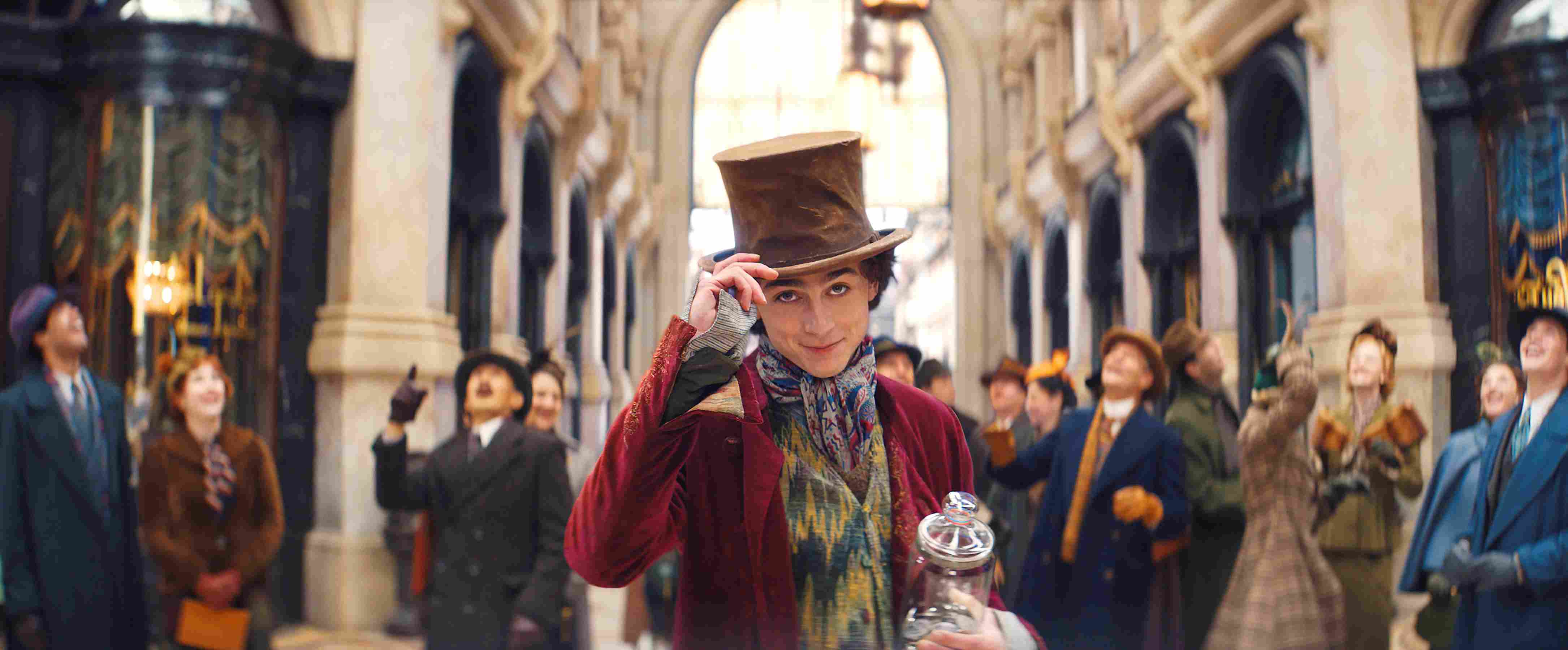
The prequel film’s understanding of Wonka seems to stop at the Willy Wonka singing “Pure Imagination” in the original 1971 film. The song, a simple tune to inspire bold creativity, is undoubtedly the most culturally enduring aspects of the 1971 film—and possibly even one of the more recognizable aspects of Willy Wonka as a whole—but it notably does serve as a red herring to insane, psychedelic boat rides (“The danger must be growing for the rowers keep on rowing!”) and all of Wonka’s nefarious acts that occur later on in the film. This prequel film instead literally utilizes “Pure Imagination” as the culmination of this Wonka’s arc.
Also read: MOVIE REVIEW: Bones and All Blends Young Love, Tragedy, and Cannibalism
Chalamet does his best to showcase the rhyme and whimsy side of the character, detached from his madman sensibilities. But every now and then, the film tries to sell you that this Wonka is a real zany person who gets his ideas from voices from the beyond or is a perfectionist so obsessed with chocolate that he traveled vast rainforests and islands for his studies. None of which really jive with Chalamet’s performance.
One might akin him more to other magical supporting characters from kids movies like Julie Andrews’ Mary Poppins or, on the animated side, Robin Williams’ Genie from Aladdin, as Chalamet too gets his own ensemble musical numbers and cast of misfortunates whose lives he brightens just by simply being in them.
While the Wonka-lite doesn’t make for much of a compelling story or character, the film isn’t really swinging for that direction either. It’s a tight musical-comedy romp, through and through. Chalamet transforms Wonka into the underdog hero and the audience gets the bonus treats of comedic performances from Olivia Colman, Keegan-Michael Key, Hugh Grant, and—the crowd favorite—Rowan Atkinson.
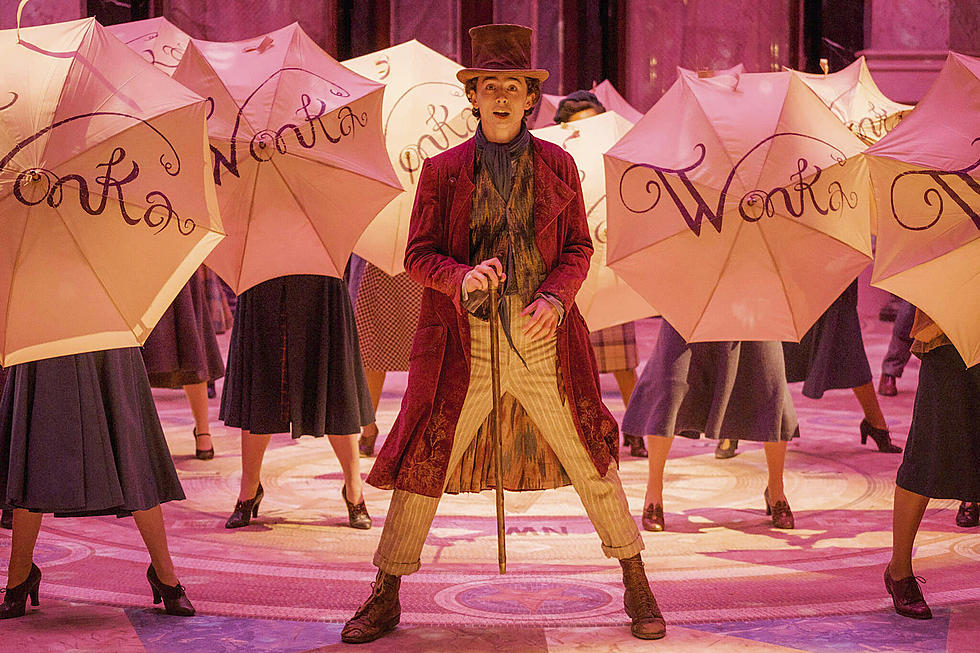
Overall, it’s a more palatable Wonka, devoid of the baggage that arguably makes his character the most interesting. A Wonka that’ll lead old men and women to maybe espouse quotes such as “Kids these days don’t know the Wonka that we used to know!” But perhaps, like in the original novel, the pure mythmaking will lead to another generation of children discovering the real Willy Wonka and all the grey area moral tales that come with that.
Rating: 3 out of 5 stars
Wonka is now showing in cinemas.