

The 21st Century’s Most Notable MMFF Movies
They may not be as remarkable as those that came before but they have their own share of creativity.

(SPOT.ph) You might ask why our list starts only in the 21st Century when the Metro Manila Film Festival had already entered its second quarter of existence. What about the films from the first quarter of the MMFF in the previous century?
The obvious answer is that the MMFF movies of the new century are not as remarkable as those in the first 25 years of the festival.
In 1976, the second year of the MMFF after its metro-wide transition and expansion from the local Manila film festival in 1975, the entries were to become the hallmarks of what film critics and scholars now consider the Second Golden Age of Philippine cinema: Lino Brocka’s “Insiang,” Lupita Concio’s “Minsa’y Isang Gamu-gamo,” and Eddie Romero’s “Ganito Kami Noon, Paano Kayo Ngayon?”
The following year, nearly all of the entries became classics: Celso Ad. Castillo’s “Burlesk Queen,” Brocka’s “Inay,” Gil Portes’s “Sa Piling ng mga Sugapa,” Ishmael Bernal’s “Walang Katapusang Tag-araw,” Romero’s “Banta ng Kahapon,” Joey Gosiengfiao’s “Babae Ngayon at Kailanman,” and Mike de Leon’s poignant “Kung Mangarap Ka’t Magising.”
In 1999, when the MMFF ended its 20th century season, the best picture award went to “Muro-ami” by Marilou Diaz-Abaya, who had also directed the 1998 best picture, “Jose Rizal.”
Therefore including the most MMFF notable movies from the former century could shove off those of the present, when the December festival has tended to emphasize commercialism rather than quality filmmaking, so that it has been dominated by blockbuster idiocies such as “Enteng Kabisote”; “Ang Tanging Ina (Last na ‘To),” which even won best picture in 2010 (What were the jurors thinking?); “Enteng ng Ina Mo,” which brought the two leads of the two movies together the following year; and all of the viciously ugly Vice Ganda movies.
But to be fair, the MMFF in the last two decades has been characterized by its own share of creativity, variety and even boldness. So we will proceed chronologically. The most notable films, to be clear, are in bold.
Also read: 10 MMFF Entries Every Movie Buff Needs to See
The Best MMFF Films of the 21st Century
‘Tanging Yaman’
The MMFF was off to a fine start this century with Laurice Guillen’s expansive domestic drama “Tanging Yaman,” which won best picture in 2000. The film revolves around the matriarch of a family (Gloria Romero) who falls ill, prompting her children and grandchildren to come to her side. As they gather, long-standing tensions, conflicts, and buried resentments surface, revealing the complexities of their relationships and individual struggles. The film delves into themes of love, forgiveness, and the resilience of familial bonds. It highlights the challenges and joys of family dynamics, portraying how Filipinos navigate personal trials while finding strength in unity and understanding.
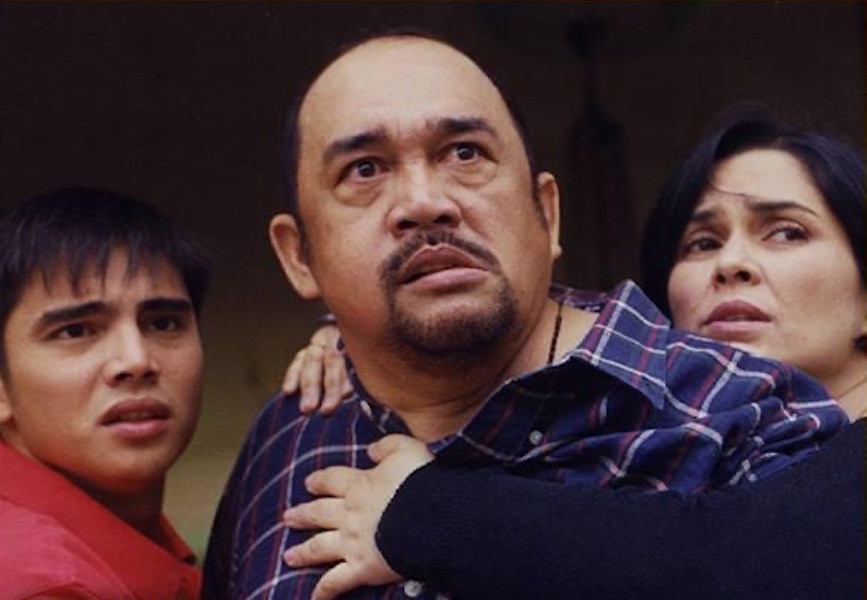
The first great Philippine film of the 21st century, “Tanging Yaman,” was both a commercial and critical success, providing viability to the family drama, as shown by later entries in the MMFF such as Joel Lamangan’s “Filipinas” (2003) and last year’s “Family Matters,” directed by Nuel C. Naval.
Other notables in the 2020 MMFF were Gil Portes’s “Markova: Comfort Gay” and Chito Roño’s “Spirit Warriors.” “Markova” is a biographical drama about Walter Dempster, who was forced into sexual slavery as a “comfort gay” by the Japanese invaders. Comedy king Dolphy’s performance of Dempster/Markova was a career-defining move.
Roño’s genre-setting fantasy-action film revolves around a group of individuals with extraordinary abilities, known as Spirit Warriors, who are tasked with defending humanity from supernatural threats. It blends Filipino folklore, martial arts, and fantasy elements to create an action-packed narrative centered on the fight between good and evil.
The following year, Roño mixed the fantasy-action genre with speculative history in “Yamashita: The Tiger’s Treasure,” which won best picture. The adventure-thriller film centered around the search for the hidden treasures allegedly amassed by Japanese General Tomoyuki Yamashita during World War II. The film combines elements of action, suspense, and historical intrigue, exploring the myths and legends surrounding Yamashita's treasures.
“Yamashita” won best picture over Abaya’s “Bagong Buwan,” a very engaging take on the Muslim Mindanao issue. Both movies were critical and commercial successes.
Also read: 10 Pinoy Movies From 2020 You Should Have Watched By Now
‘Mano Po,’ ‘Dekada ‘70’
In 2002, Joel Lamangan and writer Roy C. Iglesias inaugurate the merry cottage industry of “Chinoy” movies with the blockbuster “Mano Po,” which would have iterations in various guises and emphases in subsequent festivals.
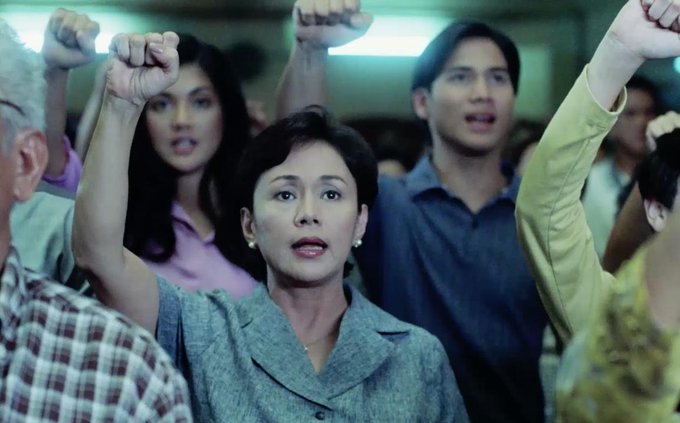
The other important movie of the 2002 MMFF was Roño’s “Dekada ’70,” which brought to the screen Lualhati Bautista’s best-selling social-protest novel. Set in the 1970s during martial law, the movie follows the Bartolome family and their experiences amidst the political turmoil and social upheaval of the time. The narrative unfolds through the eyes of Amanda, a mother navigating the challenges of a patriarchal society, grappling with personal growth, and witnessing the changing sociopolitical landscape. As the mom, Vilma Santos delivers another commanding performance.
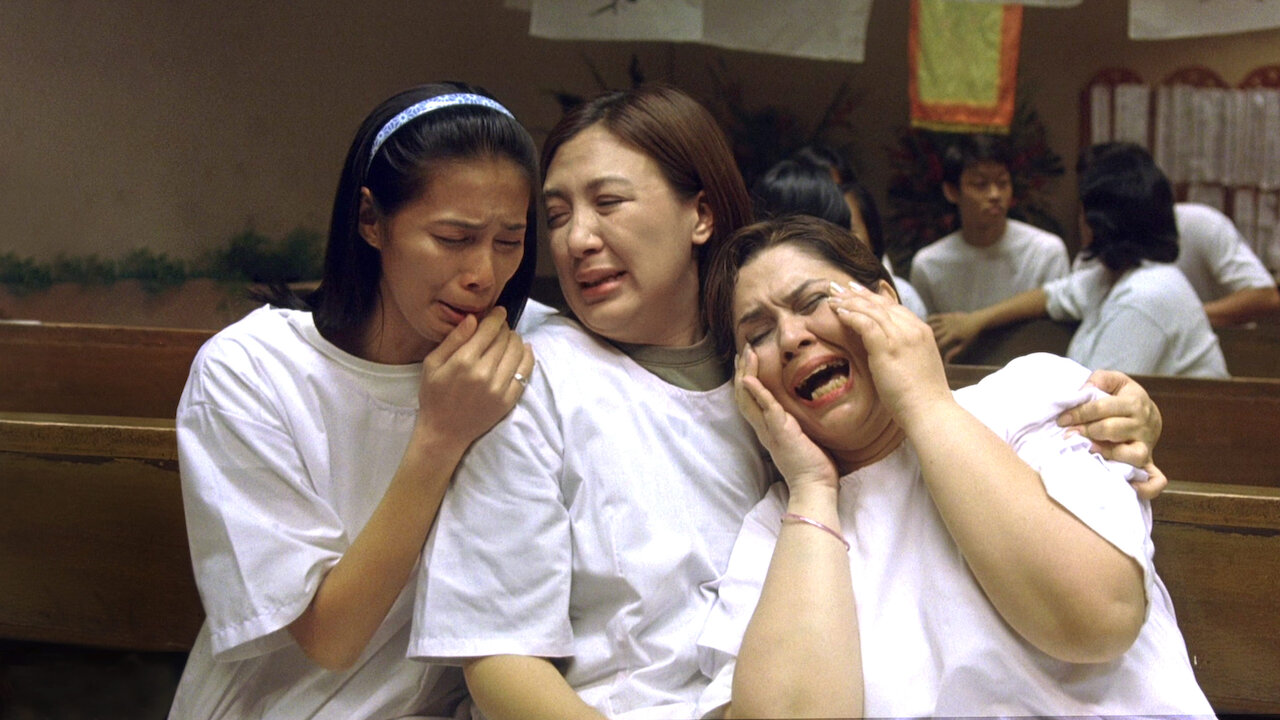
In 2003, Mark Meily’s “The Crying Ladies,” with its troika of paid mourners for a Chinese-Filipino funeral winsomely played by Sharon Cuneta, Hilda Koronel, and Angel Aquino, got the best picture. It blends heartfelt moments with comedic elements, exploring themes of friendship, family, and the Filipino culture's unique traditions surrounding death and mourning. It showcases the strength and resilience of women facing life's adversities with humor and solidarity.
In 2004, “Mano Po III: My Love” won the best picture, but the more notable movie was Cesar Montano’s “Panaghoy sa Suba (The Call of the River)” set in Bohol during the Second World War. Another notable movie was the horror film, “Sigaw,” directed by Yam Laranas, about a haunting set off by a cop’s spousal abuse. Hollywood later remade the movie into “The Echo,” starring Jesse Bradford (the boy in Soderbergh’s “The King of the Hill”).
In 2005, Lamangan’s “Blue Moon” won best picture. About a terminally ill old man (played by Eddie Garcia) looking for his long-lost love, it ushered in the modest genre of what I would call as the geriatric drama, as typified by “First Ko Si Third” (2014) by Real Florido, “Hiblang Abo” (2016) by Ralston Jover, “Kung Paano Hinihintay ang Dapithapon” (2018) by Carlo Enciso Catu, and another Lamangan MMFF film, “Rainbow’s Sunset,” which won best picture in 2018.
Another notable movie of 2005 was Jose Javier Reyes’s psychological horror thriller, “Kutob.”
‘Kasal,’ ‘Sakal’
Reyes’s comedy “Kasal, Kasali, Kasalo” dominated the 2006 season. Capitalizing on the marriage between Judy Ann Santos and Ryan Agoncillo, Reyes wrote and directed the movie hewing closely to their public persona and telling the story of a young couple navigating the joys and challenges of married life. Reyes would repeat the same formula in the 2007 sequel “Sakal, Sakali, Saklolo,” which was again a critical and commercial success.
In 2008, Meily’s “Baler,” a romantic drama set during the Siege of Baler in 1898, won best picture. In 2009 probably the only film of note was “I Love You, Goodbye,” a romantic drama served in the vintage Laurice Guillen style of passion that’s both sensitive and searing.
Best ‘Shake, Rattle & Roll”
In 2011 came “Shake, Rattle & Roll 13,” probably the best edition of the horror franchise so far this century. The best episodes in the trilogy are Jerrold Tarog’s “Parola,” a gripping story about ancient witches and a haunted lighthouse, and Chris Martinez’s unfortunately sillily titled “Rain, Rain Go Away.” The latter tells the story of a couple trying to recover from the tragedy and trauma of typhoon Ondoy by moving to a new condominium a year later. Expecting another child, the woman experiences ghostly encounters and nightmares, which hint at her unresolved guilt from a factory incident during the typhoon that led to the deaths of child laborers.
In the second decade of the present century, the notable movies were Brilliante Mendoza’s very sensitive Mindanao drama “Thy Womb” (2012), Joyce Bernal’s political action-thriller “10,000 Hours” (2013), Dan Villegas’s witty “English Only, Please” (2014), and Erik Matti and Michiko Yamamoto’s trenchant thriller “Honor Thy Father” (2015). As is well known, this last movie’s controversial disqualification from the best picture derby elicited protests that later uncovered a Pandora’s Box of sticky issues, resulting in the festival’s revamp the following year and its veer-away from the crass commercialism that has characterized it all along.
Best edition of MMFF movies
Twenty-sixteen was probably the best edition of the festival thus far in the new century. For the first time, a documentary was admitted to the festival and even became the best picture winner. “Sunday Beauty Queen” directed by Ruth Villarama follows the lives of overseas Filipino workers (OFWs) in Hong Kong who join beauty contests during their days off. It is a poignant and heartfelt portrayal of the lives of mostly domestic helpers abroad, highlighting their humanity, resilience, and the beauty that emerges amidst adversity.
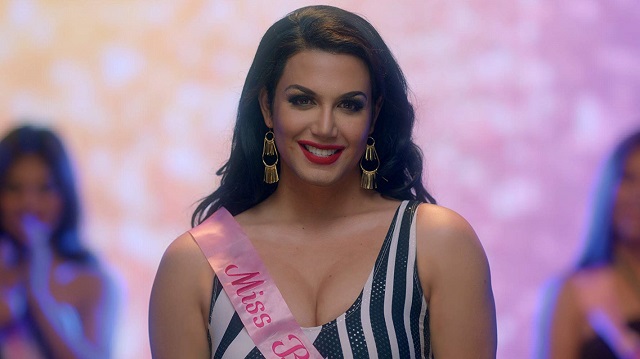
Also notable were Jun Lana’s riotous transgender black comedy “Die Beautiful” and Avid Liongoren’s “Saving Sally,” a sci-fi fantasy which combines animation and live-action to create the visually exciting world of its protagonist, a comic-book artist who has a crush on his friend Sally, an inventor.
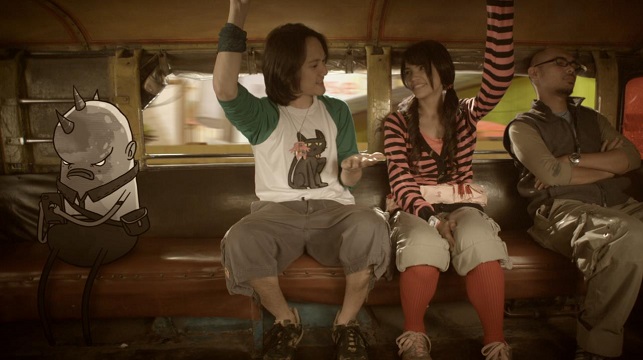
Other notables of the 2016 festival were Matti’s period horror film, “Seklusyon,” about deacons in the 1940’s experiencing a haunting in the monastery they’re secluded in, and Alvin Yapan’s moral fable “Oro,” about mining and greed.
The MMFF again broke new ground the following year with Loy Arcenas’s “Ang Larawan,” the film version of the musical-theater adaptation of Nick Joaquin’s “Portrait of the Artist as Filipino,” arguably the greatest and most-mounted drama in Philippine history.
Entering the third decade of the new century, the notable MMFF movies were Antoinette Jadaone’s “Fan Girl” (2020), a revealing tale about fandom and celebrity culture, and Carlo Francisco Manatad’s “Kung Maupay Man it Panahon,” a surreal disaster movie set around super-typhoon Yolanda.
In the 48th edition of the MMFF last year, the three best pictures were very notable movies: Mikhail Red’s “Deleter” is a psychological horror movie built around the Philippines’ international reputation as a business-outsourcing hub and the psychological rigors experienced by social-media content moderators; Lester Dimaranan’s “Mamasapano: Now It Can Be Told,” which delves into the controversial Mamasapano incident in 2015 in Muslim Mindanao; and Shugo Praico’s “Nanahimik ang Gabi,” a trenchant thriller about corruption with outstanding performances by Ian Veneracion and Heaven Paralejo.
It is hoped that with the 49th edition this month, the MMFF will equal the rich harvest of notable movies of its previous seasons.