

Being BINI: The Not So Easy Life of A 'Nation's Girl Group'
In this SPOT exclusive, the group's performance director breaks it all down.

(SPOT.ph) They're dubbed the ‘Nation’s Girl Group’ and rightfully so. There is no other group that comes close to their popularity at the moment. Their rise to fame has become so great even the team behind the eight-member band are still coming to terms with it. Their hits, “Pantropiko” and “Salamin, Salamin” have long breached the 100 million plus mark on Spotify. And then there are the viral dances their fans, from Negros to New Zealand to New York—called Blooms—post on social media, boosting the group's omnipresence even more.
The clamor for BINI, whom the public first came to know on television and social media during the pandemic, has become more tangible now that they're constantly doing live shows and concerts. It is at these events that the girls have come to realize just how famous and loved they are as they hear fans scream their names, elbow their way into a crowd, ignore a location's heat to the point of fainting—just to be in the presence of BINI.
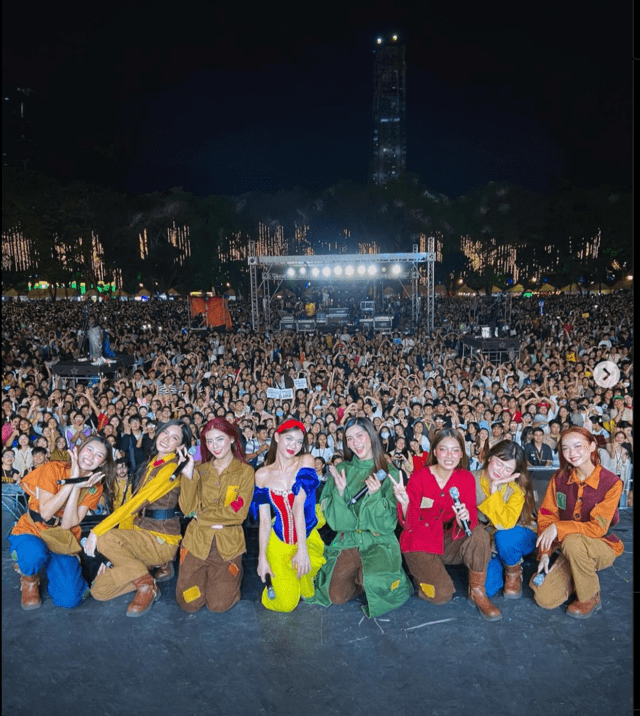
“Nakaka-humble (yung pag-rise nila) and now they're starting to create an impact,” says BINI Performance Director Mickey Perz, who takes care of every aspect of the group's performances—from choreography and staging to technical and LED requirements. He's been with the girls from the time they were all still diamonds in the rough. “I keep on saying it’s a phenomenon--actually no one can understand why there is so much love given to BINI,” muses the former Pinoy Big Brother housemate.
Also read: The Origin of Eyyy: A Good Vibes Greeting Began With A Bad Day At Work
BINI at the bootcamp
Being nurtured under ABS-CBN, arguably still the country’s biggest starmaker, is certainly one piece of the puzzle that will explain the Bini phenomenon. Maloi, Stacey, Aiah, Colet, Mikha, Gwen, Sheena, and Jhoanna were all discovered through Star Hunt Academy (SHA), the network’s talent search show aired in 2019. Mickey was part of the team that witnessed their transformation from dreamers to stars. “Our job was to look for talents na magaling kumanta, magaling sumayaw, and merong potential.” Those that displayed promise were sent to a boot camp where Mickey choreographed dances for them to perform. “The BINI that you see right now is far from the BINI before; some had to polish their singing and some their dancing. Some were not so good yet but there was just something Direk Lauren saw in them."
It was at this bootcamp that the group was formed. Fifteen girls were trimmed down to a group of 13, and then finally to eight. Around this time, the COVID-19 pandemic had hit and ABS-CBN had been shut down. With uncertainty from all directions, becoming stars was still a possibility; becoming big stars was a stretch.
No doubt a lot of what made BINI what it is today is that famed K-pop level of honing and training—the girls lived in one house, schedules strictly followed, and everything practiced to perfection. “In the beginning, we didn’t just want to train them as singers and dancers muna,” Mickey says. “We trained them as athletes because singing and dancing at the same time requires a completely different kind of stamina.”
The girls dedicated four hours to dance and three hours to singing four times a week. Rehearsals were thorough and strenuous. With the girls’ skills at different levels, Mickey and his team had to find that perfect method that would bring each members’ skills at par with each other.
“They had to understand how motion and movement work,” explains the Austrian-born Mickey. Applying what he calls the Metronome Method, the girls were taught how to be in sync with every tone. “Basically, every move from point A to B, every tik tok (of the metronome), we see to it their movement and motion is the same…up to the last minute. If someone makes a mistake they start from scratch."
This created a lot of frustration among the girls, Mickey recalls, but it also created a mindset that that they had to focus on what they're doing "every time at the same time."
'Your time is not more valuable than mine'
Training eight young girls can be a challenge, varying moods and all. “One thing we have to understand is that everyone is a bit different. Eight different girls, eight different opinions, (it was hard) especially in the beginning,” Mickey recalls. Coming from eight different provinces—Albay, Batangas, Bohol, Cavite, Cebu, Laguna, Metro Manila, Nueva Vizcaya—also meant each member had to adjust to cultural nuances they may not be used to. But despite differences, when they're all inside the training room, they are all equally BINI and they're there to work.
“It might sound a bit harsh but when you go to training, your problem should not be my problem. Your time is not more valuable than mine,” Mickey says, explaining the kind of discipline that has been set for the girls. “If gusto niyo sumigaw or umiyak (after) let’s do that. If we must huddle afterwards, then let’s do it.”
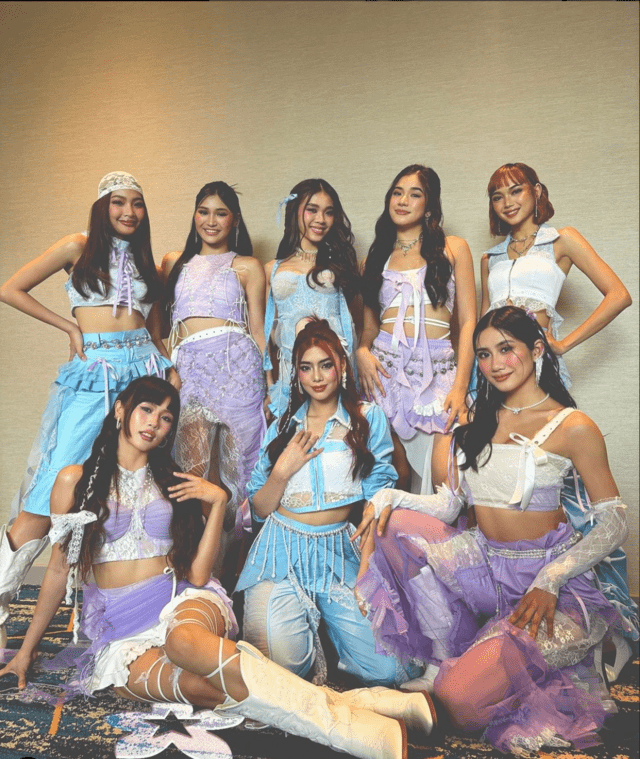
This discipline resulted into tremendous growth, observes Mickey. “They learned how to correct each other. They will say ‘Okay mali ka sa blocking, dapat eto gawin natin.' They became self-aware. I think that was crucial to their growth today.”
Since releasing their pre-debut single “Da Coconut Nut” in 2021, BINI’s fame has only moved upwards. To date, they have three albums, “Born To Win”, "Feel Good”, and “Talaarawan”; several hit singles including “Wag Muna Tayong Umuwi”, “Karera”, “Na Na Na”, and their latest “Cherry on Top.” They have multiple live shows and just this June, a first sold-out concert, BINIverse. In the pipeline is a US and Canada tour to the delight of Blooms abroad, and of course there's the Grand Biniverse at the Araneta Coliseum in November.
Also read: BINI is First Pinoy Group on Spotify's Global Top Artists Chart
The BINI core team
Being an excellent pop group doesn’t happen overnight. It requires the efforts of a dedicated team made up of the best in the biz. BINI has a core team handling many aspects of the work, more so now that they're being groomed for the global stage. For the dances alone, there are two other choreographers working with Mickey; there is one vocal coach, three multimedia producers, and five members of the management core team with Star Magic Head Laurenti “Direk Lauren” Dyogi at the helm. And then there are the life coaches who help the girls build on their strengths, plus a physical therapist and strengthening team that make sure their bodies are in optimum form and condition.
There are also the counselors that help them navigate the fame they're experiencing today. After all, the girls grew up during the pandemic and now they're exposed to a kind of fervor from fans that they've never experienced before. They started when they were 18 and 19 years and now they're between the ages of 21 to 23. “On social media, malayo sila sa fans nila, but now the girls actually feel (their fans) in person. If you go to venues, nararamdaman mo yung love ng tao," relates Mickey. "We’re all happy about the love they are getting but they must understand what to do with all that. To return the emotions that they are being given without making it awkward is still part of the journey we’re going through."
The year of BINIhood
To keep the girls motivated and focused, they were given what Mickey calls a mantra to live by each year. In 2021, it was: "Excellence is not a choice, it is acquired everyday." In 2022, it was “Stay humble but be the best among the rest.” In 2023, it was “Eye on the prize and just focus on the challenge." And this year, it is "BINIhood," with BINI taking the place of the word ‘woman’. “They’re in a state of becoming a woman (while at the same time) they are also growing bigger as a group. I strongly believe that this is the year when they have a voice and that voice is for this generation and the next,” Mickey explains.

With all the machinery and support theey're getting, the piece that truly completes the BINI phenomenon are the members themselves. On stage, in front of the cameras, and behind the scenes, they are given the opportunity to be who they are. “I think we let the girls be how they are as much as possible kaya they are relatable,” says Mickey. “Hindi sila yung parang product na we try to contain, ‘Oh you always have to be proper,’ or ‘You have to do this.’ So you see a lot of moments when they are just being girls having fun, kalog moments where they are laughing, where they can be kenkoy because that’s them."
Each member is also given the chance to shine and become part of the group's creative process. The dance steps to the chorus of "Pantropiko," for example, was famously choreographed by Sheena, while Colet wrote the song "8." “We always challenge them to develop their artistry. We ask them, ‘O, what do you feel like doing here?' ‘How would you want to execute the steps?’ Minsan we say, ‘Ah, maganda yung ginagawa ni Sheena, or ni Mikha, or ni Maloi,’ and then (we fine tune). We give them the opportunity to show their ideas and after that it’s their charm that make their performances come alive.”
Topnotch training, an experienced core team, and eight authentic voices and personalities coming together may be the magic formula that explains the BINI phenomenon. How to keep the clamor for BINI on the up and up will be the challenge, but right now they're on the top of the game. Their song may say "Buhay ay 'di karera," but we all know only those leading in the race can get away with saying things like that.
Also read: Grand BINIVerse Ticket Selling Dates Announced