

Not a "Phase": Being Bisexual in the Philippines
The B in the acronym LGBTQIA+ is often misunderstood.
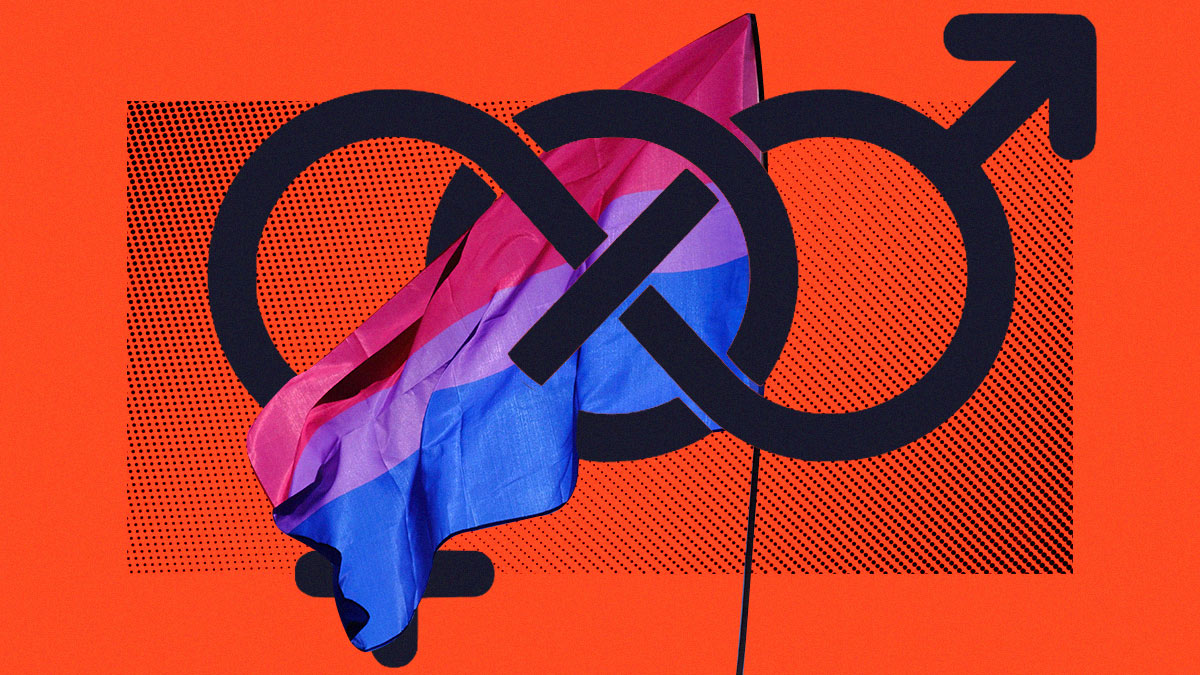
(SPOT.ph) I will always remember my first Pride March; unfortunately, not for the right reasons. During the program, the hosts called to various members of the LGBTQIA+ community or, at least, a selected few. They called out to the lesbians, the gays, and trans folks—all of whom cheered. Then, they moved on with the program, never mind that a letter in the acronym was missed. The hosts didn't call on the bisexuals.
Common Misconceptions About Bisexuals
As if being part of the LGTBQIA+ community isn't enough to have the emotional baggage of social stigma, bisexuals—especially in the Philippines—carry additional layers of misconceptions and negative connotations. They’re seen as hypersexual, indecisive, and untrustworthy.
In a society where the topic of sex carries a lot of guilt, desire is heavily regulated to ensure the mechanical production of humans that can contribute to the productivity of the world. Many people don’t feel a sincere connection with their jobs yet we are expected to work and produce: being "busy" is a modern virtue. And so, it becomes hard to imagine rest, play, and sex as something that we can do just for the heck of it. For many of us, we get agitated and even guilty when we take too much time resting. People pressure us to commodify our hobbies—if we’re good at something, people see it as a compliment to say "You could sell that!" This general guilt surrounding pleasure seems to extend to sex.
To be clear, I’m not trying to promote any particular sexual lifestyle. Consent comes with preference, and I just find it funny how bisexuals are questioned more often about this. Something about an openness of the self to be attracted to more than one thing seems to go against many strongly held notions surrounding identity and romance.
To function within a society, we're forced to find out what we're capable of; and, ultimately, what kind of a person we are. Symbols such as colors, activities, and jobs are segregated into either masculine or feminine. The range of human personality, physicality, and psychology is condensed into "man" or "woman," thereby limiting us to what can be useful in a capitalist society (or, what we might also consider to be "socially acceptable"). We’ve been so indoctrinated into this idea of binaries that we forget that people don’t always look alike, and beauty is expressed in many ways that are shaped by culture, family, society, and childhood experiences.
Regretfully, even the term "bisexual" seems to affirm a gender binary—bi, after all, means two or both. Sure, other terms such as "pansexual" and "polysexual" can also be used, but they also carry different nuances. "Pansexual" is an adjective used to describe a person who has the capacity to form enduring physical, romantic, and/ or emotional attractions to any person, regardless of gender identity; while "polysexual" refers to a person who's attracted to multiple but particular genders. "Bisexual," specifically, is used to describe a person "who has the potential to be physically, romantically, and/or emotionally attracted to people of more than one gender, not necessarily at the same time, in the same way, or to the same degree."
That said, all these labels for identity seem to also align with the societal tendency to group people in order to figure out their supposed function. I’m not against labels, as they help us get a handle on who we are, but I also feel that we must have a certain openness to the vagueness of the human condition. In other words, our personalities and preferences may change. Our bodies undergo a transformation every few years, giving us an entirely new appearance. The idea that there are things that don’t change is a kind of mass delusion—nothing is static in the universe; everything goes towards expansion and entropy. What we are seeing are stable patterns, basic forms that we recognize as certain things. Sunsets may happen every day, but each one is unique. Similarly, we can acknowledge the pattern "human" yet it is expressed in so many wonderful ways.
So, from a societal perspective, there is something radical about bisexuality. The shifting nature of their romantic and sexual desire makes them unpredictable. If society can’t label you, then it can’t force you to do things. The label can be an attempt to limit people like this, yet the accompanying stigma surrounding it still shows distrust. If they can’t predict what you like on such a basic level (that is, what you’re attracted to), then they’ll have difficulty selling you anything else.
Bisexuals are also often regarded as an indecisive bunch, as if human beings must only choose to be attracted to one variation of human-ness. This is a strange thing, since there are, quite literally, billions of ways of being human. "Phase" is another thing wrongly connected to bisexuality—as if they’d eventually decide on being either "gay" or "straight." This is interesting because it implies that being "straight" is a choice. It also makes sexuality something that seems so final, and for what?
Placing this now in a Philippine context, it would seem that, for some people, using the term "bisexual" is seen as a kind of "safety net" for those who are afraid of being gay. So, in this context, bisexuals are seen to still have the opportunity to be straight. There might be some internalized homophobia here. In a society where the man strives towards a "macho" ideal, any hint of attraction towards another man may be seen as a weakness of pride, in the sense that one man admits that another man has superior, attractive qualities.
Local terms for what seems bisexual might also be worth looking into. The term "patola," for example, is an interesting one. "Patol" means that someone in a supposedly superior position stoops down to engage with someone lower than them. "Patola" implies a straight man who might engage with someone gay, yet still retain their masculine "strength." The subtle homophobia is clear here, as it gives the straight man some power. I don’t think there’s a popular local term for bisexuals, though I think some use the term "silahis," which actually means a ray of light peeking through an opening. It’s a beautiful word, yet it seems to take on a dirty, slimy feel when referring to a person’s sexuality.
Bisexuals are also sometimes seen as untrustworthy, as if those who are in a relationship with bisexuals should worry about their partner being attracted to more than one gender. This is a strange thing since infidelity occurs regardless of gender expression or sexual orientation. The historical roots of monogamy as a political way to create a lasting covenant between two families also has its own issues. Breaking this bond can destroy trust, which leads to economic instability for both families. The social contracts surrounding romance imply mutual growth and shared financial responsibility, and, most importantly, a contribution to the labor force in the form of a child. And so society judges those who would rather be childless, or those whose partnership cannot, biologically, lead to childbirth. It’s important then, to question our notion of family and parenthood, and what it means to be in a loving home.
Another assumption about bisexuals is that they are sexually ravenous, driven by an insatiable desire to experience all permutations and extremes of sexual behavior. This is another odd idea since anyone can have fetishes, kinks, or a hyperactive sex drive. There are, of course, reasonable moral considerations when it comes to sexual activity, such as getting consent and negotiating terms of engagement. But just because a person can doesn’t mean that they’d want to. A person who is solely attracted to women will still have particular preferences—and even this is not an assurance that they’d actually interact with those kinds of people. The notion of free choice seems to be something that many of us have difficulty grasping. If we have a choice, then we can also choose not to do something. Society has always forced us to choose. It has given us the illusion that there are many good choices. But look closely and we’ll see that many "choices" come with judgment. So, the idea that bisexuals can just choose who to love, regardless of preset gendered expectations, makes a lot of people uneasy.
Here’s the strange thing: many biphobic people who outright deny the existence of bisexuals may be doing so because they think they know the nature of reality. To some straight people, bisexuals are just gay; to some gay people, bisexuals are pretending to be straight to avoid the stigma associated with homosexuality. Ironically, those people who think they know reality are in fact deniers of the truth.
So, my heart goes out to all bisexuals: you are seen, you are loved.
Carl Lorenz Cervantes is a writer and researcher whose essays have been published in academic journals, anthologies, and online magazines. As someone within the field of psychology, his interests lie in the paranormal and spiritual, particularly as they are expressed through culture. He shares his research on Instagram @sikodiwa.
Also read:
Remembering "Siya": How Precolonial Philippines Viewed Gender Diversity
I'm "Single" and Married
How All-Gender Restrooms Become Just Another Form of Discrimination