

How All-Gender Restrooms Become Just Another Form of Discrimination
Being an ally is more than changing your logo to the colors of Pride.
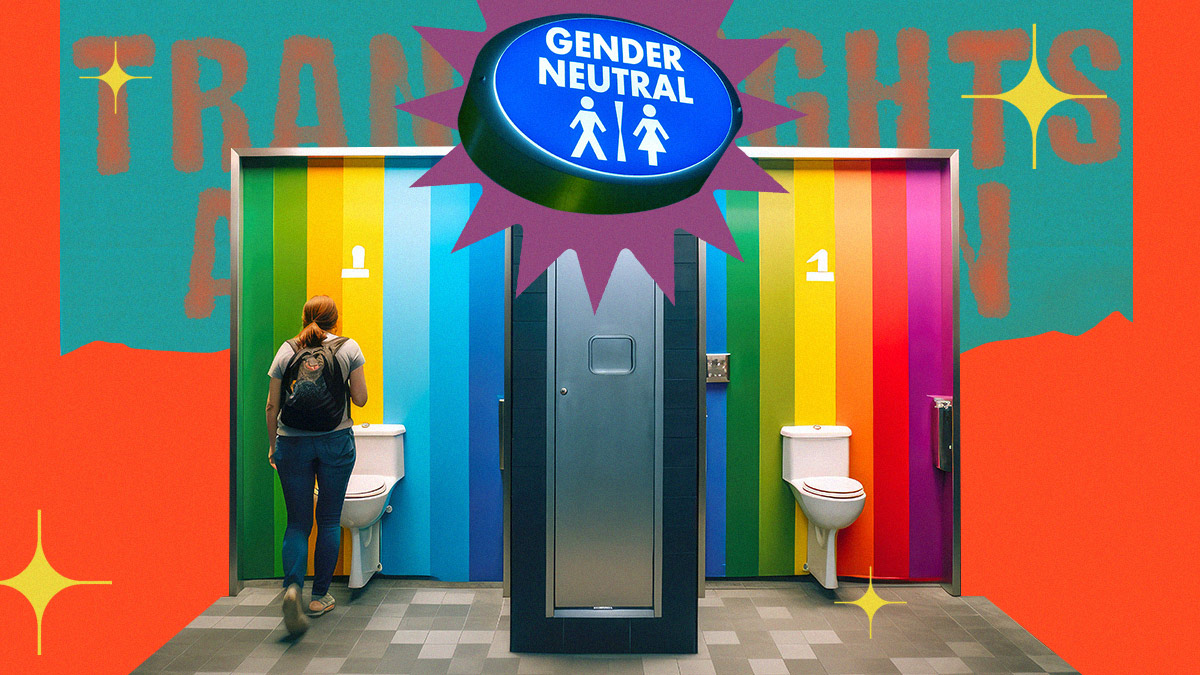
(SPOT.ph) Twenty-four-year-old Maria uses the women’s restroom at her workplace in Quezon City. Her officemate, Anne, also uses the women’s restroom. But Maria was issued an incident report following another employee’s complaint about her use of the facility. What’s the difference between them? Maria is a transgender woman, Anne is a cisgender woman. Both are women using the women’s restroom (the word is right there), but it seems that the other’s right to use an office facility is being taken away. According to their company's HR, Maria should be using the all-gender restroom, and only the all-gender restroom.
“At a very young age, I already knew who I was; and since I'm living my truth, I've encountered a lot of discrimination. I was really astonished when I learned about the report since I had never seen this type of prejudice just because I used the women's toilet. I was devastated since I had thought they were like the establishments and businesses I have been to, [which] just respected me and my [identity] because I feel more at ease using the female restroom,” Maria* told SPOT.ph in an interview.
Transgender people, especially in the Philippines, face issues of violence and discrimination on a daily basis. Prohibiting trans women from using the women’s restroom or trans men from using the men’s restroom is just a small part of this wide-scale prejudice. But the thought that something this minute was even an issue is proof that the fight for basic human rights among LGBTQIA+s still has a long way to go in this country.
"We are already in the modern world, so it saddens me that other people have these rules that prohibit us from entering certain establishments because of our gender [identity]. We are continuously fighting for our rights and want our voices to be heard. However, there are still many who don't understand us and choose to hate us instead of giving us a fair and equal opportunity," Maria said.
Acceptance Starts With Understanding
Transgender, by the definition of LGBTQIA+ media advocacy organization GLAAD, is "an adjective to describe people whose gender identity differs from the sex they were assigned at birth." A transgender man (or trans man, but not "transman") is a man who was assigned female at birth; while a transgender woman (or trans woman, but not "transwoman") is a woman who was assigned male at birth.
There's also non-binary, which is an adjective used by people who experience their gender identity and/or gender expression as falling outside the binary gender categories of "man" and "woman." Since they don't identify with the sex assigned to them at birth, other non-binary people also consider themselves to be part of the transgender community.
"It is important to note that being transgender is not dependent upon physical appearance or medical procedures. A person can call themself transgender the moment they realize that their gender identity is different than the sex they were assigned at birth," GLAAD's definition of terms indicated. In fact, some transgender individuals do not feel the need to go through gender-affirming care or gender-affirming surgery; while others want to, but don't have the resources to do it.
A cisgender person is someone whose gender identity is aligned with the sex they were assigned at birth. A cisgender woman, who was assigned female at birth, identifies as a woman; a cisgender man, who was assigned male at birth, identifies as a man. This just means to say that gender identity is part of every individual’s sexuality—whether a transgender person, a cisgender person, or a non-binary.
All-Gender Restrooms and Inclusivity
As the world recognizes this diversity of gender and sexuality, there is a growing number of schools, airports, restaurants, malls, and workplaces that open all-gender restrooms or gender-neutral restrooms. But this still begs the question, are all-gender restrooms enough to say that an establishment or community is inclusive?
Maria's office, for example, has an all-gender restroom located in another hall. After clarification with HR about her incident report, they insisted that she should use the all-gender restroom and not the women’s restroom in order to appease other employees and avoid similar complaints in the future.
"Having an all-gender restroom is actually a good idea because there are some people who are not entirely comfortable using either male or female restrooms. However, it should not stop us transgender [women] from using the female restroom because we have gone through a lot of things to finally decide what actually fits us and what makes us feel like normal human beings. If a certain establishment or company will provide a restroom for all genders and ask us as part of the LGBTQIA+ community to only use that restroom, it does not make them LGBTQIA+-friendly. They are not giving us a safe space to be with; they are just excluding us from other people and not really respecting our own [identity]. I myself am more comfortable using the female restroom and experiencing the things my biologically born female friends were doing," Maria explained.
By definition, inclusivity is "the practice or policy of providing equal access to opportunities and resources for people who might otherwise be excluded or marginalized." In the case of Maria, she was excluded as a woman from using the women's restroom. Ironically, she works for a multinational company that not only attends the Metro Manila Pride March annually but also promotes inclusion and diversity.
"Habang ang layunin talaga ay payagan at hayaan ang lahat ng tao—anuman ang SOGIESC [Sexual Orientation, Gender Identity, Gender Expression, Sexual Characteristics] nila—na makagamit ng mga banyong nakaayon sa gender identity nila, mainam ding aksyon ang pagkakaroon ng all-gender restrooms sa mga kumportableng gumamit nito. Kailangan nga lang mai-standardize ito: angkop ang pagkakagawa, kumpleto ang pasilidad at accessible sa lahat ng gustong gumamit. Ang gender responsive at [gender] inclusive na paraan ay kahit pa mayroong all-gender comfort room ay mahayaan ang mga kasamahang trans na makagamit ng banyong umaayon sa pagkakakilanlan nila. Sa gayon, hindi rin dapat pilitin ang mga trans na gamitin ang all-gender comfort rooms," Gio Potes, SOGIESC Training Officer at the University of the Philippines Diliman Gender Office, explained to SPOT.ph.
For Maria, she's more comfortable using the female restroom because it affirms her identity as a woman.
Atty. Quino Reyes, Legal Counsel and Director for Memberships of the Philippine LGBT Chamber of Commerce, added: "Transgender people should not be forced to use all-gender restrooms. Genuine inclusivity means offering safe, affirming, and convenient options for everyone. All people—not just transgender persons—should be given the choice to use all-gender restrooms or restrooms that align with their gender identity and expression."
The Long and Winding Road to Anti-Discrimination Policies
An employee's complaint against Maria's use of the women's restrooms, which escalated into a filed incident report, is a form of discrimination. And this is not an isolated case.
Back in 2019, Gretchen Custodio Diez was detained at the Quezon City Police District Station 7 after lining up to use the women's restroom at Farmers Plaza Mall. She was eventually released, but not before reigniting discussions on the passage of the long-pending SOGIESC Equality Bill.
This bill hopes to institutionalize the elimination of discrimination on the basis of people's sexual orientation or gender identity. As of May 23, the proposed SOGIESC Equality Bill has been approved by the House Committee on Women and Gender Equality. The early version of the SOGIESC Equality Bill, previously called the Anti-Discrimination Bill, was first filed in 2000 by then Akbayan Representative Loretta Rosales and the late Senator Miriam Defensor Santiago under the 11th Congress. Similar bills were refiled in the succeeding legislative assemblies, but would always end up getting stuck at the committee level. It has been 23 years.
Similar experiences of Maria and Diez happened in Quezon City, where the Gender Fair Ordinance was established in 2014. "It is hereby declared a policy of Quezon City to actively work for the elimination of all forms of discrimination that offend the equal protection clause of the Bill of Rights enshrined in the Consitution, and other existing laws and to value the dignity of every person, guarantee full respect for human rights, and give the highest priority to measures that protect and enhance the right of all people," it says.
Unfortunately, Quezon City's Gender Fair Ordinance doesn't say anything specific regarding the use of men's and women's restrooms, except for the installation of facilities and support systems for LGBTQIA+s. "All government agencies, private offices, and commercial/industrial establishments shall designate toilet rooms and lavatories labeled as all-gender CR," it states.
The Ordinance also says that "any act of discrimination or harassment based on actual or perceived sexual orientation, gender identity, and expression, which demeans the dignity and self-respect of a person or impairs, mars, reduces or nullifies the recognition, enjoyment, or exercise of a person's human and legal rights and basic freedoms in the civil, political, labor, economic, social, cultural, educational spheres, and other spheres" is one of the prohibited acts on Section IV.
But the latter, as abstract as it is, is not solid enough to bring to the court.
"Ordinances of local government units (cities, municipalities, and provinces) are insufficient to enforce anti-discrimination policies. First, ordinances are severely limited in scope (what they can do) and area (where they can be enforced). Second, ordinances do not have the coercive power of law—penal ordinances are often just slaps on the wrist—so there is less reason for people to strictly comply with them. Finally, relying on ordinances means the national government does not prioritize diversity and inclusivity, as well as the well-being of gender-diverse people. A national anti-discrimination law, such as the SOGIE Equality Bill, is necessary," Reyes explained.
So what can Maria and other trans women experiencing discrimination in the workplace do? Philippine LGBT Chamber of Commerce's legal counsel said that "unless there is a local ordinance or a national law criminalizing such restroom bans, there is little resort for transgender, intersex, and other people who cannot use the restroom aligning with their gender identity." He further explained that if there is a local ordinance, banning trans women from using the women's restroom is a possible criminal case that can be reported to the police and filed in court. Otherwise, the "aggrieved person—whether or not an employee—may file a complaint with, or request to, the organization's management." Having a company union is also helpful since they can be asked to intervene and lobby to overturn the ban.
“May mga pagkakataong sa mismong mga LGU na may SOGIE o Anti-Discrimination Ordinance ay mayroon pa ring nangyayaring diskriminasyon sa paggamit ng banyo o palikuran—patunay ito na hindi napapalaganap ang ordinansa at may kakulangan sa pagbabantay. Pagsubok pa rin ang pagpapalaganap ng ganitong mga ordinansa sa mga pribadong entidad, at mungkahi ko ring magkaroon ng mekanismo upang maipalaganap ang mga sesyon ng oryentasyon sa gender sensitivity at SOGIE sa mga pribadong entidad, at ang layuning aksyon nito ay gender-responsive at inclusive na mga pasilidad—kabilang na ang mga restroom," Potes said.
"All-gender restrooms are not enough for an organization to be considered inclusive; though they are an important step. Inclusivity involves more than just restrooms and other physical spaces and assets. Inclusivity includes goals, programs, processes, benefits, and indicators that aim to make organizations welcoming and nurturing spaces for everyone," Reyes added.
More than changing their logos into the colors of the Pride Flag every month of June, companies that want to champion diversity and encourage a culture of inclusion and belonging should walk the talk.
"If an establishment or a company is promoting a healthy environment for all genders, I believe they should conduct proper training and seminars for their people so they can really provide a [truly] healthy environment for everyone," Maria said.
The key to diversity is authenticity, after all.
*Editor's note: The names in this story have been changed to preserve anonymity.
Also read:
All You Need to Know About SOGIE, Explained
10 Common Misconceptions About the SOGIE Equality Bill