

LOOK: This Snake in Taal Lake Is One of the Rarest in the World
This snake is one of only two true freshwater sea snakes in the world.
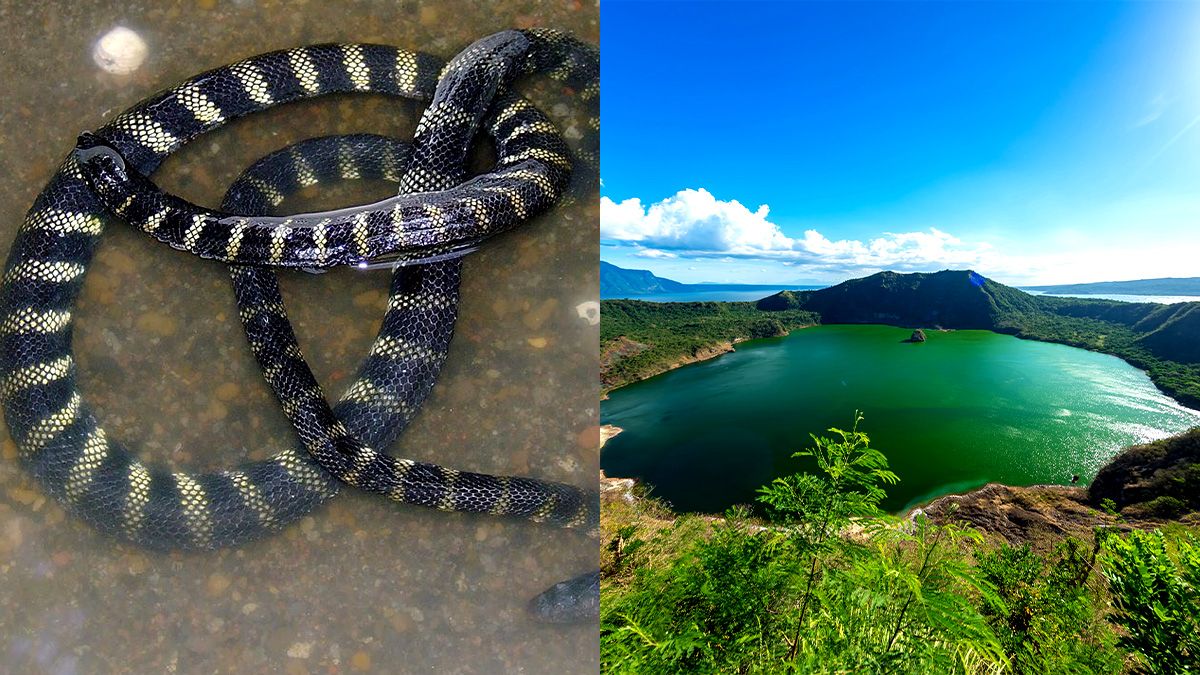
Taal Lake has one of the more peculiar ecosystems known to man. It was once home to bull sharks and still has a considerable population of Maliputo and Tawilis in it. Even snakes, including a particular species that is among the rarest in the world, call it home. Unfortunately, this snake is now facing rapid extinction.
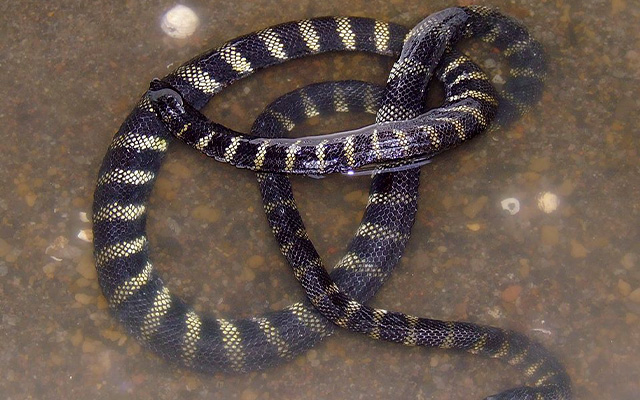
Hydrophis semperi, better known as Garman's sea snake or the Taal Lake Sea Snake, defies nature in a sense. It is one of only two true freshwater sea snakes in the world (the freshwater sea snake species Laticauda crockeri being the other). The often harmless, venomous sea snake is only found in one place in the entire world, in the volcanic caldera of Taal Lake.
"The Lake Taal Snake is becoming rarer and has been classified by the International Union for Conservation of Nature (IUCN) as vulnerable. If you wish to see one, take a kayak or small boat, paddle around, and wait for one to pop up from the depths to take a breath. Don't approach it—just observe from a distance and marvel at its Slytherin-like grace," Gregg Yan once told Esquire Philippines.
Also read:
10 Scenic Restaurants In and Around Tagaytay Worth the Drive
10 Under-the-Radar Spots In and Around Tagaytay for Your Next Getaway
Weekend Spot: This Batangas Cliffside House Boasts Stunning Views of Taal Lake
How Did the Taal Lake Snake Manage to Survive All These Years?
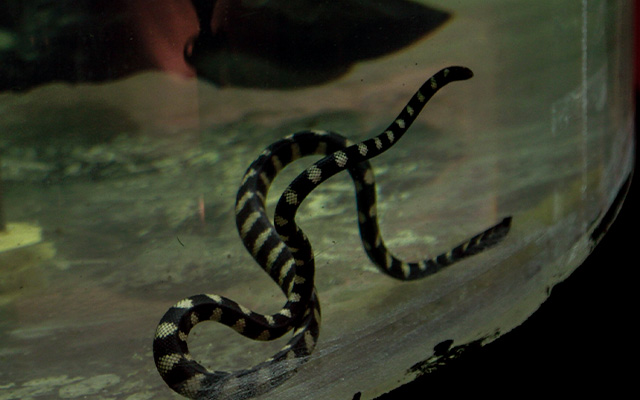
Discovered by naturalist Carl Semper in the middle of the 19th Century, the freshwater sea snake is among one of the smallest worldwide. It measures 19.7 to 29.5 inches (50 to 70 cm) in length and is characterized by black or deep blue skin with yellow or white bands. The snake is also identifiable through its elongated head and paddle-shaped tail.
Here's the part that reads a little funny on paper: Why is this particular sea snake not in the sea? It is widely believed that the Taal Lake Sea Snake adapted to the volcanic forces of its habitat over time. Some herpetologists argue that it may have evolved from another species of sea snake, Hydrophis cyanocinctus, through the Founder principle—this theory posits that a group of founder species was isolated and exposed to these vastly weirder environmental conditions.
Experts point to the changes the area has gone through over the past few hundred years for the lake's unusual ecosystem, as researcher Chris Hay noted in a post.
Back in 1754, when Taal Volcano erupted, tephra and ash deposits blocked the Pansipit River. This meant that the only way to the sea was blocked and that the accumulative precipitation turned the saline water into freshwater. Thus, the snakes' ancestors were trapped, leading to what we now know as the Hydrophis semperi and Taal Lake's other denizens, like the Tawilis.

The Taal Lake Sea Snake is about two to five times more venomous than a cobra. But it isn't exactly an aggressive species. Contrary to their looks, these creatures are quite docile and only attack when provoked.
Sadly, they're becoming harder to come by these days. The species faces threats from humans and other external factors like pesticides, untreated sewage, and petrol waste.
Also read:
LOOK: The Endangered Jade Vine Is Spotted at Masungi Georeserve
Bicol Might Be Home to a Critically Endangered Species of Dolphins