
OPINION: Miss Universe Wanted a 'Transformational Woman.' So Why Didn't It Want Michelle Dee?
Miss Universe, in the words of UP professor Danilo M. Reyes.

(SPOT.ph) A year ago, the new owner of Miss Universe announced a brand-new philosophy: Transformational Woman! Quickly, we all bought into it.
Back in Manila, national organizers crowned Michelle Marquez Dee to represent us at the great beauty derby.
Also read: 10 Best Philippine Costumes Ever Worn on the Miss Universe Stage
Miss Universe: a Transformational Woman
She is transformational in many ways: 1) Three of our four Ms. Universes were mestizas in the Continental way. Michelle took victory with a distinct, edgy Oriental look; in that mold, we had our last win in 1969, with Gloria Diaz. 2) Michelle has a well-grounded, heart-true advocacy. 3) She is eloquent and outspoken, both. Whenever she opens her mouth, she is grammatical, idiomatic, smart, and principled about the day’s pressing issues; she loathes memorizing all the rehashed beauty lines. 4) She has worked hard, transforming her own sense of fashion and style to promote an elegant, culturally respectful, and wide-ranging expression. 5) She is unapologetic about plural love.
Off to El Salvador she went, competing in the pageant, making it as far as the Top 10. And while everyone thought her Top-5 finish would be a cinch, Michelle just dropped out of the game without rhyme or reason.
For my money, it’s all because of the contest’s shifty, discontinuous format. Unquestionably, Michelle had won the game of transformation and received minor prizes for it. But for all the powerhouse scores she amassed, Transformation had no place at the main event.
Sure, she had her chance with beauty of face. But soon as the judges started choosing their Top 10, it meant beautiful Latina faces. Why? Because the ship sagged with Latino and American judges who favored regional aesthetics. The eventual winner has a beautiful Latina face. Not that Michelle wasn’t a pretty sight to behold. She just happens to be an Oriental beauty. Riyo Mori was the last in that template to claim victory. Count with your one hand: we only have a handful of winners there, Gloria Diaz included.
More so, the points that Michelle scored for compelling advocacy didn’t figure in the main event. Earlier, they had recognized her strength with a consolation prize, hefty in its own right. But transformational advocacy wasn't going to be part of the main event. They were not willing to give air time to a platform that could prod the world to transform its ways. It didn’t even matter at that point.
Michelle believed that she would prevail during the Q&A. But the main event’s format categorically shut out that strength of hers. There was no place for speaking out one’s mind. Maybe it had a 50% bearing in the preliminary. But it mattered no longer during the main event. Instead, they had a short, simple Q&A for the Top 5, long enough for the girls to spout all the motherhood statements and the memorized lines. So much for a transformational mind.
Michelle herself rues, “Too bad that I have not been given the chance to hold the mic.”
For our belle, not making it to Top 5 just doesn’t make sense, logically that is. Look, a big-sized queen made it to Top 20, as well as another candidate who had to forego the swimwear competition following her homeland's cultural restrictions. So why should Michelle flop in the evening gown, when she wore one that was not only the epitome of elan but also culturally smart, a transformational coup in the world of high fashion. More importantly, she had won the fan votes: this was the people’s queen as the greater world had elected her. Can the judges just set that aside?
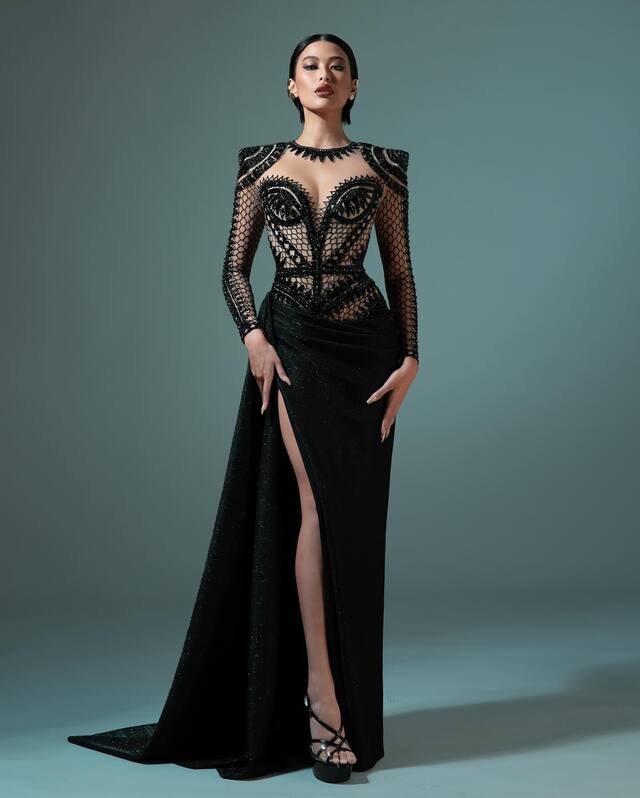
Only that midway in the contest, the transformational phenomenon was no longer part of the criteria. It was back to the age-old formula: beauty of face, figure, and shining, shimmering gown as you could dream it—the gaudy belle of the ball—from the barrio pageant to Volcano Central in El Salvador. It was also back to the familiar, favorite things of traditional pageant judging and the owner’s prerogative. Transformation was the ruse leading us there.
It’s like training hard for Olympic-level swimming. You go there, earnestly counting on your destiny. And they tell you last minute, “Okay, you’re in—for synchronized swimming, that is.”
Also read: 10 Times Miss Universe Candidates Wore the Most Unexpected National Costumes
What happens next?
Transformational Woman was one catchy phrase. And we all believed that it would direct the course of the day. But someone like the Pied Piper of Pattpong played and we followed. So, when decision day came, they sneaked in a contest format that had a very weak connection to that grand theme of Transformation.
Now, some things for us to consider:
1) Reassess if we still want to take part in this discontinuous, deceptive game. For the sake of national pride, why not take a three-year break from this derby, until it transforms correctly into fair pageant shape? Call it boycott and reassessment, both. It will give us clarity and the necessary perspective.
2) In a real Transformation game, judges should be subjected to a public exercise where they articulate their capacity for plural aesthetics. Every single Miss U candidate does that. They buckle and do their darn best to articulate their understanding of the game. And we subject many of them to cruel laughter. Why should the judges not undergo the same regiment? This year, I have no doubt about former queens Janelle Commissiong and Iris Mittenaere doing it right. But I do wonder about the rest of them. Out with regionalists, ultra-nationalists, and one-track mind aesthetes who think that “because they look like me, then they are surely beautiful”.
3) Watch that shifty contest format, changing year after year. That’s where all the weights are altered to shut out the true queens. Sadly, that’s where destiny is tampered with.
4) Paula Shugart was right: Transformational Woman was one catchy phrase. Yet high up there, someone refused to walk the walk. Which is so unlike Michelle, ma belle— who did more than walk that stunning cobra walk.
Still and all, in our hearts, Michelle Marquez Dee is a winner. She played the game of Transformation through and true. Hopefully, the rest of us can do that, too—seeing the light, saying no to all that's fishy, flashy, and foul.
Losing is a fact of life. After all, in that unbroken stretch of the pageant’s 72 editions, we’ve only won four times. Which means that we don't mind losing—68 times and more. We’re okay with losing . . . but not our dignity.
Danilo M. Reyes is an instructor in UP Diliman, teaching Literature and Creative Writing in both English and Filipino.