
This Open-Air Neighborhood Mall Is Now a San Juan Architectural Gem
This Thai-designed structure is more than just another "aesthetic" space.

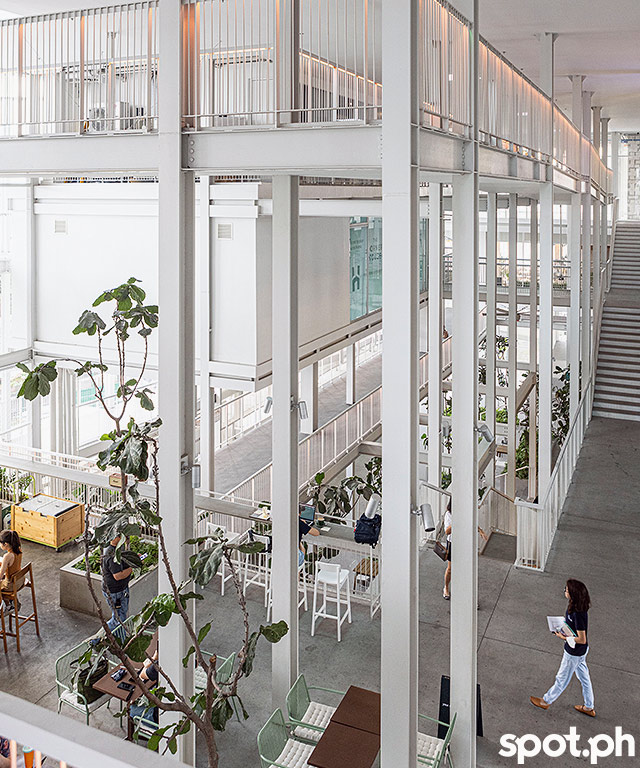
(SPOT.ph) For an imposing structure, The Corner House in San Juan, located right where the busy streets of P. Guevara and Recto meet, sends out a warm, welcoming vibe. Lush berms of green and cascading concrete steps are the first things that catch the eye in this four-story building sitting atop towering white beams. "Wonderful scale, beautiful tropical design that allows shade, and beautiful spaces inside for the community," raved the TikTok-famous Archimarathon whose feature on the place got Pinoys giving the all-white neighborhood mall a second look.
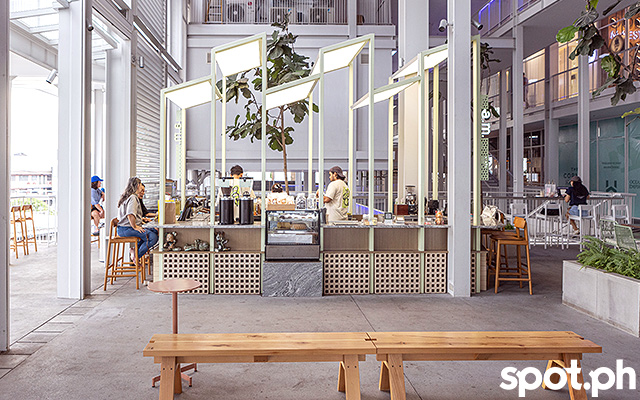
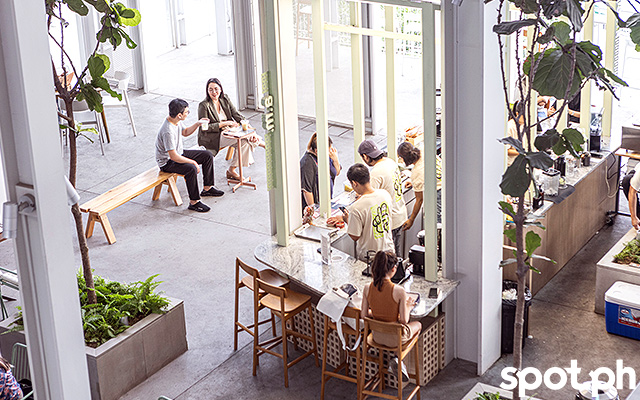
Standing on the lot where the memorable Cafe Ysabel used to be, The Corner House is a modern lifestyle complex that features an exciting and not-your-usual mix of F&B gems: there's One World Deli, Seven Plates, cafe a.m., Bun Appetit, Tajimaya Yakiniku Restaurant, and the bar called Raion, to name a few. Last we heard, a Michelin-starred restaurant is also set to open here.

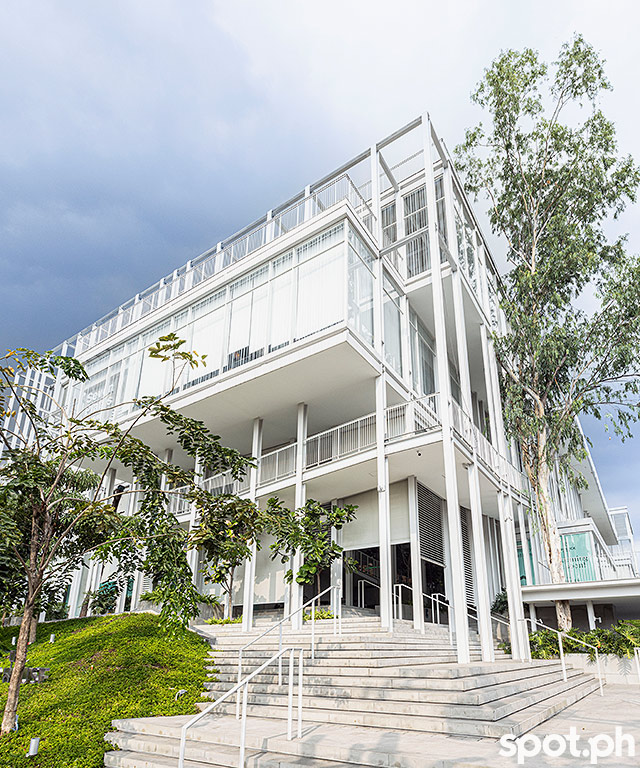
Frequent travelers to Bangkok may notice a few similarities to The Commons, a popular open-air, multi-use structure with a web of stairs and ramps. Well, that's because The Corner House was inspired by The Commons. The Dichaves family was traveling in Bangkok and was so taken by the building they thought of putting up something similar in Manila. And perhaps to make things easier, they tapped Department of Architecture, the Bangkok-based architecture firm who did The Commons, to design the project.
Also read: The Fascinating Story Behind This Cebu Church That Blends Christian and Islamic Architecture.
But Department of Architecture's principal architect Amata Luphaiboon tells SPOT.ph: “Even though the initial intention was similar to our Bangkok project, the architectural solution for Manila has its own unique characteristics.”
How The Corner House came to be
Luphaiboon first visited the San Juan site back in 2016, to study the local conditions and to ensure the building is a mindful response not only to Manila's mostly warm climate but also to its often-punishing wet seasons. “While the initial impression might suggest that designing for Manila and Bangkok is similar, several key differences required careful consideration,” explains the Thai architect. “The first notable difference is the intensity of the monsoon rains in Manila, which are surprisingly stronger and often come in almost horizontally. This necessitated a design that allows the building envelope to close securely during heavy downpours.”
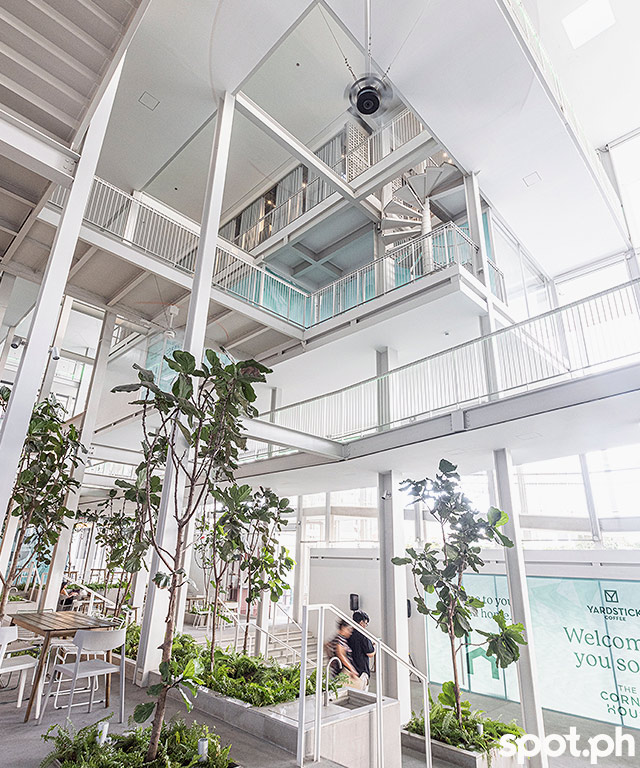
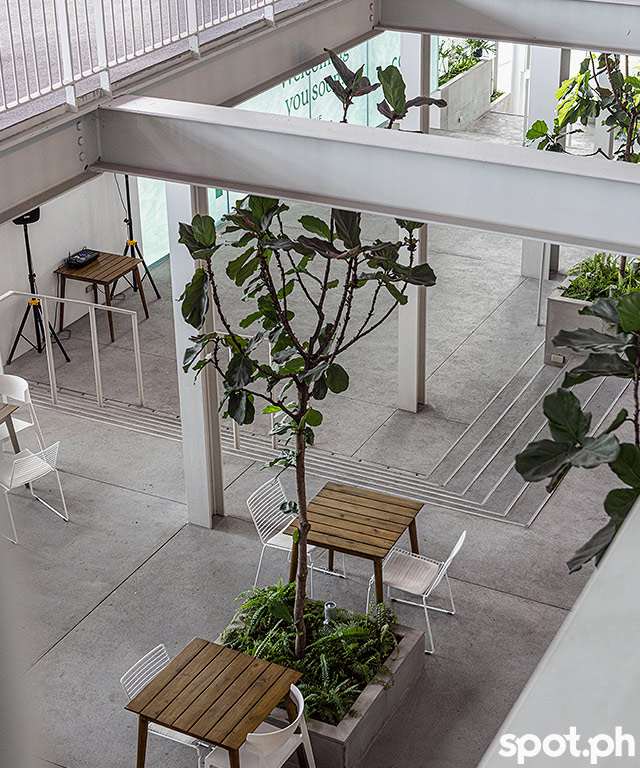
The Corner House, points out Luphaiboon, is equipped with motorized louvers and blinds which can be used to block intense rain and keep everyone safe and dry while inside the structure.
Another significant difference between Manila and Bangkok is that our city is very much reliant on private cars while a large portion of Bangkok's populace uses public transportation. "This meant that we needed to provide a much greater number of parking spaces, all of which had to be accommodated in basement levels,” Luphaiboon offers. Anyone who's been to this side of San Juan knows how hard parking can be in the area, and parking often dictates people's willingness to visit. The Corner House visitors need not worry, however: it has over a hundred parking slots now in its basement level, so this breezy complex has become a convenient and attractive option versus nearby establishments.
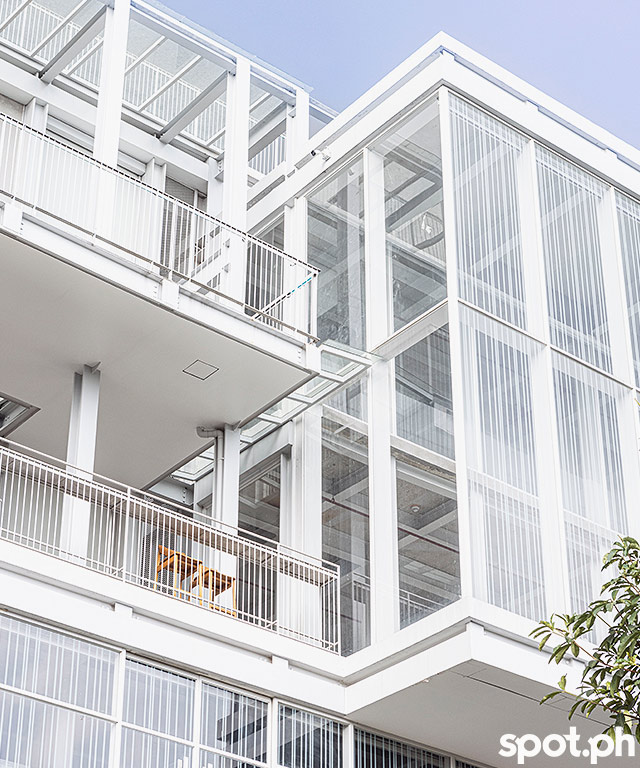
The building is furnished with skylights made with dichroic glass, which are scattered across the structure and give off iridescent patches of color throughout. But the open design already bathes the whole neighborhood center with natural light—which clearly adds to its inviting aura. And because of this generous supply of light, plants thrive within the structure, which makes Vincent Lim of Clarq Landscape Design's job a little easier.
Lim was enlisted to do the landscaping of The Corner House and he filled the indoor spaces with fiddle leaf fig trees and Boston ferns. “Aside from coming up with a plant palette that is almost monochromatic, it was key to specify plant materials that will showcase some seasonal changes," Lim tells us. "The ground cover we used on some parts of The Corner House will look stunning during summer—with the splash of colors brought about by the flowers."
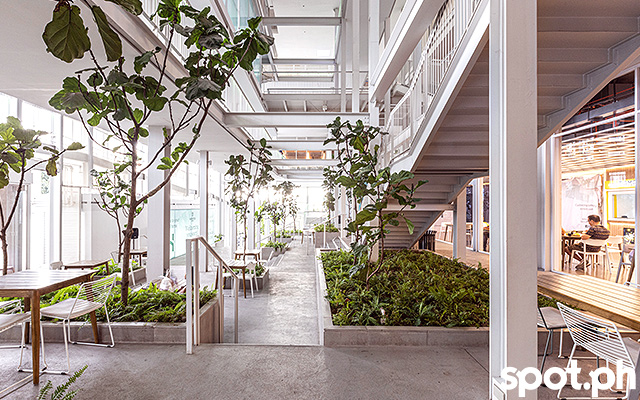
Lim saved the Narra trees that were already on the site and added native trees such as Dita trees, since these establish roots quickly after transplanting. “The white and green aesthetic of the project is very special and refreshing," observes the landscape artist. "It was essential to minimize the use of variety in the plant selection and it turned out elegant."
Things to do at The Corner House
Apart from dining and drinking activities, the complex can serve as an atrium space to view the San Juan skyline. Another unique feature is the jogging ramp that wraps the structure. Lined with a rubber jogging track that spans 500 meters, joggers and walkers can do laps around the building by day or night.
Construction for The Corner House took place largely during the pandemic, making it impossible for the Bangkok team to visit the site. This posed challenges but "we were fortunate to have a competent, collaborative, and helpful local architect team, BAAD Studio, who took good care of overseeing the construction process,” Luphaiboon says. “This was particularly important given the differences in construction practices between the Philippines and our more familiar contexts. The collaborative efforts ensured that the architectural design was successfully adapted to local construction methods.”
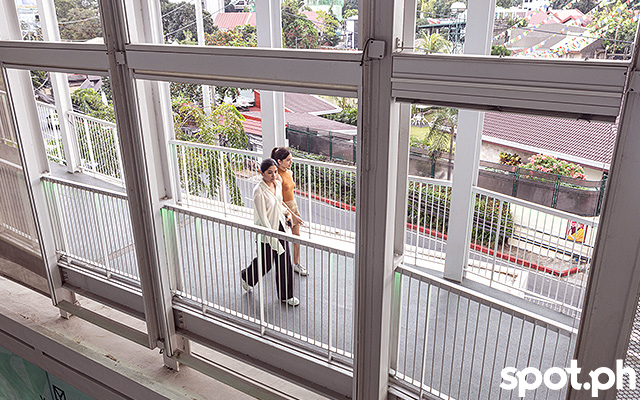
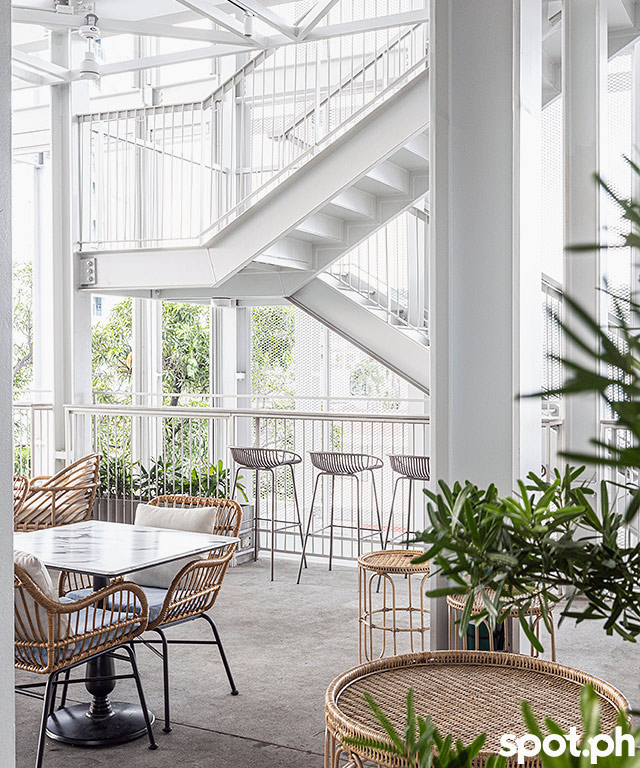
The Corner House seems an ideal response to the public spaces we craved during the pandemic (and its quite amazing to realize the Dichaveses had this building design in mind since 2016). It has plenty of open space and with almost no walls surrounding it, cross ventilation is not a problem—plus everything is further cooled by giant ceiling fans.
“We believe that open-air spaces are essential, especially in Asian tropical countries where people often seek refuge from the heat in air-conditioned shopping malls," says Luphaiboon who is not exactly a fan of traditional shopping environments. "I view the mall-lifestyle as unhealthy for both mind and body. This emphasis on open-air lifestyle spaces reflects a recognition of the need for quality outdoor areas in bustling Asian metropolises.”
Also read: WATCH: Experience Timeless Architecture at The Lark in San Juan, La Union