

10 Filipino Words Added to the Oxford English Dictionary
Language is ever-evolving, as they say.
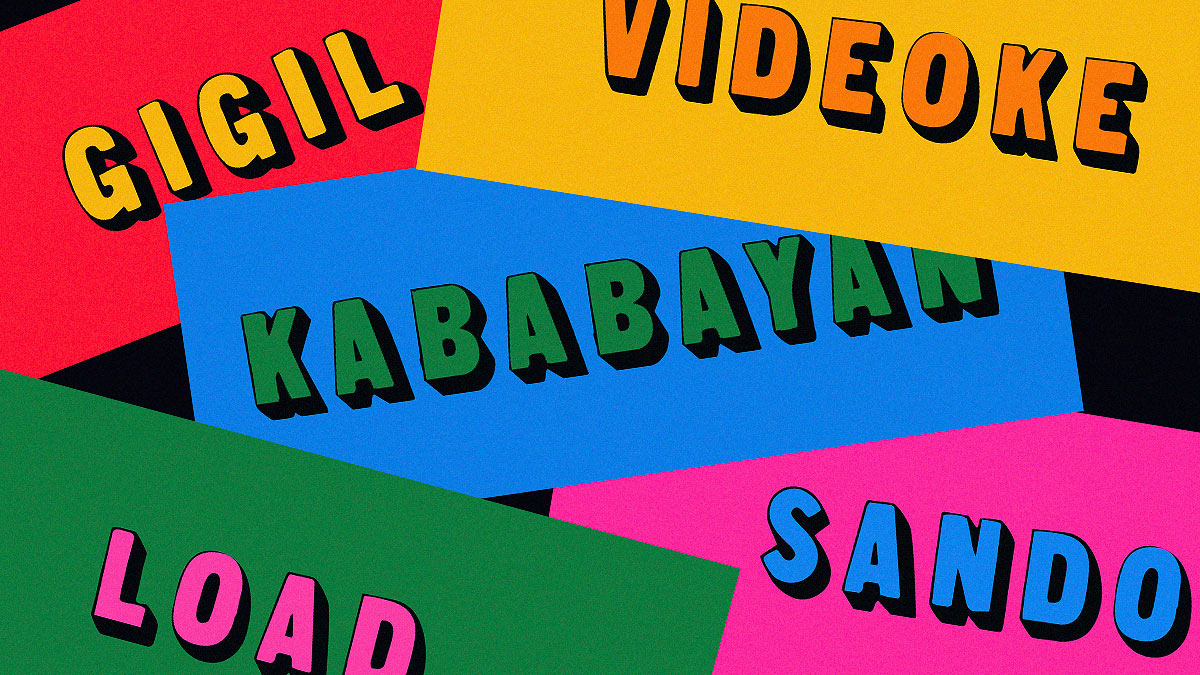
(SPOT.ph) Long gone are the days when gigil and other uniquely Filipino words were considered “untranslatable” to English. The latest update from the Oxford English Dictionary (OED) includes several Filipino terms—proof that the exchange goes both ways: English influences us, but we’re influencing English too.
Gigil’s global debut even made headlines in The New York Times and BBC, alongside other cultural staples like lumpia, sando, and videoke. Beyond these cultural exports, some entries reflect how English words take on new lives in the Philippines. After all, no foreigner would instinctively understand what we mean by "CR" or "load"—but here, they’re everyday essentials.
“Philippine English is not substandard English or badly-learned English. It is a variety of English as legitimate as American and British English,” Ariane Borlongan, Associate Professor of Sociolinguistics at the Institute of Global Studies, told SPOT.ph in 2023. “Admittedly, what becomes as distinctive features of Philippine English (or any new variety of English, for that matter) begins as errors until they become a feature of a new English.”
Also included in the update is the adjective form of Pinoy, now officially recognized alongside the noun. Yes, we can’t believe it took that one that long either.
Of course, this isn’t the first time Filipino terms have made their way into the OED. Words like suki, kilig, and barkada have already been recognized in earlier updates. Maybe tampo, pasalubong, and sayang can go next? We’re drafting that petition to the OED as we speak.
Also read: "Result in" or "Result to": Is It Time for Philippine English to be Accepted?
10 Filipino words in the Oxford English Dictionary
CR
A toilet; a lavatory; comfort room.
Gigil
An intense feeling caused by anger, eagerness, or the pleasure of seeing someone or something cute or adorable, typically physically manifested by the tight clenching of hands, gritting of the teeth, trembling of the body, or the pinching or squeezing of the person or thing causing this emotion.
Kababayan
A fellow Filipino; one's fellow Filipino. Also: a person from the same Philippine region or town as another.
A small, sweet cake, similar to a muffin, typically yellow in colour and having the shape of a salakot.
Load
Credit purchased for a pay-as-you-go mobile phone.
Lumpia
In East and Southeast Asian cookery: any of various types of spring roll, typically consisting of a very thin pancake filled with minced meat, seafood, or vegetables, rolled into a cylinder (and sometimes deep-fried), and served with a dipping sauce.
Salakot
A type of lightweight Filipino hat traditionally worn by farmers as protection against the weather, typically domed or conical in shape, with a wide brim, and often having a spiked or ornamental finial at the tip of the crown.
Sando
A sleeveless garment worn under or instead of a shirt; a vest.
Terror
Of a teacher: strict, harsh, demanding.
Thomasite
An American teacher in the Philippines during the period of American occupation (1899–1946); esp. one belonging to the first group of teachers who arrived on the U.S. Army Transport Thomas in 1901, tasked with establishing a new public school system, teaching basic education, and training Filipino teachers, using English as the primary language of instruction.
Videoke
A form of entertainment popular in bars, at parties, etc., in which a person sings the vocal line of a popular song to the accompaniment of a pre-recorded backing tape while following the lyrics which appear on a screen in time with the music. Also: the equipment used for this. Frequently as a modifier, esp. in videoke bar.
Also read: 10 Filipino Words You're Probably Using Wrong