

Bangus Skin Might Be the Answer to Severe Burn Treatments
New research has the potential to transform wound care in the Philippines.

(SPOT.ph) Researchers from Ateneo de Manila University are turning one of the most abundant fish in the Philippines into a lifesaving medical resource. That’s right—the bangus served on our dining tables might find its way into hospitals soon.
The published study has revealed that bangus or milkfish skin could be used to treat severe burns and other major injuries, offering a cost-effective solution for wound care in developing countries. This is big news, considering that bangus skin is something that usually just ends up in the trash.
When someone suffers third-degree burns, where all skin layers are damaged, artificial skin is often used to protect exposed tissue and encourage healing. Burn treatments often rely on imported, expensive artificial skin. But then there’s milkfish skin—abundant, affordable, and rich in collagen—which turns out can be a key component for healing wounds.
“Among the economically significant fish species in the Philippines, bangus is one of the most widely cultivated. However, limited research has been conducted on the suitability of milkfish skin for wound care,” the researchers wrote in the paper. “Given its abundance and potential collagen content, milkfish skin presents a valuable opportunity to expand the donor pool for fish skin grafting.”
Also read: Ateneo Tops List of 56 Philippine Universities in THE Impact Rankings 2024
How bangus skin was tested for collagen
Led by Dr. Janice Ragaza and Bianca Patrice Go, the Ateneo team prepared fish skin samples from local markets in Metro Manila.
The samples were descaled, cleaned with salt water, and cut into uniform strips. To ensure sterilization, some of the fish skin samples were treated with a solution of silver nanoparticles (AgNP)—a known antimicrobial agent—while others were left untreated for comparison.
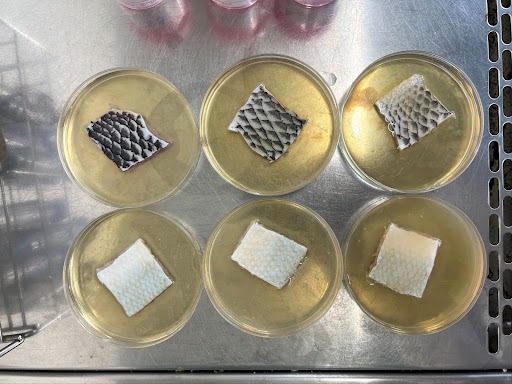
Results from the study showed that AgNP-treated bangus skin managed to prevent bacterial and fungal growth. Under the microscope, the collagen structure of bangus skin proved just as sturdy as tilapia skin, which is already recognized in the medical field for burn treatments.
Further research and clinical trials are still needed before it can be implemented in hospitals. Still, the findings so far offer plenty of reasons to celebrate.
“By demonstrating that milkfish skin can be effectively sterilized and used similarly to tilapia skin, this research… has the potential to transform wound care in underserved areas, improving patient outcomes in regions with limited access to advanced medical facilities,” the researchers wrote in the paper.
Also read: Toxic Algae Species Found in Luzon Shellfish Farms