
Marcos Proclaims a "Railway Renaissance"—What Can We Expect?
Here's a hopeful timeline of the biggest infrastructure projects on the way.
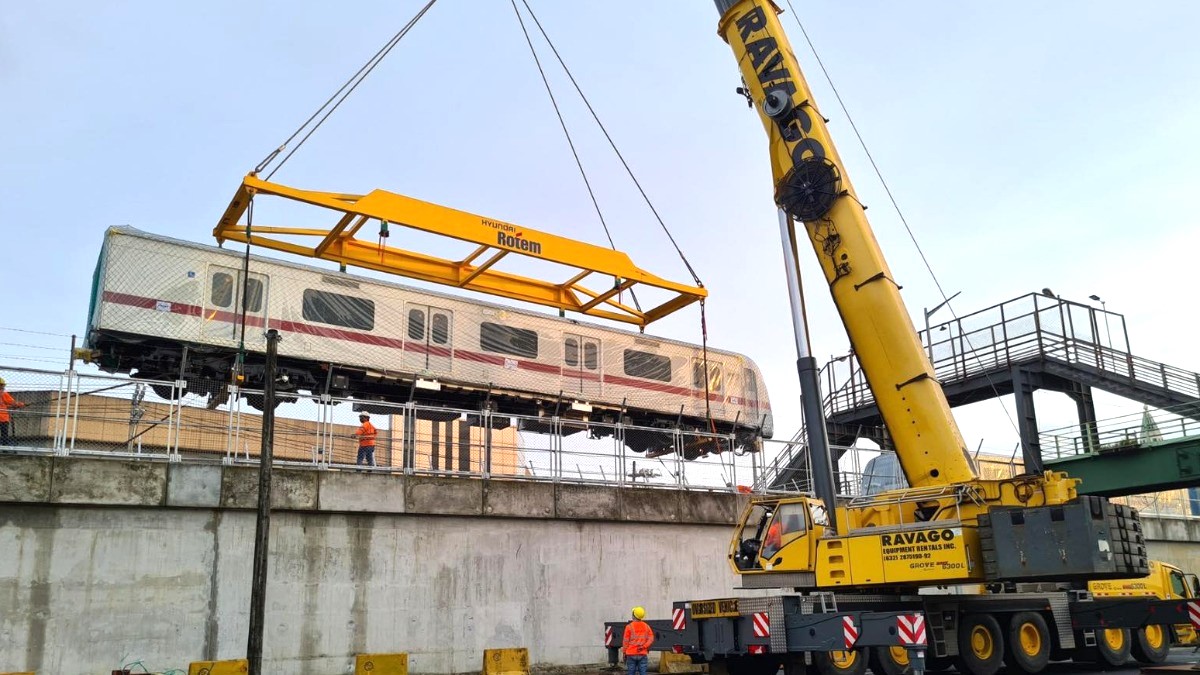
(SPOT.ph) Infrastructure development has always been a top priority for President Ferdinand “Bongbong” Marcos Jr. since the beginning of his term. This promise was reaffirmed in his recent State of the Nation Address (SONA) as he boldly proclaimed that the Philippines is now "in the midst of a railway renaissance."
During his address, he put the spotlight on five big-ticket projects: the Metro Manila Subway, MRT-7, North South Commuter Railway, LRT-1 Cavite Extension, and the PNR Bicol Line. Let’s take a closer look at each one. Many efforts have been made to bring back the old glory days of what was once Asia's most extensive train networks, so we're here to see what concrete steps will be made under this administration.
Also read: The Philippines Once Had an Extensive Railway System; Why Wasn’t it Rebuilt?
"We are in the midst of a railway renaissance": Infrastructure projects mentioned during SONA 2024
Metro Manila Subway
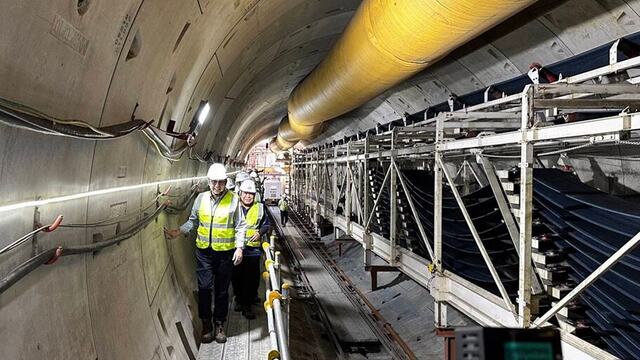
At the forefront of this renaissance is the Metro Manila Subway, which has been touted as “the project of the century.” It has recently seen substantial milestones in its tunneling works. Take it from Marcos during SONA: "Sa puntong ito, katumbas na ng tatlo hanggang anim na palapag ang lalim ng nahukay at tuloy-tuloy na umuusad sa susunod na istasyon.”
The Metro Manila Subway will feature 17 stations in 33 kilometers, connecting Valenzuela City to Pasay City with a spur line to Terminal 3 of Ninoy Aquino International Airport (NAIA).
Once completed, the DOTr said it is expected to reduce travel time from Valenzuela to Pasay to 35 minutes from the previous 1 hour and 30 minutes. Each of the 42 train sets planned for the subway will have a capacity of 2,242 passengers, which totals over 500,000 passengers per day.
The project broke ground as early as February 2019, but actual construction had only commenced in January 2023 amid previous right-of-way issues on top of the delays caused by the COVID-19 pandemic.
As of January 2024, the Metro Manila Subway has reached "an overall project implementation progress rate at 40%" as per the Department of Transportation (DOTr). It is expected to be completed by 2029.
Also read: LOOK: The Metro Manila Subway Is Shaping Up
MRT-7
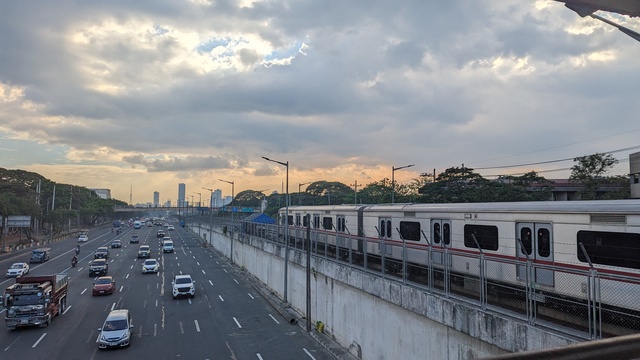
The MRT-7 is an entirely new train line that will connect Quezon City to San Jose del Monte, Bulacan. There will be a total of 14 stations spanning around 23 kilometers. Once fully operational, MRT-7 is expected to cut travel time between these two locations from two hours to 35 minutes.
In May 2024, DOTr Secretary Jaime Bautista claimed that the MRT-7 would be partially operational with 12 stations from North Avenue to Quirino Avenue by 2025, but the Bulacan leg won’t be completed until 2027 or 2028 due to—you guessed it—right-of-way issues.
“We will make sure that right-of-way issues are resolved in the most equitable, efficient, and expeditious manner, so that these will not get in the way of our infrastructure development,” Marcos said.
The MRT-7 will also link up with several other train lines at the Common Station in Quezon City in what is called the Unified Grand Central Station. This grand terminal will connect a total of four train lines: the LRT-1, MRT-3, and eventually, the MRT-7 and the Metro Manila Subway.
Also read: MRT-7 Faces Right-of-Way Issues, Delaying Full Operations A Few More Years
North South Commuter Railway
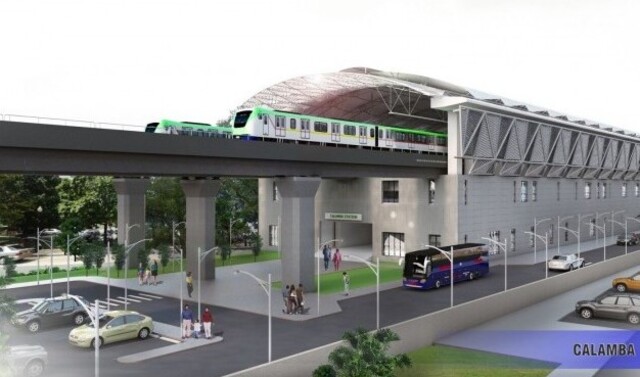
The North-South Commuter Railway (NSCR) is a 147-kilometer stretch of urban rail transit connecting New Clark City to Calamba with 36 stations across Central Luzon, the National Capital Region, and CALABARZON.
This project has been in the pipeline since the 1990s, but it only started to make headway in recent years. According to the DOTr, it will cut travel time from four hours to less than two hours for over 800,000 daily passengers.
Construction is currently rolling out in three phases: PNR Clark 1, PNR Clark 2, and PNR Calamba. Unlike PNR Clark 1 and 2, PNR Calamba will not be starting from scratch. It will instead reconstruct the current Metro Commuter Line, so partial operations could start as early as 2025 and be in full operations by 2028.
Also read: PNR to Halt Certain Routes for Five Years to Make Way for the NSCR
LRT-1 Cavite Extension
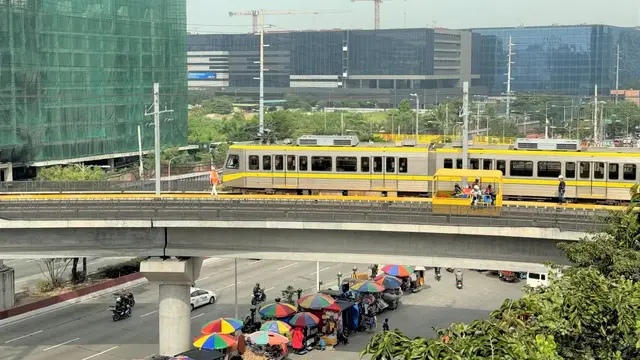
The Cavite Extension will increase the total number of LRT-1 stations from 20 to 28 with 11.8 kilometers of new railway. Five stations will be in Parañaque City, one in Las Piñas, and two in Bacoor, Cavite. Travel time from Pasay to Cavite will be cut to 25 to 30 minutes from the current one hour and 30 minutes.
Phase 1 of the Cavite Extension is currently at a 94% progress rate as of November 2023, with high hopes to be operational by the fourth quarter of 2024. Meanwhile, Phase 2 construction is set to begin once Phase 1 reaches a 100% completion rate.
"Bubuksan ito sa publiko sa loob ng taong ito. At sa ilang taon, aabot na ang linyang ito hanggang Bacoor," Marcos said. "Nagdagdag din tayo ng pitumpu’t anim na bago at modernong mga tren sa LRT-1 upang mas dumami, bumilis, at maging mas kumportable ang biyahe ng mga pasahero."
Also read: Everything You Need to Know About the LRT-1 Cavite Extension
PNR Bicol Line
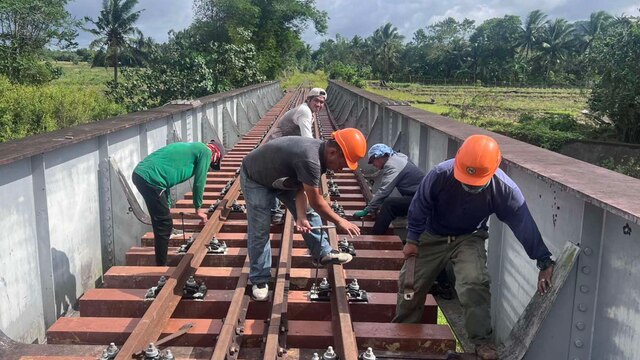
Last but not least is the reopening of the PNR Bicol Line after six years of hiatus.
The PNR Bicol Line is a 100-kilometer railway stretching from Naga to Legazpi with scenic views of Mayon Volcano along the route. It closed due to a lack of train coaches and locomotives, plus a lack of maintenance and funding challenges contributed to its prolonged closure.
The line finally resumed partial operations on December 2023 with old routes in Naga City and Legazpi City and new routes in Travesia, Daraga, and Legazpi.
Also read: PNR’s Naga to Legazpi Route Is Back After Six Years