Follow us!
© 2026 Spot.PH

NPC Seal of Registration

Spot.ph has been granted the NPC Seal of Registration in recognition of the successful registration of its DPO and DPS

The Philippines Once Had an Extensive Railway System; Why Wasn’t it Rebuilt?


Published Aug 22, 2022

(SPOT.ph) Any commuter today would be beleaguered by the overall traffic congestion, intermittent MRTs, and the long lines at Carousel bus stations. Commuting in the Philippines on a daily basis can feel like hell on earth, and you can’t help but think: wouldn’t an efficient train system—with many additional train lines, such as the ones found in Hong Kong and Singapore—solve this problem?

Urban planner Paulo Alcazaren tells SPOT.ph in an interview that this was not always the case. Decades ago, before WWII and a couple of years after, the Philippines had a rather comprehensive railway system. And so, while we are waiting for the MRT-7, Metro Manila Subway, the North-South Commuter Railway Project, and the Makati Intra-city Subway to be completed, let’s learn about the history of our Philippine trains, and how there was once a very convenient means of transportation in our hands.
history of railways
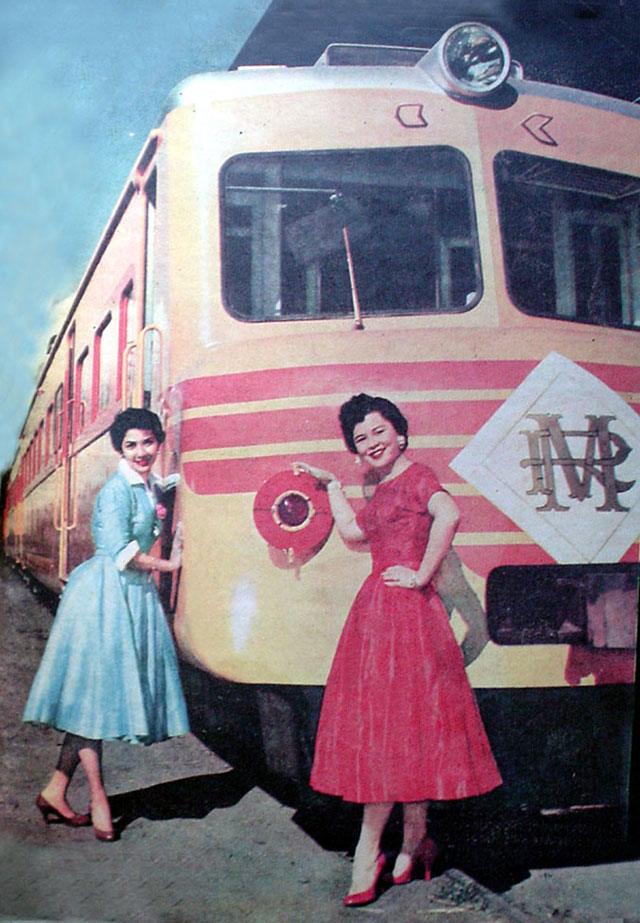
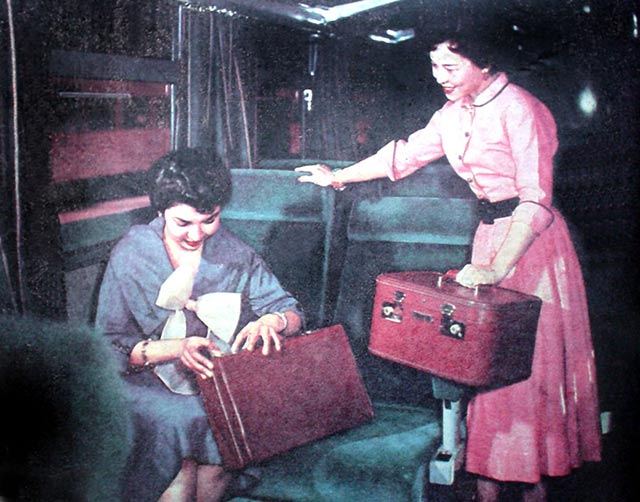
Before the current commuting situation, traveling via the Philippine train was a comfortable, even glamorous experience.
PHOTO Courtesy of Paulo Alcazaren
philippine railways history
PHOTO Courtesy of Paulo Alcazaren
Article continues after this ad.
ADVERTISEMENT - CONTINUE READING BELOW

Glory Days of the Philippine Railway: Trains up to La Union and Albay

The railway systems in the Philippines began in the 1890s with the Ferrocaril line. "The first line was Manila to Dagupan, that was the only line during the Spanish period until the Filipino American-War," Alcazaren explains. "The Americans took over, and they expanded that throughout the pre-war years until 1940, to like eight times and over a thousand kilometers up north; and then down south they had spur lines [short railway branch lines] going to Los Baños and to Cavite."

He says that there were also extensive tram lines in Manila heading up to Malabon and Navotas, and through the east via Pasig that led up to Marikina and Antipolo. Alcazaren adds that the reason why some lines were introduced in Antipolo was to ferry the crowds going on religious pilgrimages. "So, you can take a train to go on your pilgrimage. That was the reason they added those lines, because the number of people going to Antipolo was so high."
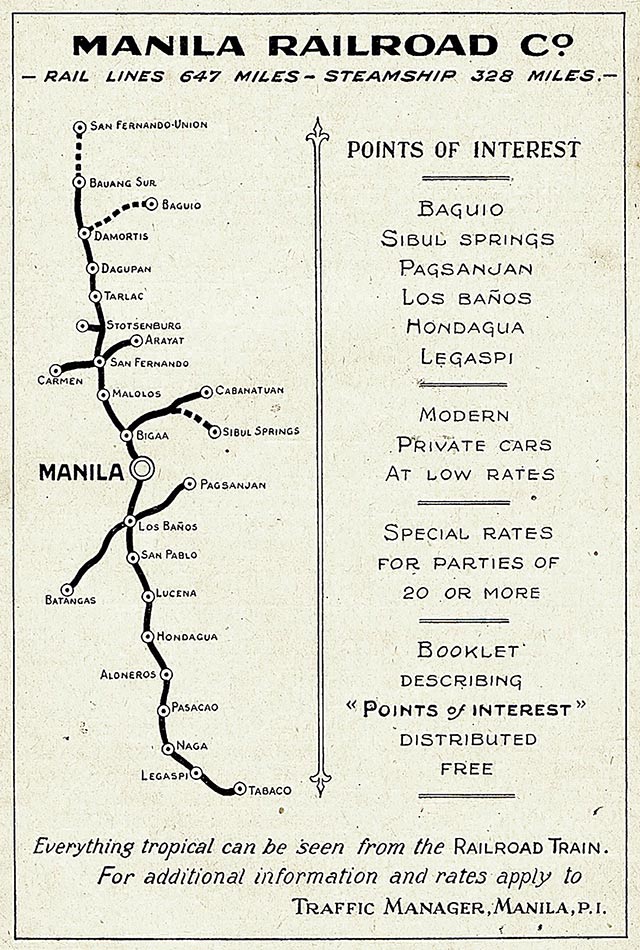
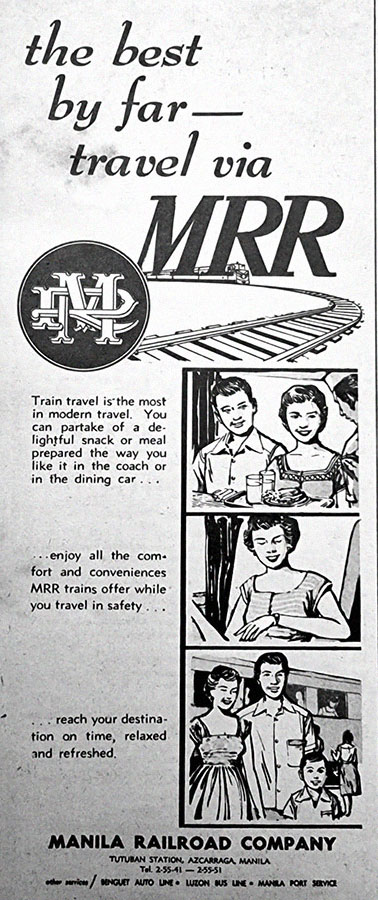
ads by the Manila Railroad Company, precursor of PNR
This 1926 ad by the Manila Railroad Company shows how extensive the railway lines in the country were, stretching to La Union up north and Tabaco Albay down south.
PHOTO Courtesy of Paulo Alcazaren
Article continues after this video.
ADVERTISEMENT
watch now
ads by the Manila Railroad Company
PHOTO Courtesy of Paulo Alcazaren

With the rail lines under the Manila Railroad Company, a summer bakasyonista in the 1920s and 1930s could hop on a train from Manila all the way up to La Union, or down south to as far as Albay. If you wanted a shorter day trip, you could have also visited nearby tourist spots like Pagsanjan by train.

By the 1930s, the country had a complete railway system. "Before the war, we had three types of railways: you had the tranvia—the very light rail—and you had the inter-area rail, the one that went from McKinley to Tutuban Station, and then you had the trains that went up to Dagupan and eventually San Fernando, La Union [and] as far south as Bicol," Alcazaren recounts. "They had spur lines [or a very short secondary railway line] to get to different areas, and to Sangley Base [in Cavite City]."
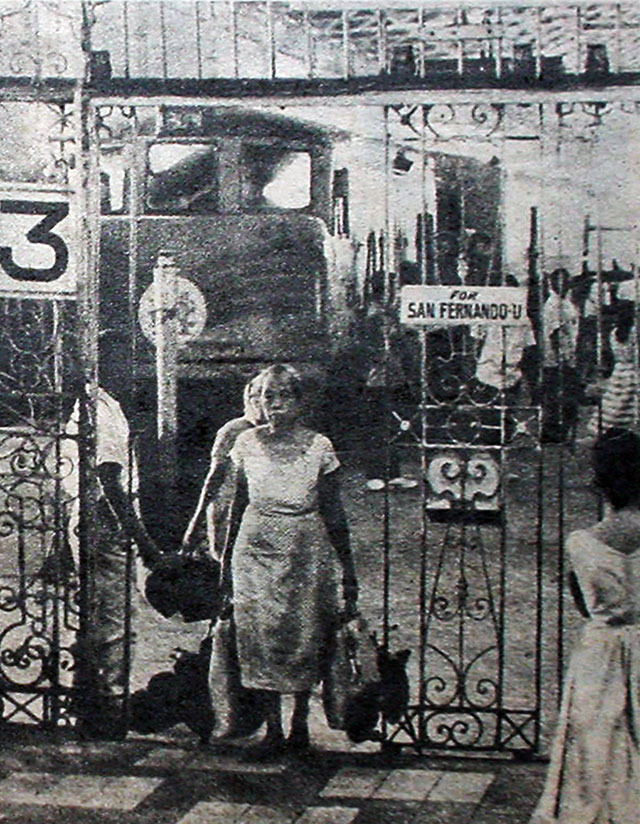
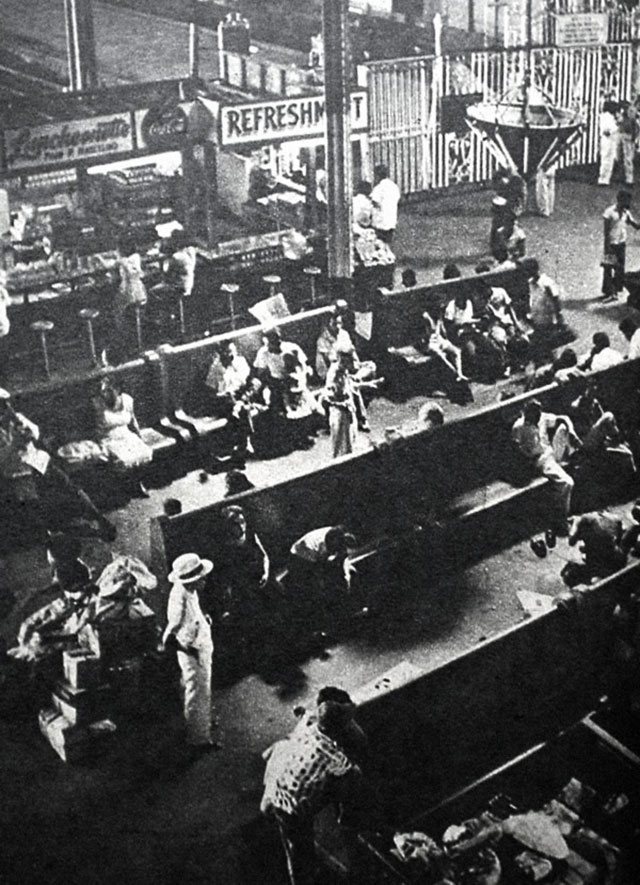
busy train stations
The busy train stations showed the heyday of Philippine railways when it was the primary form of travel.
PHOTO Courtesy of Paulo Alcazaren
Article continues after this ad.
ADVERTISEMENT - CONTINUE READING BELOW
heyday of Philippine railways
PHOTO Courtesy of Paulo Alcazaren

Even Corregidor had trains. The U.S. military station during the American Period had trams to take you to the barracks and multiple buildings on the island. 

These pre-war train systems were not isolated to Luzon; there were railways in the southern provinces, as well. "Wherever there was a hacienda, there was train," Alcazaren says. "In individual haciendas or sugar plantations, they had their own lighter rail for transporting sugar left and right. Panay, Negros, and Cebu had their own railway system. So, the Panay Line ran through Panay, Negros, and Cebu, and they had a few hundred kilometers. And then from Panay, it went to Capiz, then Iloilo, and Bacolod."
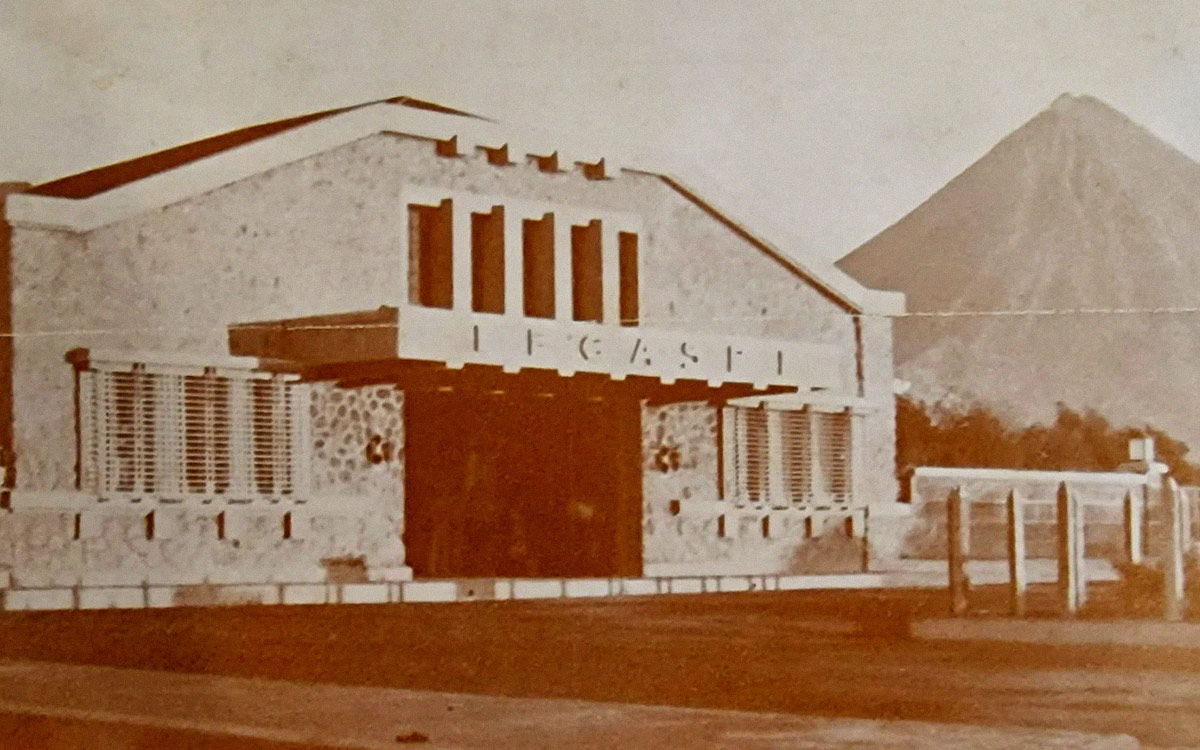
Legazpi Station with a view of Mayon Volcano in the background. This elegant Art Deco train station was designed by National Artist Pablo Antonio. The train station still exists in Albay. PHOTO: Courtesy of Paulo Alcazaren

WWII Destruction and Why Most Philippine Rails Were Not Rebuilt

This extensive railway system remained in the convenience of people until WWII hit the country. Heavy bombardments damaged the entirety of the rail system, especially the tranvias in Manila. In 1946, the U.S. Army turned over what remained of the railways—less than half of it—to the Commonwealth government.

Alcazaren tells of its destruction. "It all deteriorated after the war. The rolling stock was lost; the rails were also damaged. They recovered half of the rails, and the spur lines disappeared." Some of the inter-provincial rail systems were rebuilt as we lacked expressways back then. But most of what was damaged were sold off as scrap metal—train cabs, tracks, and all. These abandoned railways were repurposed as the long, winding roads you can still see on Google Earth; now renamed in various provinces as Daang Bakal or Calle Tren.

Article continues after this ad.
ADVERTISEMENT - CONTINUE READING BELOW
1940s locomotive
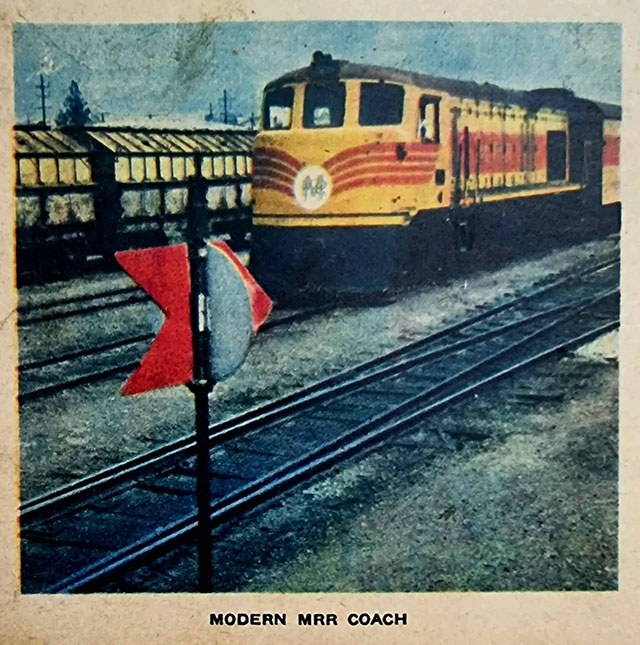
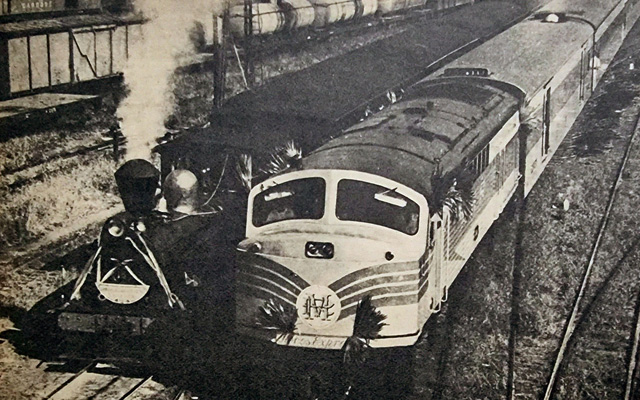
A late-1940s steam locomotive next to the MRR diesel train that eventually replaced it.
PHOTO Courtesy of Paulo Alcazaren
MRR Coach
An MRR Coach in 1964.
PHOTO Courtesy of Paulo Alcazaren

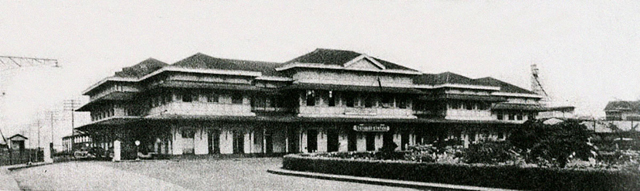
Then why weren’t all of the railways and trams rebuilt after the war? Our rolling stock was not maintained, although Manila Railroad Company (MRR), which eventually became the Philippine National Railways, maintained these rails, modernized the central Tutuban Station, and replaced the steam engines with diesel trains. 

tutuban station
Tutuban Central Station in Manila. The station was repurposed into the Tutuban Center Mall.
PHOTO Courtesy of Paulo Alcazaren
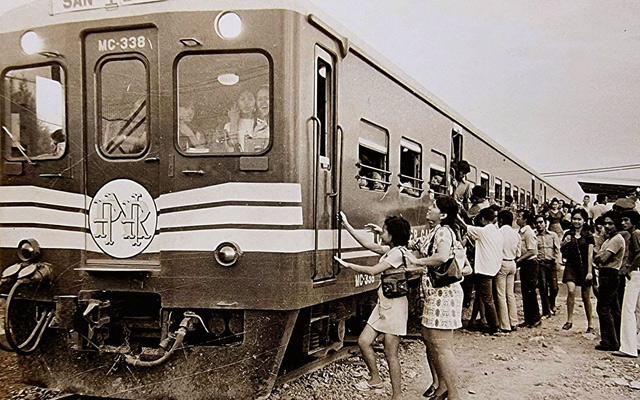
pnr to san pedro
A PNR commuter train to San Pedro in the 1970s.
PHOTO BY Courtesy Paulo Alcazaren

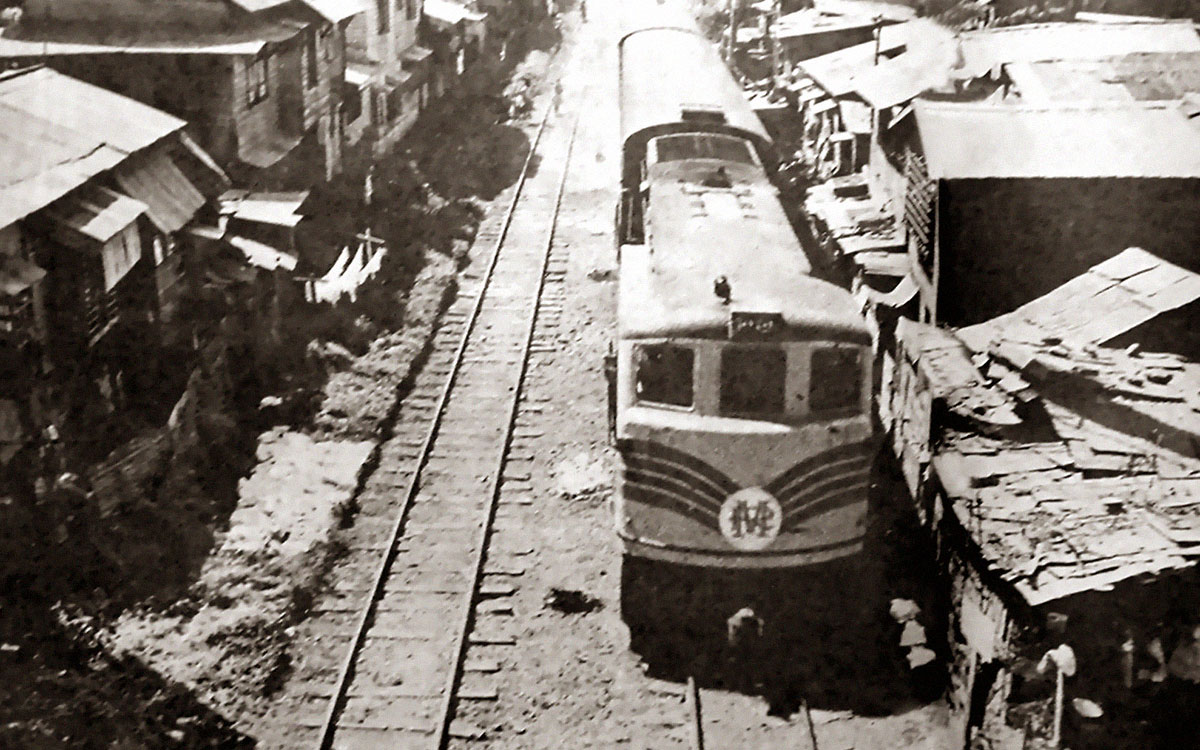
All seemed fine until the steady decline of the rails from the late 1960s to the '90s. "By the '80s and '90s, it was a combination of mismanagement, informal settlers at the Philippine National Railways (PNR) easement, as well as damage to the rails and lack of maintenance." The final straw for Philippine railways was the advent of other forms of transportation, such as air travel, shipping, bus lines, and the rise of the automobile industry.

Even back then, informal settlements encroached upon the railway easements. PHOTO: Courtesy of Paulo Alcazaren

Missed Railway Opportunities, and Closing the Last-Mile Gap

And so, all these factors bring us to our current commuting struggles. Still, the urban planner says there are always plans being pitched to the government and private sectors to improve and revive our railways. Most of these just don’t push through. Here, Alcazaren refers to the brilliant ideas of urban-regional planner Dr. Art Corpuz, who wrote the book The Colonial Iron Horse: Railroads and Regional Development in the Philippines, first published in 1999. 

“The emerging trend in the 1990s, which is now accepted worldwide, is the movement called Transit-Oriented Design. Transit-Oriented Design (TOD) development states that you grow cities based on mass rail transit systems connecting satellite cities," Alcazaren explains. "Art was retained by Ayala (Group), and so Nuvali was being master-planned in the 1990s. He pitched this idea to the Ayalas, and they wanted to make it because it totally made sense—there was going to be a train near Nuvali, and you could hop on that train and get off on Alabang, or on Ayala Avenue. What happened? The idea got stuck at the government level back then."

Paco Train Station
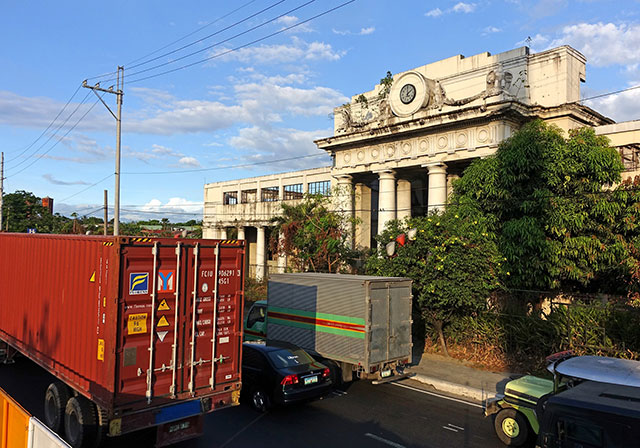
The almost-demolished Paco Train Station in Manila in 2019—only the façade remains. This beautiful station was designed by William E. Parsons in 1908. It is now semi-obscured by the Skyway.
PHOTO BY Courtesy of Paulo Alcazaren

While there is the hope that the new rail developments will help alleviate our commuting problems and reduce our carbon footprint, Alcazaren cautions that there are other important things to consider. 

"Some of the areas of the stations are not TOD-planned. Because in Hong Kong or Singapore, when they plan an extension to the Mass Transit Railway or Mass Rapid Transit, [respectively], the stations are situated in their satellite cities. That means when you get down from the train, you are surrounded by residentials, by schools. Everything is there, so it’s planned in terms of aligning all of the land use to take advantage of the proximity to the station. And so you will not rely on taking cars, jeeps, tricycles, or all of these informal modes of transportation that are always left to cover that last-mile gap." 

Alcazaren stresses that TOD is the sensible way to go, as it becomes a win-win situation—the development will help make money while providing convenience to everyone. And unless the development is done right, the typical city folk will still see cars as the supposed more convenient alternative over public transport. "The solution to all this…is seeing the big picture," he says.

Comments

Latest Stories

Load More Stories
Close