
(SPOT.ph) Metro Manila as seen from above isn’t so bad. At 9 a.m. on a clear sunny day as I looked out an airplane window, coasting a couple thousand feet high in the sky, Metro Manila and its endless sprawl of crowded urban space looked almost welcoming. Almost peaceful. Almost as if the past two years hadn’t just happened.
The lockdown began right around the ides of March in 2020; never a good time, historically speaking. I ended up stuck in Puerto Princesa for nearly a year; “stuck” in the sense that back then, I hadn’t considered my parents’ origins to be my own, much less a place that could be “home.” I finally flew back in January of 2021 to a relatively quiet Metro—staying for nearly a year before being called back to Puerto Princesa by Christmas, and more importantly, the ravages of Odette.
Also read: The Innate Absurdity of Being Filipino—Or Why I Traveled 500 Miles to Renew My Passport
After that, there was a good three months of me occupied by an odd sense of finality in my move back to the city province. We helped where and when we could after Odette; water, electricity, and the Internet was about as unstable as the general public mood at the time. And yes, I’m talking about that wack chaos period we all went through at the start of 2022. Cue a certain name and a certain party place and all of the memes. The only thing I dare recall of that cursed time, floating at the top of my repressed memories, was thinking “Hey, I may be losing it but at least I’m not losing it in Metro Manila.” At that point, I absolutely relished the peace I could have at home in Puerto Princesa—oh yes, I had inadvertently transformed into some version of the most coveted social-media personality of the time, a “digital nomad.”
Of course, my digital nomadic-ness wasn’t as glamorous as the IG feeds of others. I lived with my parents in the city proper and spent most of my time with my laptop and phone up in the air looking for the best, most stable service, which typically found me in the garden on a hammock or on the porch overlooking mangroves—definitely not something to complain about. Sure, I had to contend with insects and the sun’s intensity, but that was absolutely nothing compared to the urban insanity I had to battle on the daily when I would commute to the office.
Also read: I'm a Pandemic Hire, How do I Return to Office When It's So Unfamiliar?
But then, things finally started to calm down. Case numbers dipped, vaccine count went up, and, of all the unbelievable things that happened in the past few years (Ostriches included, remember that?), Metro Manila went down to Alert Level 1 in March—nearly two years after the lockdown was first announced. You could feel the sigh of relief, a certain loosening (and I mean sanity-wise too), from the folks in NCR all the way from where I sat more or less calmly around 800 kilometers away in Puerto Princesa. I tried to ignore it the best I could because I knew what the double-edged sword meant, work-wise—until finally, the e-mail announcing RTO came.
So that’s how I ended up coasting over Metro Manila, steady, if a little on edge, and I suppose looking pretty much unscathed (relatively speaking) by the past few years. Incidentally, exactly what I was thinking of the city I was about to return to below.
What’s the point?
My first few months working at home in Puerto Princesa, there was a certain disjunct I felt—a disconnect we were all battling with, I’m sure, and as I am a millennial, it was encapsulated best in a tweet I saw somewhere. I can no longer locate it but you probably saw it anyways, or at least thought it in some form; it went something like this: “We’re really typing away on our laptops at home while the world falls apart around us.” Like most Internet hits, it was oddly specific—definitely an experience the relatively luckier ones were going through—and went straight to the bone.
This was a feeling a lot of people probably carried as we tried to get on with our lives, amid a pandemic (and amid all the news that reported all the shit that went down “amid/st the pandemic”). I practically nurtured this thought throughout the years, coping the best I could, Dalgona coffee included. Remember that, too? Feels like eons ago.
Fast forward to March and a new 180 hits. I was back in a now half-empty office I hadn’t returned to in years, talking to my teammates in person, and the disjunct only became wider. You’d think the return meant the pieces would fall back into place: I could type away on my laptop worry-free because finally, the world was no longer falling apart (or at least, not as rapidly as before). But by now a new question had taken over, in the context of my job as a writer and the digital landscape in general, what was the point of physically returning to Metro Manila?
It Doesn’t Have to Be the Way It Was
Once in a while I did end up on a nearby beach with my laptop a la digital nomad, which honestly did not do great for that disjunction I was trying to keep together in my brain. Work or beach? Why not both you might ask; Because my brain cells can’t, is the basic answer. How do I type away on my laptop while the waves beckon? Why would I besmirch a golden moment like standing on the shore, watching the waves, by bringing out my phone because the boss messaged?
There was something completely farcical about walking on a picturesque beach with my phone out hunting for signal like some deranged, tech-dependent youngster. It’s funny, yes, but then compare that imagery to me trying to stuff myself into an overcrowded train, with dozens of others, all headed for work in a strange mockery of sardines-in-a-can thanks to a city-induced routine, and you’ll see there’s a joke in there somewhere too. If you ask me which punchline is more worth it, I’m sure you already know the answer.
It’s that lack of a routine like that in Puerto Princesa that proved something to me: The world doesn’t work the way we believe it did. Office spaces are not the be-all and end-all. For a sizable chunk of the workforce, WFH worked—and it could continue to work.
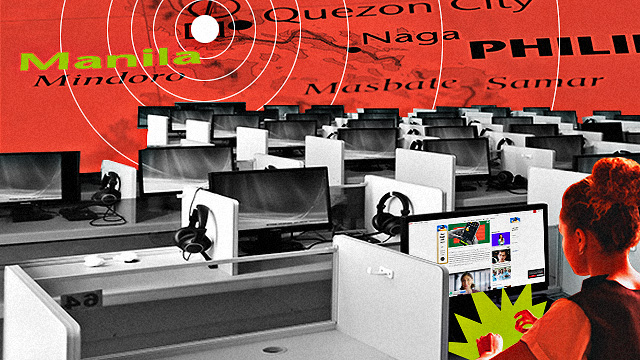
Government has begun to call for the BPO industry—one of the largest in all sense of the word—to return to work on-site in a hybrid setup giving them a deadline of March 31. The MMDA has begun looking into reinstating the number coding; public transport is already back at full capacity. Apart from the practical risks this brings (the pandemic is still happening, folks), the move raises a lot more questions. All the cogs in the machine are being put back in place, but for whose benefit?
Returning to the way things were, to keep at the old pace and pulse of the city, doesn’t seem as necessary as it did before. We can change our methods yes, but it doesn’t have to stop there. We could also change our goals.
For the longest time the city has been equated with success, that to become somebody, you had to be somewhere. And for the longest time, too, on the opposite of that thought has been a feeling, a certain ripple outwards—just ask all the tiny homes being built outside, almost like some form of escape; a crude if not specific example of the way the so-called “outside” has changed, caught up, even. The only difference is that, now, well now we have proof.
this strange new world.