
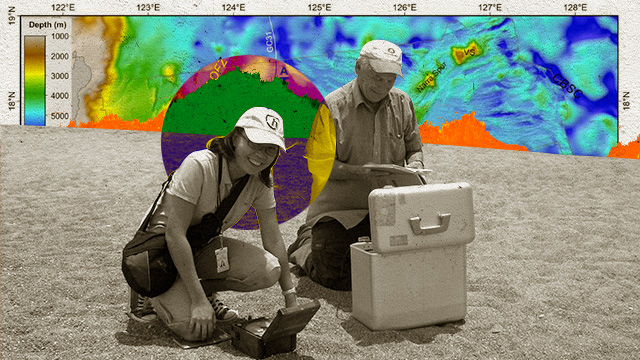
(SPOT.ph) It all started with a book. "The cover itself was a photo, an image of the earth from the moon. One of the earliest siguro ‘yon na images," shares Jenny Anne Barretto, the same geophysicist who in 2019 rocked the country with her and her colleagues’ findings on Apolaki Caldera. Spanning around 150 kilometers across at its widest, this underwater volcanic structure in Benham Rise, off of Luzon’s northern coast, paved the way for a few moments of glory for a usually overlooked aspect of the Philippines. But before Barretto led this massive discovery, she started out as a kid with a dream—a dream that, ironically enough, looked far outside of the Earth she now studies.
The book in question was an atlas brought home by her journalist father. It was a "huge one filled with all the photos, images of the different planets, of the moon, so that got me to dreaming about being an astronaut," says Barretto.
Also read:
Massive Caldera Found in Philippine Seas—And It Could Be Earth's Biggest
Meet the Filipina Engineer Who Struggled in Math But Now Works at NASA
Meet the Filipina Engineer Who Makes Sure Your Netflix Doesn't Buffer
A Letter From NASA
That atlas is a memory from her childhood in Manila, years before her parents decided to uproot themselves from crazy urbanity and resettle in Kidapawan. "Mayroon din kaming family sa Mindanao and my parents wanted to move into farming so they left their jobs, moved there; doon ako nag-high school," says Barretto. It was a huge difference for her. At around 12 years old, she had to learn a new language, a new culture, and perhaps most importantly, she felt a few steps further away from her goal of being an astronaut.
"Feeling ko lang mas marami akong resources kung nasa Maynila ako. But I remember my father encouraged me. Sabi niya ‘Why not write a letter?’ Like if you wanted to have more resources, sumulat ka sa NASA." At the time, Barretto had heard the U.S. space agency had a program of sorts for young astronaut-hopefuls, so she took a chance upon the urging of her father.
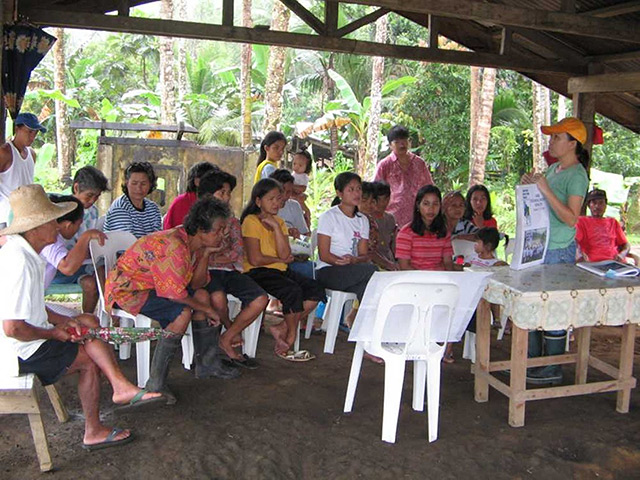
"Siguro naghanap lang ako ng general address ng NASA, kung ano lang nakita ko kasi wala pang Internet noon," Barretto says laughing. This was the ‘80s after all. Still, the money her family paid for overseas postage was well worth it when sometime later a package arrived at their home in Cotabato—a reply from NASA. It was a package with basic tools, books, and "a membership application form for the young astronauts’ club or program," recalls Barretto.
That package was more than enough fuel to last the aspiring kid until college—where Baretto found herself back in Metro Manila, this time as a student at the University of the Philippines studying Metallurgical Engineering.
A Different Side of the Pinatubo Aftermath
"I thought of metallurgical engineering kasi I said ‘pag naging astronaut ako I would like to conduct experiments on how to make new alloy na pwede mo lang i-mix in zero gravity. Early on I realized that metallurgical engineering is heavy on chemistry, which I did not like," Barretto shares cheekily. "Bago nila ako sipain out of the program, bago magbagsakan grades ko—kasi I was on a scholarship sa DOST—I have to go." And as luck, or ill-fate, would have it, this was around the same time Mount Pinatubo exploded in 1991.
While the explosion brought devastation for many, there was a silver lining for the sake of science. "Wala kasing studies before that so Pinatubo talaga opened the opportunity for a lot of scientists na volcanologists to study kung paano nagbe-behave ang lahar."
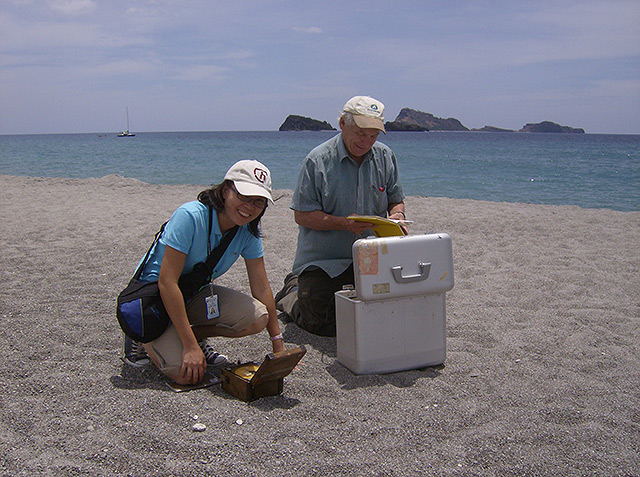
Barretto ended up in an introductory course to geology—part of her curriculum, yes, but the timing could not have been better. "Right after the eruption, ‘yong lahar covered Angeles, Pampanga, hindi mo ma-recognize. Pero the students, we got the opportunity to work as student assistants during the semestral break; we got to experience how it was to monitor kung may lahar events, on-call ka 24/7, naka-base kami sa Subic Bay," says Barretto. They worked under the leadership of Dr. Kelvin Rodolfo, learning how it was to be on the field and monitoring something that was previously unstudied. "I was hooked."
"So hindi lang ako ang nag-shift, ang daming nag-shift to geology at the time. From engineering, physics; na-realize nila na mas gusto nila 'yong outdoor experience."
Years on in her career, Barretto says those days still reign as one of the most exciting. It was so exciting in fact that she and her fellow students were in danger of not graduating. "Muntik na hindi kami [magtapos] kasi gusto namin mag-work na lang," she shares, explaining that they were paid volunteers. Thankfully they were told that "If you want a career in this one, kailangan grumadweyt."
So Barretto went back and duly finished her studies. Setting her off down a path that would pass through—but certainly not stop—at Benham Rise, and the Apolaki Caldera.
What the Apolaki Caldera Means
Barretto and several other authorites and bodies were tapped to help prove from a scientific standpoint that the Benham Rise—a formation characterized by "a broad elevation that generally rises gently and smoothly from the surrounding relief"—off the coast of eastern Luzon is a part of the Philippines. This was in the late 2010s, but it was only in 2012 that the United Nations Convention on the Law of the Sea laid judgment. And yes, they concluded that Barretto and the team had "successfully shown that indeed, Benham Rise is a part of the Philippines."
Fast forward to 2014. Barretto had been hired to work abroad but while waiting for them to be sent off to the field, she randomly decided to review their studies on the Benham Rise. "In my boredom, makapag-research nga." She recalls, "Volcanic in nature [ang rise]; nag-identify lang kami ng ibang volcano in Benham Rise that we felt showed ‘yong argument namin."
This meant that she had forgotten "something very basic taught to geologists," she admits—that basic lesson, to put it plainly, is to look at the big picture. So imagine her surprise when she finally (literally) zoomed out on their graphs and saw what looked like a massive impact crater.
"Hindi namin napansin before," she says. "I had to find an explanation."
Her mind had flown straight to an impact crater because at that time, "Wala pang volcanic crater known na bigger than Yellowstone, which is 60 kilometers wide." Yet the possibility was there. She ended up showing it to a few of her colleagues whom she had worked with on Benham Rise previously, Ray Wood and John Milsom.
The team then spent 2014 to 2018 gathering open-source data and using what equipment they could, all on the side, before finally dropping the paper in 2019. The discovery was massive for the scientists. "[The eruptions] must have been huge to produce such a big crater structure and that would have an effect on climate at the time; this would have been millions of years ago. The last time it erupted would be around 25 million years ago," explains Barretto. This information would be very useful, not to mention exciting, for folks tracking how the Earth has changed through time.
And for the layman? Well, Barretto assures us "Hindi na siya puputok, that’s one thing."
Aside from zero explosions though, Baretto says that the nature of a caldera presents many economic opportunities. "Hindi pa kasi viable ngayon but ‘yong mga minimina present-day on land, for gold, copper, zinc, they are usually found in ancient volcanoes. It is possible that Benham Rise is hosting as a whole, candidate siya to host those kinds of metal. In the future, 'pag siguro hindi na ganon ka mahal mag-extract ng metals underwater plus maganda na 'yong studies on how to prevent environmental impact."
Barretto adds that it's about time the government looks into updating the permits we give people exploring our waters. "Anybody who would want to explore for [metals] should ask permission and should pay the Philippine government for permits—which we don’t, wala tayong laws and regulations on exploration and mining for minerals. Mayroon tayong regulations sa petroleum but not for mining so maybe we should prepare na."
"So maybe in the future it can be a source of wealth for the Filipinos," Barretto concludes, "knowing that it is ours."
Geology in the Philippines
The path Barretto is on isn't typical, it must be admitted. While her contemporaries back in college set off on more secured and assured lucrative paths (think medicine)—she chose geology. Still, she has been in the industry since 1995 and has seen the changes. Back then, "Kung geology, ang choices sa Pilipinas, hindi ganoon karami."
"I think now it’s different. There are a lot of choices. Maraming geologists na practitioners ngayon na hindi kailangan mag-field—although of course, they’d still want to—and because of IT, if they’re into IT, and the Geographical Informations Systems, they can practice still using those tools. They can go anywhere," she points out. Folks can now go into more varied fields of geology in the Philippines, think hazards, or even marine science. "Mas marami nang opportunities now for graduates of geology."
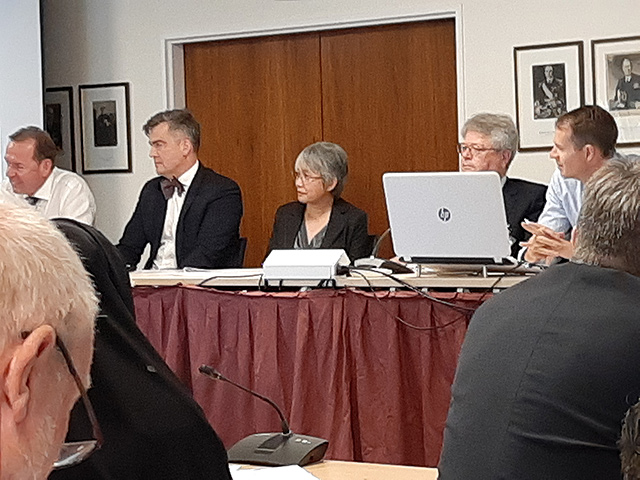
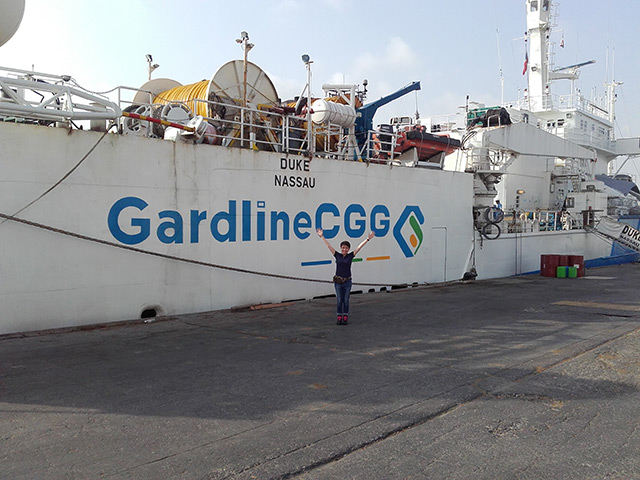
And as for where Barretto is headed next? Well, she is currently based in New Zealand working with GNS Science but spends her spare time continuing research on the Philippines. With all the new technology and open-source data, her latest project is to answer a question you might have asked yourself once. Why is Luzon bent that way? "If you notice ‘yong Luzon, or the Philippines itself, para siyang may scoliosis, tabingi siya. Wala pang nagsusulat ano ‘yong dahilan, ano kaya ‘yong cause."
There's no saying what Barretto—or perhaps a new league of Pinoy scientists—might discover next. There is a whole lot left to unearth about the Philippines. But we can rest assured Barretto isn't going to stop anytime soon. As she says, "My heart is still with the Philippines."