

(SPOT.ph) Places have names to give us a sense of direction. More than that, they give us a sense of belonging, of being rooted to a certain space and its story. The act of naming a place is a meticulous practice with every street carrying a history of its own.
The names of Cebu’s streets not only serve as location markers, but also ground us. In this sense, they also serve as a “silent reminder” of our history, that we may not get lost in the future.
Also read: Mango Avenue: The Street Cebuanos Refuse to Call by Its “Real” Name
We may already know these street names by heart now. But do we know these people? We can think of it this way: the streets are people too, and as people, they have a memory, a history. They are more than just a name, so let’s start honoring them by getting to know them here.
Meet the people behind and history of these Cebu City streets
Leon Kilat Street (Pantaleon Villegas a.k.a Leon Kilat)
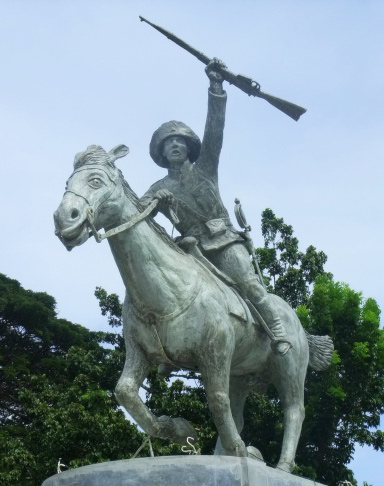
Cebuanos often hear about the revolutionary Leon Kilat (“lightning Leon”), whether the hero or the street. Despite the fact that his name is associated with an almost mythical man, the person was very much real. His name was Pantaleon Villegas, and he was not originally from Cebu. Rather, he came to Cebu for work. After a stint at a bakery and at a drugstore, he found himself employed by a circus, where he met a Katipunero. He was subsequently recruited to the KKK and eventually became a distinguished lieutenant general and the leader of the Katipuneros in Cebu.
Pantaleon was said to be invincible in battle, having in his possession amulets that rendered him powerful. Even his relatives in his native Bacong, Negros Oriental, swore that he had the ability to seemingly appear out of nowhere. His handkerchief was said to be like a magic carpet, enabling him to disappear at will. Due to this ability to teleport in a flash, people described him as“lightning,” which was how he became Leon Kilat. Fellow Katipuneros were not immune to his legend, either, as Andres Abellana, who also has a street named after him, would swear that Leon would charge into battle head on, with bullets whizzing around him, and he never seemed to get hit, or if he did, he simply brushed them off.
Today, Leon Kilat is also best remembered for Tres de Abril, the Palm Sunday rebellion he led in Cebu against Spain in 1898. Five days later, he would be betrayed and stabbed to death in the city of Carcar by men who feared retaliation from Spain. According to an account by Emil Justimbaste, the killers waited for Kilat to fall asleep. Eight men held him down and took turns stabbing him. For good measure, they broke his skull and limbs, making sure that lightning Leon will not come back from the dead.
Cui Street (Don Pedro Cui)
Born into one of the richest families of Cebu, Don Pedro Cui was privately tutored, then attended the Colegio de San Carlos, and then went to study law at the University of Santo Tomas. After becoming a lawyer, he came home to Cebu and began his practice. He was reputed to be a well-meaning man, so much so that he stopped practicing law after finding out that a man he successfully defended from a murder charge turned out to be truly guilty.
As a businessman, Cui ventured into the tobacco and sugar trade, later constructing boarding houses along Magallanes Street.
Cui, along with his older sister, Benigna, are known for their generous acts of charity. The siblings devoted much of their time and personal resources to philanthropy, focusing especially on assisting the elderly abandoned by their families. The siblings were so passionate about their advocacy that they eventually donated all of their wealth to have the first Home for the Aged built in the province of Cebu in 1925—the Hospicio de San Jose de Barili, which still stands today. Cui never married and died a year after the Hospicio was established.
Climaco Street (Juan Climaco)
Juan Climaco is known as a revolutionary who fought during the Philippine-American war. He was also the second governor of Cebu, although he was the first to be elected to the position as he was preceded by Julio Llorente, who was appointed by the Americans. We have him to thank for the modernization of the Cebu port, along with the construction of the roads that connect Talisay to Toledo. If that’s not enough, he was also instrumental in the establishment of the Visayan Electric Company, more commonly known as VECO.
During the revolution, Climaco was chief of staff of General Arcadio Maxilom (for whom Mango Avenue has been renamed). Climaco was known for financing the revolution, and Emilio Aguinaldo later promoted him to general. Climaco was a stalwart revolutionary, gathering arms and writing a memorial to the US Congress to justify the revolt and advocating for independence. Following rumors of Aguinaldo’s capture, he wrote a manifesto encouraging revolutionaries to continue the fight. According to Resil Mojares, the surrender of Climaco and Maxilom in 1901 would mark the end of Cebu’s organized resistance against the American forces.
Rama Avenue (Don Vicente Rama)
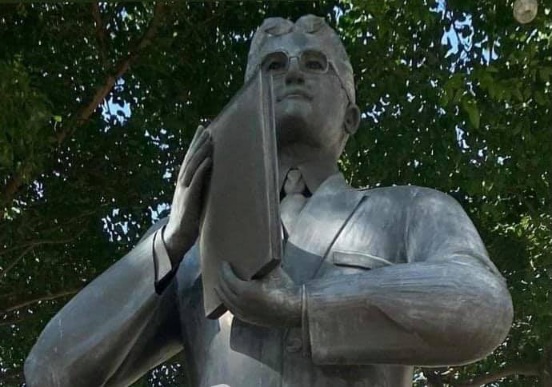
Almost four kilometers long, V. Rama Avenue stretches from Tamarra Trading at the Taboan area to Our Lady of Guadalupe Parish Church. It’s one of the city’s well-known avenues, and for a huge reason: Don Vicente Rama (1887-1956) is regarded as the “Father of Cebu City.” Despite great opposition, he authored the bill—the Commonwealth Act No. 58—that reverted Cebu into a city on February 24, 1937, the day on which we now celebrate Charter Day.
In case you’re wondering, Cebu was granted status of city by Spain in 1594, but that was “invalidated” during the American Colonial Times. It was Don Vicente Rama who fought for Cebu’s cityhood. Talk about integrity—there are famous stories about how he didn’t use his influence to bail his own son out of jail and wouldn’t let his wife use government-owned vehicles for personal use.
During the World War II, Rama was asked by the Japanese to join their new government. He refused to report to the military chief until a car was sent to deliver him to their headquarters. There, he was asked to be Governor of Cebu, a post he refused as he recognized Hilario Abellana as the rightful governor. He was then offered the position of Mayor of Cebu, which he again refused. In the end, he agreed to be the Mayor of Carcar when the Japanese military threatened to kill him and his family should he refuse once more.
Besides being a staunch politician, he also had a significant contribution to Cebuano journalism and literature. In the 1920s, he launched a weekly named Bag-ong Kusog(New Force). It remained a dominant periodical for almost 30 years—its circulation eventually reaching Hawaii—publishing writings that sparked social change.
According to Resil Mojares, he was not just a publisher, as he was rather prolific in his literary works, writing novels, short stories, and poems, among others, tackling contemporary themes. He had a number of pseudonyms for such works, such as Datu Dakila, Rectum Clarum, and Kolas Tabian. Don Rama’s grandson, Mike, is the current mayor of Cebu.
Also read: 10 Most Unusual Street Names in Manila (And Where They Came From)
Sotto Street (Don Vicente Sotto)
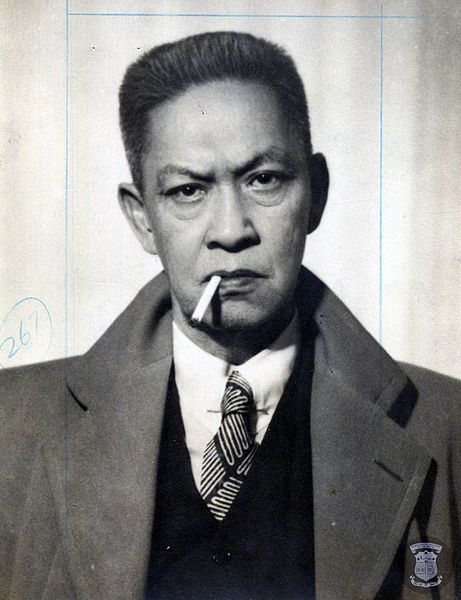
The street is named after a writer who once said, “The Supreme Court can send me to jail, but it cannot close my mouth.”
Born in Parian, Don Vicente Sotto (1877 to 1950) is regarded as “The Father of Cebuano Journalism, Language, and Literature.” An indefatigable writer, Sotto launched newspaper after newspaper right up to the early 1910s, spouting nationalistic themes. And get this: he was so outspoken that throughout his journalistic career, he had a tally of 54 cases of libel and sedition. Only three of these ended with convictions, which he was later pardoned for.
In 1899, at only 22 years old, he published La Justicia, the very first Filipino-ran newspaper in Cebu. The Americans labeled its advocacy for national independence as subversive and immediately shut it down. But the fiery young man came back not more than a week later with another newspaper, El Nacional. This finally landed him a stay at Fort San Pedro, where he was imprisoned for over two months. Ever irrepressible, he launched El Pueblo after his release. He even used the pen name Taga Kotta, or resident of the fort, after his incarceration.
In 1901, Sotto founded Ang Suga (The Light), the first newspaper in Visayas to publish in Cebuano. This was where he wrote and published “Maming,” credited by some as the first short story written in the language. Ang Suga ran from 1901 to 1912, eventually becoming Vicente’s longest-running publication, which also launched the careers of many Cebuano writers and journalists.
Vicente later practiced law and served in public office, through which he came to be known as the “tall, dark, and gruesome” senator from Cebu because of his staunch views. He believed in press freedom so much that he authored a law which protects journalists from being forced to reveal the names of their news sources. It is now known as the Sotto Law, or Republic Act No. 53.
Apart from the street that bears his name, Vicente Sotto Memorial Medical Center is named after the late senator. The Don Vicente Sotto Cebuano Studies grant at the University of San Carlos was also established in honor of him, geared towards the scholarly awareness of the history, language, and arts of Cebu.
Col. J. Cushing Street (Colonel James M. Cushing)
James M. Cushing was a Texan mining engineer in the US Army who later became the leader of the guerrilla forces in the Cebu Area Command, which had over 8,000 men, fighting against the Japanese.
In 1944, a seaplane crashed in the seas of San Fernando, Cebu. It transported the papers authored by Marshal Admiral Mineichi Koga. Known as the Z or “Sho” Plan, or the Koga Papers, the papers told of the anticipated landing of the Allied forces in Mindanao.
Together with Captain Manuel F. Segura, Cushing handled the documents and held the surviving passengers as prisoners of war. Among the passengers was Admiral Shigeru Fukudome, Koga’s second in command and the first flag officer in Japanese history to be captured by the enemy.
Cushing made a deal to surrender Fukudome, along with the other survivors, to the Japanese forces, in exchange for the assurance that the murders of civilians would stop. However, Cushing kept the Koga Papers, which became instrumental in the decision of the Allied Forces to land in Leyte instead of Mindanao, where much of the Japanese forces lay in wait.
Cushing lived to see the Japanese surrender in 1945 in Tabogon, Cebu. He later married a Cebuana and continued to reside in the country after the war. He died of a heart attack and was subsequently interred at the Libingan ng mga Bayani.
J. Cuenco Ave. (Senator Mariano Jesus Diosomito Cuenco)
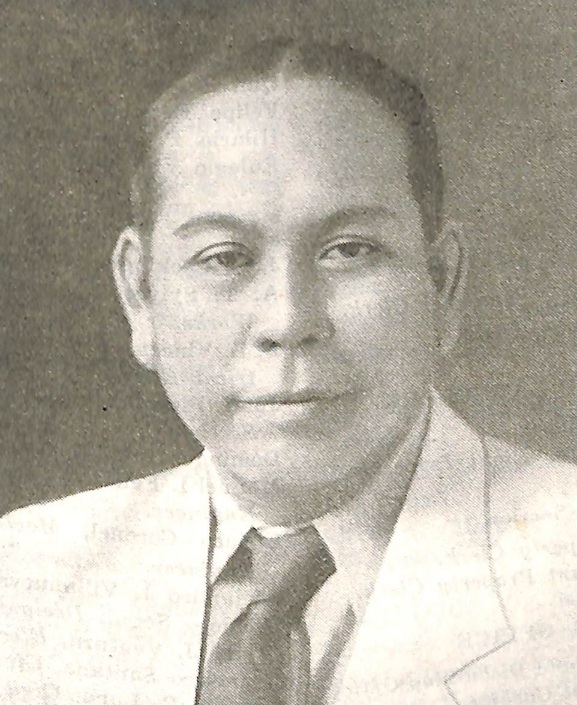
M.J. Cuenco Avenue is one of Cebu’s most well-known thoroughfares. It runs from Imus Avenue and intersects many other well-known streets, such as T. Padilla, on to Cebu Technological University and ending with the Plaza Independencia. It’s also often called Martires, from its former name Calle de los Martires, which literally means the street of martyrs, for this is where much Cebuano blood had been spilled. According to historian Clarence Paul Oaminal, this bloodbath happened following the events of Tres de Abril, when members of the KKK and civilians were executed. In 1964, the street was renamed into M.J. Cuenco Avenue.
Born in Carmen, Cebu, Mariano Jesus Cuenco was a politician, successfully vying for the governorship of Cebu. He rose to become a senator and was instrumental in creating a more structured legislative body, uncovering much corruption in the government. He eventually became Senate President and continued to serve the senate to the end of his days.
Mariano was also a prolific writer. He was the publisher of El Precursor, a newspaper in Spanish, and the founder of The Republic. For his literary works, he used the pen name “Lauro Katindog”, under which he also wrote Visayan-language works.
Go Lam Drive (Don Go Lam)
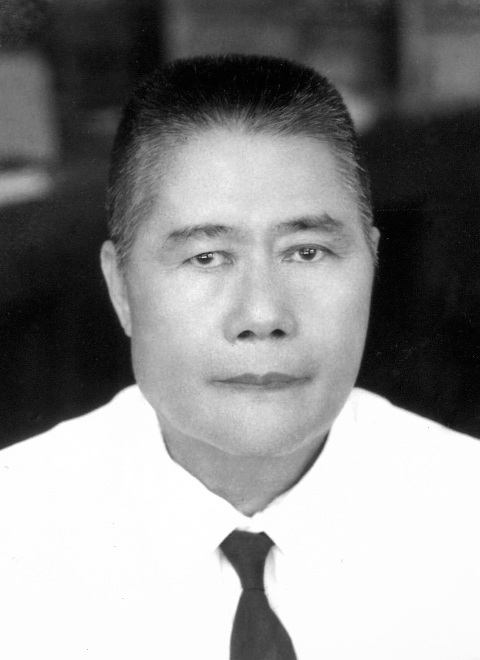
Go Lam Drive is an access road that leads from Pope John Paul II Avenue (formerly Juan Luna) in Mabolo to the International Pharmaceuticals, Inc. Plant, or IPI. This is especially appropriate as Don Go Lam was the father of the founders of IPI—probably best known for their products Omega Painkiller, Efficascent Oil, Bioderm, and Casino Alcohol.
Lam was a Chinese businessman from Xiamen, China. His surname, Go, comes from Don Manuel Gotianuy, his adoptive father (and the father of Attorney Augusto W. Go).
The IPI Foundation, formerly known as Don Go Lam Foundation, built upon Lam’s goodwill and continues to serve the local community by providing livelihood programs and scholarships for the needy, along with healthcare and calamity assistance.
Vestil Street (Francisco Sanchez Vestil)
Did you know that one of Cebu’s streets was named after an Olympic basketball player? That’s right, it’s F. Vestil Street, named in honor of Francisco Sanchez Vestil. He was a Cebuano basketball player who participated in the Summer Olympics of 1948, where he was also the flag bearer of the country’s delegation.
Born in the municipality of Mambaling, Francisco came from humble roots. He even initially worked as a baggage carrier. Standing at six feet, he was a center player who began his basketball career in Cebu. In 1938, he helped win the 1938 National Open Basketball Championships with the Visayan Institute (now the University of the Visayas), which became the first provincial team to do so.
Earning recognition, he enrolled at the University of Santo Tomas, where he received his high school diploma. He helped UST win three consecutive titles at the UAAP, from 1946 to 1948, receiving the Most Valuable Player award in 1947.
A year later at the Olympics, Francisco and his team finished 12th overall among teams from 23 nations. He was enshrined to the Cebu Sports Hall of Fame in 1990. Nine years later, he was installed into the National Basketball Hall of Fame.
Arlington Pond Street (Dr. Erasmus Arlington "Arlie" Pond)
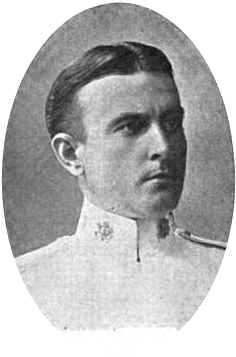
You’ve already heard of the street named after a basketball player, but there’s also one for an American baseball pitcher.
Erasmus Arlington “Arlie” Pond was an American Major League Baseball pitcher who played for the Baltimore Orioles. In addition, Arlington was also a doctor in the United States Army, serving during the Spanish-American War and World War I.
In 1906, he was appointed as the first chief of the Southern Islands Hospital (which is now Vicente Sotto Memorial Medical Center). Arlington also founded a hospital for lepers and was instrumental in vaccinating the Cebuano population. Never losing his love for baseball, he helped promote the sport as a social leader in Cebu’s American community.