


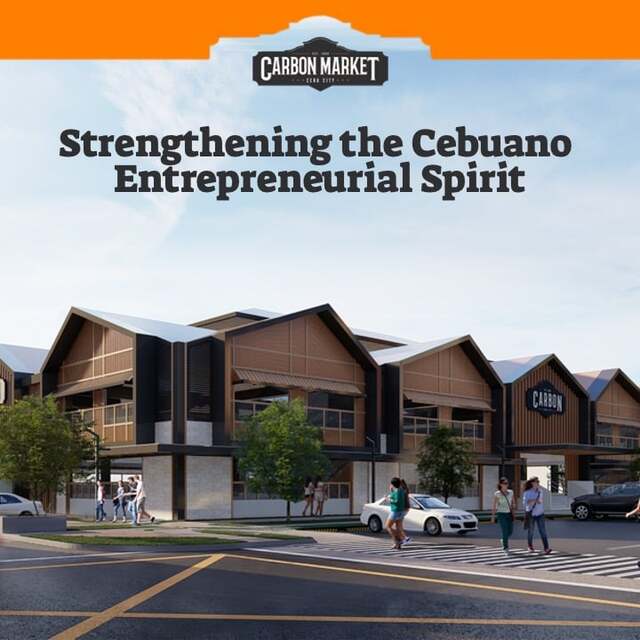
(SPOT.ph) Photos and videos announcing the opening of the Carbon Night Market made the rounds online in May 2022. These images showed what appeared to be a new and improved Carbon Market—better known to locals simply as “Carbon” said with a lilt hard to explain to non-speakers—that looked less like a traditional wet market and more like other food parks that have popped up across the Metro in recent years. With its “orderly, clean, and spacious” layout, as one video put it, this new Carbon Night Market appeared to be precisely the right kind of establishment to open in the middle of a pandemic. And many seemed to give it their approval, as seen in the number of love and wow reacts that posts relating to the night market received on social media.
Also read: Mango Avenue: The Street Cebuanos Refuse to Call by Its “Real” Name
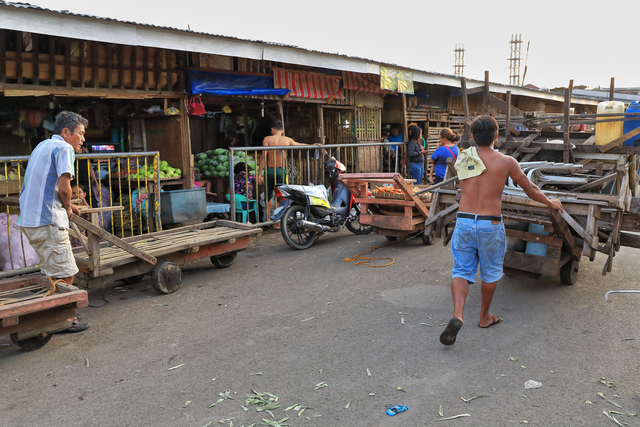
But just two months later—over the course of several days in mid-July—another set of Carbon Market stories caught the attention of social media. On two different sections of the larger Carbon Market complex, Sitio Bato and Freedom Park, government personnel conducted a series of demolitions and ordered the residents and vendors to vacate their structures.

These two wildly different narratives surrounding one of the Philippines’ oldest and longest-standing marketplaces raised questions on our conventional understanding of words like “development'' and “modernization.” While many in government and other entities tend to cloak these terms with an air of benevolence, or at least utter them without further questioning their motives, the effects of policies implemented under the “spirit” of such terms may not always prove positive for regular citizens—particularly the most disadvantaged in society. The academic Jan Knippers Black once noted how the “strategically ambiguous” nature of words like “development,” “progress,” and “modernization” is no accident, as such ambiguity allows their definitions to be highly adaptable to the language needs of those in power.
Carbon Market’s modernization, as currently touted, could in a lot of ways serve as a litmus test for how the wider Cebuano public perceives and evaluates such terms—and may even raise some especially relevant questions for those who take pride in calling the country’s most economically prosperous province their home.
A Brief History of Carbon Market
What we know as the larger Carbon Market Complex today constitutes five major areas. Units 1, 2, and 3 run parallel to the coastline and face the more immediate risk of being demolished, while Freedom Park and Warwick Barracks run perpendicularly to the shore, lining up with Unit 1. Nearby residential areas, where many vendors live and have also faced threats of demolition, include Sitios Bato and Lutaw-Lutaw. The entire complex, on account of being extremely close to the coast, teems with commercial activity, and this may have been the case for as far back as people can remember.

According to historian Bruce Fenner, even in the precolonial era, Cebu’s port area already had a reputation as a “major regional trading center.” In his book, Cebu Under the Spanish Flag (1521–1896): An Economic and Social History, Fenner cites an account from the period mentioning how members of Magellan’s crew were directed by the chieftain of Limasawa to “Zubu” after they asked him if he knew of any port where they could restock on supplies. Upon their arrival, the chronicler Antonio Pigafetta observed how the soldiers remarked that they had never seen a more impressive Visayan port.
Also read: Meet the Real-Life Figures Behind the Names of Cebu's Streets
When Cebu was eventually colonized by Spain a few decades later, huge swathes of land—including those lots in what is currently the downtown area—became property of the church. The area that would eventually go on to become Carbon Market, then limited to modern-day Units 1 and 2, continued to bustle with commercial activity. In the first of a series of articles he wrote titled “In Defense of Carbon Market,” the late lawyer and history enthusiast Clarence Paul Oaminal traces the Sotto family’s prosperity to their activities in Carbon. The late senator Vicente Sotto’s mother, Pascuala, sold pusô (hanging rice) and fish, while her husband, Marcelino, worked as a porter.
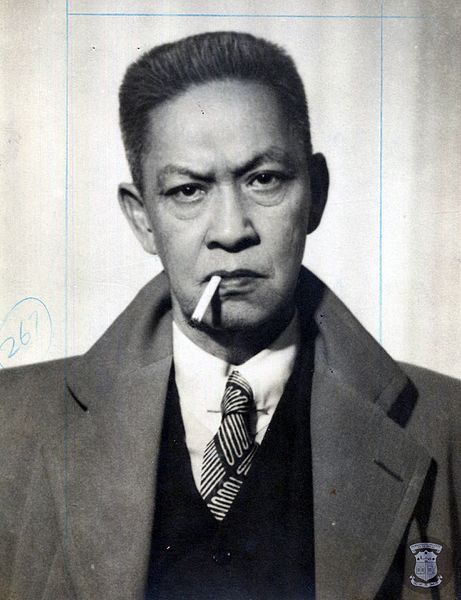
During the American period, the site was turned over to the government, with a portion of it being designated a dumping ground for the coal—or carbon—used by the Philippine Railway System in Cebu. The name of the dumped material stuck like soot and would go on to be used to refer to the area to this day. Other lots that would eventually constitute the larger Carbon complex have their own interesting histories. Freedom Park, for example, which fronts the University of San Jose–Recoletos and was originally known as Washington Plaza. It used to be a wide, open space where speeches by famous Cebuano historical figures were delivered. Warwick Barracks, meanwhile, was previously a military garrison on land owned by the national government. In 1964, President Diosdado Macapagal signed Proclamation No. 241, designating the site as a commercial area and adding it to the growing Carbon complex. The following year, the president added a few more lots, which now comprise the present Unit 3.
As decades passed, government neglect and population growth led to an overall decline of quality of life in the area, which falls under the jurisdiction of Barangay Ermita. A November 2007 article by The Freeman cited in a Rappler report explains how Ermita barangay councilor and president of the vendors’ cooperative Erwin Gokong Sr. first proposed a redevelopment of the market. Nothing, however, seems to have come of this.
The Document at the Heart of the Matter
To gain a better understanding of the current controversy, it helps to go over the 2020 Joint-Venture Agreement, or JVA, entered into by the Cebu City government and the developer Megawide Construction Corporation. In September 2019, according to a timeline by Rappler reporters Ryan Macasero and John Sitchon, the mayor at the time, the late Edgar Labella, announced that the city would partner with the SM group of companies for the construction of a new three-story market. The following month, however, on October 11, Megawide Construction Corporation (MCC), which already had experience operating and developing Mactan Cebu International Airport, submitted an unsolicited proposal to the city government for the “phased redevelopment of Carbon Market and adjacent project sites” (quoted verbatim from the JVA).
On January 11, 2020, the city council, through its Joint Venture Selections Committee, and MCC entered into the aforementioned JVA, indicating that the latter had won the bidding for the development project with its P5.5 billion proposal and a cooperation period between the government and the company for at least 50 years. Said proposal included the construction of two-level commercial hubs that would replace Units 1 to 3, a ferry and taxi terminal with direct access to the airport, the night market previously mentioned, and a three-story market building that would stand on the lots currently occupied by Warwick Barracks and Freedom Park. This three-story building, once completed, would be called the New Carbon Public Market as vendors occupying Units 1 to 3 are expected to be relocated there.

Negotiations between the city and MCC regarding the terms and conditions of the JVA continued over the next several months and concluded on September 24, 2020. A call for any comparative proposals was made public between September 29 and October 6, 2020, with an October 16 deadline set. Since no other proposals were received, the agreement between the city and MCC was deemed good to go. On January 6, 2021, the city council authorized then-Mayor Labella to sign the Memorandum of Agreement (MOA) between the local government and MCC, which he eventually did five days later.
Because the JVA was jointly entered into by the two parties, and its terms and conditions reviewed over several sessions, one would readily assume that the document must have been mutually agreeable. Even the objective of the proposal, indicated on page 10 of the JVA, sounds rather noble, with its acknowledgment of Carbon as a “source of pride for the local community” and its aim of maintaining traditions and culture, while at the same time “showcasing” these to visitors.
But even a casual reader not particularly versed in legalese may easily single out a couple of questionable items that clearly place the city government—and by extension, the vendors it ought to represent—at a disadvantage. One of the most obvious is the first item of Section 4, which allows for the creation of a Project Oversight Committee (POC). The JVA states that this committee shall consist of seven members, four of whom are to be nominated by MCC and the remaining three slots shall be for nominees of the city. The imbalance is so glaring that at least one city councilor raised it as a concern during the meeting the council held on January 6, 2021.
Other items worth raising eyebrows at can be found in section 7, Operation and Maintenance. The first point under this section already gives a number of distinct privileges to MCC, such as the collection of rental fees, entrance fees for products, parking fees, and penalties for violations. In the event that a vendor fails to settle their rental fees after a grace period of one month, the same item mandates that it is the city government’s responsibility to evict that vendor, and failure to find a replacement within 15 working days shall result in a forfeiture of that right to MCC. Maintenance of the market, which includes the “handling of facilities management, sewerage, and janitorial services,” is also handed over to MCC.
The succeeding section, Obligations of the Parties, allows for MCC to evaluate and select the architect, general contractor, suppliers, and other personnel for the project. The city, on the other hand, is effectively disempowered, with its role reduced to merely providing assistance—most alarmingly, security by setting up PNP outposts—for the venture.
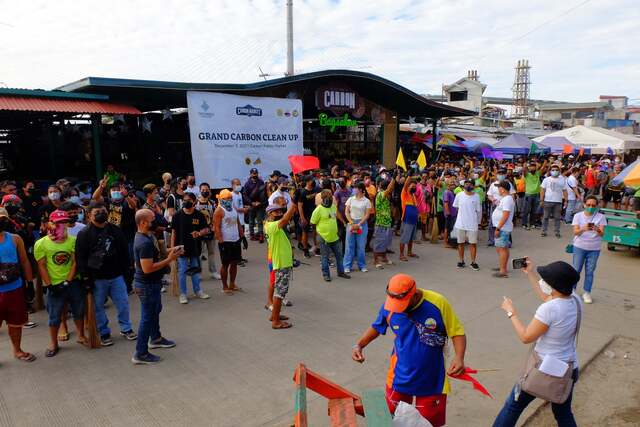
Shortly after designs for the new market were released to the public, and as various vendors’ associations caught wind of the inequities present in the JVA, resistance grew. On March 1, 2021, the Movement Against Carbon Market Privatization, a collective of various vendors’ organizations, held a protest outside City Hall and submitted their petition against the proposal. Despite protests and meetings continuing throughout much of 2021, demolitions and constructions in accord with MCC’s proposal persisted. One significant development came in August. Then-Vice Mayor Mike Rama acknowledged the need to review the JVA, which, reportedly had not been thoroughly read in its entirety by the city councilors prior to the January 6 session, where the terms of the JVA were supposed to be discussed.
In July 2022, more than a year after Rama’s acknowledgment, a supplemental MOA was signed in the presence of “barangay captains, vendors, and other stakeholders who have a direct relation to the Carbon Market operations,” as per the Cebu City news and information website. This document allegedly increases MCC’s original investment of P5.5 billion to P8 billion, provides for a P50 million annual cut for the city, and “cures” additional defects in the original JVA, according to Mayor Rama. An August 6, report by SunStar mentions that this supplemental agreement also recognizes Freedom Park as a “vital component” of the redevelopment project and allows for its restoration back into a wide, open space.
It is worth noting, however, that Carbon-hanong Alyansa, a vendors’ organization critical of the venture, has asserted that there is “no essential difference” between the contents of the supplemental MOA and the original JVA.
What the Vendors Are Saying
In a February 15, 2021 statement published on Carbon-hanong Alyansa’s Facebook page, the association did not pull any punches when making clear its stance on the JVA. Members collectively cited the arrangement as an example of “privatization” and not, as city government officials claimed, a public-private partnership. They referenced unfair terms, such as those giving MCC the right to collect fees and the privilege of choosing which investors and consortiums set up shop in their commercial hubs. They also criticized the 50-year cooperation period between the city and MCC, which has a provision to extend for another 25 years. Additionally, they called out the local government for its failure to look after its constituents and prioritizing the interests of a corporation. After all, it isn’t just vendors who will be affected in the long run but minimum-wage earners, small business owners, and other consumers who regularly avail themselves of the affordable and fresh offerings that only Carbon can provide. “Private jud ang unod sa kontrata (The contract’s substance is really private in nature),” remarked Anna Marie Ariosa in a personal interview with SPOT.ph. Ariosa is the chairperson of Carbon-hanong Alyansa and a vendor herself who started selling fish at 15 to fund her education.
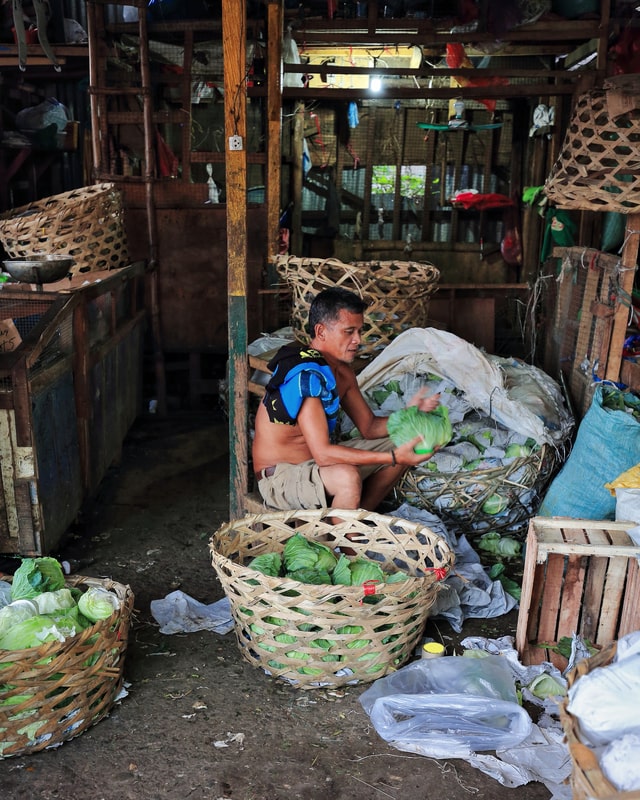
In light of information they received that MCC was to present to the Public Market Oversight Committee their floor plan for the New Carbon Public Market, Carbon-hanong Alyansa released a pair of statements in May 2021, reiterating their criticisms concerning the hasty manner by which the JVA was entered into, including the lack of consultation (or, as Ariosa described it, “wala’y saktong pagpasabot”) for various other stakeholders. They also questioned the assurances the city and MCC gave vendors as to what would happen once the New Carbon Public Market would be ready for occupancy. Because the current public market complex is home to at least 6,000 vendors, and the new building can accommodate only so many (even less so with the redevelopment of Freedom Park), vendors interested in availing themselves of a stall at the new market must register with the Market Authority. Once stalls are assigned, a shifting scheme of eight hours per shift will be implemented. Vendors who happen to be assigned to shifts where there are fewer customers will clearly be at a disadvantage (“Luoy kaayo,” as one vendor put it, which is best likened to the Tagalog phrase "kawawa talaga" or loosely translated, "a truly pitiful situation"), more so with the exorbitant rental fees in place. Once a vendor’s shift ends, they will also be expected to move their supplies elsewhere to make way for the next vendor, thus saddling them further with transportation costs.
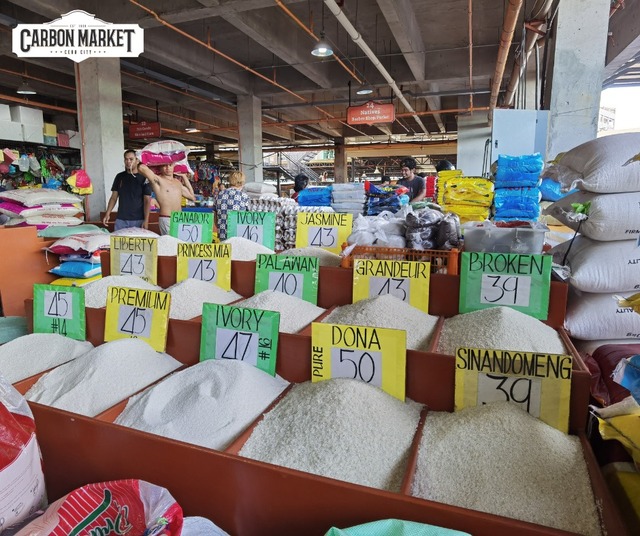
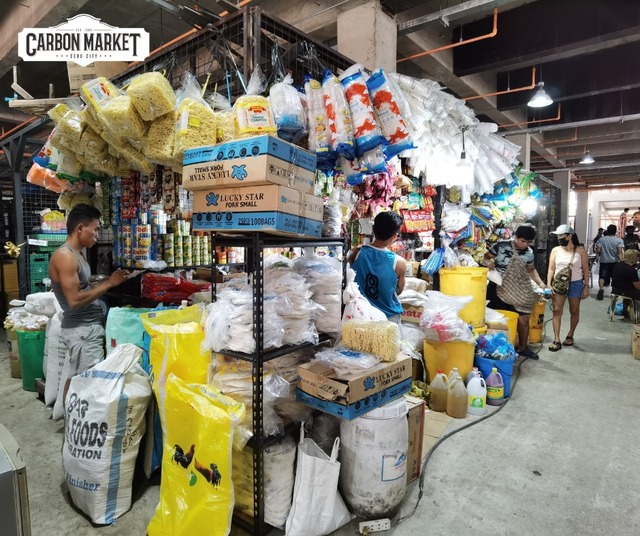
In the meantime, vendors whose stalls have already been demolished have been moved to an interim market, where stalls are more cramped and stuffier, and a 50% to 60% decrease in sales has been noticed. The current relocation plan also does not take into consideration the porters, tricycle drivers, and the residents of the two Carbon sitios whose lives and livelihoods will be adversely affected by the major shift.
Another point of criticism leveled against the JVA is how it compromises the Market Code of 2017, a city ordinance that already provides standard rates for entry fees and ideally should not be superseded by the former document, which is essentially a contract. MCC’s imposition of its own rates could lead to a high likelihood that satellite markets reliant on Carbon—such as those in Taboan, Pasil, and Pardo—would be affected, perhaps even pressured to impose their own price hikes or call for an amendment to the Market Code in order to adjust to MCC’s new rates.
Ariosa emphasized that the vendors’ associations opposed to the venture are not against the development or modernization of Carbon Market per se, but its privatization. Whereas those supportive of Carbon’s modernization under the current JVA may easily denounce her and her peers as backward-thinking, all Ariosa and other vendors really want is the establishment of a “simple, clean, safe, organized, and affordable” public market under the management of the city, with significant input by and participation of the vendors.
Things have proven to be a tough uphill battle so far. For starters, many vendors vocal against the venture have been victimized by online trolls and even red-tagged. Another blow came in the May 2022 elections, where many Carbon residents were banking on a Margot Osmeña victory against the-Vice Mayor Rama. The mayoral candidate and wife of former mayor Tomas Osmeña vehemently opposed MCC’s modernization plans and vowed she would rescind the JVA if elected. Also, while the Facebook pages of Carbon-hanong Alyansa and Movement against Carbon Market Privatization have significant followings, the Carbon Market Cebu page, which features the logo of the MCC-backed project and offers a much rosier view of the issue, far outpaces the two other pages.
There is reason to hope though. Since the JVA’s enactment, allies of the vendors from various sectors have been working tirelessly to ensure that the project does not see completion or is at least stalled indefinitely. Lawyers have been offering their services pro bono, newspaper columnists have written informative op-eds on the issue, and even an architect voluntarily designed an alternative plan that would still retain Carbon’s “soul” as a people’s market, not displace vendors, and cost an estimated P757 million—a fraction of the cost proposed by MCC. Following the July 2022 demolitions conducted in Sitio Bato and Freedom Park, various groups and individuals previously unaware or silent about the issue voiced their opposition to the arrangement between the city and MCC. Whether all these efforts will count for something is a question only time can answer. Unfortunately, time, at the moment, does not seem to favor the vendors.
Conclusion: Opposing Narratives
The Carbon Market modernization controversy is a classic example of how powerful narratives can be. They can shape our understanding of certain events and ultimately go as far as to warp our reality.
On the one hand, it may be easy (or perhaps more convenient) to believe that change—regardless of what shape or form it takes—is always a good thing, that humanity’s march has always been inevitably toward progress. From this perspective, a local government allowing a private company to give a long-overdue facelift to a century-old market complex may seem like an eventuality, even a logical move.
On the other hand, one may try to be a little more discerning and look into what isn’t elaborated or mentioned in the previous myth. If one finds that there are silenced voices and ignored perspectives past the “development” and “modernization” discourse, then it may be worth asking why. Who benefits from such silencing and ignoring? One may even do a little digging to look into whether or not what’s going on in Carbon is something new, or if there are similar patterns elsewhere of land being privatized, populations being deemed disposable, and governments being disempowered. Further questions may eventually follow: What happened to those who willingly gave in to the idea of “modernization” at the expense of their way of life? How does their legacy compare to that of those who willfully resisted and stood up to a greater power? Where were the other voices in the community—specifically the more privileged ones—when their more vulnerable peers were under threat?
Whichever narrative Cebuanos choose to believe and act on could decide the fate of not just one of the province’s most storied sites, but the fates as well of those whose lives give that site its stories.
Writer’s note: The author of this piece reached out to MCC for comment, giving ample time for a response, but none has been made as of publishing.