

(SPOT.ph) At one point or another, all of us have Googled “fun facts about the Philippines,” hoping to find interesting trivia about our many beaches, our rich and expansive history, or—for more practical purposes, of course—why there is a rumor about a half-human, half-snake creature in Robinsons Galleria. Venturing through this forest of knowledge, you’ll find many pathways full of interesting tidbits on Philippine history and famous people you didn’t know were actually 1/16th Filipino, but eventually, you’ll come across one of the forest’s dark, side paths: the story of 1992’s Pepsi Number Fever.
This particularly story feels wide and expansive in scope but is certainly only a bit more than a distant memory for today’s average Filipino; somewhat similar to the likes of Star Wars’ Rey and Finn thinking Luke Skywalker was just merely a myth, even if his heroic adventures only took place 30 years prior, in-universe. (Yes, the ‘90s were 30 years ago too, let’s move on.)
In the blistering heat of summer 1992, the Filipino people sought escape from the stress of everyday life through the grand promise of one promotional campaign being run by the number two soda manufacturer at the time, Pepsi. The rules? Simple. Buy a bottle of Pepsi, 7-Up, Mountain Dew, or Miranda, and inscribed underneath the bottle cap will be a three-digit code. The Pepsi Company was said to have tight control over the production of the bottle cap codes, as the winner of the grand prize, to be announced at the height of the summer, would take home P1 million.
Seems straightforward enough, which is what Filipinos at the time thought as well. Millions of hopeful Filipinos participated in the campaign and Pepsi’s monthly sales skyrocketed from $10 million to $14 million. On the 25th of May, however, these millions were on the edge of their seat as they tuned in to the news for the announcement that the winning number was 349, a three-digit code that researchers and publications claim to have been printed on 800,000 bottle caps. Talk about a glaring editorial mistake.
Also read: Mango Avenue: The Street Cebuanos Refuse to Call by Its “Real” Name
Here’s a rundown of the Pepsi Number Fever and “Pepsi 349” fiasco:
A fever dream not only for the citizens of the country but for Pepsi as well, the whole endeavor was brought about by the heads of Pepsi’s international arm wanting to surpass the sales of Coca-Cola in the Philippines especially, among other countries. Thus, the Pepsi Number Fever campaign was introduced in the Philippines, Argentina, Chile, Guatemala, and Mexico.
As many Filipinos today could relate, getting 611 times your monthly salary in one night, when all you’d essentially need to do is drink a lot of soda, sounds like an easy and effortless way to make money. With their market share going up from 19.4% to 24.9%, the company, of course, didn’t seem to mind capitalizing on the aspirations of opportunity-minded Filipinos.
Yet, as most soda drinkers know, if you shake up the bottle… you’d best be ready for the explosive mess you’re about to have on your hands.
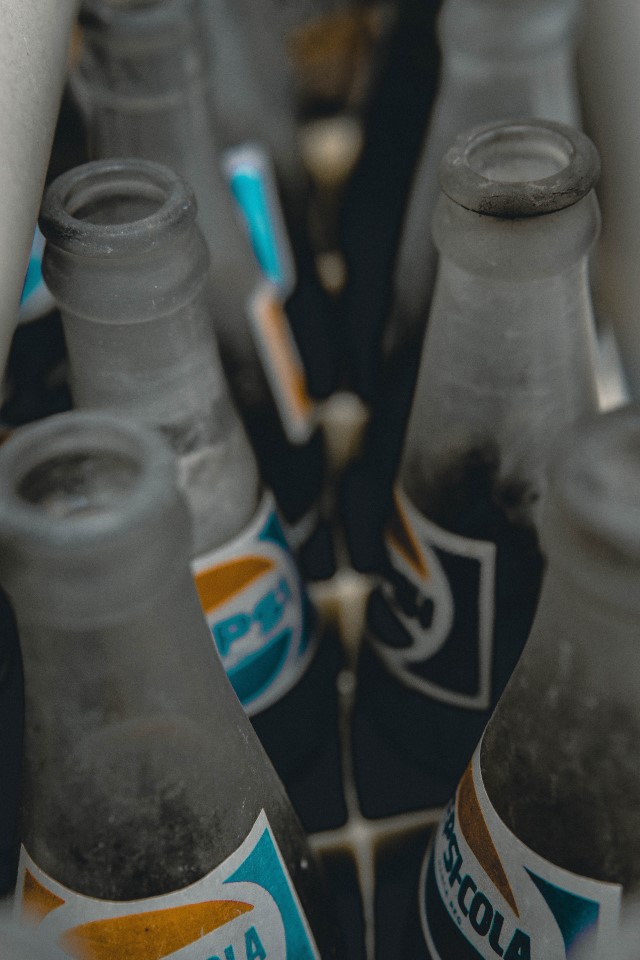
In the aftermath of the news essentially announcing that thousands of people were entitled to P1 million in cash prizes, it’s no surprise to learn that chaos ensued. The “winners” formed up a crowd at the company’s bottling factory in Quezon City, where protests and, later, riots would begin to escalate over the next few days. Rocks were thrown, the police were called in, insults were thrown around, and tears were shed. (Okay, the last two may not be entirely factual.)
To make matters worse, some business executives thought they could tone down the situation by—*checks notes*—announcing the following day that the winning number was actually 134, which undoubtedly only added more to the confusion and to the number of supposed “winners.”
The company did decide to pay the “winners” who came forward peacefully within a designated two-week period P500, as a “goodwill gesture.” A far cry from the P1 million that was initially promised to the winner, but according to AsiaWeek (via Bloomberg) Pepsi ended up paying close to U.S. $10 million (or about P260 million in 1992), an even further cry from the comparatively measly U.S. $2 million they had set for prizes.
However, despite the company’s net losses, there were those who felt extremely betrayed, still, by their investment into the promotional campaign. Unidentified assailants threw Molotov cocktails into factories and set delivery trucks on fire, with no expected outcome other than to terrorize the company and those who worked under its name. (Bloomberg)
The attacks continued even close to a year after the night of the announcement. One homemade bomb was thrown at a Pepsi delivery truck, only for it to bounce off and detonate towards the sidewalk, killing a schoolteacher and a five-year-old girl and injuring several others. (Bloomberg) A month later, a manufacturing plant in Davao was similarly bombed with a grenade, which killed three of the employees working there.
However, not all battles were fought violently. Many attempted to file cases and class action lawsuits against the company but after years of multiple cases being filed both in the Philippines and the United States, no full payout has been given to those who still staked their claim of the grand prize. Settlements, both in and out of court, were met over moral damages caused by the whole fiasco.
Local Vice President of Pepsi Frederick Dael told Deutsche Presse-Agentur (via Bloomberg) that “anytime anyone mentions anything to do with Pepsi, somebody always digs up 349.” Apologies for lighting the way through this particular path in the forest of knowledge, Dael.
Hey, Spotters! Check us out on Viber to join our Community and subscribe to our Chatbot.