
The SPOT.ph Guide to Power Banks
Add this to your tech arsenal.

(SPOT.ph) As we have been living in a connected world, there is one accessory that is already a must these days: power banks (or as some may write it, powerbanks; my preferred spelling but we will keep the space for this article). When I am on the road, hopping from one meeting to another during this new normal, I usually bring with me at least two fully charged power banks to get me through the day. These battery packs keep my smartphone and pocket WiFi devices—some even charge laptops—fueled up.
Allow me to walk you through how to determine the right power bank for your need and lifestyle.
Also read:
The SPOT.ph Guide to Laptops
The SPOT.ph Guide to Smartphones
History of Power Banks
The first recorded sighting of a power bank dates back to CES 2001. The Consumer Electronics Show, a.k.a. CES, is the most influential annual tech event in the world, and it was here that a bunch of college students exhibited a power bank using AA batteries and a control circuit board.
From that time on towards the late 2000s, the power bank market started to gain traction. Special thanks goes to the launch of the Apple iPhone in 2007, as the smartphone can only be used for up to four hours on a single charge—a bummer when you’re a mobile warrior like me. Several OEMs (Original Equipment Manufacturers) saw great potential for a multimillion-dollar industry in developing power banks.
Inside power banks are batteries, battery protection, charging circuits, and a voltage regulator. Batteries used in powerbanks can be Lithium Ion (Li-Ion) and Lithium Polymer (LiPo). Li-ion batteries come in a cylindrical-shaped plastic case and require low maintenance, making them cheaper than LiPo batteries. However, LiPos offers a lot of performance enhancements compared to Li-Ion including higher energy density and lighter weight, plus the fact that it can be produced in different shapes and sizes.
Nowadays, it is but ordinary to see powerbanks being sold anywhere: from department, gadget, and even convenience stores, to sidewalk and ambulant vendors (the ones that we see when we are stuck in traffic).
Things to Note When Buying Power Banks
Capacity
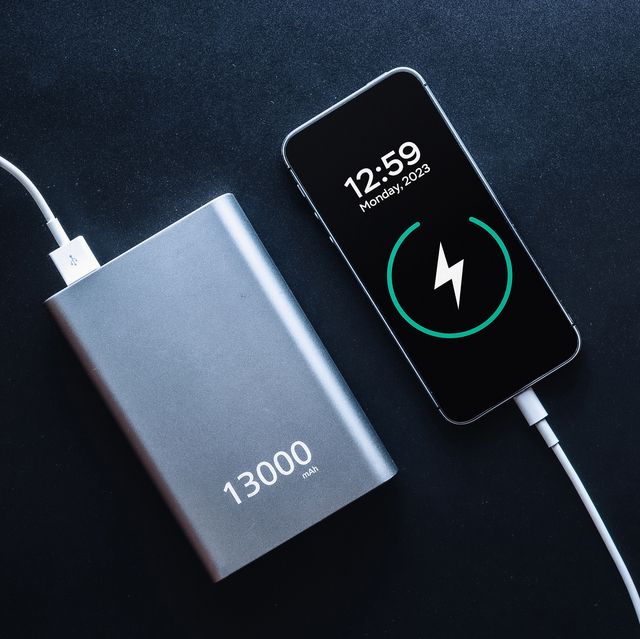
When shopping for a power bank, the first thing that you need to check is its capacity. Using the unit of measure milliampere/hour (mAh) will determine the right power bank capacity that you need.
If your smartphone has a 5,000 mAh battery, don’t consider buying a powerbank rated at 2,000 mAh only as it will not be enough to charge your device fully. These days, it is common for smartphone users to carry with them power banks that are at least 10,000 mAh. Some people opt to bring 20,000 mAh powerbanks, but we note that they weigh heavier than common power chargers. For me, I opted to have two 10,000 mAh with me at the same time.
Also, please take note of the thing called “Usable Capacity” caused by inefficiencies in charging (variation in voltage when you charge the powerbank) that results in only around 66% of the power bank’s total capacity to be actually usable. For example, if you have a fully charged 10,000 mAh power bank, only around 6,600 mAh of power juice will be usable for you to charge your devices with. In simpler terms: the power bank’s capacity is not 100% transferable to your phone or device.
Ports
Once you are decided on the capacity of the power bank to purchase, the next things to consider are the included ports, form factor (portability), and price.
It is important to choose a power bank with several ports available for you to use all at the same time. If you have multiple devices that you need to charge regularly, or intend to share your power bank with family and friends, it is recommended that you buy those models with multiple USB ports. Please also mind that not all USB ports in a power bank are the same: some support fast charging while most do not.
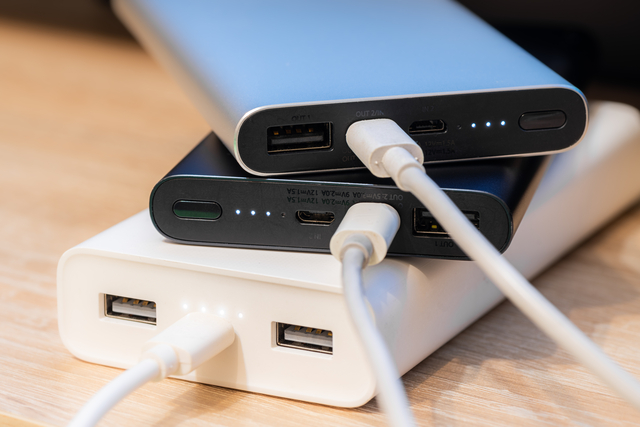
The power banks available locally have USB-A, USB-C, and Micro USB ports by default. As more and more smartphone units are already using USB-C ports, it is prudent to invest in powerbanks that are based primarily on this kind of USB port. Quite a number of power bank makers these days offer units that have built-in USB cables that can cater to most smartphone units—this is a plus point if you are shopping for a brand new portable charger.
In some instances, you can even find power bank models that have higher capacities to sport AC and DC outlets. You can actually use these powerbanks to charge your laptop or small home appliances like your ISP-supplied modem, electric fan, and even your television set—that is the reason why some are calling them power stations instead.
Form
The form factor of a powerbank depends on the capacity it can hold. As the capacity of a powerbank increases, the number of batteries inside it also increments. Most 10,000 mAh powerbanks can fit in the front pocket of your jeans (the type usually made for men). As a general rule: as the capacity of a powerbank increases, as does its size and weight.
Popular Brands & Usual Prices of Power Banks
When talking about power banks, off the top of my head, I can easily recommend you shop the following brands: Anker, ROMOSS, BAVIN, Yoobao, and Rapoo.
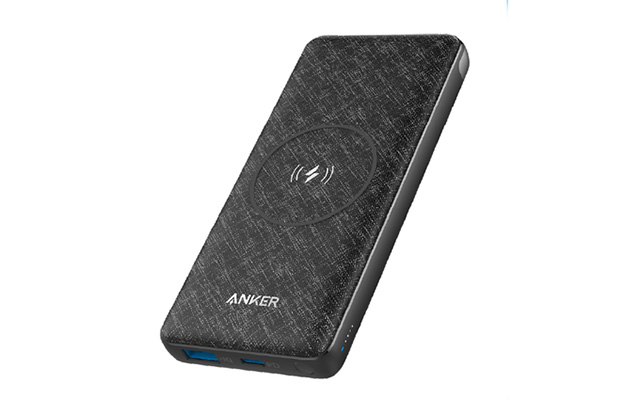
Even before the pandemic, Anker had already been recognized as one of the most popular brands when power banks come into the discussion. The Chinese electronics manufacturer started to gain traction and following on Amazon around half a decade ago. Up to this day, Anker power banks are time-tested, cost-effective solutions for all types of gadget users.
ROMOSS and Yoobao power banks became hits in eCommerce shops due to their massive battery capacities. Both brands have midrange-level priced power banks sporting at least 30,000 mAh capacities.
As for BAVIN and Rapoo, both brands are starting to gain loyal followers, thanks to their reliable power banks with stylish designs and prices that are affordable.
The price range for the power banks offered by these brands depends on their power capacity. They should be within the range of P600 to P4,000 each.
Where to Buy Power Banks
In this age of electronic commerce, I still prefer buying power banks at brick-and-mortar stores for the reason that I want to see and feel how heavy (or lightweight) the device is before purchasing. If I already have an idea of how the actual product appears and weighs, Shopee and Lazada will be your best friends in buying a powerbank online. Just make sure that you are buying from authorized distributors so that you won’t find it hard to claim for product warranty if needed.
Additional Tips on Power Banks
When traveling via air, carefully read and understand the limitations set by the airline and civil aeronautics agencies of the country you are visiting. Bear in mind that power banks are considered batteries, and in most airlines, batteries are only allowed in hand-carry luggage. For instance, the Federal Aviation Administration and the TSA Transportation Security Administration of the U.S. rules that passengers can only bring with them inside their hand carry luggage power banks rated up to 27,000 mAh (or 100 Wh) only. Prior approval is needed if you intend to bring power banks with more than 27,000 mAh capacity.
Since the threat of rotational brownouts are here again, did you know that you can actually use a power bank to energize the Internet modem provided by your ISP during a power outage? You only need to purchase a 5V to 12V DC cable (commonly known as WiFi to Powerbank cables in eCommerce platforms) for you to power up your Internet modem with the use of a power bank when needed.