
Can a Solar Storm Really Cause an "Internet Apocalypse"?
The internet is panicking over the possibility.
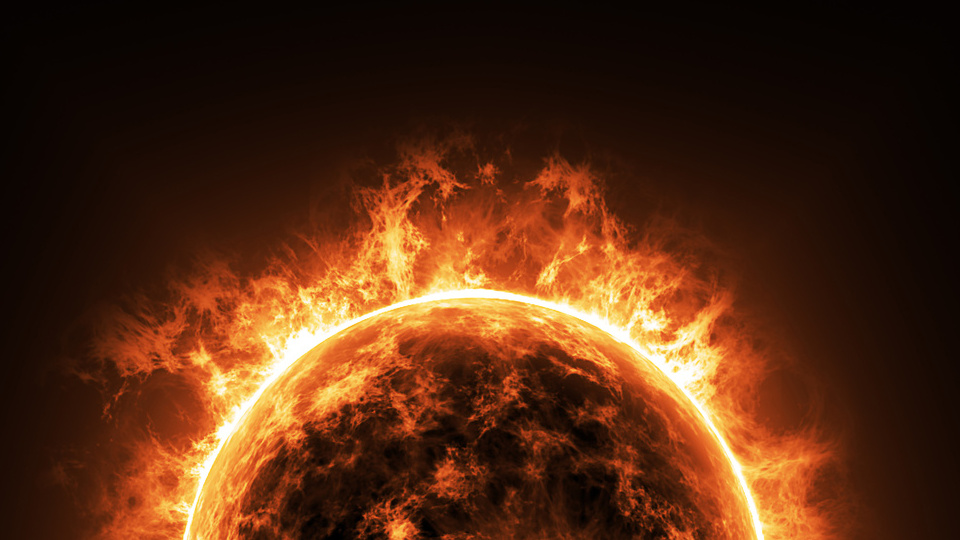
(SPOT.ph) Solar storms have long captivated our imagination with the stunning Northern Lights they produce. However, few scientists are increasingly concerned about the potential havoc these solar phenomena could wreak on our technology-dependent world—and it has Internet users worried.
If a solar storm heads toward us, it can disrupt Earth's magnetic field, which will cause what Professor Peter Becker of George Mason University calls an "Internet apocalypse." But he also said there's only a 10% chance, and NASA (or any other space agency) has not confirmed it.
"The Internet has come of age during a time when the sun has been relatively quiet, and now it's entering a more active time," Becker was quoted as saying. "It's the first time in human history that there's been an intersection of increased solar activity with our dependence on the internet and our global economic dependence on the Internet."
Also read: 10 Places for Stargazing Near and Around Manila
What is a solar storm?
A solar storm is a powerful and energetic event that happens on the surface of the Sun. It's caused by the Sun's magnetic activity getting twisted up, leading to massive bursts of energy and matter being thrown into space. There are two main parts to these storms: solar flares and coronal mass ejections (CMEs).
Where solar flares can mess up radio and navigation systems, CMEs can have a much more significant impact. When a CME heads our way, it can cause problems like disrupting satellite communications and power grids, according to National Geographic.
Why panic now? The National Oceanic and Atmospheric Administration (NOAAA) forecasts the current solar cycle to ramp up and even peak in 2024, which could mean a lot more solar storms.
Also read: Today in Random: Why Is There a Question Mark in Space?
Is the Internet at risk?
It's true that the current solar cycle will reach its peak soon, but how likely is a solar storm to cause Internet outage?
Becker said there’s a 10% chance of "something really large...going to happen that could potentially wipe out the Internet" within the next decade. However, NASA has not confirmed this, nor has any other major space agency. We can rest easy for now.
It has happened before, with historical events like the Carrington Event in 1859 serving as cautionary tales. During that solar storm, telegraph systems experienced failures, sparks flew off from telegraph lines, and operators suffered electrocution due to a high surge in voltage. In today's interconnected world, with more delicate electronics and widespread communication systems, Becker said a similar event could have far-reaching consequences.
"So you lay that on top of the internet with its very delicate electronics, you're talking about something that could really fry the system for a period of several weeks to months in terms of the time it would take to repair all the infrastructure," Becker said. "That could all be fried.”
This is something that even The Simpsons managed to predict in Season 24 Episode 9, except the blackout was caused by a comet, not a solar storm.
Researchers like Becker are actively working on establishing early warning systems that will allow them to provide a crucial heads-up with 18 to 24 hours' notice when this happens.
"If we have a warning, every minute counts," Becker said.