
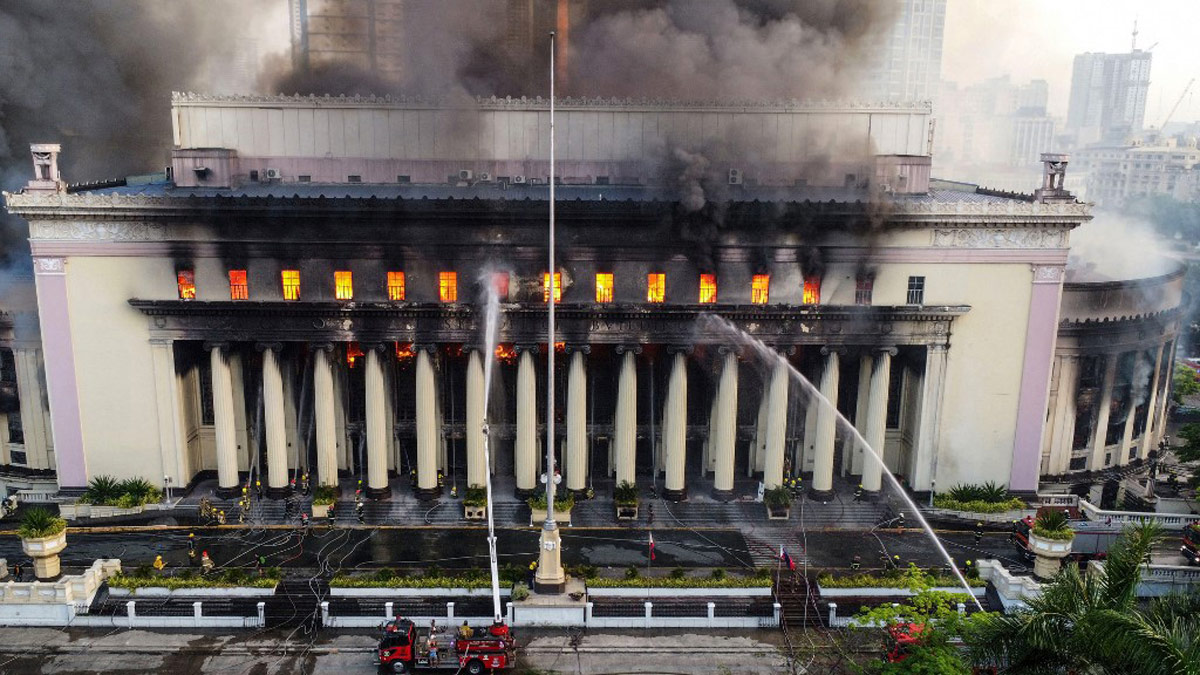
(SPOT.ph) The historic Manila Central Post Office was razed by fire just before midnight on Sunday, May 21. Postmaster General Luis Carlos said that "the whole building has been burned down from the ground floor, from the basement, all the way up to the fifth floor." The structure's foundation is still intact, but the same cannot be said for the interiors. So what happens now to this heritage site?
Escuela Taller de Filipinas Foundation, which is a non-government organization and vocational school that advocates for heritage conservation, reiterated through a social media post "how crucial post-disaster response is at this point, in order to reduce further risk and manage what remains of this important heritage asset."
Manila Central Post Office was built through the design of Filipino architects Juan M. Arellano (Manila Metropolitan Theater and the Old Legislative Building) and Tomás Mapúa (De La Salle University's St. La Salle Hall) with American consulting architect Ralph Doane in 1926. It was declared an Important Cultural Property in 2018.
Also read: Heritage of the Manila Central Post Office: A Short History
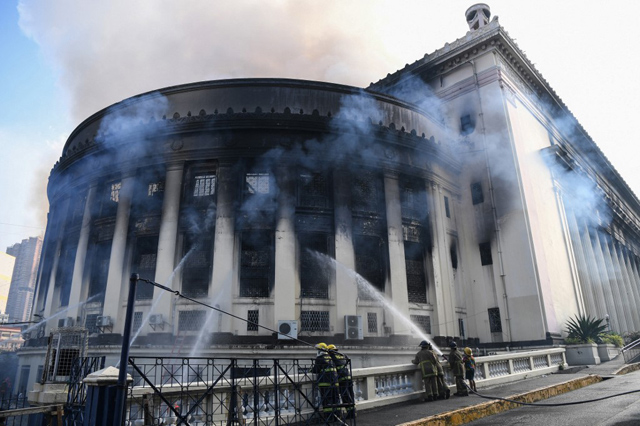
Escuela Taller de Filipinas Foundation gave several points on what should be done at the Manila Central Post Office:
- Rapid post-disaster damage and needs assessment should be performed to prevent further damage or loss to the site.
- Proper shoring should be in place to ensure that post-disaster activities, such as documentation and retrieval, are done safely
- Risk assessment of the current state of the Post Office building is also important so that the response is calibrated according to risks that are identified.
- A retrieval plan of site and building components should be quickly developed so that significant elements can be protected from further damage or loss.
The Foundation also explained the importance of information management in heritage conservation. This involves documentation and condition survey, which are key in doing post-disaster responses for heritage sites.
"We have always advocated that preventive conservation significantly reduces vulnerabilities against the hazards our heritage sites are exposed to. Managing changes within such heritage properties in order for them to adapt and remain relevant to modern needs is essential for them to retain their significance and mitigate risks. Sadly, the value of our built heritage presents itself when disasters such as the fire that consumed the Post Office Building occur," they added. Active and preventive conservation, rather than passive maintenance, is essential for the Philippines' heritage structures. "Only then can we all be heritage protectors."
Also read: Is Manila Replacing Culture With Condos? City Mayor Puts End to Central Post Office Rumors