
Exploring the Roots of Chocolate at a Cacao Farm in Davao
There are plenty of reasons to eat, and love, local chocolate.

(SPOT.ph) We’ve all seen and we all love chocolate. (At least we hope you do; hey, you clicked on this article!) Before you have chocolate, though, you have cacao—the plant which grows in different parts of the Philippines, and whose fruit is then processed into chocolate as we know it. Davao, in particular, is called the chocolate capital of the country, being home to great cacao that’s even been recognized internationally.
We were about to dive into these roots of chocolate the best way possible: by exploring a cacao farm for ourselves. About an hour had passed since we’d departed from our hotel in Davao City and headed to the Cacao Culture farm in Barangay Gumalang, Calinan. Buildings soon turn into grasslands, and our ride transitions from smooth-sailing streets to bumpy roads.
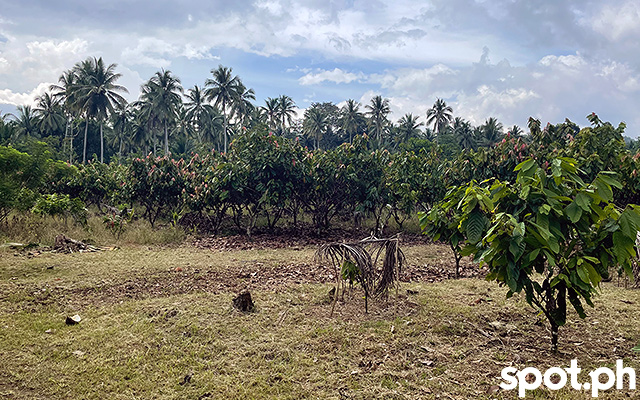
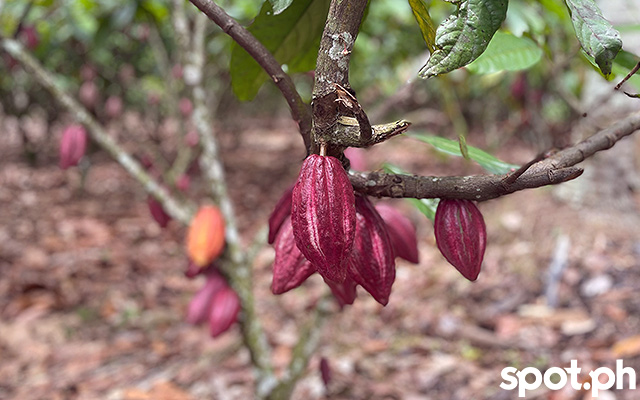
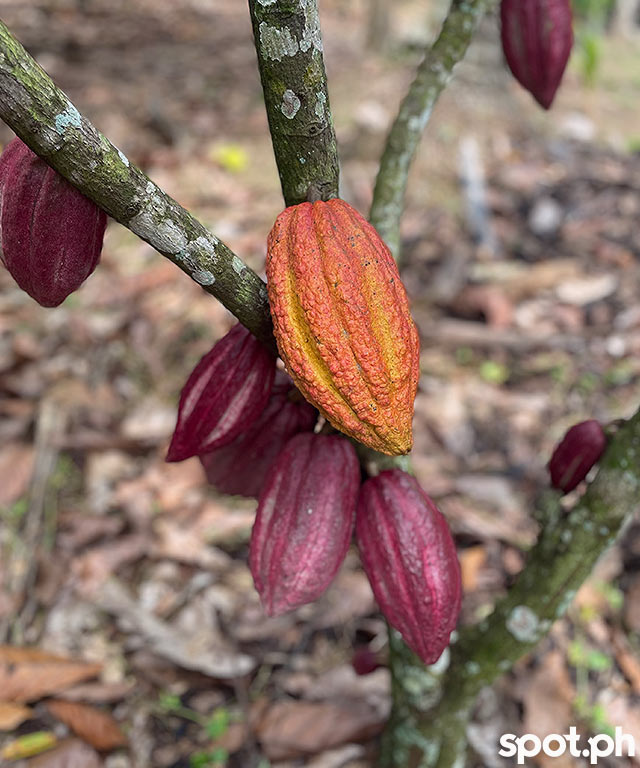
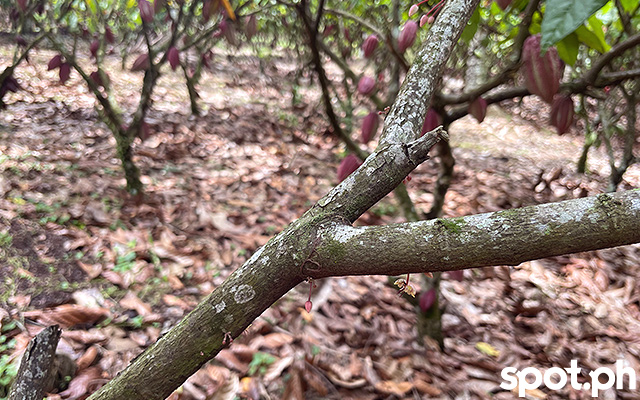
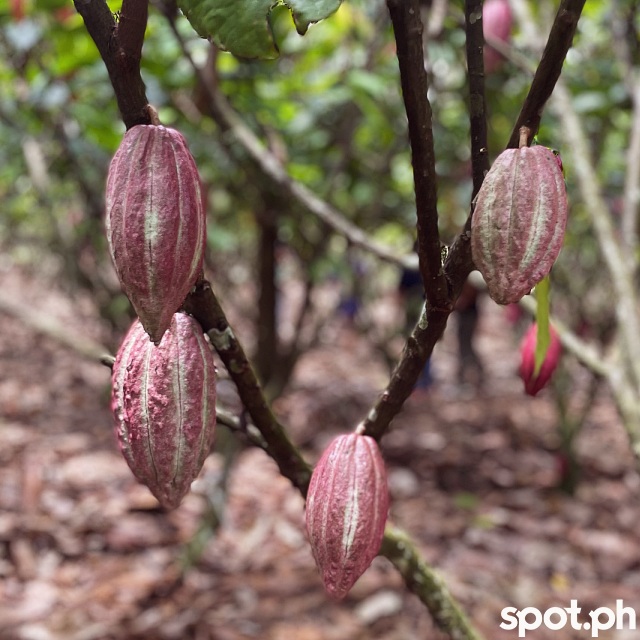
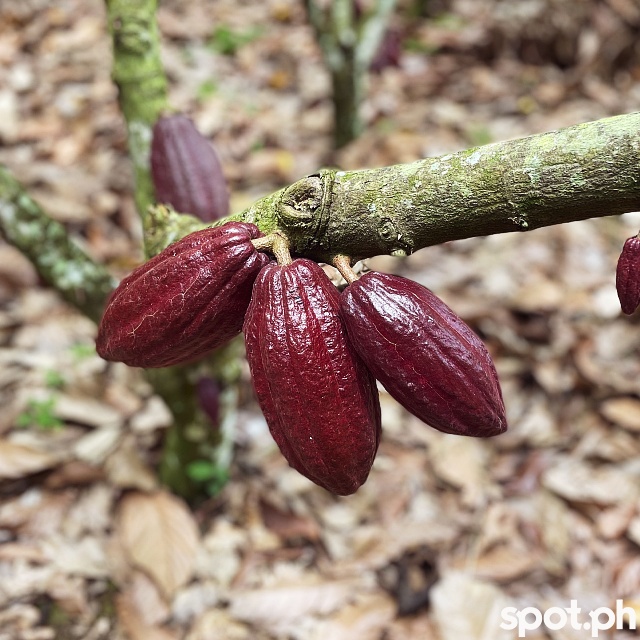
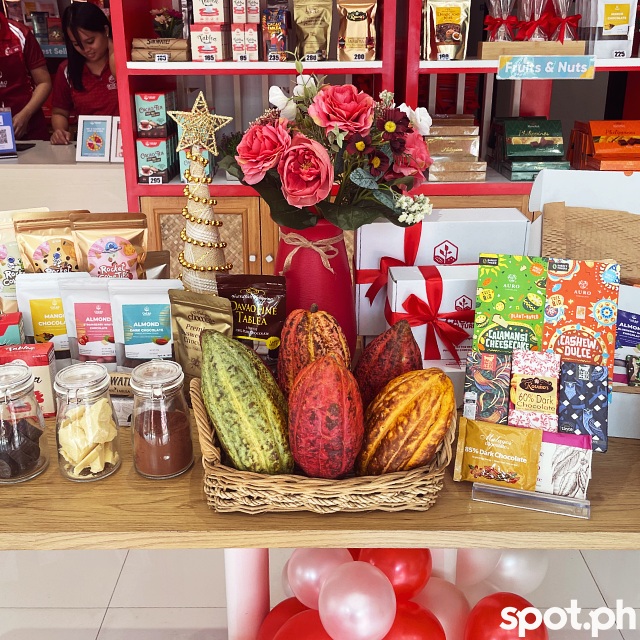
After passing more trees and even bumpier paths, we evenutally arrive at the venue—where the air is clean, the skies clear, and cacao pods hanging from the trees showcase their vibrant colors, ranging from maroon to strawberry red to green to apricot to a bright, sunny yellow.
Also read:
This Colorful Café in Davao Champions Filipino Chocolate From Bean to Bar and Beyond
The Best Local Brands With Swoon-Worthy Bean-to-Bar Chocolate
Take a look at the Cacao Culture cacao farm in Davao:
We meet Donny Margalio, one of Cacao Culture’s cacao farmers, joined at the site by his wife Sunny (also a farmer) and their son who stays in the farm. They spend their days at the farm pruning, or selecting and cutting individual branches from cacao trees to help with its yield; cleaning the area and spraying insecticide and fungicides to keep insects and diseases at bay; applying fertilizers as necessary; and harvesting (more on that shortly), among other activities.
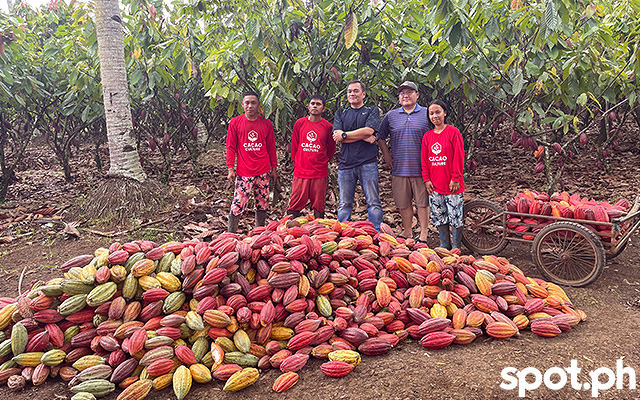
In an exchange with SPOT.ph (with responses in Tagalog as well as Bisaya), Margalio shares how was formerly working at a banana plantation, where workload was high yet income was low. One fateful day, he joined CocoaPhil—a non-stock and non-profit organization dedicated to cacao—and through mutual connections got linked to Cacao Culture founder Kenneth Reyes-Lao and joined their team. He now earns a more stable income here, which better allows him to support his family. “Magsi-six years na kami [dito].”
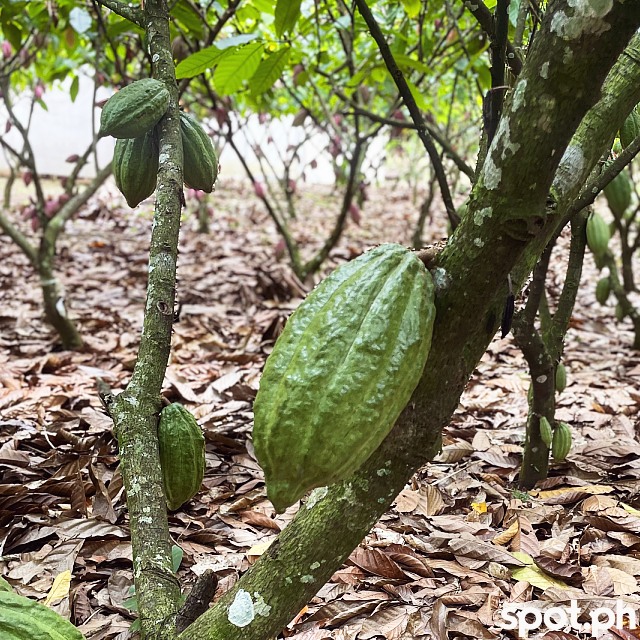
The three-hectare cacao farm we were situated in was started by Kenneth and partner Shiela. The two had moved to Davao from Manila in 2016, and saw the economic potential of cacao—never mind that the two (who came from IT backgrounds) knew little on the cacao subject at the time. Their own fascination led them down the rabbithole and the two found themselves joining agricultural seminars (and even watching Youtube videos!) to learn the ways of the cacao plant.
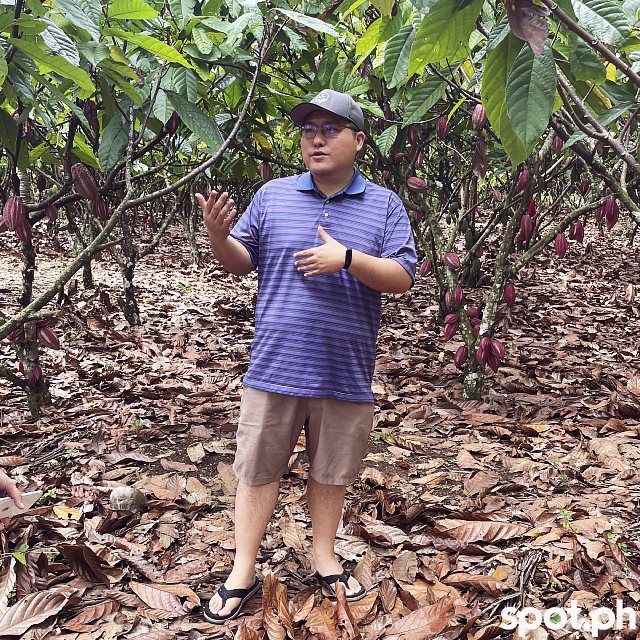
With the acquisition of the cacao farm in 2017, they were a major step closer to their dream of making their own chocolate. Its location is ideal for growing cacao, too, being mid-level in elevation. "Calinan is kind of a sweet spot for a lot of fruit trees to thrive in Davao," says Kenneth, sharing how it's full of trees of durian and banana in particular. "Temperature, weather, and soil all contribute to the plants' growth."
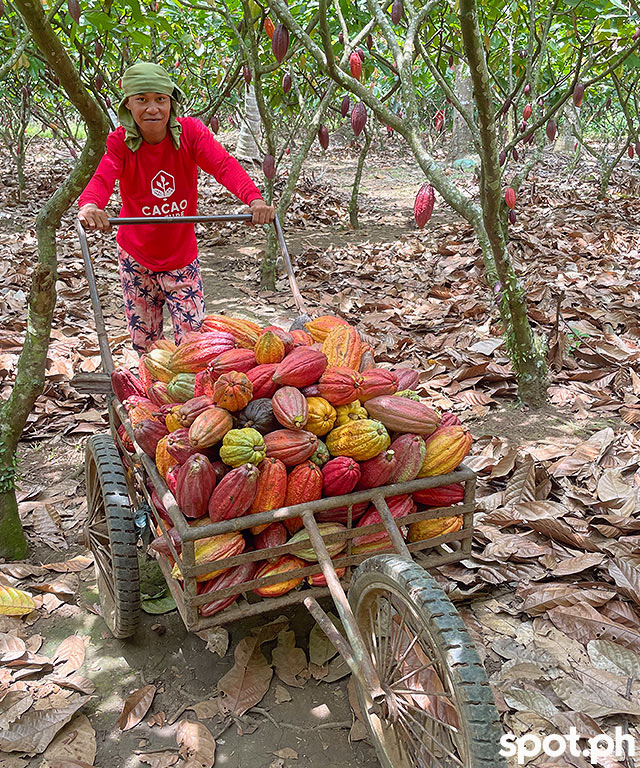
“We met someone who was willing to lease their farm long term,” Kenneth relays. The farm, he shares, was “parang abandoned in a sense,” and two ended up doing much of the prep work to be able to use the farm themselves. “It's a three-hectare farm… and then mga 2,500 seedlings [ang nasa] trees na ngayon. And then all the cacao beans that we harvest is now being produced or consumed by us as products.”
From Cacao to Chocolate
Cacao was brought into the Philippines from Mexico by way of the Manila-Acapulco Galleon Trade, with the Spanish planting the first cacao tree in 1665. It comes in three general varieties: Criollo, which is the most rare and difficult to grow, yet is prized (and expensive!) due to its complex flavor; Forastero, which is more resilient to disease and has high yield, but not particularly tasty; and Trinitario, which is a hybrid of the previous two.
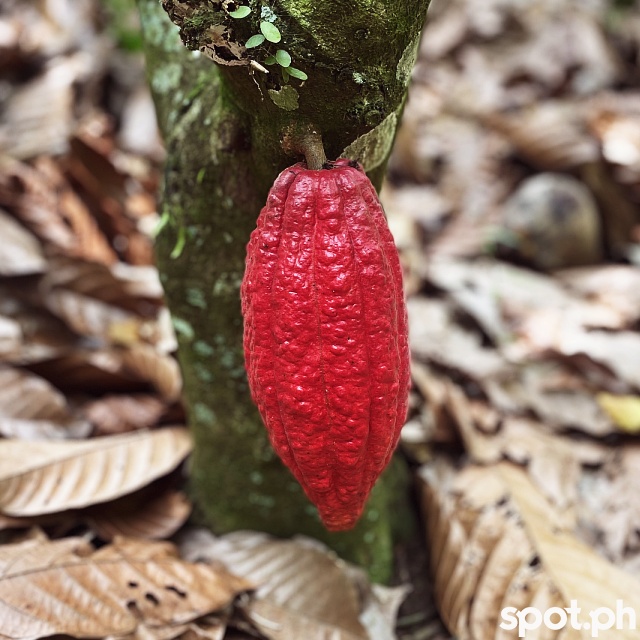
Kenneth explains that the Cacao Culture farm grows a couple of varieties under the Trinitario umbrella, though you can find all three around the Philippines (yup, Criollo included—although it is rare).
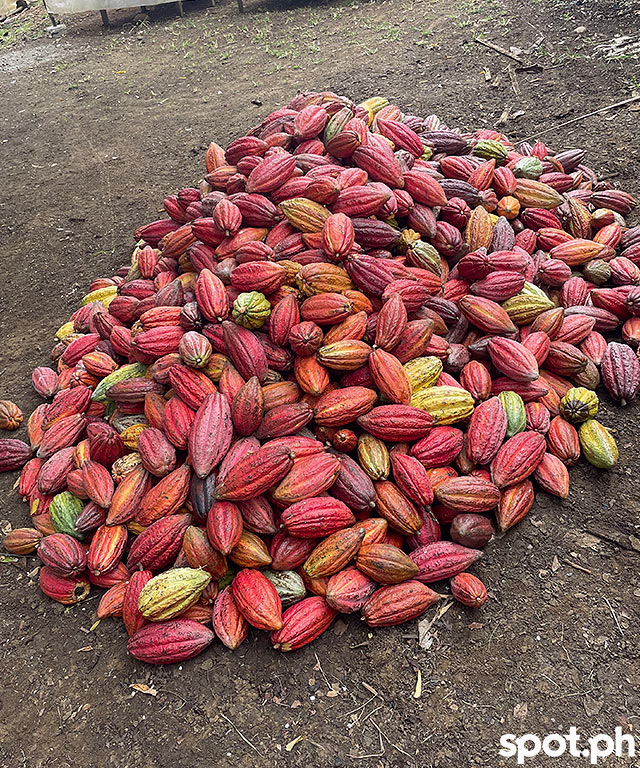
How does chocolate as we know it come about? When cacao pods are ripe—which you can tell by the color of pods, depending on the variety—they’re harvested by cutting pods from the trees using pruning shears. (Others might entail the help of a machete for harvesting, though Kenneth explains this is discouraged “para maalagaa ang tree.”) It’s typically during the fourth quarter (i.e., October to December) that cacao fruits are at peak ripeness, he says. “But there’s a lot that goes into the farm management that some farms can harvest the whole year round.”
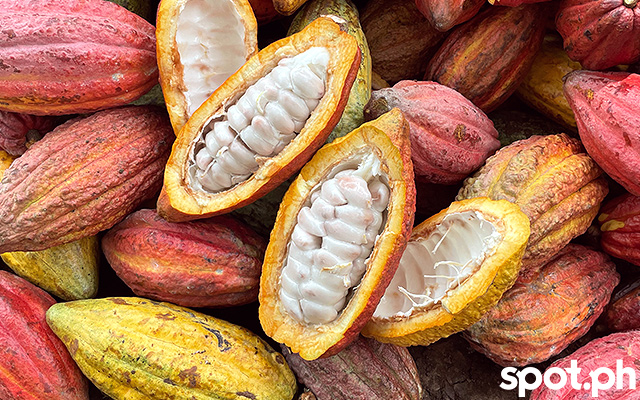
We approach the bed of harvested cacao pods on the ground. Donna takes a knife and—with a thwack—breaks open two pods to show us what’s inside. Cacao, remember, is a fruit—and true enough, within the pods are the cacao beans, covered with white cacao pulp. This pulp is edible; though not quite fleshy (you do more sucking than chewing), it has a juicy makeup and lush, tangy taste comparable to mangosteen or lanzones with a creamy undertone. (It can also be used in other cooking applications—let’s just say you’re bound to see more of that here in Manila soon.)
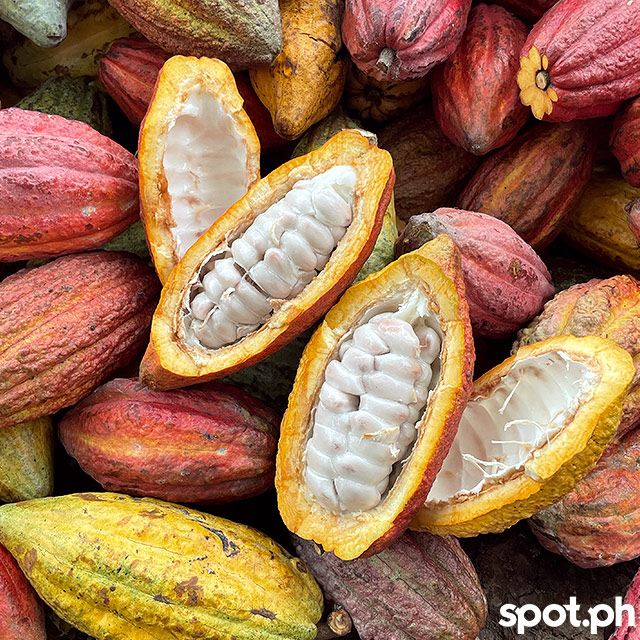
It’s the cacao beans within the pulp that are taken to the next steps on the list. And as cacao is a living, breathing thing, the resulting taste of chocolate is subject to a number of factors—including the type of cacao, the terroir (i.e., the environmental factors where it grows), the soil, and the post-harvest processes that follow.
The beans are allowed to ferment, which reduces the beans’ natural tannins. They’re then dried and roasted, darkening their color and helping develop their flavor. Afterwards they’re winnowed, which removes the outer husk from the cacao bean (these husks can be steeped into tea); ground, and optionally combined with sugar and/or milk as needed to form a paste called cacao mass or cacao liquor; tempered, to give it a glossy appearance and sharp snap; molded into bars or whatever other form; and finally, packed into the chocolate you see at stores today.
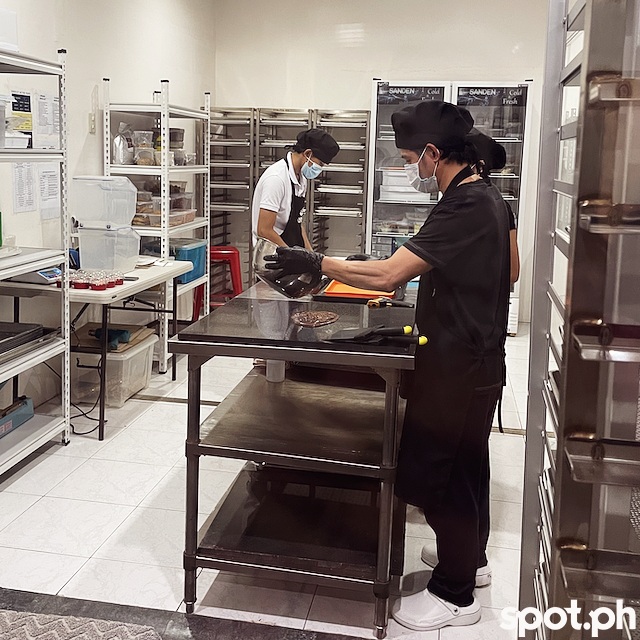
Cacao Culture’s line of products includes cacao-centric items, e.g. tablea (made from pure cacao paste) and cacao tea (from the leftover husks when the beans are winnowed). Their range of chocolate treats, on the other hand, doesn’t include actual plain bars, and instead focuses on fun spinoffs—chocolate-covered almonds, chocolate-dipped dried mangoes, chocolate-filled cone tips, chocolate barks, and even bonbons and truffles that you can pick up at their café along Mangga Street. (Don’t miss the hot chocolate there, either.)
Also read: Cop Some of the Best Local Chocolates From This Online Shop
Sustainability Matters
Much of the picturesque charm of the Cacao Culture farm comes down to the cacao pods being in full display hanging from the trees. This isn’t the case with all cacao farms, though. On our way here we’d passed by other cacao trees whose pods were wrapped in plastic—an act called “plastic sleeving,” done to help keep pests away and prevent diseases. It’s intended well, but is labor-intensive to carry out—not to mention resource-heavy, at times using up to 50 sleeves in one tree and thus coming at the expense of the environment.
Cacao Culture, on the other hand, is able to do away with the said practice. The trick? Proper farm management “na talagang focused on sustainability,” according to Kenneth.
Waste, for example, can pose an issue. Excess matter like leftover cacao pods would normally just be dumped in the farm, but this can take long to decompose—and thus attracts pests that would eat away at the prized cacao fruit. To minimize this, they’ve partnered with WasteX, a Singaporean company known for their equipment that turns agricultural waste into biocharcoal a.k.a. biochar, which they then return to the soil for its soil improvement properties.
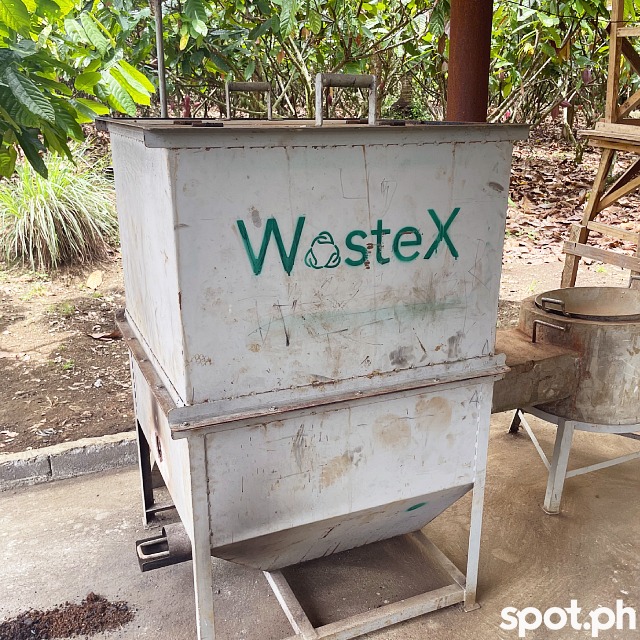
As part of the partnership, they’re also investigating how this use of biochar can affect—and ideally, improve—the yield of their cacao trees. “We're seeing more harvest do’n sa trees that we already put the [biochar] compost in,” says Kenneth. “[We’ll see the] results maybe at the end of this year.”
Spreading the Love for Local
Cacao Culture’s mission of “spreading the love for Philippine chocolate” goes beyond them as a brand, and onto the local chocolate industry as a whole. At their shop on Mangga street (which you can also order from online—they ship to Manila), they also carry products from other Filipino bean-to-bar chocolate brands; they also share their knowledge about cacao and chocolate on their Youtube channel, which you can watch for free.
"In my opinion, the Filipino consumer is maturing and becoming more complex in terms of influence and taste," Kenneth says. Asking to support local, he explains, is a "two-way relationship"—businesses and product creators need to meet the "changing taste and demand" of the Filipino consumer; the Filipino consumer's support is needed to encourage local brands to level up and compete with their international counterparts.
"Filipino consumers and Filipino biz and product creators need to meet halfway... we need to elevate the craft, the experience worthy of the Filipino consumer. 'Pag masarap, maganda ang experience. 'Pag magaling, mas madaling suportahan."
There’s long been this notion of Filipinos thinking imported automatically equals better, especially in the realm of chocolate. This is a disservice, though, considering the Philippines—and especially Davao—is home to great cacao. In 2020, cacao produced by Davao's Puentespina Farm was recognized to be an heirloom treasure. And more recently this year, it was announced that three cacao farmers from Davao were selected to represent the Philippines in the upcoming 2023 International Cocoa Awards in Paris.)
The Philippines also has a continually evolving number of bean-to-bar chocolate purveyors—i.e., purveyors who make their chocolate from scratch and have control over every stage of the process, from (cacao) bean to (chocolate) bar. Many of these purveyors also embrace (if not delibrately flaunt) the distinct taste of the cacao used, rather than conceal it the way commercialized chocolate bars typically do.
Other countries have begun to take notice of our Filipino cacao and chocolate game: there’s the Davao farmers repping the Philippines at the International Cocoa Awards in Paris, as mentioned; brands like Malagos Chocolate, Auro Chocolate, and Theo & Philo have also won numerous international awards over the years. Now it’s the Filipino people’s turn. Buying and eating local makes for a win-win situation: you get great-tasting chocolate; the economy and the players in the industry benefit, too.
With more locals knowing how to appreciate good chocolate, there can then be more demand for higher-quality stuff that does justice to the individuality of our cacao—and with it, our soil, our climate, our hardworking farmers, and the skills of Filipino chocolate makers.
Also read: How Tigre y Oliva Is Building a Global Name Using All-Local Ingredients
Hey, Spotters! Check us out on Viber to join our Community and subscribe to our Chatbot.