
This Tiny Sake Bar in Makati Might Bring Back Tokyo Memories
Bring friends to distract you from the prices of the sake you'll be consuming.
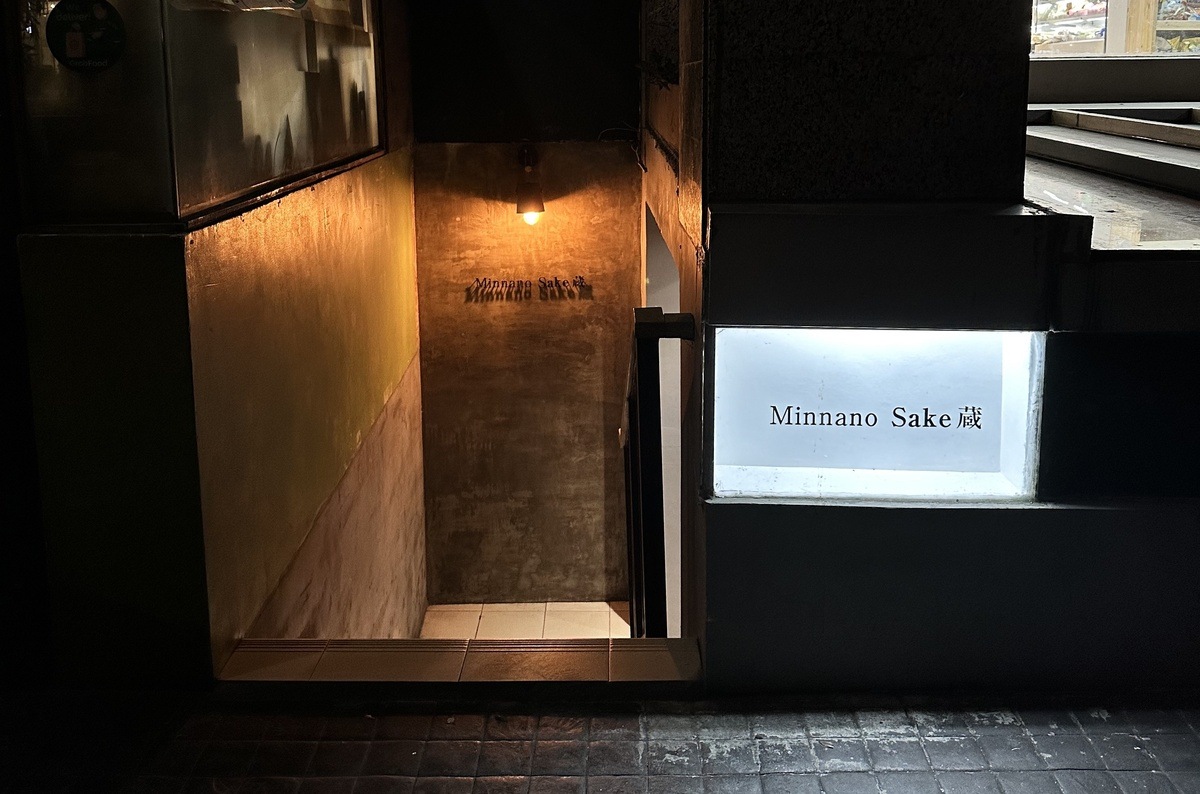
Minnano Sake Bar
Minnano Supermarket, 197 Salcedo Street, Legazpi Village, Makati City
Facebook: www.facebook.com/msuperph
(SPOT.ph) As a student in Tokyo, I was convinced I was shopping in the right supermarket whenever I found housewives stalking the evening shift staff. The housewives would move stealthily, like predators watching prey, waiting for the staff to place stickers saying “50% off” on the boxes of fresh sushi. After that came a passive-aggressive rush to the refrigerators to grab one’s fish of choice. That was the SEIYU supermarket in my neighborhood. The floors were unpolished, the lighting antiseptic, but the aisles were well-stocked—and the cashiers operated by warm neighborhood retirees. A liter of sake could be had for 900 yen (P335), a can of low-malt beer for 90 yen (P33.50)—and yes, all the sushi you want at half price, if you survive the crowds.
Minnano Supermarket (Japanese for “Everyone’s Supermarket”) triggered my nostalgia for a place like SEIYU—partly because that’s what SEIYU felt like—a supermarket for everyone. Their well-run Instagram account conveys the warmth of their staff and their wide selection of goods. Upon visiting, one might find that the staff is indeed friendly, and the variety of their stock is indeed satisfying. But a stroll along its aisles will remind you that Minnano, after all, is still in Makati’s Legazpi Village—and not in the idyllic suburban Tokyo of my memory. It is not a neighborhood SEIYU, but a Japanese Santis, where a frozen mackerel may cost nearly double the price of the same mackerel in Little Tokyo.
Also read:
This Hidden Bar in Makati Is an Under-the-Radar Spot for Stellar Sushi + Sashimi
Sake Manila Brings More Than 200 Labels Under One Roof
This Quirky Whisky Bar Was Shipped From Kansai to Manila
What Minnano does offer is, in a word, pleasantness—a manicured version of the other Japanese minimarts—plus some premium fruits, chocolates, or cosmetics that one might be hard-pressed to find elsewhere. Once in a while, you might find a Rolls Royce parked outside, and a VIP searching for Shine Muscat grapes.
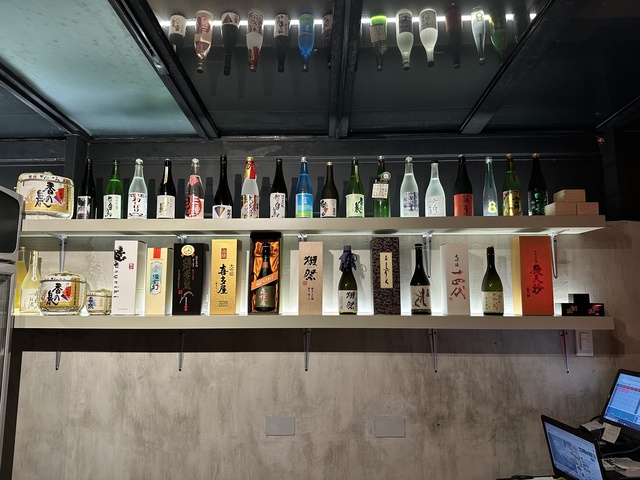
Of course, there is sake too.
Welcome to Minnano Sake Bar
Beneath Minnano Supermarket is Minnano Sake Bar—a small space that might be able to cram together ten people, at most. A few steps from the supermarket, one descends a narrow flight of stairs and discovers a mood-lit room—with tasteful signage, a minimalist neon sign, industrial-chic interiors, blemished only by a sobering fluorescent light from outside its lone window. There is one table, one bar counter, and two helpful staffers who take orders, pour sake, and fry pulutan.
The bar review is a strange art. The challenge is to pick a place with character—perhaps with a kooky owner, a novel concept, or curious drinks on offer. I am thinking, for example, of an izakaya in Tokyo whose walls were plastered with posters of bikini butts—and another bar with a library theme and shelves of old books. But even when the bar itself feels like a story, it feels unjust to walk in there alone, have a few drinks, and write 4 stars out of 5 on your notebook.
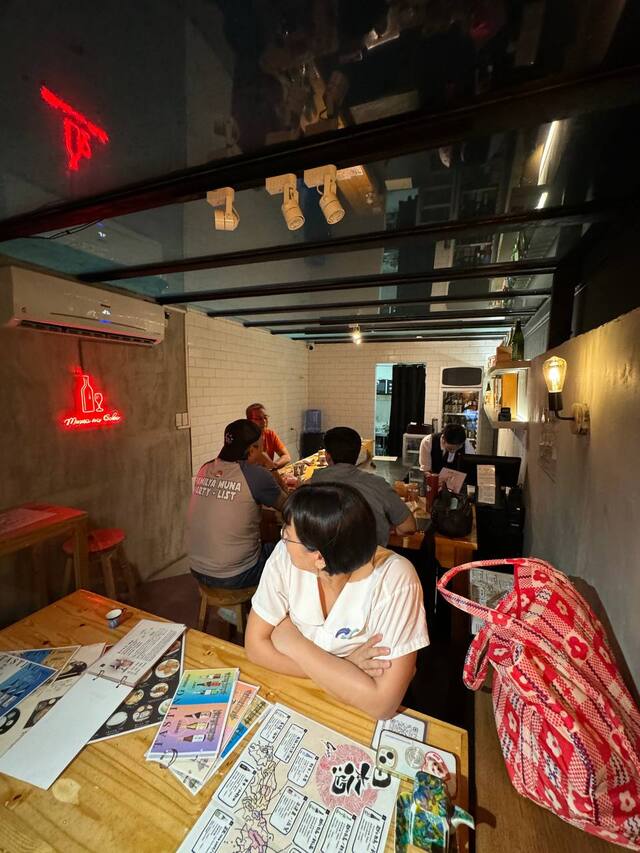
The best nights occur when a bar finds a chemical reaction with its patrons. It doesn’t matter whether they are there to read, inflict their woes on the poor bartender, or revel in the company of a few good friends. The magic is when the patrons—in the span of an evening—find themselves making the place theirs. Suddenly, there is community. Suddenly, everyone finds out why they went out that night. This is why I try to bring friends to these things—and not just anyone, but those who might have a certain alchemy with the place.
Dino is a creative who visits Osaka regularly to support his football team Cerezo Osaka—his creative work often involves unlikely mash-ups between Pinoy and Japanese pop culture and memes. And Toni is the patroness of the gyudon restaurant and Japanese culture hub Kodawari. The three of us first met at her restaurant and started drunkenly practicing Japanese—and then sharing observations and curiosities about living in Japan.
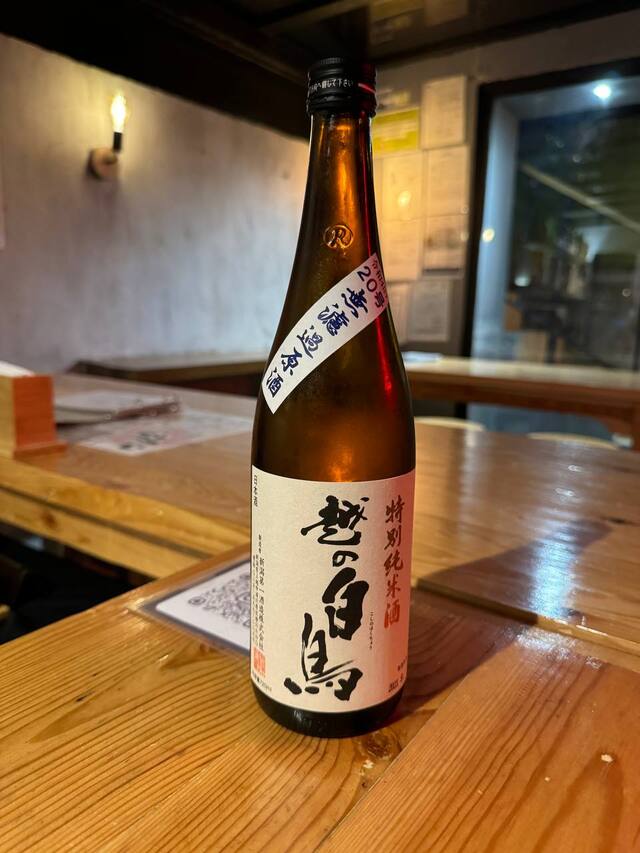
Here is one thing that surprised me about Japan: First, “sake” is not just sake. It is a catch-all word for all kinds of alcohol. Sake, as we know it, is called nihonshu. Second, in most izakaya, nihonshu is a relatively effective way to get drunk. It is traditional liquor, but it is also an everyman’s drink. A 720ml bottle in a chain like Watami might set you back 1,000 to 1,500 pesos in Japan. So, it was a surprise to see Minnano charging around 3,000 pesos for their average bottle of nihonshu—and, particularly, 2,700 pesos for a bottle of Chikumanishiki gold label, which retails for around 500 pesos in Japan. One might cite inefficient supply chains, customs duties, and perhaps the cost of rent and labor—but a 400% markup leaves one wondering if these sake bottles were coursed through the Manila-Acapulco trade.
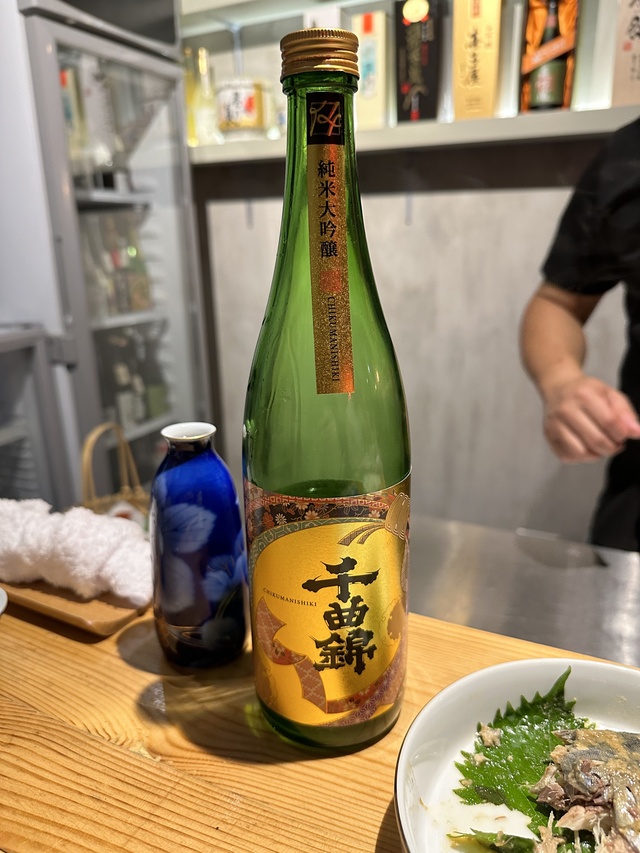
A fair comparison would be Bar Koji, located in Ralph’s Wines & Spirits on Arnaiz, which is arguably a better location than Minnano. The Phoenix x Tatenokawa collaboration sake in Ralph’s—which retails for around 1,000 pesos in Japan—goes for 2,500 pesos. Steep, but one can see how a business might justify it. In Minnano, the same exact bottle costs P4,000. Granted, Minnano does carry plenty of labels that can’t be found anywhere else in Manila—and perhaps the markup is understandable if one assumes these are imported in very small batches. But prospective customers should know: While it is perfectly acceptable to get sake-drunk for a premium price in Minnano—it would be the equivalent of going to a posh bar in New York and paying $50 for a six-pack of Red Horse.
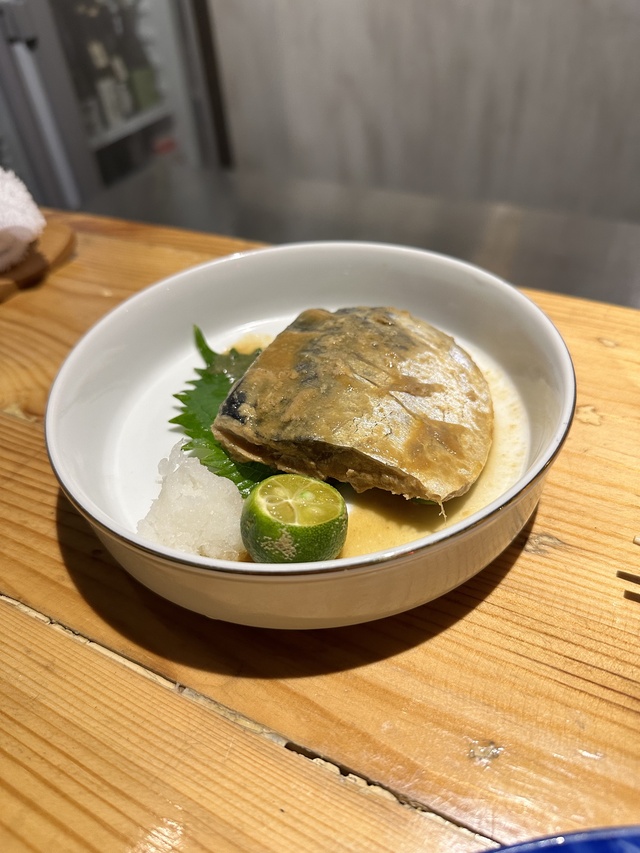
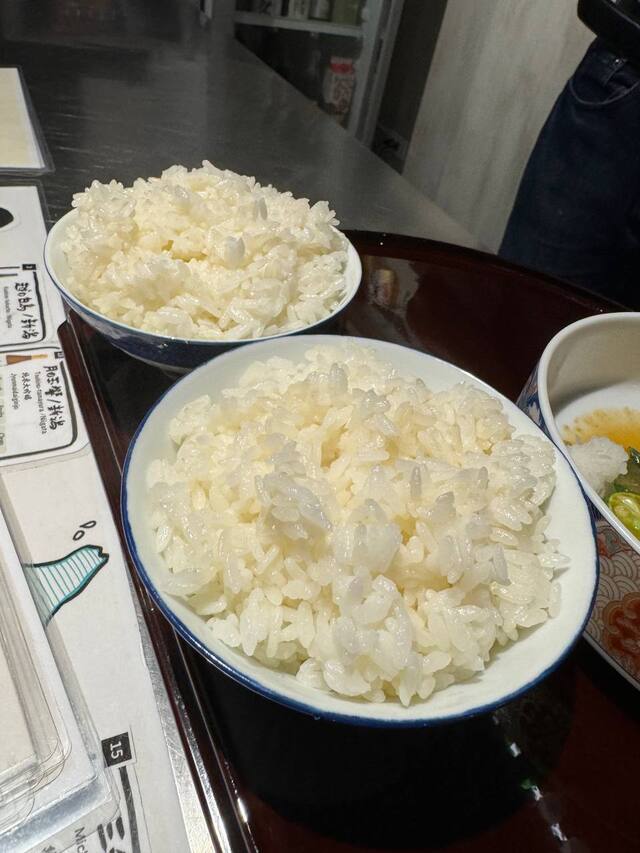
Minnano does have an interesting selection of bar bites: Japanese wieners (P290), gyoza (P390), today’s fish—in our case a tasty miso mackerel (P480), and the karaage’s lesser known, differently-battered cousin—the tatsutaage chicken (P390). The single oddity in the food menu might be the 300-peso cup of rice, which eclipses the P100 “motivational rice” of Facebook provocateur Rendon Labador. It is the kind of thing you order once, as a middle finger to anyone who ever doubted your earning potential—then never again.
The staff explained that it was Hokkaido rice, hence the price. But even assuming that it is Hokkaido’s premium Yumepirika rice which retails for around 300 pesos a kilo—Minnano’s cup of rice would be going for at least a 300% markup. A mysterious decision—given the fairly standard prices of their other food items.
Also read: Manila POGO Club: A Night Inside Makati's Chinese Superclub
Not exactly "Everyone's Sake Bar"
After being economical with our drink choices (two low-end bottles of sake), and admittedly rather liberal with our food, our bill for three people ran over 10,000 pesos. When I was younger my father asked me what one calls a rich Japanese person. When I didn’t answer, he said: “E di… Naka-Gucci!” Minnano Sake Bar means “Everyone’s Sake Bar,” but it feels like it can only be afforded by the Naka-Guccis of Manila.
Doing math is a terrible way to enjoy a bar. And typically, I go out of my way to understand smaller establishments who have higher-than-usual price points. But Minnano’s markups are honestly too distracting—and one’s enjoyment might be overshadowed by the dread of receiving the bill.
The Power of Friendship is an old trope in anime. Whenever a hero is getting beaten by a seemingly omnipotent villain, the hero thinks about their friends and family. Their strong emotions typically result in a nonsensical and undeserved power-up, which helps them triumph over the bad guy. It is lazy writing, and anime fans caught on and turned it into a meme. This is why it pains me to say that our evening in Minnano was saved by the Power of Friendship.
Our little drinking group loves Japan, truly. But we were also quite wary of putting all things Japanese on a pedestal—whether it’s shelling out 4,000 pesos for a sake bottle that is just 1,000 pesos in Japan, or reducing one’s view of the country to touristic pleasures: sushi, tempura, anime, sakura, geisha. Dino mentions that this kind of experience for Filipinos is not actually the dominant narrative—that Philippine-Japan relations are colored mostly by labor export and, yes, practical marriage arrangements. That in Japan, you will find so many Filipinos who would not give a rat’s ass about Naruto or one-day tattoo eyeliner. Their experience of Japan is everyday; it is work; it is survival; it is penny pinching in sake bars, and sometimes even living in the shadow of exploitation. Were we drunk? You f*cking bet. The sake might have been expensive, but the good thing is that it still works.
A lot of people get hung up on the idea of authenticity. Is this pizza really Neapolitan? Are your espadrilles made in Spain? Does Enrique Iglesias count as Filipino? Who knows. Minnano Sake Bar seems authentic. The sake is not common—albeit overpriced. Some of the food items are quite unique. But my most memorable drinks in Tokyo were with Japanese friends from the dorm, chugging down discount alcohol from SEIYU. It was visiting a bar called Alp’s all the way in Shinjuku because their beers were 100 yen a glass. It was sitting down with our dorm master with tetra-pak sake and forcibly breaking down the language barrier. Minnano may well be authentic, but one realizes that—in every single country in the world, Japan included—everyone loves a cheap drink and a long conversation. It doesn’t get more authentic than that. Call it the Power of Friendship if you want. It really is damn powerful.
Hey, Spotters! Check us out on Viber to join our Community and subscribe to our Chatbot.