
Binulo Tagaytay Highlights Kapampangan Fare + a Traditional Filipino Cooking Method
An old Clark favorite makes the 177-kilometer journey so you don't have to.
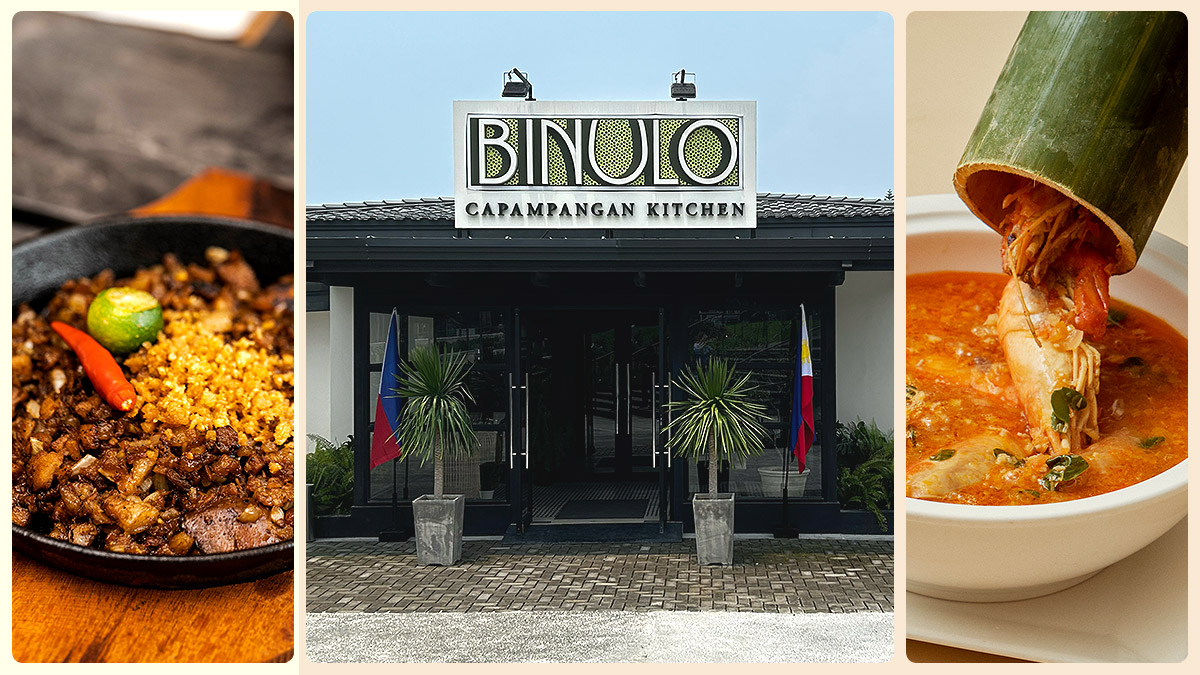
Binulo Contact Details
Station House Tagaytay, Silang Junction South, Tagaytay City
Contact: 0905-841-8515
Facebook: www.facebook.com/binulo.tagaytay
Open from 11 a.m. to 9 p.m., Wednesday to Monday
(SPOT.ph) Along Manuel A. Roxas Highway, in the industrial core of Central Luzon, resides a culinary institution that’s been getting rave reviews since it opened. It’s a destination in and of itself—a considerable feat when it’s settled among several other tourist-y to-dos—but this article is not about that place. Clark may be its root, but even restaurants like Binulo, it seems, must branch out after blossoming; that is how the name finds itself in Tagaytay.
While chefs, critics, and diners have all had a lot to say about authentic Kapampangan cuisine, what doesn’t seem to be mentioned enough is its influence over the rest of Luzon, and possibly beyond. In recent months, there have been mentions of codifying Pampanga’s status as a Philippine food capital, citing both international and domestic acclaim. (That is not to say that other regions and provinces don’t have their own wonders; many lasting local favorites can be traced back to any of them, which we feel is a good indicator of the Philippine’s cultural abundance.)
Also read:
The SPOT.ph Guide to Filipino Food
When You Travel for Food, You Help Locals, Our Heritage, and the Planet, Says UN Forum in Cebu
Binulo brings Kapampangan fare to Tagaytay
Filipino fare overall, at its core, can be simultaneously resourceful and indulgent, and seem to have always followed the “rules” that diners and cooking-show binge-watchers have only lately become aware of—things we may have lost over decades of cultural mingling in urban spaces, and have come to rediscover as new concepts emerge. Both the homestead and refresh of Binulo embody these qualities enough that no good host or tour guide would find themselves embarrassed.
The Food
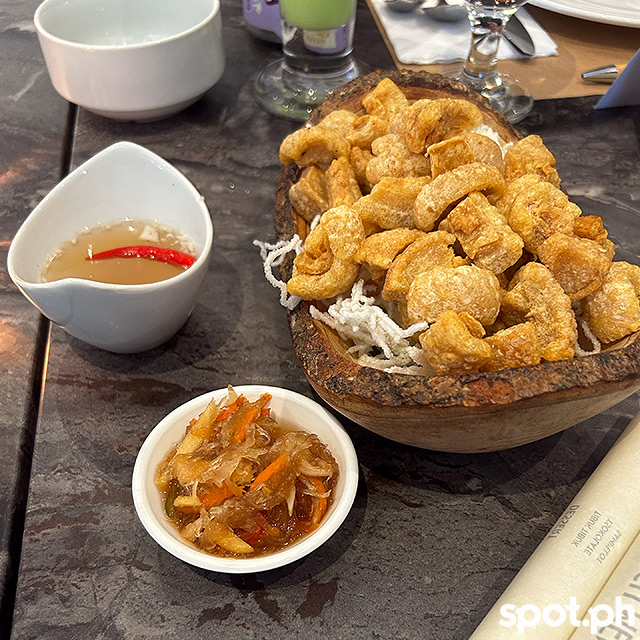
Start off strong and classic with Pititian with Atsara (P420), which you may know better as chicharon. Binulo’s version has all the fun, puffy crunch that makes the beloved appetizer (or pulutan, let’s be real) what it is. Tradition is upheld even in the modern overhaul in that the cracklings must be served with vinegar and chili, but the twist is in the name: the sweet-tangy iteration of pickled papaya adds a different dimension, making for a much more interesting bite. Both the pititian and the atsara can be purchased as pasalubong or for home use from the little shop near the door.
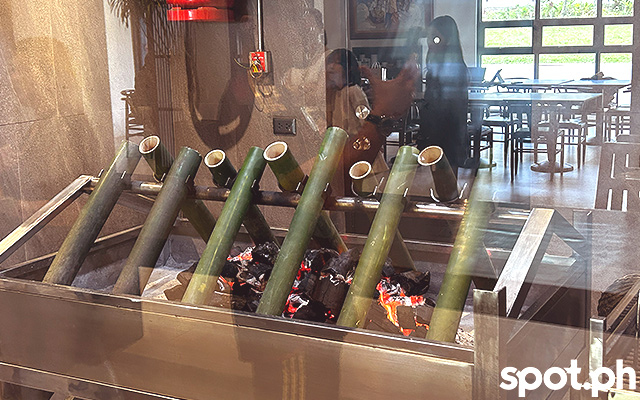
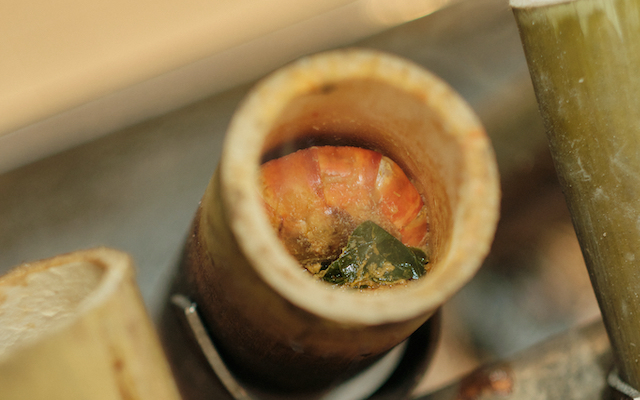
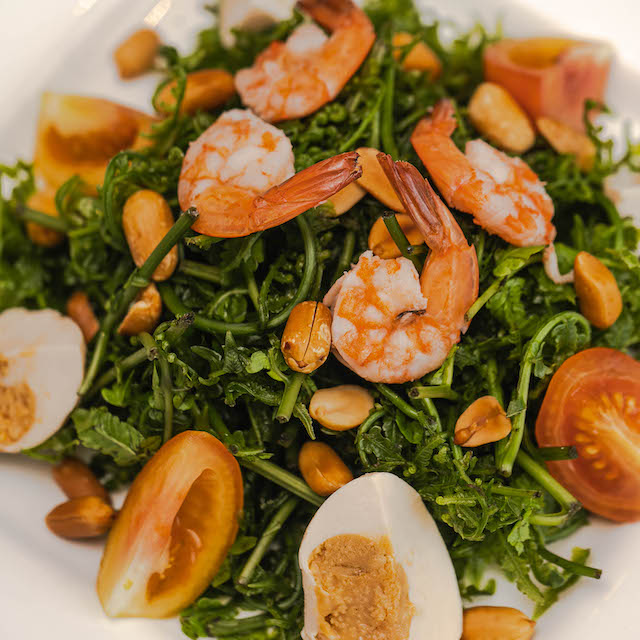
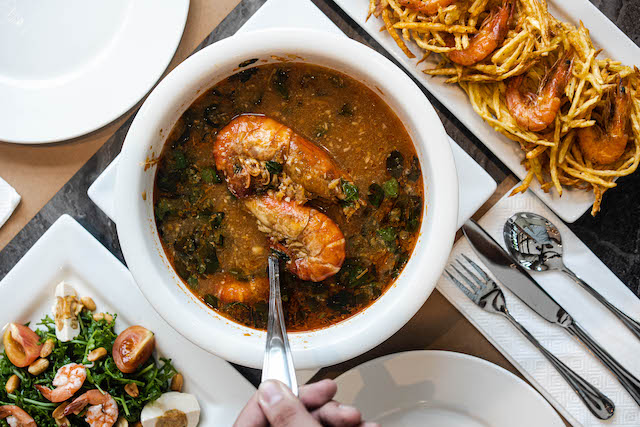
The Paco Salad (P470) boasts fresh tomatoes, generous chunks of salted egg, and plump little shrimp—plus some bright pink vinaigrette that makes this take on the familiar fern mess stand out. There’s also an added layer of mystery; nobody would tell us (and they probably won’t tell you) what makes the dressing pink, but we suspect it’s also what turns it a little sweet. Whatever it is, it’s a great precursor to one of the star soups, Pangat na Ulang (P870), an aromatic, refreshingly sour representation of our pre-colonial ways. This is where the word “binulo” comes in, meaning “cooked in fresh bamboo stalks.” In this case, you get fat river prawns and lingering lemongrass; there’s a lightness to this rendition that could make it read like a savory palate cleanser to some, which bodes well for the extensive menu.
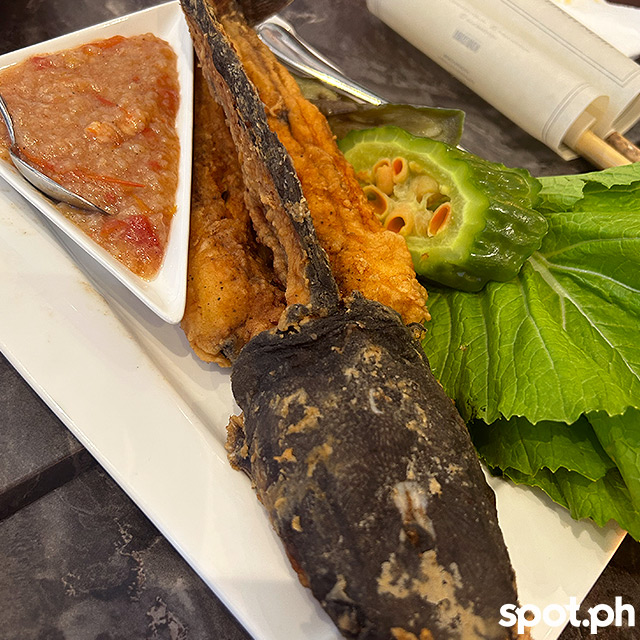
Binukadkad na Hito (P570) adheres to the Filipino eating traditions of sharing food and really getting your hands involved. When you’re presented with crispy catfish, bright and bitter mustard greens, and Binulo’s own subtly punchy buro, it’s hard to say no—so be warned that this number could be test of willpower, dexterity, the durability of one’s manicure, or of all three. Best to come with bare nails. (Did we mention you can also buy jars of the buro in the shop out front? You’re welcome.)
What We Recommend
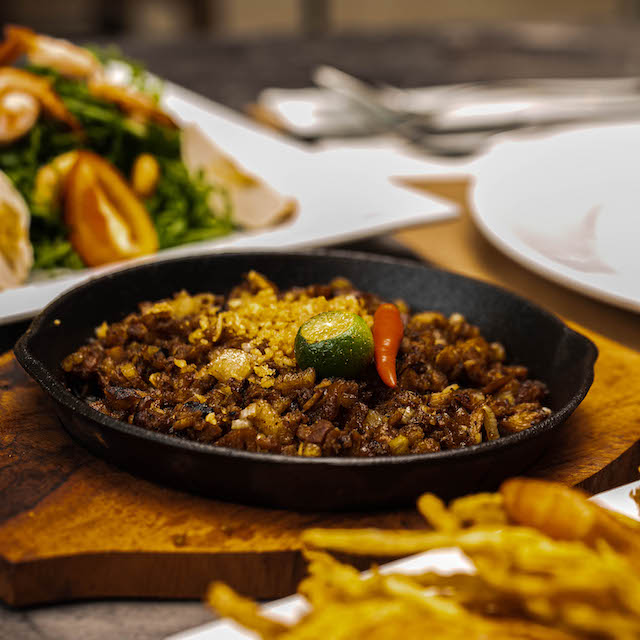
How could we not talk about the Pork Sisig (P530)? It’s unreal to think that the sordid origin story of this dish only turns 50 this very year, for all that it’s as much a part of our lore as anything could be. True, the price tag on this particular plate seems a little steep, but one bite will tell you exactly why—this ostensibly authentic version just sits so well on the palate, the way Kapampangan food always aims to. It’s rich but not heavy, in a way that almost successfully compels Manileños to follow instructions and forgo rice—emphasis on “almost,” because rice is life, okay? (If you’re going to do it, you may as well order the Binulo Rice over the regular steamed rice; you’re already here.)
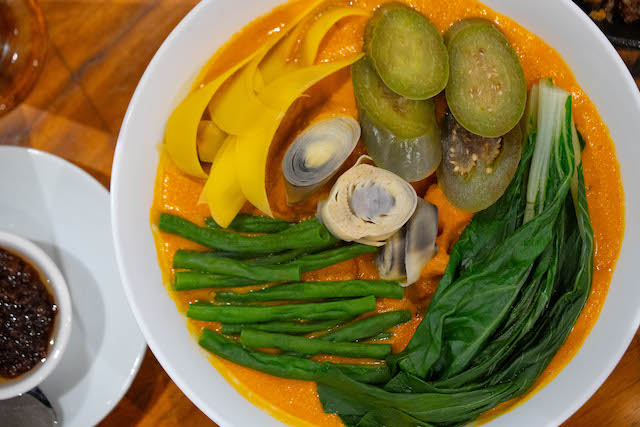
And yet, of the whole menu, co-founder Aniela Tolentino shares that the Kare-Kare (P950) may be the most evocative of what Binulo is about. “We take no shortcuts because that grants our kitchen almost full control of the flavor,” she says proudly, “right down to crushing the peanuts.” It certainly pays off; the vegetables retain some snap of freshness, holding up well against what is essentially a creamy peanut-based curry—hence “kare”—and that meaty yet delicate oxtail.
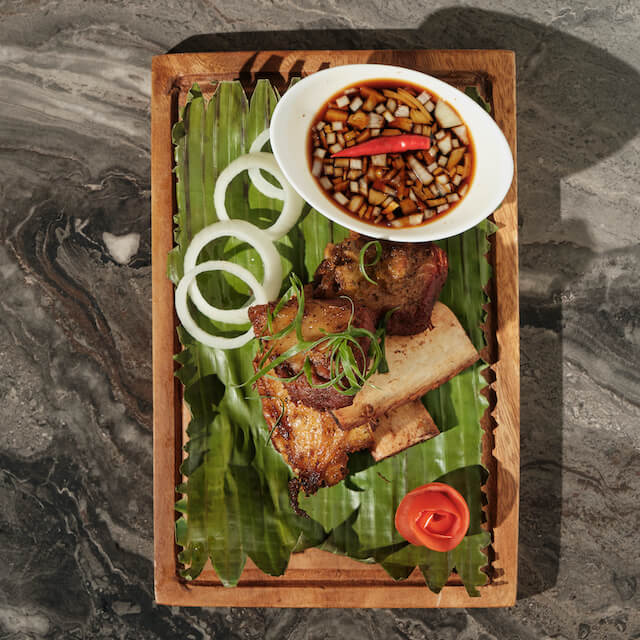
For some, however, the Crispy Tadyang (P970) could prove to be a formidable rival for that spotlight. It’s got a lot of what anyone could ever want in short ribs, really: that bark that bites back a little before giving way to that soft, just-clinging-to-the-bone beef that needs virtually nothing else. But the Pampanga way is to always have a sauce of some kind, and this one is your classic soy sauce and vinegar with onions and chili, because of course.
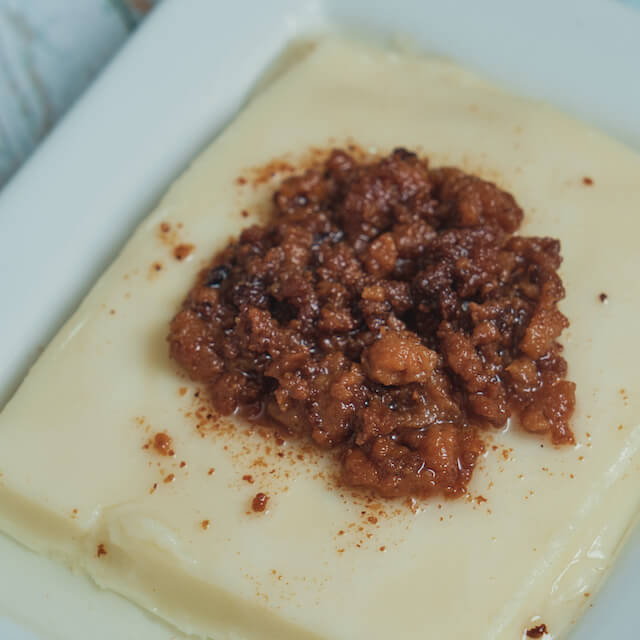
After maybe another bowlful of pangat or a good sip of the Buko Pandan (P180), some of you might find that however full you are, there’s always room for dessert. The Tibuk-Tibuk (P340) and Sampelot (P420) at Binulo may be the platonic ideals of maja blanca—smooth, not cloyingly sweet, and just the right amount—and ginataang bilo-bilo, respectively. As much as we love bilo-bilo on a good day, the texture can be a little tedious to get through, but that isn’t the case here; the chewiness of the glutinous rice doesn’t overstay its welcome, the sweetness doesn’t overwhelm, and the gata has a tempered sort of richness.
A Taste of Tradition
If the name isn’t immediately familiar, Tolentino is both a co-founder of Papa Bolo—a brewery only two kilometers from this new Binulo franchise—and Cavite’s District 8 Representative. She and partner Augustine Roa, when their calendars would permit, found themselves on the road to Clark, Pampanga just to enjoy a meal at the Mabalacat mainstay. “I can’t explain it,” she says. “Even though it’s not where I’m from, the food feels like home in a way that I love showing off to other people.”
While previously unaware of the House bill push to recognize Pampanga as, officially, a “culinary heartland,” Tolentino can attest to the reasoning behind it. “So much of what we enjoy at home can be credited to someone or some store in Pampanga,” she adds, “and I wanted to bring [Binulo] to my hometown to sort of help people make that connection as well.”
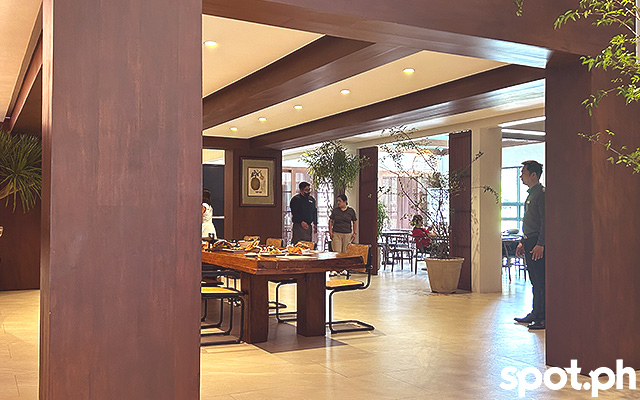
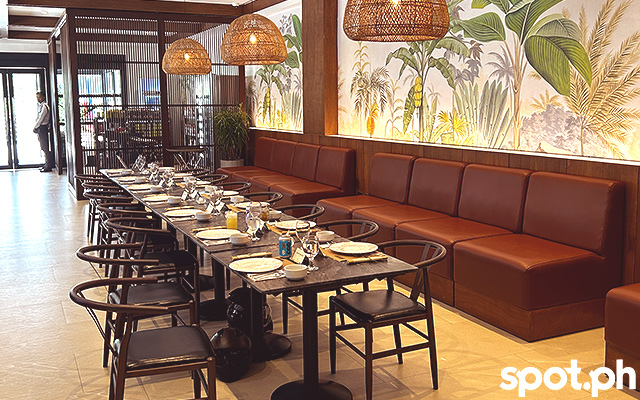
It can be said of the new Binulo—as Tolentino and the original crew emphasized to us many times—that it is simply a clone of the reliable menu that got a bit of a facelift. It is a marketing truth universally acknowledged that legacy brands, if in need of a new audience, must be in want of a new look. Earth and woody tones, leaf motifs, and the new graphic’s callback to bamboo take the old and the new and marry them smoothly in the middle.
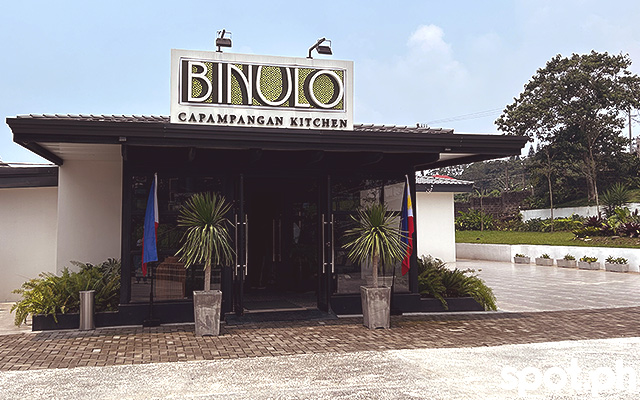
All this is located at Station House, a low-density commercial center along the well-known Nasugbu Highway and just a kilometer past Ayala Malls Serin. Over the years, the highway has become a spread of easy pickings and road-trip reliables; although some names have come and gone and even resurfaced, we can generally count on this road to always have something for any mood, and Binulo proves to be as good an addition as any.
Hey, Spotters! Check us out on Viber to join our Community and subscribe to our Chatbot.